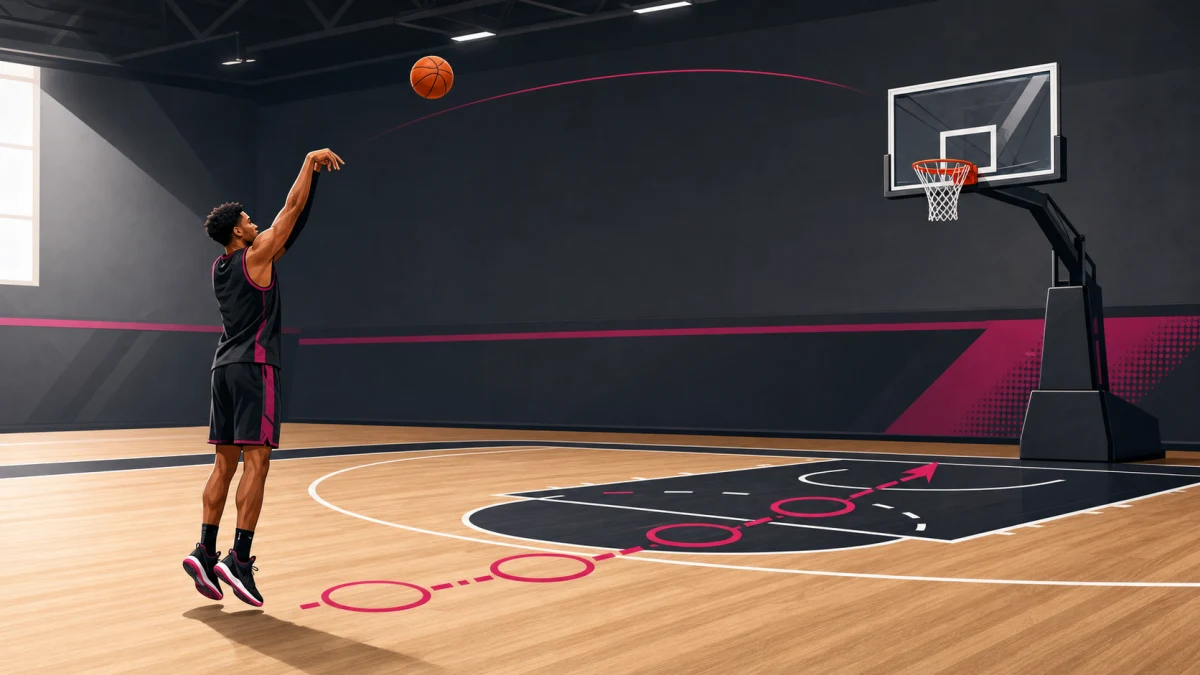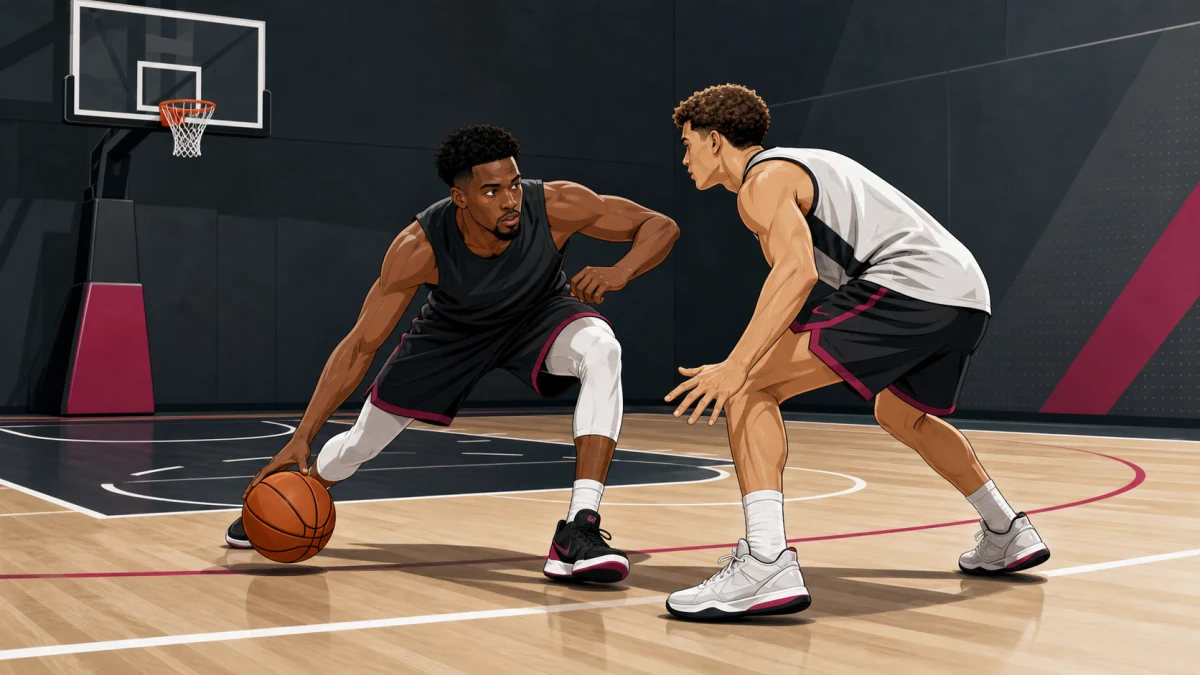


The short version: In WABC’s stationary behind-the-back crossover, one bounce carries the ball down and across behind you, then up to your other hand. Take a settling dribble on the receiving side before you reverse.
Key takeaways
- Start with an active dribble beside you and have your other hand ready.
- If you need a step to recover the ball, restart the rep at a slower pace.
- If one direction gives you trouble, start on that side and practice it by itself.
Where should the ball start?
The World Association of Basketball Coaches (WABC) teaches a V-shaped crossover behind the back that works best when you stay in place. Its Level 1 manual also describes a separate behind-the-back dribble that sends the ball forward in front of you. WABC Coaching Level Manuals Level 1 English
Work on your own with one ball. Get a dribble going beside you with your right hand. Have your left hand ready at your left side to meet the rebound.
What does the V-shaped bounce look like?
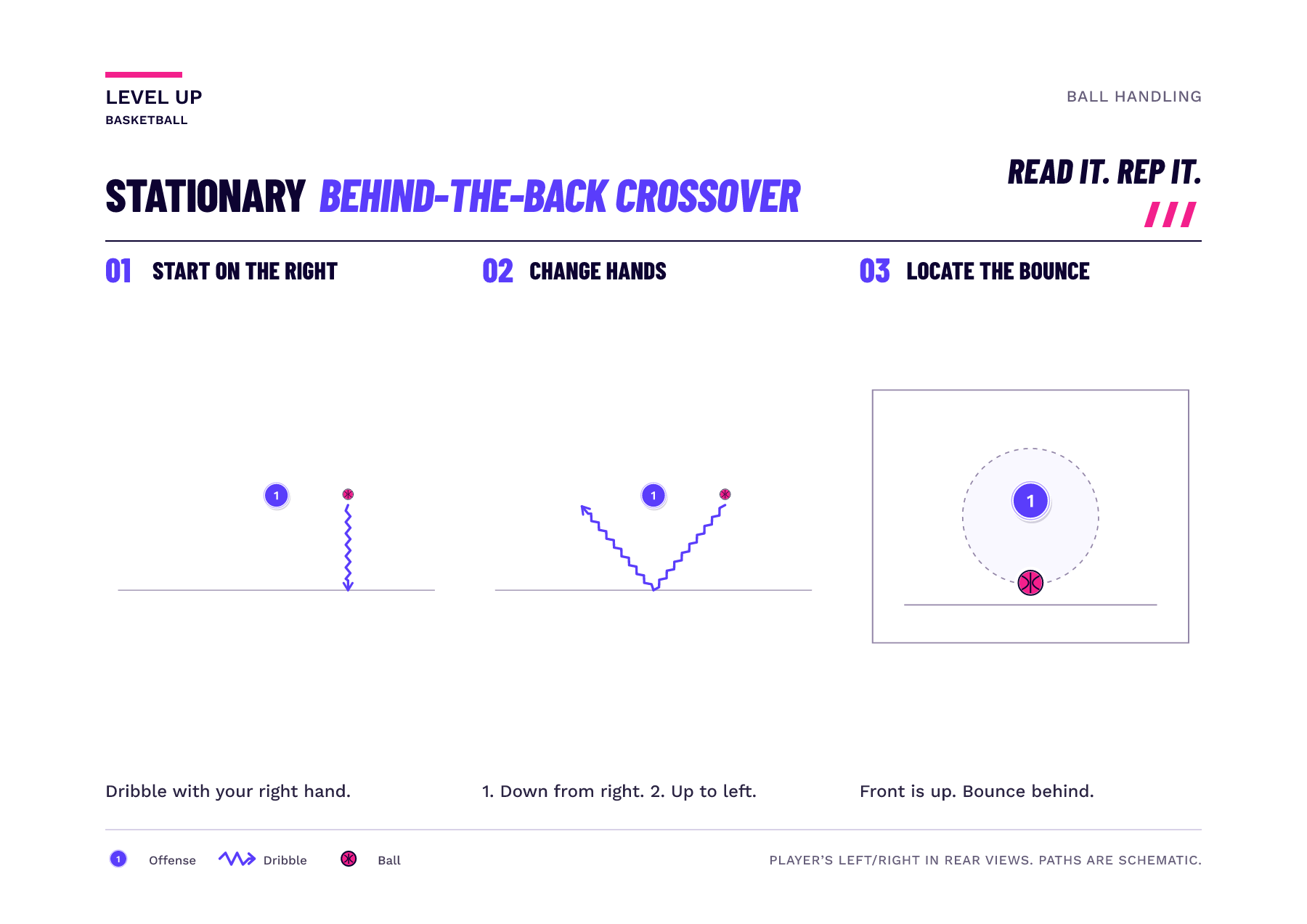
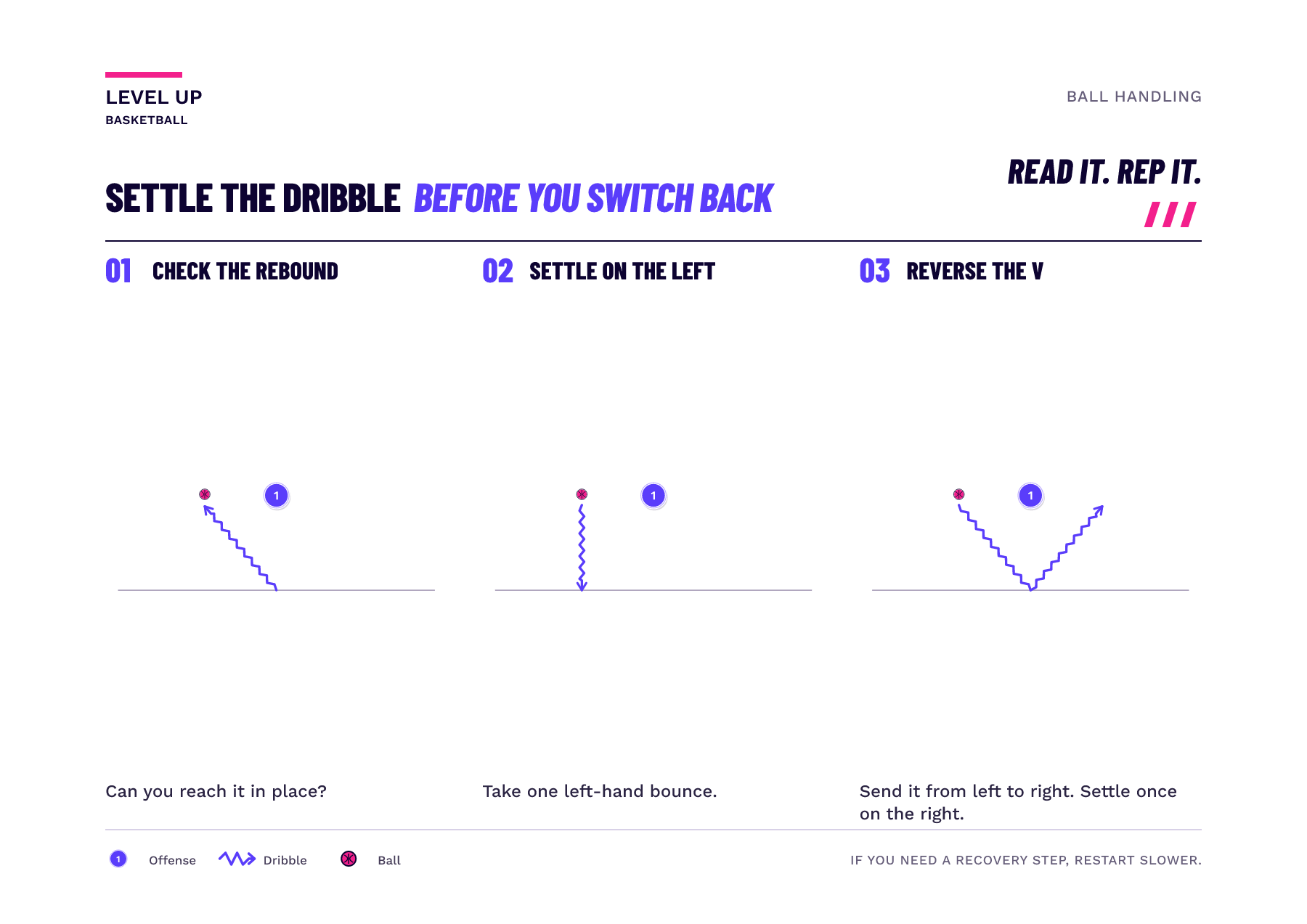
Send your next dribble diagonally down and across behind you. Let the ball hit the floor once and meet the rebound at your left side with your left hand. The floor contact is the point of the V in WABC’s stationary crossover.
Swipe sideways to explore the full diagram.
When should you switch back?
If you can reach the rebound without a recovery step, take one settling bounce with your left hand at your left side. Use that bounce to check your control. Then switch back from left to right and settle the ball with a right-hand dribble.
If the ball clips a heel, gets away, or makes you step to reach it, restart at a slower pace and practice one crossover at a time. If the return gives you trouble, start with a left-hand dribble and practice that direction on its own. stationary dribble control guide
Swipe sideways to explore the full diagram.
Was this useful?