
The short version: Stationary control centers on a low stance, finger-pad contact, a controlled ball path, and attention directed beyond the ball.
Key takeaways
- Use a low athletic stance rather than upright dribbling.
- Finger pads, relaxed fingers, and the wrist define the approved contact guidance.
- Keep visual attention available instead of treating ball-watching as complete control.
- The approved task sequence begins with stationary control before later movement.
What posture supports a stationary dribble?
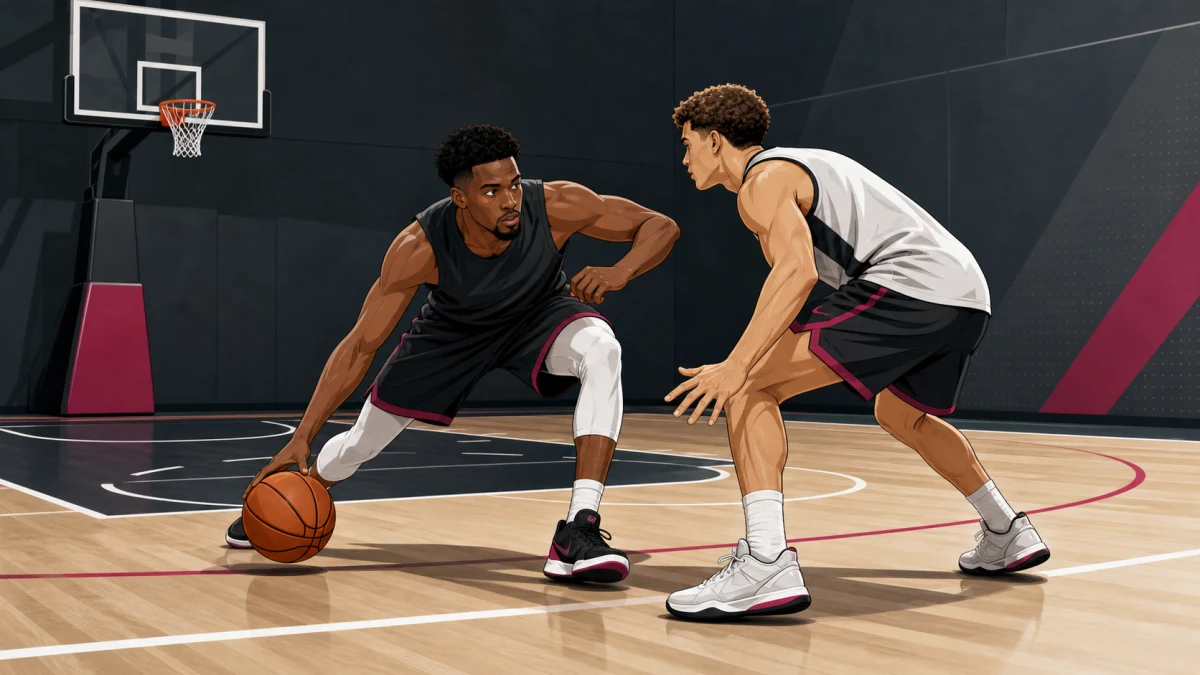
A stationary dribble stance can use wide feet, bent knees, lowered hips, a tall chest, and an up-facing head. Dr. Dish describes that low athletic position as supporting balance, explosiveness, and awareness. Vanta Sports pairs bent knees, loaded hips, and a tall chest with the cue, “Sit into your stance.” Basketball Drills: 5 Ball-Handling Fundamentals Dribbling Exercises to Improve Ball Handling: A Practical Guide for Basketball and Netball Coaches | Vanta Sports basketball workouts
Dr. Dish cautions that standing upright while dribbling does not help strengthen the muscles used in competitive play. In Vanta Sports’ figure-8 description, the player takes a wide stance and dribbles continuously between and around the legs in a figure-8 pattern. Mastering the Hardwood: Essential Dribbling Exercises to Improve Ball Handling | Vanta Sports
Vanta Sports describes the stationary spider dribble from feet set shoulder-width apart. The ball travels directly between the legs while the hand order is right in front, left in front, right behind, then left behind.
Where should the hand contact the basketball?
Active for Life’s dribbling guidance calls for fingers that are spread and relaxed. It also places contact on the finger pads near the ends of the fingers rather than on the fingertips. Those two details describe how the hand meets the ball before a player adds movement. Lp Dribble Hand 3 1 Dribble And Go
Vanta Sports’ youth-coach guide says to control the ball with fingertips while keeping palms off it, associating that contact with better control, quicker reactions, and softer touch. Its separate guide describes finger pads, rather than palms, as the source of control for manipulating the ball’s direction and speed. Dribbling Exercises to Improve Ball Handling: A Complete Guide for Youth Coaches | Vanta Sports
For touch, Vanta Sports pairs fingertips and the wrist with the cue, “Push it; do not slap it.” Another Vanta Sports cue asks players to imagine playing the piano on the ball. Both cues identify the hand and wrist as the contact points being coached.
How low and direct should the ball path be?
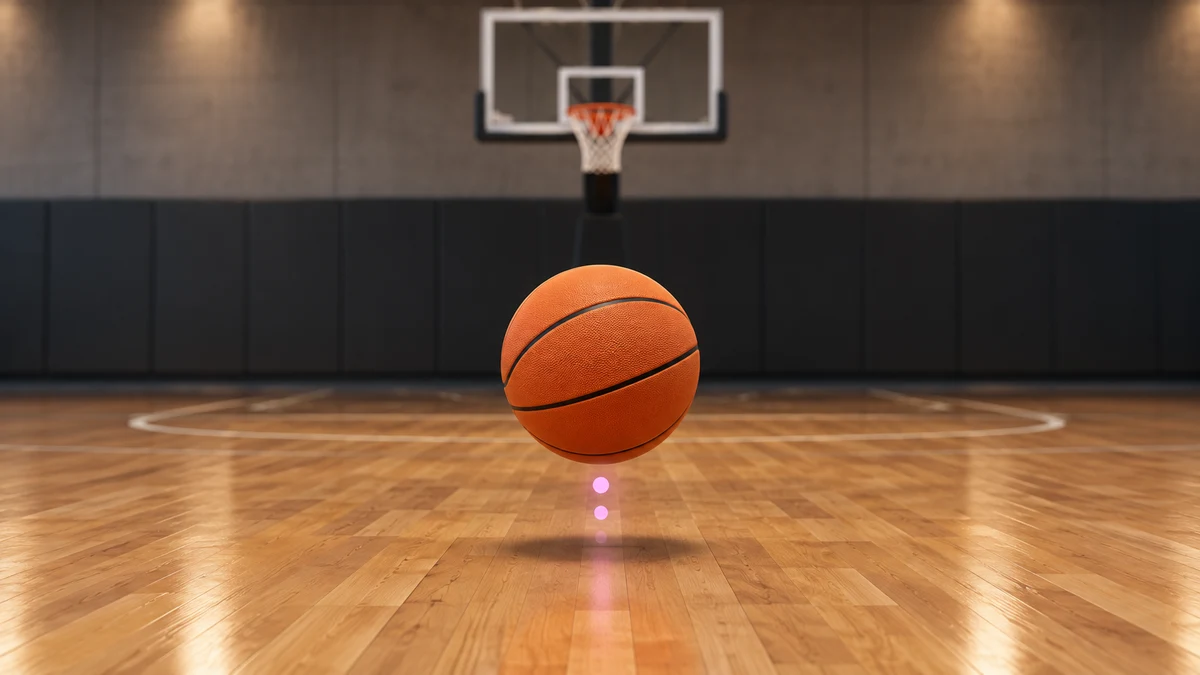
Active for Life demonstrates a bounce at or below waist level. Vanta Sports’ ball-height priority is to keep the ball close enough to protect, using the cue, “Keep it below the defender’s hand.” These are height descriptions for the ball path, not a repetition target.
Dr. Dish says keeping the elbows tight and the hand on top of the basketball maintains the ball’s trajectory. The same guidance says this position prevents added spin or curve, which it identifies as a frequent reason a player loses control.
Dr. Dish links proper finger placement and wrist use to directing the ball where the player intends it to go. For a pound dribble, Vanta Sports instructs the player to drive the ball as hard as possible into the floor while keeping it below waist height.
Which stationary tasks show ball contact and return?
In stationary fingertip taps, Vanta Sports has players tap the ball back and forth between the fingertips while keeping it below the knees. The same description calls for bent, relaxed elbows, fingertip-only contact, and eyes up as much as possible during the task.
For a pound dribble, Vanta Sports adds two coaching points: keep the hand on top of the ball and engage the core for stability. Its stated ball-path detail is that the ball returns quickly to the waist after the bounce.
Vanta Sports states that a harder dribble returns the ball to the hand more quickly. It connects that quicker return with less time exposed to defenders and greater player control. The claim describes the return path of the ball; it does not set a required speed or count.
What should the player attend to while dribbling?
Dr. Dish says dribbling with the eyes up gives the brain more time to analyze the court situation. Vanta Sports draws a boundary around that idea: a player who can bounce the ball rapidly while watching it has only part of the ball-handling skill.
Vanta Sports’ vision priority says the eyes scan before and after a move, using the cue, “See the colour, then attack.” Dr. Dish offers a partner task: the partner changes the number of raised fingers, and the dribbler calls out the number as it changes.
Vanta Sports describes peripheral-vision practice as dribbling without looking at the ball while focusing on the rim, coach, or teammates. In a stationary setting, those are distinct visual targets a coach, player, or family member can place in the player’s field of view.
What can follow stationary control?
Vanta Sports describes a game-ready ball handler as controlling the ball with fingertips, changing pace and direction, protecting it with the body, and keeping visual attention available. Vanta Sports reports that USA Basketball’s youth-development guidance moves from familiarity and stationary control to walking, jogging, and sprinting. The same source cautions that adding speed before control rehearses poor habits.
Vanta Sports’ hand-balance priority is for both hands to become usable tools, with the cue, “Weak hand gets the first rep.” Its youth-coach guide sets out a sequence of stationary work, walking, jogging, sprinting, and then defenders, and says rushing that sequence creates bad habits that are difficult to break. basketball practice plan
For a crossover, Vanta Sports starts the player in an athletic stance with the ball in the right hand, then directs a low, quick transfer from right to left in front of the body. Its coaching points are to push rather than slap the ball, keep the crossover low and quick, and use the off-hand to protect it.
For a between-the-legs dribble, Vanta Sports starts with an athletic stance and one foot forward. The ball travels from front to back between the legs as the hands switch. Its listed details are a step wide enough for the ball, a low dribble, and fingertips guiding the ball.
Vanta Sports says figure 8s should begin slowly to preserve proper technique. Its description then asks the player to increase speed as comfort grows, keep the eyes up, and reverse the figure-8 direction halfway through the drill. It does not provide a numerical standard for changing tasks.
Practice stationary dribble control
Frequently asked questions
How low should a stationary dribble bounce?
The approved guidance gives two compatible descriptions rather than a numeric target. Active for Life places the bounce at or below the waist. Vanta Sports says the ball should stay close enough to protect and uses the cue, “Keep it below the defender’s hand.”
Should a player look at the ball while practicing?
Dr. Dish says eyes-up dribbling gives the brain more time to analyze the court situation. Vanta Sports describes looking away from the ball while focusing on the rim, coach, or teammates as a way to develop peripheral vision.
What are the visible markers of a pound dribble?
Vanta Sports describes a pound dribble as a hard bounce into the floor that stays below waist height. Its listed coaching points are a hand on top of the ball and core engagement for stability, with the ball returning quickly to the waist.
What task sequence does the approved guidance describe after stationary work?
Vanta Sports reports USA Basketball guidance that begins with familiarity and stationary control before walking, jogging, and sprinting. Its youth-coach guide adds defenders after sprinting and warns that rushing the sequence can create bad habits that are hard to break.