
The short version: Start a post split with a clean post entry, useful perimeter spacing, and two players close enough to screen without crowding the post. One perimeter player screens for the other, who reads the defender and can cut straight, curl, flare, or reject the screen. The post player stays patient, sees both the cutter and help defense, and passes away from pressure. Teach the timing without defense, then progress through guided 2v2 and 3v3 reads before using the action in live play.
Key takeaways
- Post split spacing must preserve room for the post player and a clear path for both perimeter players.
- The cutter reads the defender instead of choosing the same route on every repetition.
- The screener must arrive balanced, set the screen before contact, and become a second option after the cut.
- The post player should keep vision on the split and deliver the ball into a safe window away from the defender.
What is a post split in basketball?
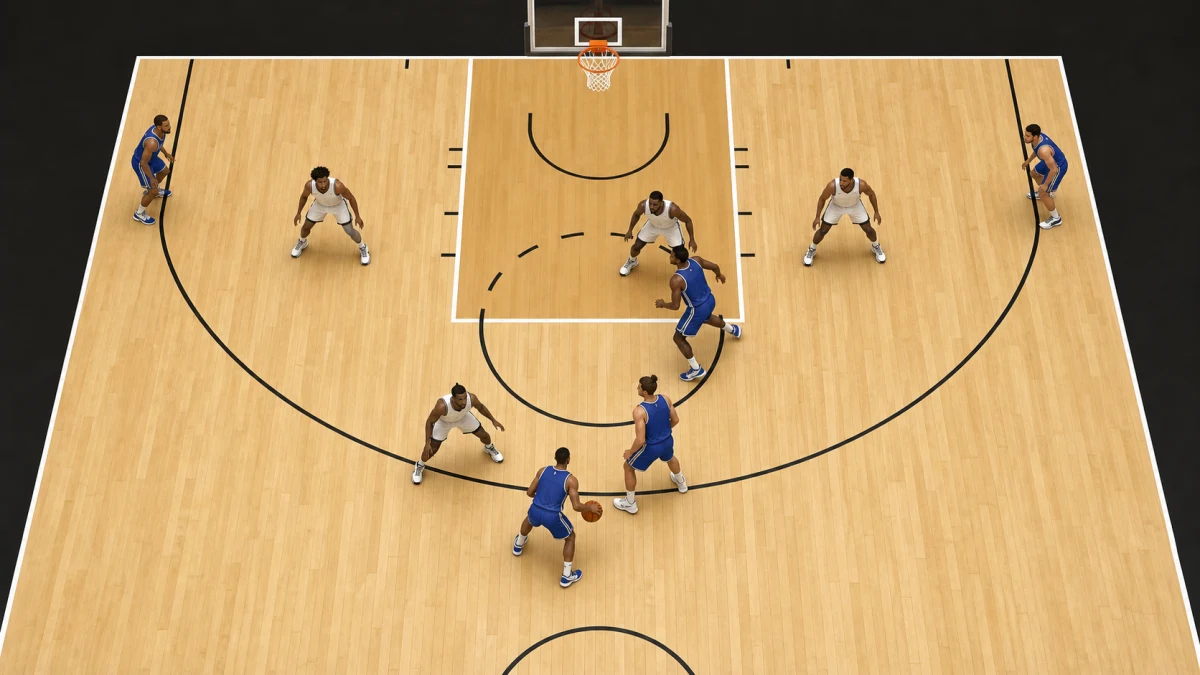
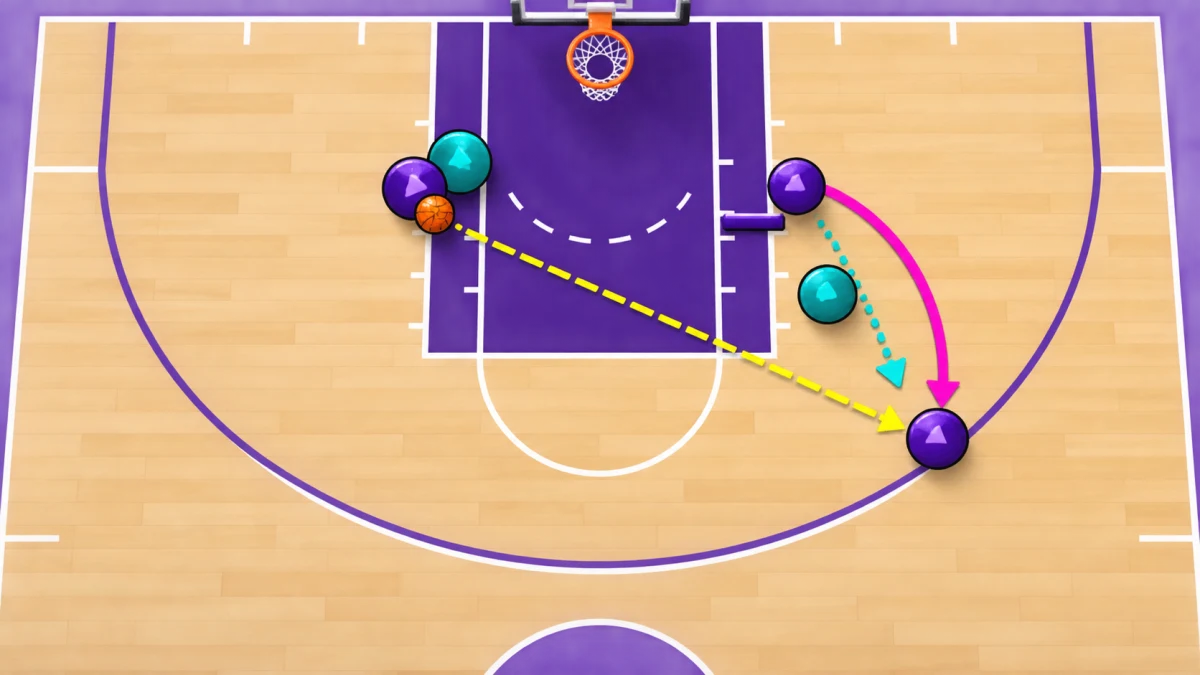
A post split begins after the ball enters the post and two perimeter teammates create an off-ball screening action near that side of the floor. One player usually screens for the other, but the value of the action comes from the reads around it. The cutter can use the screen, curl toward the lane, flare into space, or reject the screen. The screener can open to the ball, slip, or become the next receiver. The post player protects the ball and reads the cutter, screener, and help defense. FIBA WABC Coaching Manual Level 2 FIBA WABC Coaching Manual Level 3 off-ball screening fundamentals
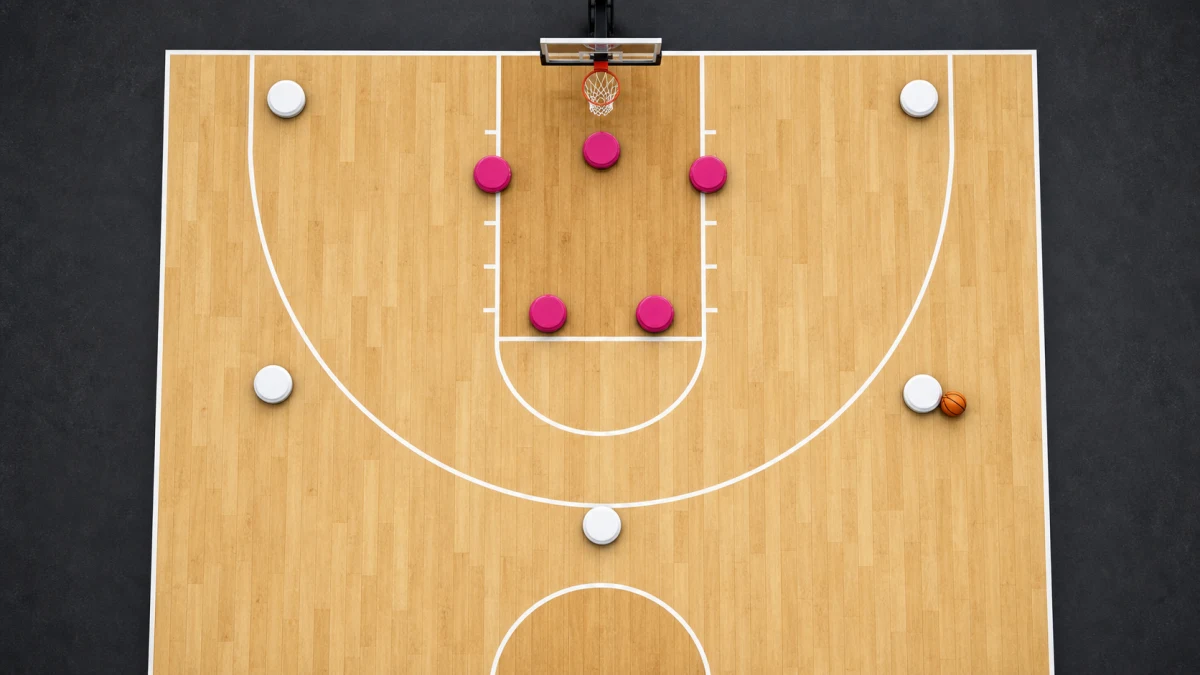
The action should not collapse into three players standing beside the post. The entry passer and the second perimeter player need enough separation to create a real screening angle, while the post player needs a clean view of the lane. A useful setup can come from the wing and slot, the corner and wing, or another alignment in the team's offense. The names can change; the spacing problem does not. If defenders can guard the post and both cutters from one compact area, the split has lost its purpose. basketball spacing principles
Build the entry and spacing first
Teach the entry before teaching the split. The post receiver should present a target, catch with balance, and keep the ball protected. The passer should deliver to the available hand or shoulder rather than pulling the post player toward a defender. Once the catch is secure, the perimeter players move into their split spacing without drifting into the post's operating space. Freeze early repetitions and check whether the post player can see both teammates without turning completely away from the basket.
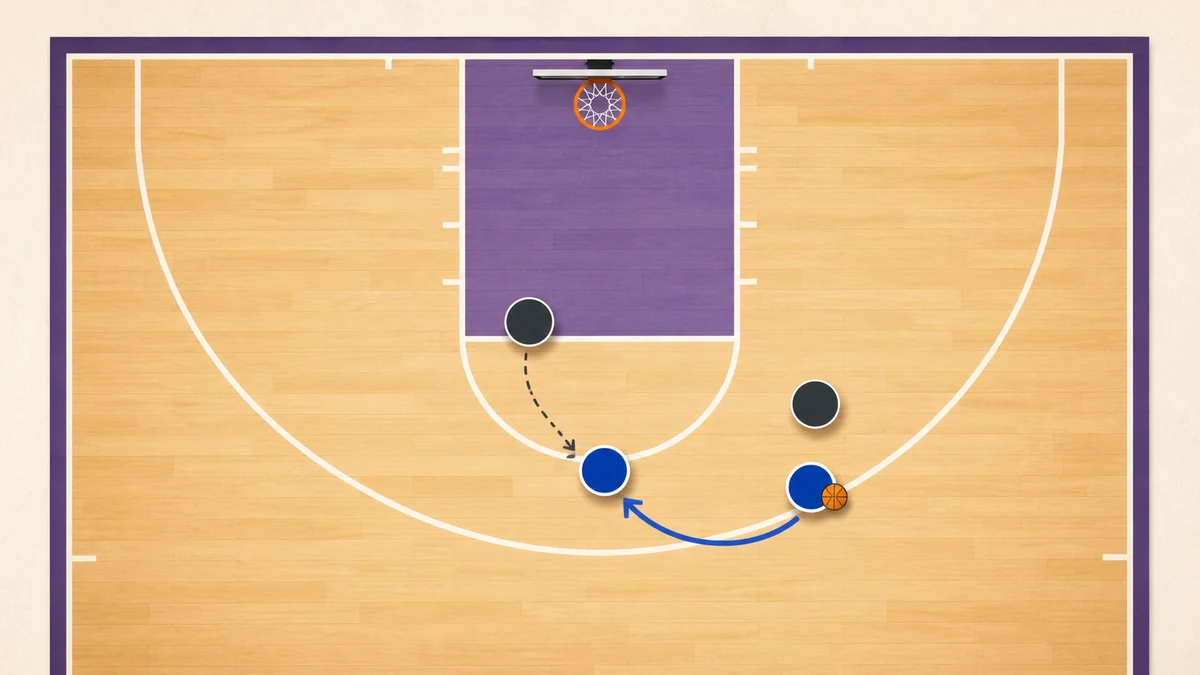
The screen should form at a distance that produces a useful cut but does not invite an offensive foul or traffic jam. The screener arrives under control, establishes position, and gives the cutter time to set up the defender. The cutter first creates separation, then changes pace across the screen. FIBA WABC materials repeatedly connect screening to timing and defender reads. Treat the screen as a shared action: an early cutter makes the screen ineffective, while a late screener leaves the cutter exposed.
Read the defender: straight, curl, flare, or reject
- Straight cut: use the screening lane when the defender trails and the path stays open.
- Curl: turn tightly toward the lane when the defender follows high and the interior window is available.
- Flare: move away from the screen when the defender goes under or protects the inside route.
- Reject or back cut: leave before using the screen when the defender overplays the expected route and the direct lane is clear.
These are starting reads, not automatic promises. Help defense, post position, and team spacing can close a route that looks open against the cutter's defender alone. Ask the cutter to see the defender before crossing the screen and the post player to see the whole action. The screener also reads the play. If both defenders chase the cutter, the screener may open into space. If a defender jumps the screening angle early, the screener may slip before contact if that option belongs in the team's rules.
What does the post passer read?
The post player should not release the ball simply because a cutter appears. First check the cutter's defender, then the nearest help defender, then the passing angle. The FIBA WABC Level 3 manual uses a pocket pass to a cutter and emphasizes placing the ball away from the defender. That cue is more useful than forcing one pass type. A bounce pass, push pass, short hook pass, or pass back outside can all be correct when the window and pressure change.
Patience matters, but holding the ball too long lets the defense recover. The post player can use a pivot or ball fake to improve the window while keeping the split in view. If the cutter is covered, the screener may become the safer option. If both perimeter options are removed, the post player can attack the matchup or reverse the ball according to the offense. A good repetition preserves all three threats instead of demanding a pass into a closed lane.
A four-stage post-split progression
- Three-player timing: enter the post, establish split spacing, set the screen, and complete one named cut with no defense.
- Guided 2v2 screening: remove the post passer and let a defender show one coverage so the cutter chooses straight, curl, flare, or reject.
- Live 3v3 post split: add the post passer and defenders, then score the offense for the correct read and a catchable pass rather than only a made shot.
- Constraint game: require a post touch or an off-ball screen before a score can count, then remove the rule and see whether players still recognize the action.
Small-sided progression keeps the relevant decisions visible. The WABC Level 2 manual recommends 2v2 and 3v3 breakdown work and describes constraints that can increase screening and movement. Avoid adding five defenders before the three offensive players can coordinate the entry, screen, and first read. When the action breaks down, identify whether the cause was spacing, screen timing, route selection, pass placement, or help-defense recognition, then repair that layer. build a basketball practice plan
Common post-split breakdowns
- Crowded post: move the split farther from the catch and restore a passing lane.
- Screen before the cutter is ready: reset the spacing and require eye contact or a timing cue before the approach.
- Cutter runs the same route: give the defender two coverages and score the cutter's read, not the called pattern.
- Post passer forces the first window: require a second option or a safe reset when the cutter is covered.
- Screener watches the pass: teach the screener to open, slip, or relocate after helping the cutter.
Keep feedback tied to something players can see. Instead of saying the action was slow, identify whether the cutter changed pace too early, the screen arrived late, or the post player missed the first open window. Instead of demanding the curl every time, show which defender position created it. Post split becomes reliable when three players share the same timing and can explain why the route changed. basketball workouts
Frequently asked questions
Who sets the screen in a post split?
The entry passer often screens for the nearby perimeter teammate, but teams can reverse the roles based on alignment and matchup. The important points are that both players recognize the same action, the screener arrives balanced, and the cutter has enough space to read the defender.
What should the cutter read first?
Read the on-ball side of the cutter's defender and the path around the screen. A trailing defender can open a straight or curl route; a defender protecting the inside can create a flare; an early overplay can expose a rejection or back cut. The cutter must also respect help defense near the post.
How do you keep post split from crowding the paint?
Start the perimeter players far enough from the post catch to create a real screen and cutting lane. Use a freeze check after the entry: the post player should see the split, the cutter should have more than one route, and the screener should not stand in the post player's attack space.
When should post split become live?
Move to guided defense when the players can complete the entry, establish the screen, and preserve spacing without repeated stops. Add one coverage first, then a second. Progress to live 3v3 when the cutter and post passer can identify why the route or pass changed.