
The short version: Off-ball screening works when the screener arrives early and becomes stationary, the cutter waits and then changes pace, and the passer reads the window created by the defense. The cut is a response—not a memorized route.
Key takeaways
- Pin-down, back, flare, and cross screens describe different angles and destinations.
- The cutter should wait for the screen to be set, then pass close enough to make the defender choose a route.
- Trail, under, overplay, and switch coverages create different receiving windows.
- The passer must see the cutter and the help defender, not throw to a spot on autopilot.
- A useful screen still has to be legal: stationary at contact, two feet down, and enough time and distance.
What is an off-ball screen?
An off-ball screen delays or redirects the defender of a player who does not have the ball. FIBA's rulebook describes screening as an attempt to stop an opponent without the ball from reaching a desired position. That definition is more useful than thinking only about contact. The real objective is to change a defender's path for a moment, so a cutter can reach a passing window before the defense recovers. FIBA Official Basketball Rules 2024 basketball offensive spacing
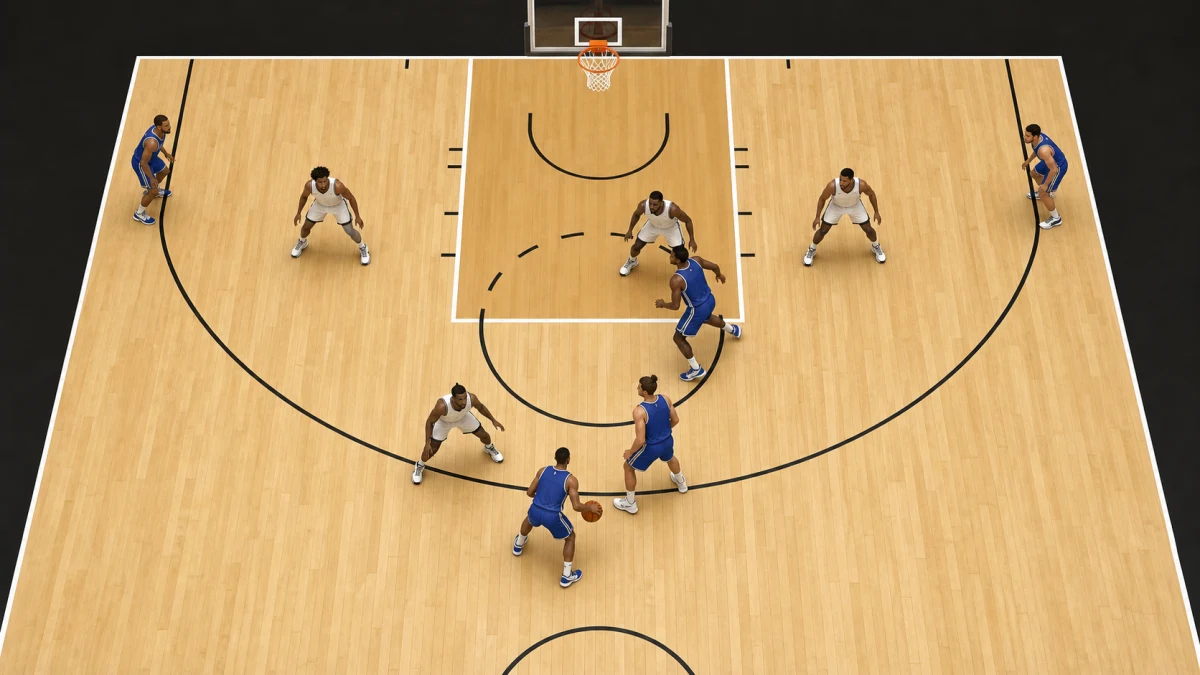
Four jobs have to connect. The screener creates the angle and becomes stationary. The cutter waits, changes pace, and travels close to the screener. The passer holds a useful passing angle and reads help. The two defenders decide whether to trail, go under, switch, or disrupt the route. If one offensive player leaves early or drifts away from the screen, the action can lose its advantage before the pass is even available. WABC Coaches Manual Level 3
The four screen shapes to recognize
| Action | Basic geometry | First window |
|---|---|---|
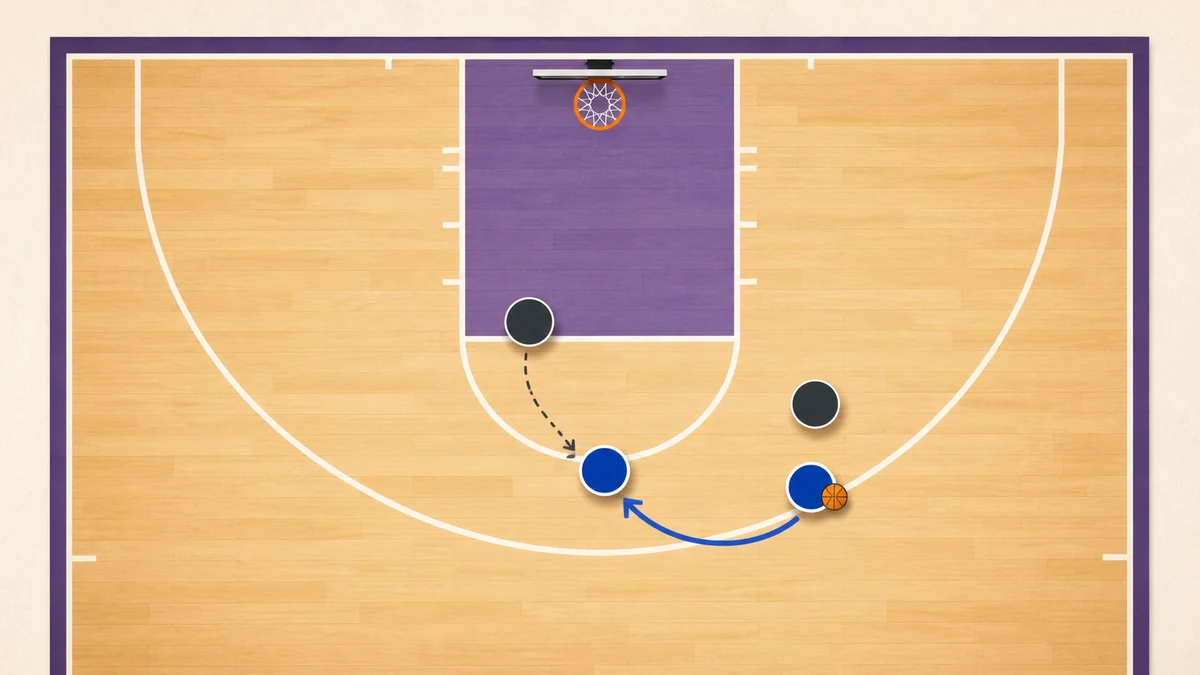
| Pin-down | A screener near the lane screens down toward a cutter starting near the baseline or corner. | Cutter rises toward the wing or curls into the lane. |
| Back screen | A screener positions behind or to the side of an overplaying defender. | Cutter attacks the basket behind the defense. |
| Flare screen | The screen sends the cutter away from the ball toward the wing or corner. | Pass travels over or around the top defender. |
| Cross screen | A cutter moves laterally across the lane off a screen. | Catch arrives on the opposite block or short corner. |
| Screen-the-screener | The first screener immediately receives a second screen from a teammate. | The passer reads two consecutive options. |
WABC Coaching Manual Level 2 Jr. NBA All-Star Practice Plans — Using a Screen Shooting Game
Names are shorthand, not guarantees. A pin-down may produce a straight catch, a curl, a fade, or a back cut depending on the defender. A back screen may never create a layup if help is already waiting. Screen-the-screener is valuable because the first screener's defender often turns attention toward the initial cut; the second screen asks that defender to solve another problem immediately.
How should the cutter read the defender?
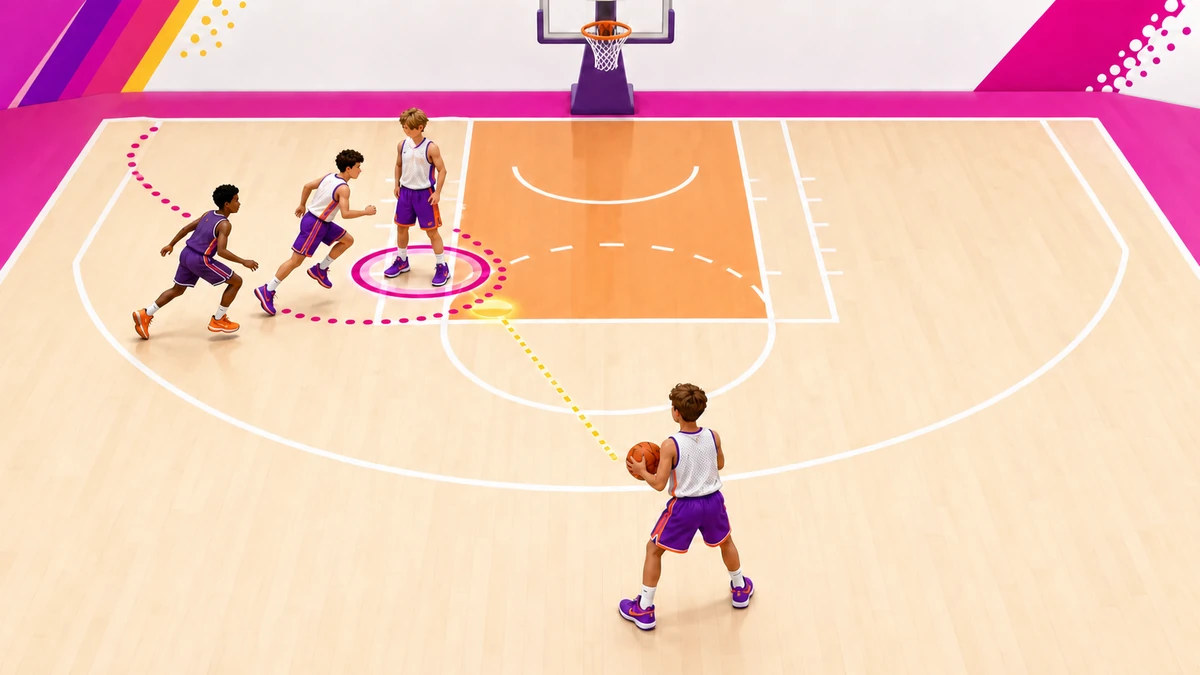
Start by locating the cutter's defender before the cut. If the defender trails around a pin-down, both the WABC manual and Jr. NBA use a curl: the cutter keeps the defender behind and turns toward the key or elbow. If the defender goes under, Jr. NBA gives the cutter a step-back into open space. If the defender jumps over the top, the available answer can be a fade to the corner or a cut behind the screen toward the hoop.
A top-lock is an aggressive denial position above the cutter's intended route. Treat it as information, not a command to wrestle through the same path. WABC notes that back screens can punish defenders who deny passes; a back cut or changed screening angle may expose the space the defender abandoned. The correct read still depends on help at the rim, the passer's angle, and the team's spacing. This is why the cutter should see the floor before accelerating. help defense and rotations
- Trail: curl tightly enough to keep the defender on the cutter's back shoulder.
- Under: stop or step back into the space the defender conceded.
- Overplay: fade away from the screen or cut behind it if the lane is available.
- Top-lock or denial: look behind the defender and check the rim help before using a back cut.
- Switch: avoid crowding the new defender; preserve spacing and let the passer see the matchup.
What do the screener and passer control?
The screener should arrive before the cutter and set an angle relative to the defender—not simply occupy a favorite floor mark. WABC's back-screen teaching point is clear: the cutter does not move until the screen is set. That pause lets the screener establish two feet, lets the cutter disguise the departure, and gives the passer time to see how the defense is positioned.
The passer's target changes with the read. A straight cut asks for a perimeter lead pass. A curl asks for the ball in front of the cutter before help closes the lane. A fade needs enough height and width to clear the defender. A back cut needs an unobstructed lane and a receiver looking for the ball. The passer should delay or decline the throw when the help defender owns the window; an action can be executed correctly without producing an immediate pass.
Re-screening is the adjustment when the first angle does not create separation. The WABC turn-out sequence lets the screener pivot into a second legal position after the defender overplays the first screen. The players must reset the timing: the screener establishes the new spot, the cutter changes direction, and only then does the passer attack the new window.
What are common defensive answers?
Off-ball defense is a two-player coverage. WABC illustrates trail, through, and under techniques. In a trail, the cutter's defender follows while the screener's defender can show into the curl path. In a through coverage, the screener's defender creates a gap for the teammate to pass between defender and ball. In an under coverage, the cutter's defender takes an inside route. Each choice gives something up, which is why the offense reads both defenders rather than only the closest one. basketball screen coverages
A switch exchanges assignments and can erase the first window, but it may also leave a different size or speed matchup. WABC shows switching across consecutive off-ball screens, which makes communication and early positioning essential. Offensively, the response is not always an instant isolation. Clear the traffic first, locate the new help positions, and keep the next pass connected to the team's spacing.
What makes an off-ball screen legal?
Under FIBA rules, a legal screen requires the screener to be stationary inside the cylinder with both feet on the floor when contact occurs. An illegal screen includes moving into the defender at contact. So does setting a blind screen without enough space or failing to respect time and distance against a moving opponent. A clean screen creates a decision with position and timing; it is not a hit delivered to the defender.
- Blind side of a stationary defender: allow one normal step before contact.
- Moving defender: leave enough room to stop or change direction—between one and two normal steps under FIBA rules.
- At contact: be stationary, inside the cylinder, with both feet on the court.
- After the first action: establish a new legal position before a re-screen; do not slide into the defender.
Turn the read into practice
Frequently asked questions
What is the difference between a pin-down and a flare screen?
A pin-down usually sends a baseline or corner cutter up toward the wing or into a curl. A flare screen sends the cutter away from the ball toward the wing or corner. Jr. NBA uses both as variations in the same screen-reading game, so the important distinction is the angle and destination, not the label alone.
Should a cutter always curl when a defender trails?
A curl is an established read against a trailing defender, but it is not automatic. The cutter still checks the screener's defender and rim help. If that help owns the lane, the passer may hold the ball and the offense can flow into a re-screen, post touch, or spacing action instead.
When should the cutter leave?
After the screener is set. The WABC Level 3 manual specifically teaches the cutter to wait for the back screen and listen for the screener's feet to land. Leaving early weakens the angle and can pull a moving screener into illegal contact.
What is screen-the-screener?
It is a chained action: one player sets a screen and is immediately screened by another teammate. WABC's motion example gives the passer two consecutive options. Defenders must communicate through both actions, and the offense must preserve enough space for both cuts to remain visible.