
The short version: A 2-3 zone places two defenders across the top and three across the back line. Each player protects a connected area and shifts with the ball. The shape can crowd the paint and change an opponent's rhythm, but it is not passive: the five defenders must pressure the ball, protect the high post and short corner, communicate cutters, and finish every possession with a box-out. Offenses attack it by occupying the gaps and moving the ball faster than the defense can recover.
Key takeaways
- The alignment is simple; the rotations and communication make it effective.
- The most sensitive spaces are the high post, short corner, wing-baseline seam, and offensive glass.
- Offenses should create two defenders guarding three threats through gap occupation, overloads, and quick reversals.
- Young players still need man-to-man habits; a zone should not replace learning containment, help, and recovery.
What is a 2-3 zone defense?
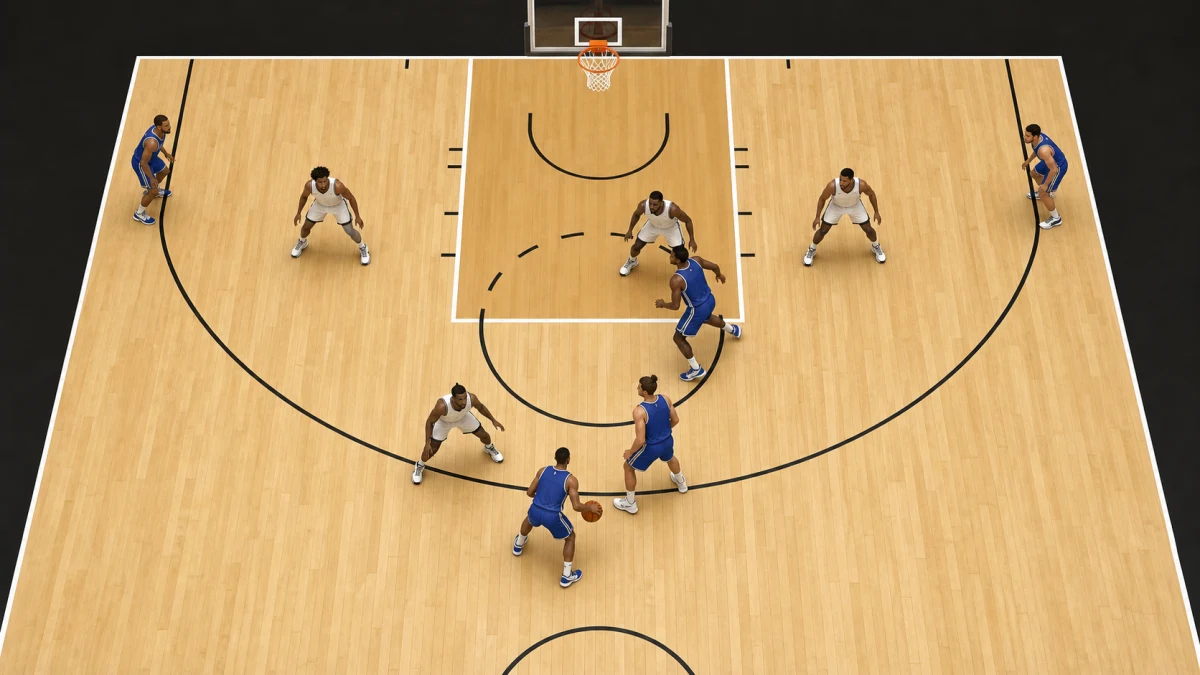
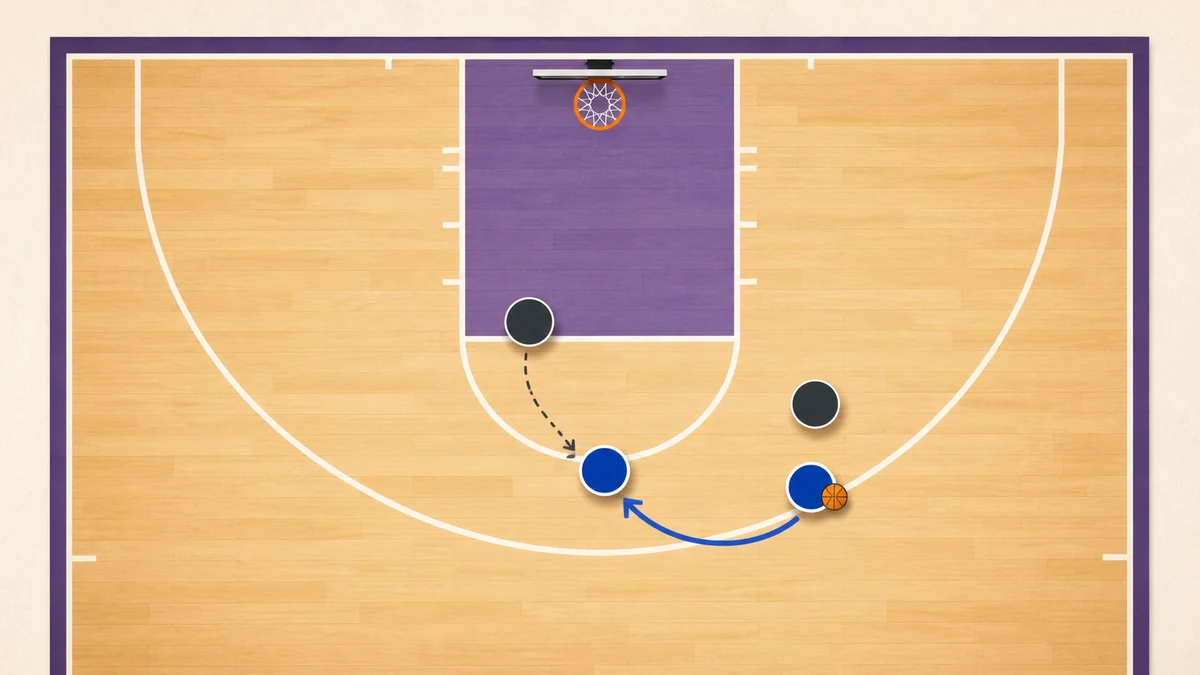
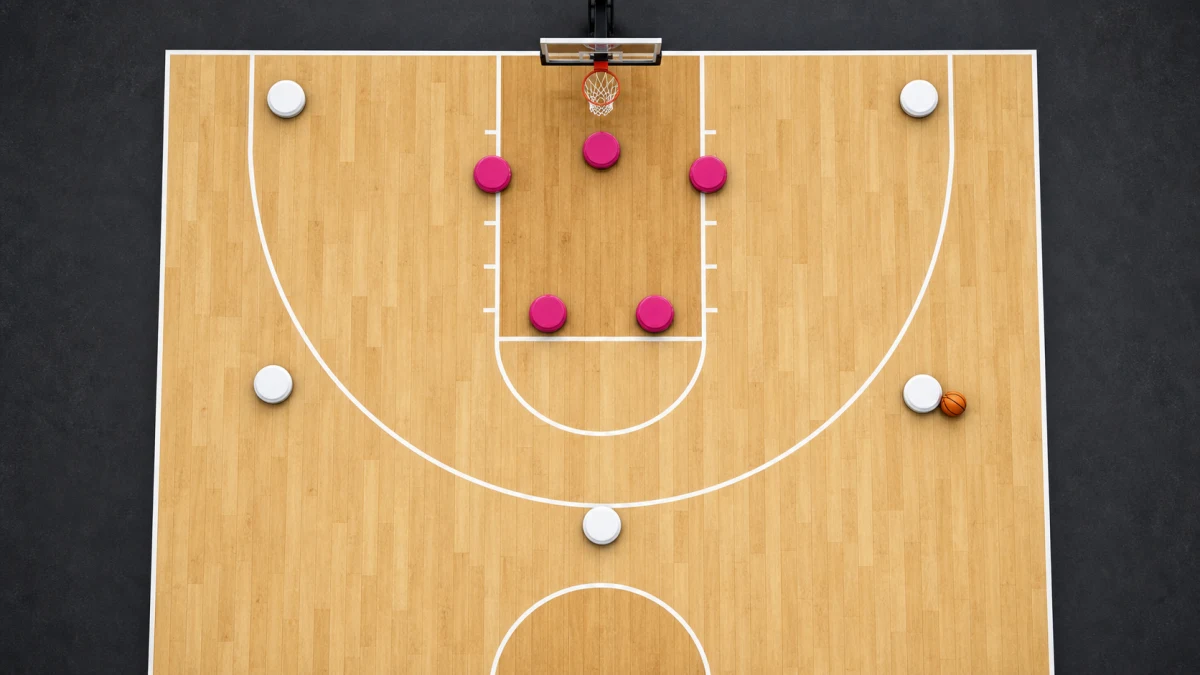
In the starting shape, two guards form the top line. Two forwards protect the wings, corners, and low blocks, while the middle defender anchors the lane. The labels describe starting responsibilities, not fixed squares. When the ball moves, the zone bends: a top defender may take the wing, a forward may close the corner, and the middle defender may step toward a high-post catch.
Zone defense is therefore a set of shared rules, not five players standing in assigned spots. Each defender must know who pressures the ball, who protects the rim, who takes the next pass, and who covers behind the rotation. The World Association of Basketball Coaches describes zone systems through the same connected principles: influence the ball, deny penetrating passes, keep active hands, and prevent strong-side cutters from getting in front. See the FIBA/WABC advanced coaching manual.
Swipe sideways to explore the full diagram.
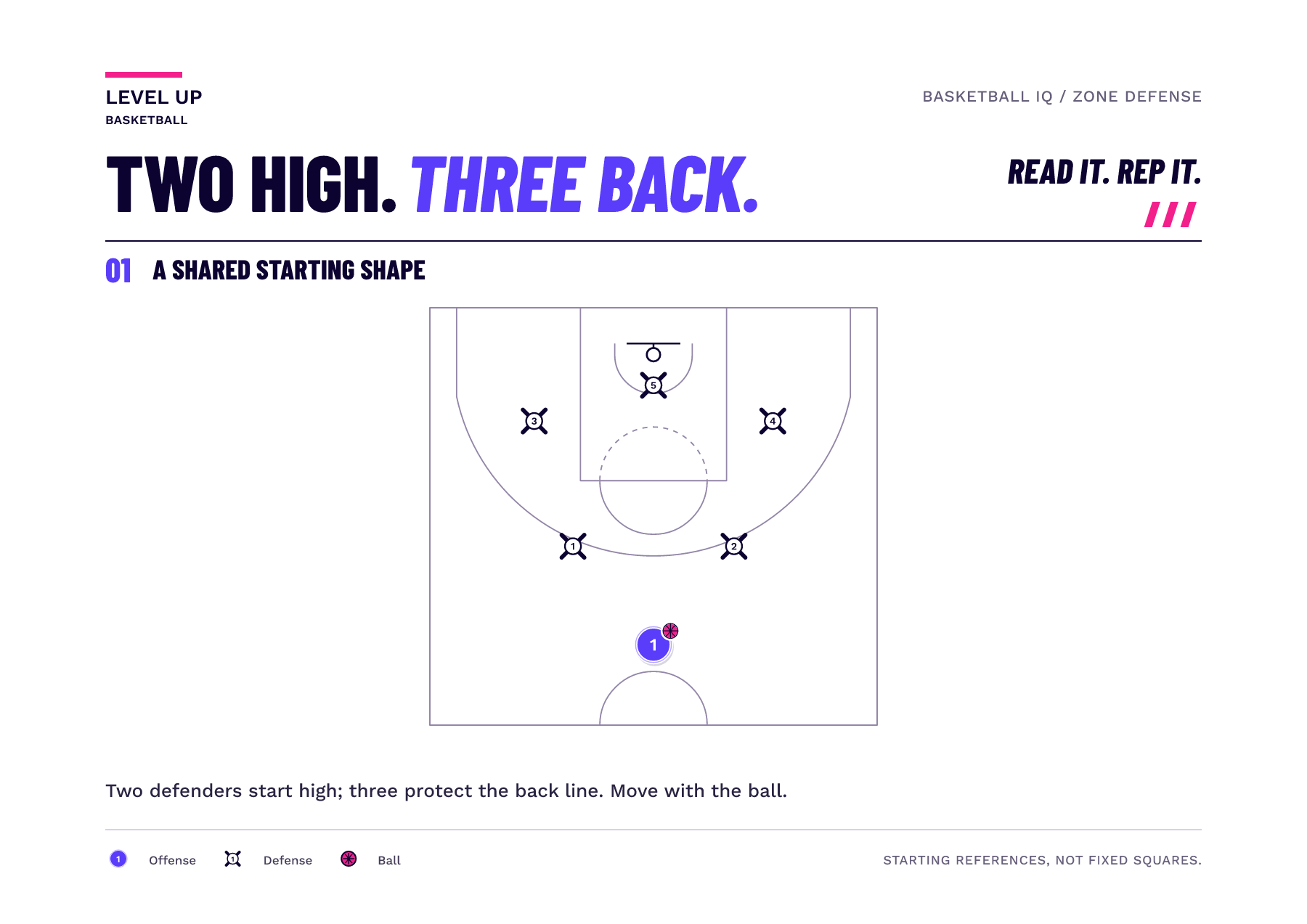
What each defender is responsible for
| Position | Primary spaces | First responsibility | Common mistake |
|---|---|---|---|
| Top defenders | Top, slots, and first wing pass | Contain the ball and discourage direct high-post entry | Both chase the same pass and expose the middle |
| Wing defenders | Wing, corner, short corner, low block | Close the corner under control and recover inside | Standing halfway between two threats without taking either |
| Middle defender | Paint, rim, low post, cutter traffic | Protect the basket and direct the back line | Following the ball so far that the weak-side rim is open |
Teams can change these rules. Some keep the top guard on the wing; others send the forward. Some front the high post; others allow the catch and collapse. The important part is that all five players use the same coverage.
Why coaches choose a 2-3 zone
A 2-3 can reduce straight-line drives by placing multiple defenders between the ball and the rim. It can make a team that prefers isolation solve passing and spacing problems instead. It also changes the rhythm of a game when an opponent has prepared mainly for man-to-man coverage.
That does not mean a zone automatically requires less effort or protects every player. A 2025 study comparing defensive styles and court sizes in basketball small-sided games found that changing the defensive style altered physical and technical demands. That is a reminder to plan the task rather than assume “zone” means rest. Review the small-sided-game defensive-style study.
The four spaces an offense should test
- High post. A catch near the free-throw line turns the player toward both corners, the rim, and the weak side. The top and back lines must decide who steps up.
- Short corner. A baseline receiver outside the lane can occupy the wing defender while pulling the middle defender away from the rim.
- Wing-baseline seam. When the ball moves from wing to corner, the handoff between top and wing defenders creates a timing window.
- Weak-side glass. Zone defenders see the ball but do not begin attached to one matchup. The offense can exploit that uncertainty on rebounds.
How to attack the zone without depending on hot shooting
Good shooting punishes late closeouts, but the offense should not become five players waiting around the arc. The first goal is to make two defenders account for three connected threats.
- Occupy the high post and short corner together. One interior catch should have an immediate rim, baseline, and opposite-side option.
- Overload one side. Place a ball handler, wing, corner, and interior receiver where three zone defenders must communicate four threats.
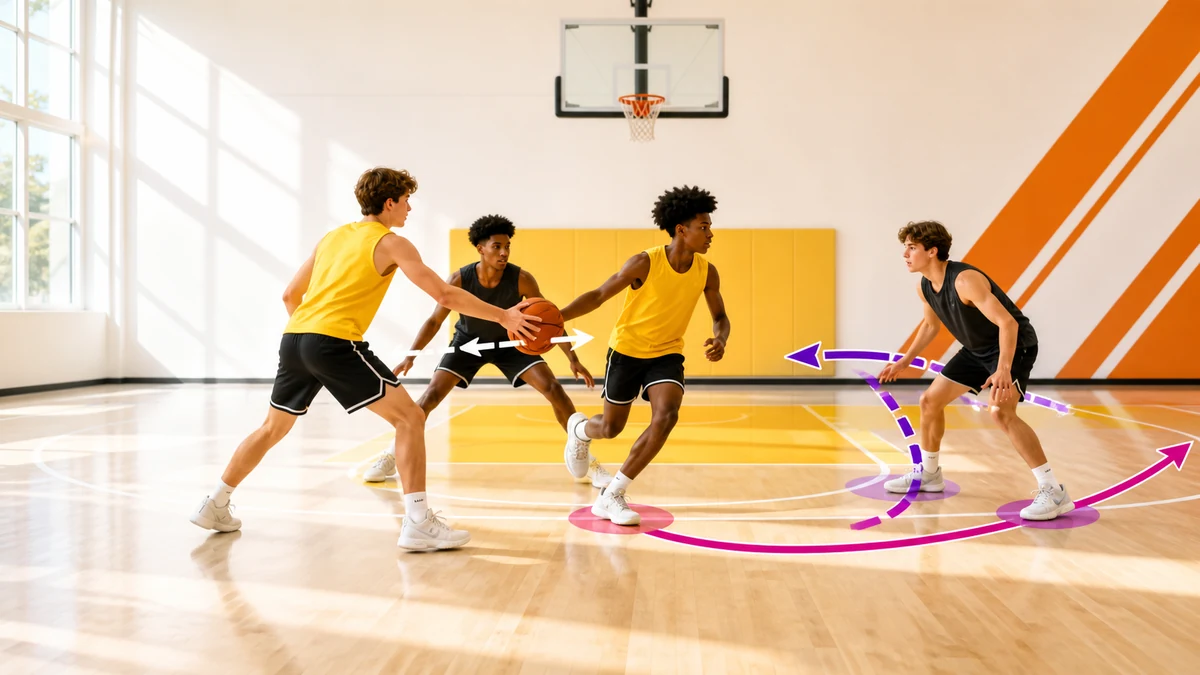
- Reverse through the top. A controlled reversal can move the top line and force the weak-side forward to travel farther on the next closeout.
- Use pass fakes before skip passes. Move the eyes and hands of the zone, then pass through the window that opens.
- Cut behind a defender's head. Once a zone defender turns completely toward the ball, the weak-side cutter can enter the space they no longer see.
A three-step practice progression
- Shell without shots: move the ball around the perimeter and freeze after each pass. Check pressure, high-post protection, weak-side rim help, and communication.
- Four-on-five advantage drill: give the offense four perimeter passers plus one high-post or short-corner receiver. Limit dribbles so the defense must rotate and the offense must solve spacing.
- Five-on-five with scoring rules: award the offense for paint touches and offensive rebounds; award the defense for three stops that end with a controlled rebound.
Film the shell from above or from the baseline. Pause when two defenders guard the same player or when no defender can name the weak-side rim threat. Those moments reveal the rotation problem faster than the final shot does.
When a 2-3 zone is the wrong answer
If players cannot contain the ball, communicate a cutter, or box out, changing the alignment will not solve the underlying defensive habits. At younger ages, exclusive zone play can also reduce opportunities to learn on-ball containment and help-and-recover responsibilities. Use the zone as one coverage inside a broader defensive education, not as a way to avoid teaching individual defense.
Next, study how the pick-and-roll creates a two-player advantage, or use the basketball defense drills guide to train containment and recovery.
Frequently asked questions
Is a 2-3 zone good for youth basketball?
It can teach positioning and communication, but it should not replace individual defensive development. Young players still need repeated practice containing the ball, helping, recovering, closing out, and matching up in transition so the zone does not hide missing fundamentals.
What's the difference between a 2-3 and a 3-2 zone?
A 2-3 begins with two defenders high and three along the back line. A 3-2 begins with three higher defenders and two nearer the baseline. The real coverage depends on each team's rotation rules, responsibilities, and adjustments, not only the starting diagram.
What's the best way to beat a zone if you can't shoot?
Put the ball in the high post, occupy the short corner, cut behind defenders, and attack the offensive glass. The offense still needs purposeful spacing and quick decisions, but it does not need to rely only on three-pointers to create an advantage.