
The short version: A pick-and-roll, or on-ball screen, begins when a teammate screens the defender guarding the ball and then moves into open space. The action is effective because the ball handler, screener, and three off-ball players can create more threats than two defenders can cover without help. The screen itself is only the start; timing, spacing, and the read against the defense determine the result.
Key takeaways
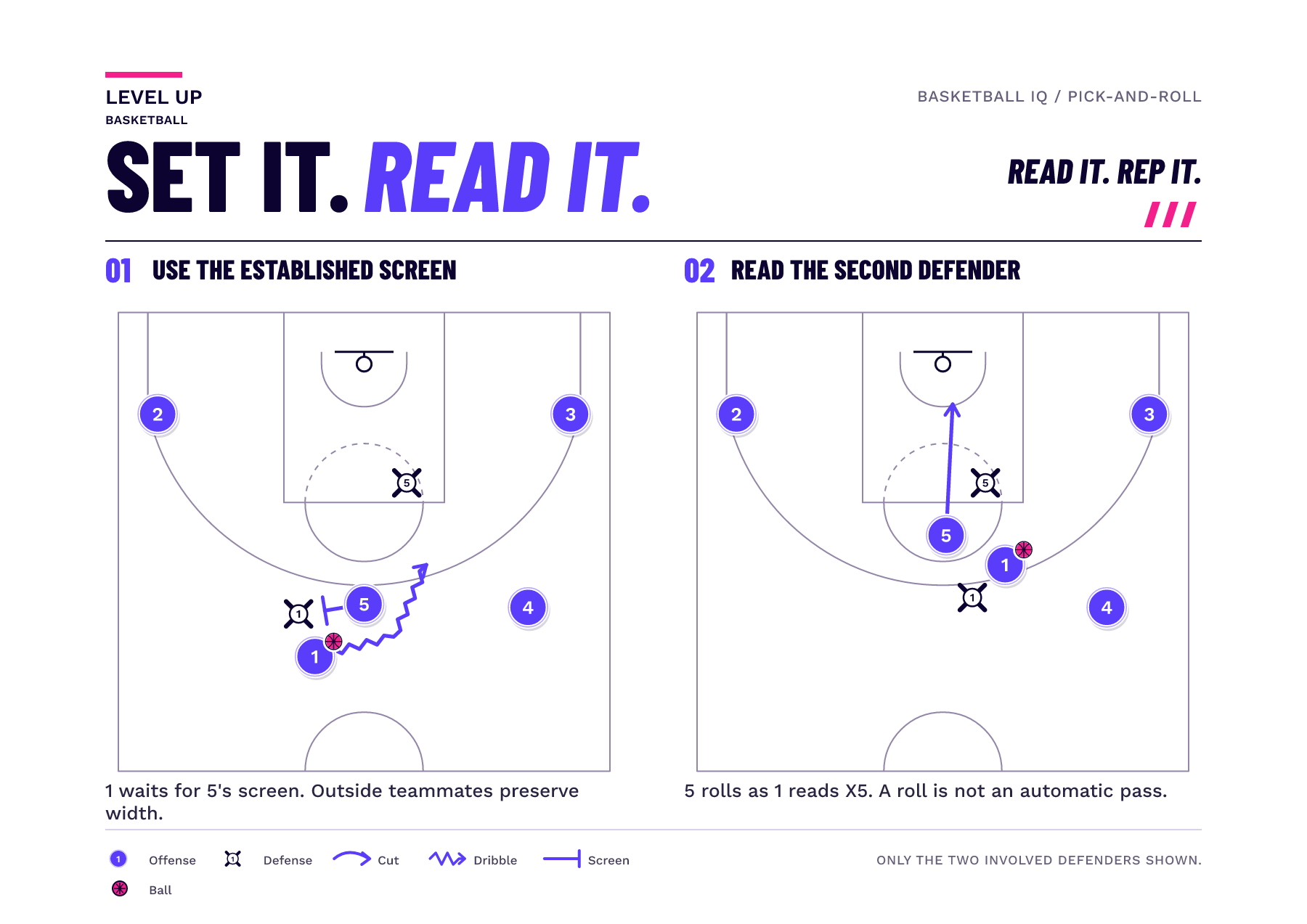
- The ball handler must wait for the screen, attack shoulder-to-hip, and see the second defender.
- The screener must arrive legally, create a useful angle, and roll, short-roll, slip, or pop based on the coverage.
- Off-ball spacing creates the passing windows; poor spacing can neutralize a good screen.
- Drop, switch, show, and blitz coverages each concede different space. The offense reads; it does not run one automatic answer.
What counts as a pick-and-roll?
The FIBA/WABC coaches manual defines the action as a screen for a teammate with the ball followed by movement toward the basket; it also calls it an on-ball screen. In live basketball, the second movement can be a hard roll, a short roll into the lane, a slip before contact, or a pop to the perimeter. Read the FIBA/WABC coaches manual.
A legal screen requires the screener to establish position without moving into contact illegally. The exact rule application depends on the governing rulebook and the defender's movement, so players should learn it from their league and coach rather than assuming every collision is acceptable.
The four phases of the action
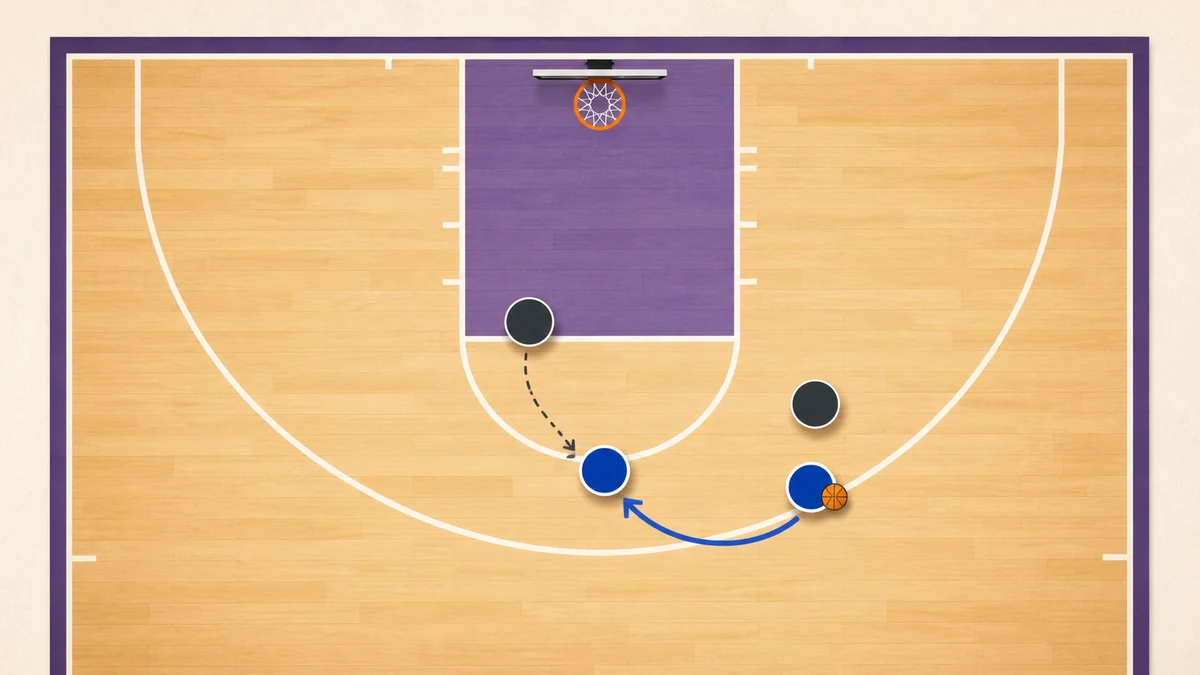
- Set up: the ball handler creates an angle and the screener arrives under control.
- Contact or slip: the ball handler waits long enough to use the screen while the screener reads whether contact is useful.
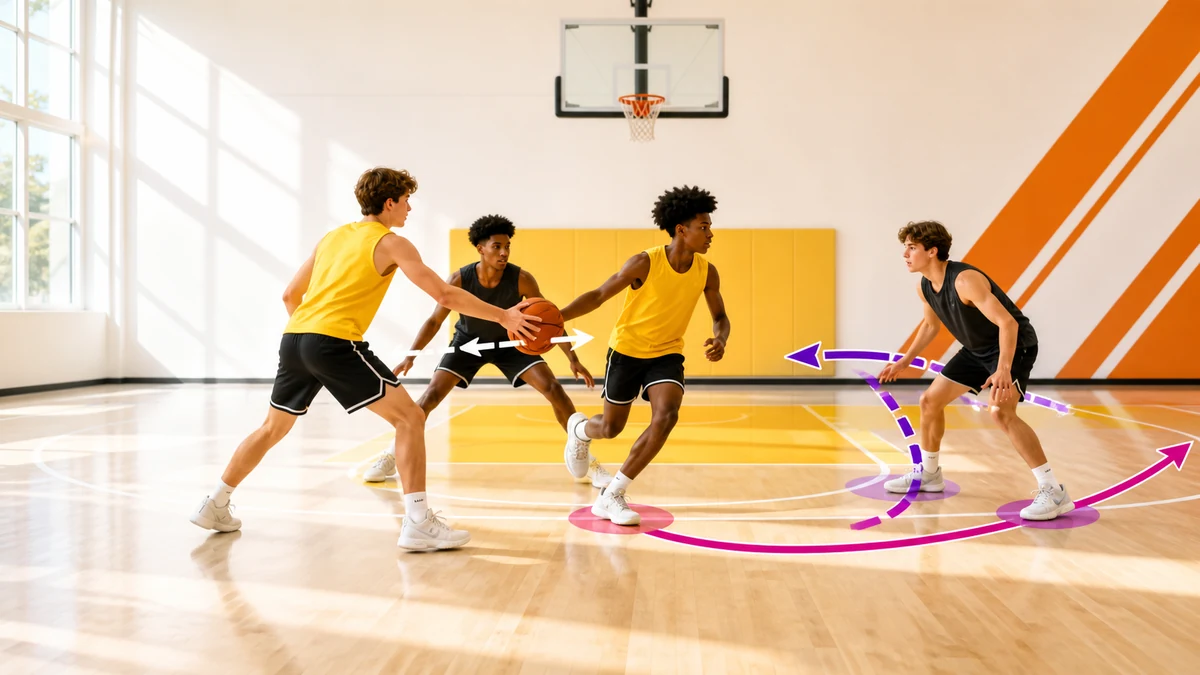
- Separation: the ball handler turns the corner or rejects; the screener rolls, slips, short-rolls, or pops.
- Advantage decision: the offense shoots, passes, drives, or moves the ball to the next advantage.
Many failed pick-and-rolls break in Phase 1. If the ball handler leaves early, the defender slides through. If the screener approaches at a poor angle, the screen directs the ball away from useful space. If the three teammates stand too close to the action, help defenders can guard two people at once.
Swipe sideways to explore the full diagram.
Ball-handler responsibilities
- Set up the defender. A change of pace or direction makes the screen harder to avoid.
- Use the screener tightly. Passing near the screener's shoulder reduces the gap available to the on-ball defender.
- Keep the dribble alive. Picking up the ball too early removes the ability to move the second defender.
- See the low defender. The roller may appear open until the weak-side help steps into the lane.
- Reject when appropriate. If the on-ball defender jumps early to the screen side, attacking the open side can be the correct read.
Screener responsibilities
The screener communicates the side, stops in a legal position, and creates an angle that matches the intended attack. After the screen:
- Roll: open toward the ball and run to the rim when the lane is available.
- Short roll: stop in the middle when two defenders commit to the ball and receive with a four-on-three behind the play.
- Slip: leave before contact when the defense anticipates or switches early.
- Pop: move into open perimeter space when the screener is a credible shooter and the coverage protects the paint.
The screener should not choose only by personal preference. Rolling into a teammate's occupied space or popping without shooting range reduces the advantage.
How defenses guard it
| Coverage | Defensive goal | Offensive space to read |
|---|---|---|
| Drop | Keep the screener's defender near the rim | Pull-up, pocket pass, floater, or re-screen depending on depth |
| Switch | Exchange assignments and stay out of rotation | Mismatch, slip, seal, or immediate movement before the switch settles |
| Show or hedge | Delay the ball handler before recovering | Split, retreat, early pass, or short roll |
| Blitz | Send two defenders to the ball | Fast outlet to the screener or nearest release, creating four-on-three |
| Under | Protect the drive by going below the screen | Open shot, re-screen at a new angle, or attack before the defender recovers |
The WABC Level 3 manual notes that successful on-ball-screen defense depends on court vision, decisiveness, timing, efficient movement, and five players working together; the particular tactic is only part of the solution. It also stresses that coverage should reflect location, offensive personnel, and defensive limitations. See the advanced FIBA/WABC coverage guidance.
Why the other three offensive players matter
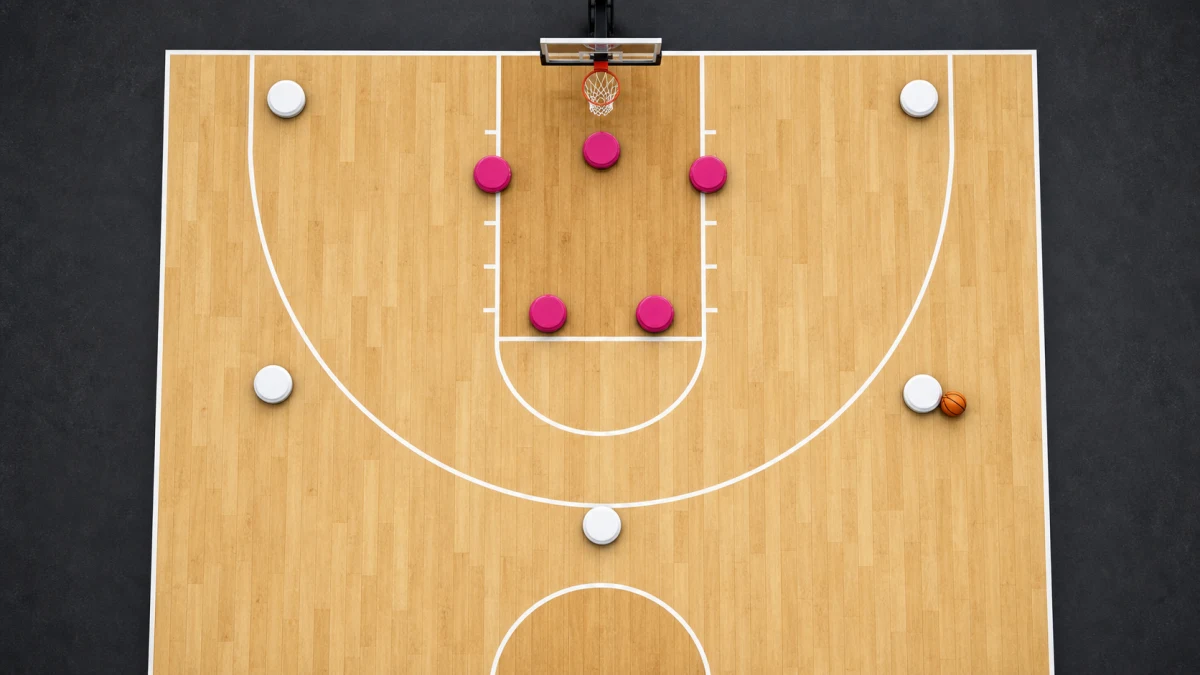
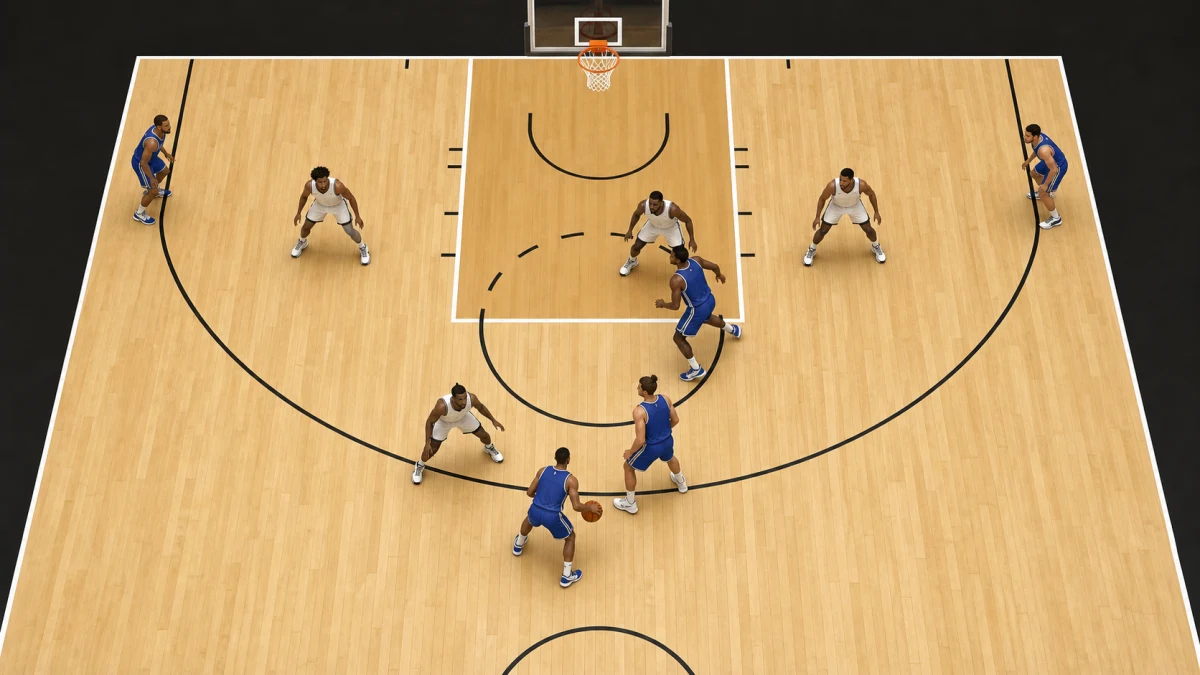
The pick-and-roll is often drawn as two-on-two, but help defenders determine the final read. A corner player who lifts at the right time can open a passing lane. A weak-side cutter can punish a defender staring at the roll. A shooter who stands too close to the ball can let one defender cover both the shooter and the lane.
Use simple spacing rules: keep the lane clear before the roll, maintain passing windows on both sides, and move only when movement creates a new problem for the defense. Random cutting can close the same space the screener is trying to use.
Three drills that teach the read
- Two-on-zero timing: rehearse setup, screen angle, shoulder-to-hip path, and roll timing from both sides. Change the finish each rep.
- Two-on-two guided coverage: defenders announce drop, switch, or blitz before the action. Offense must produce the correct first read, not necessarily a score.
- Three-on-three live: add a weak-side offensive player and defender. Now the ball handler must read the low help, and the off-ball player must hold or relocate.
Score decisions: one point for creating an advantage, one for the correct pass or shot, and one for finishing. This prevents a difficult make from hiding a poor read.
Common execution errors
- The ball handler sprints before the screen is set.
- The screener sets a flat angle that changes no path.
- The ball handler watches only the on-ball defender and misses the low help.
- The roller turns without showing a target hand.
- The weak-side offense drifts into the roll.
- The team keeps running the same answer after the coverage changes.
Compare the reads with how to attack a 2-3 zone, then explore more in Basketball IQ & Film.
Frequently asked questions
What are the first reads in a pick-and-roll?
The ball handler reads the on-ball defender, the screener's defender, and the space created by the screen. The screener reads the coverage and available lane. Both players must also see help defenders, because the best decision may be a pass away from the two-player action.
What is the difference between a roll and a pop?
On a roll, the screener turns toward the basket and attacks the interior space. On a pop, the screener moves into open perimeter space. The coverage, the screener's skills, and the positioning of the other three offensive players influence which option is available.
Why is spacing important in a pick-and-roll?
Spacing gives the ball handler and screener room to read the defense and makes help rotations longer. Teammates who stand too close can bring extra defenders into the action, remove passing windows, and make an otherwise correct read harder to execute.