
The short version: Pick-and-roll defense involves various coverages such as drop, switch, hedge, blitz, and ice. Teams can study these different defensive schemes to understand their basic structures and options.
Key takeaways
- There is no single best pick-and-roll coverage; success depends on matching the defensive scheme to the specific strengths and weaknesses of both your own roster and the opponent's personnel.
- Defending the pick-and-roll 2v2 is the ideal defensive scenario because it allows the remaining three off-ball defenders to stay home, limiting open perimeter shots and easy roll opportunities.
- Drop coverage protects the paint and rim but concedes mid-range pull-up jumpers, making it vulnerable to elite pull-up shooters unless the on-ball defender contests effectively from behind.
- Hedging requires the screener's defender to temporarily step into the dribbler's path to force hesitation, whereas a blitz is a permanent two-man trap designed to force turnovers.
- Ice coverage is a highly effective side pick-and-roll tactic that forces the ball handler away from the middle of the floor and down the sideline or baseline.
The Geometry of the Pick-and-Roll
The pick-and-roll is the cornerstone of modern basketball offense. It is defined as a two-person play where an offensive player sets a screen on the ball handler's defender and then cuts, or rolls, to the basket after the ball handler drives past the screen. Alternatively, offenses frequently run the pick-and-pop, a variation where the offensive screener sets the screen and then pops out to the three-point line instead of rolling to the rim. These two actions force defensive units to make split-second decisions, testing their communication, positioning, and individual techniques. FIBA Europe Basketball Terminology
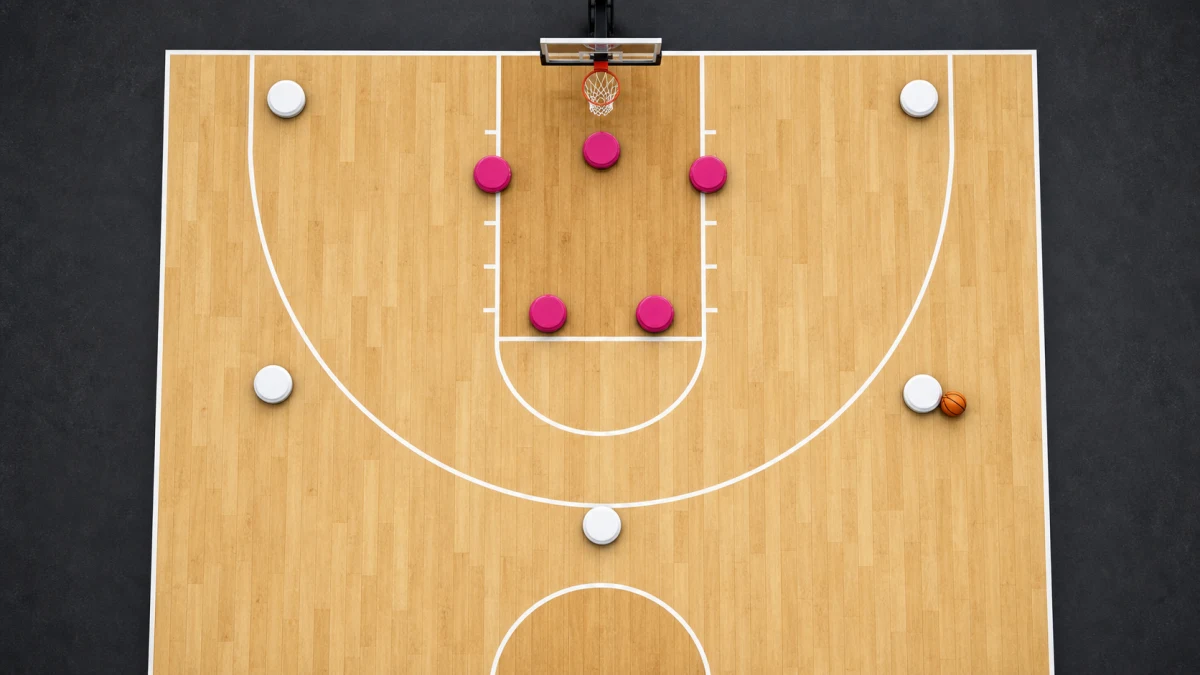
From a defensive standpoint, the ultimate goal is often to handle the action with just the two players directly involved in the screen. Defending a pick-and-roll 2v2 is incredibly valuable because it allows the remaining three off-ball defenders to stay home on their respective offensive players. This limits passing options to both the rolling big men and open perimeter shooters, preventing the offense from generating high-value spot-up three-pointers or uncontested layups. Tactics Board: Three Takeaways from Rytas vs. Tenerife | FIBA Basketball
To achieve this defensive stability, coaches utilize five primary coverages: drop, switch, hedge, blitz, and ice. Each coverage alters the court geometry and shifts the defensive responsibilities of the players involved. Understanding these coverages requires analyzing the precise movements and reads of all four primary players: the offensive ball handler, the offensive screener, the on-ball defender, and the screener's defender. For a deeper look at the offensive side, check out our guide on pick-and-roll fundamentals. pick-and-roll fundamentals
Drop Coverage: Protecting the Paint
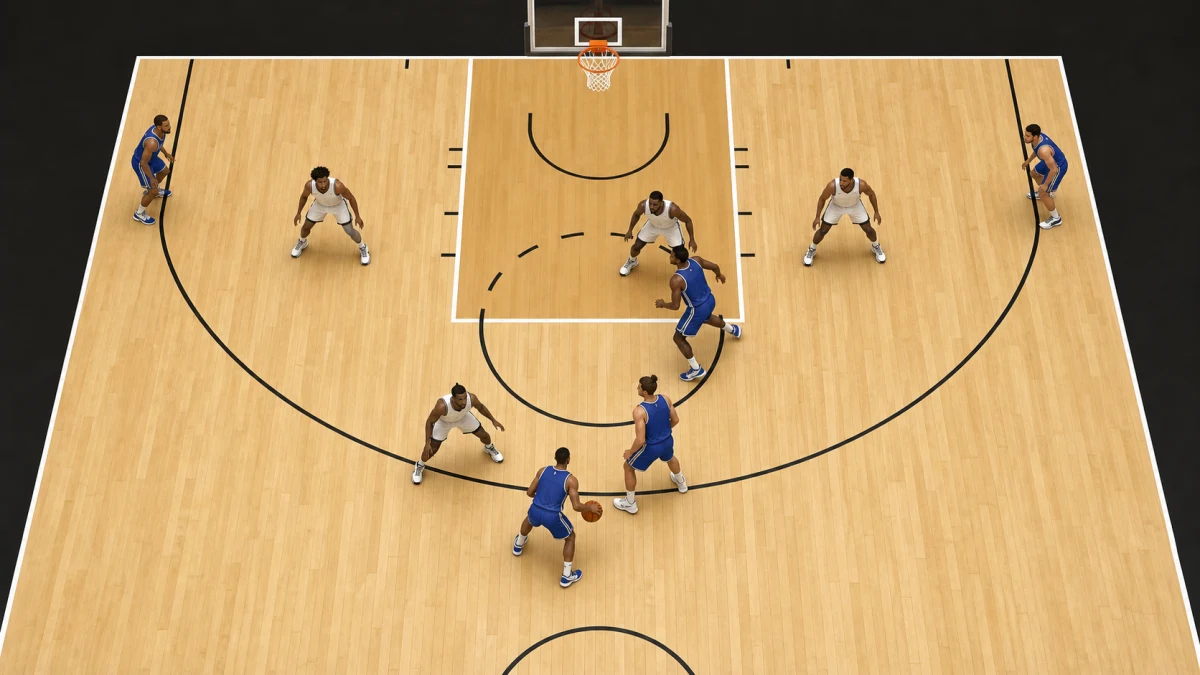
In a Drop and Over pick-and-roll coverage, the defender guarding the screener drops back to protect the basket, while the defender guarding the ball handler fights over the screen to recover.
This coverage involves the dropping defender positioning themselves between the ball handler and the basket, while the on-ball defender recovers from behind. Both the offense and defense adjust their movements based on this positioning.
To counter drop coverage, offenses have developed adjustments. One counter is the Gortat screen, which is an offensive adjustment where a screener sets a second screen on their own defender who is positioned in drop coverage.
Switching: Eliminating Space and Forcing Isolation
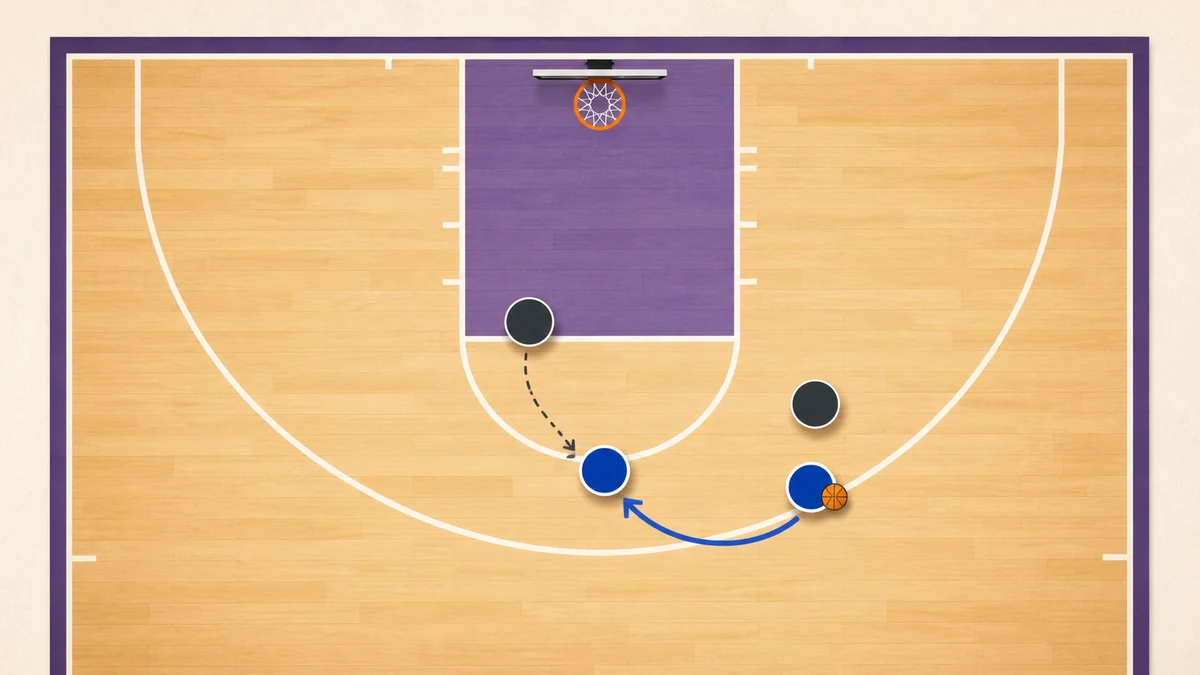
In switching coverage, the on-ball defender and the screener's defender trade offensive assignments instead of fighting over the screen or dropping back. This change in assignments alters the defensive matchups on the floor.
However, switching introduces a major tactical trade-off: mismatch creation. Elite offensive ball handlers excel at identifying slow-footed big men on switches and exploiting them on the perimeter. Conversely, if a smaller guard switches onto a physical post player, the offense will immediately look to feed the ball inside. The offensive screener's read is to 'slip' the screen early or roll aggressively to seal the smaller defender in the paint before help can arrive.
To mitigate these mismatch disadvantages, advanced defensive teams utilize off-ball communication tactics. A prime example is the triple switch. This is a defensive communication tactic executed away from the ball to prevent a mismatch or an open shot in the paint after an initial pick-and-roll switch. As the small defender gets switched onto the rolling big, a third defender rotates from the weak side to take the roller, allowing the small defender to 'scram' out to the perimeter and cover the open shooter. Tactics Board: AEK switch through gears | FIBA Basketball
Hedging: Active Disruption (Hard Hedge vs. Blitz)
Hedging is an aggressive, high-energy coverage designed to disrupt the flow of the offense. In a pick-and-roll, a hedge occurs when the defender of the screener steps directly into the path of the dribbler, forcing the dribbler to hesitate and allowing their original defender time to recover around the screen. This is often initiated from an 'At the level' (or 'Up to touch') position, where the screener's defender starts at the level of the screen and physically touches the screener before stepping out.
It is critical to distinguish a Hard Hedge from a Blitz. A hedge is a temporary 'show and recover' action; the screener's defender lunges out to stop the ball handler's momentum and then quickly sprints back to recover to their original matchup. A Blitz (or Trap), on the other hand, is a permanent two-man trap. In a blitz, both the on-ball defender and the screener's defender aggressively swarm the ball handler, forcing them to retreat, turn the ball over, or make a difficult lofted pass over the defense.
Teams often mix these coverages based on game situations. For instance, the French Women's National Team at the 2022 FIBA Women's Basketball World Cup demonstrated this tactical flexibility. They frequently switched on wide pin downs and flare screens, and normally hedged high on outside ball screens with some trapping tendencies. FIBA Women's Basketball World Cup 2022 Scouting Report
During a hedge, the screener's defender steps directly into the path of the dribbler to force a hesitation. The defenders work to contain the ball handler and recover to their original assignments, while the offensive players look for open space or passing options.
Ice Coverage: Denying the Middle
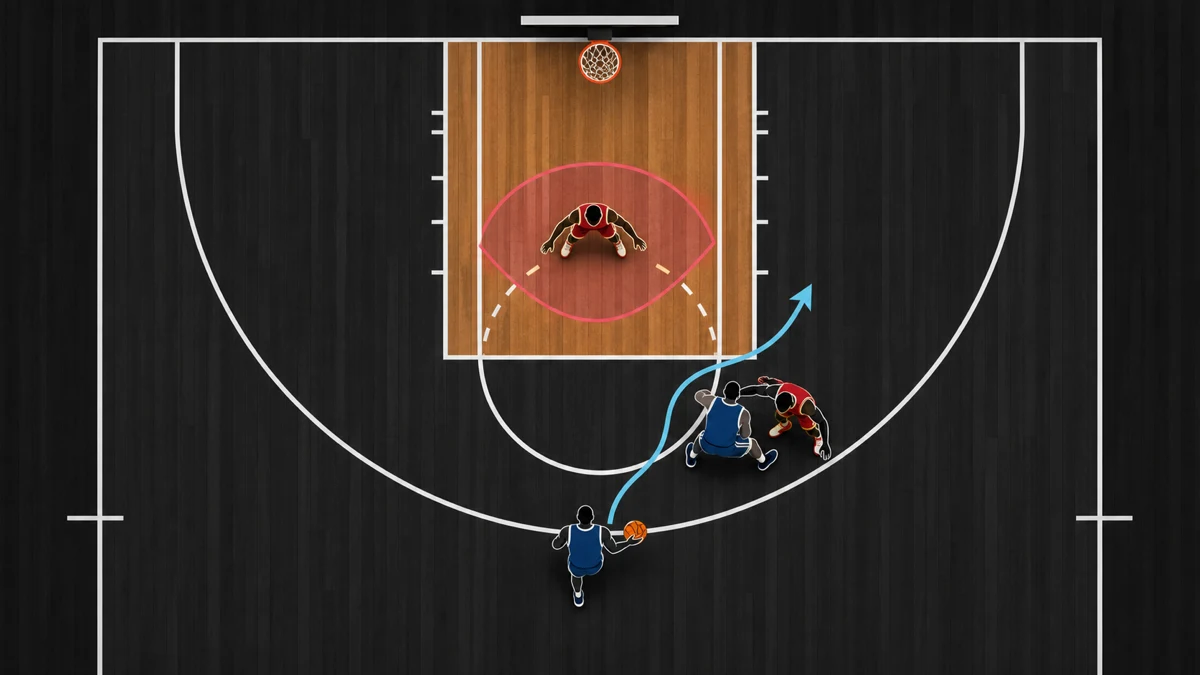
Ice coverage (also referred to as Blue, Down, or Push) is a specialized tactic used almost exclusively on side pick-and-rolls. The primary goal of Ice is to deny the ball handler access to the middle of the floor, which is the most dangerous area for playmaking. The geometry of Ice is diagonal and sideline-oriented.
In Ice coverage, the on-ball defender positions themselves to direct the ball handler toward the sideline or baseline, away from the screen. The screener's defender and the recovering on-ball defender then work to manage the resulting drive.
Against this coverage, the offense may look to execute different plays, such as a pick-and-pop. A pick-and-pop is a two-person play where an offensive player sets a screen on the ball handler's defender and pops out to the three-point line after the ball handler drives past the screen.
What This Means for Players and Coaches
For coaches and players looking to master these concepts, structured practice is essential. In basketball practice drills, coaches can defend ball screens by hedging the screen, dropping back, or playing in between the two options. This forces the offensive players to read the defender's positioning in real-time and make the appropriate play. MVP Practice Plans - NBA.com: Jr. NBA
Additionally, teams can incorporate advanced recovery tactics like the Next defense. This is a run and jump defensive tactic used often after an on-ball screen action has occurred or after a penetration in order to stop the ball and force the ball handler to pass it.
To practice these skills, players and coaches can utilize Level Up's free basketball drills and workout pages. basketball drills
It is vital to remember that no coverage is a magic bullet. Elite offensive players are designed to break specific coverages. For example, a master mid-range shooter will dismantle a deep drop coverage all night, while an elite isolation player will feast on switches. The key to defensive excellence is versatility: understanding the mathematical trade-offs of each coverage, mastering the individual physical techniques, and communicating effectively as a five-man unit on every single possession.
Practice and Analyze Your Game
Frequently asked questions
What are the main pick-and-roll coverages?
Common coverages include drop, switch, hedge or show, blitz, and ice. Each changes the responsibilities of the on-ball defender, screener defender, and off-ball helpers, so the label alone is not enough without the team's rotation rules.
Why would a defense use drop coverage?
Drop coverage keeps the screener's defender nearer the paint while the on-ball defender works through the screen. It can protect the rim and roll, but it may concede space for pull-ups or pocket passes depending on execution and personnel.
What makes switching a pick-and-roll risky?
Switching can remove immediate separation but may create a size or speed mismatch. It also requires clear communication and disciplined off-ball positioning, because an offense can attack the new matchup or slip the screen before the switch is established.