
The short version: Effective spacing is a dynamic system of movement. By mastering coordinated cuts, fills, and drive reactions, offenses can systematically exploit defensive rotations.
Key takeaways
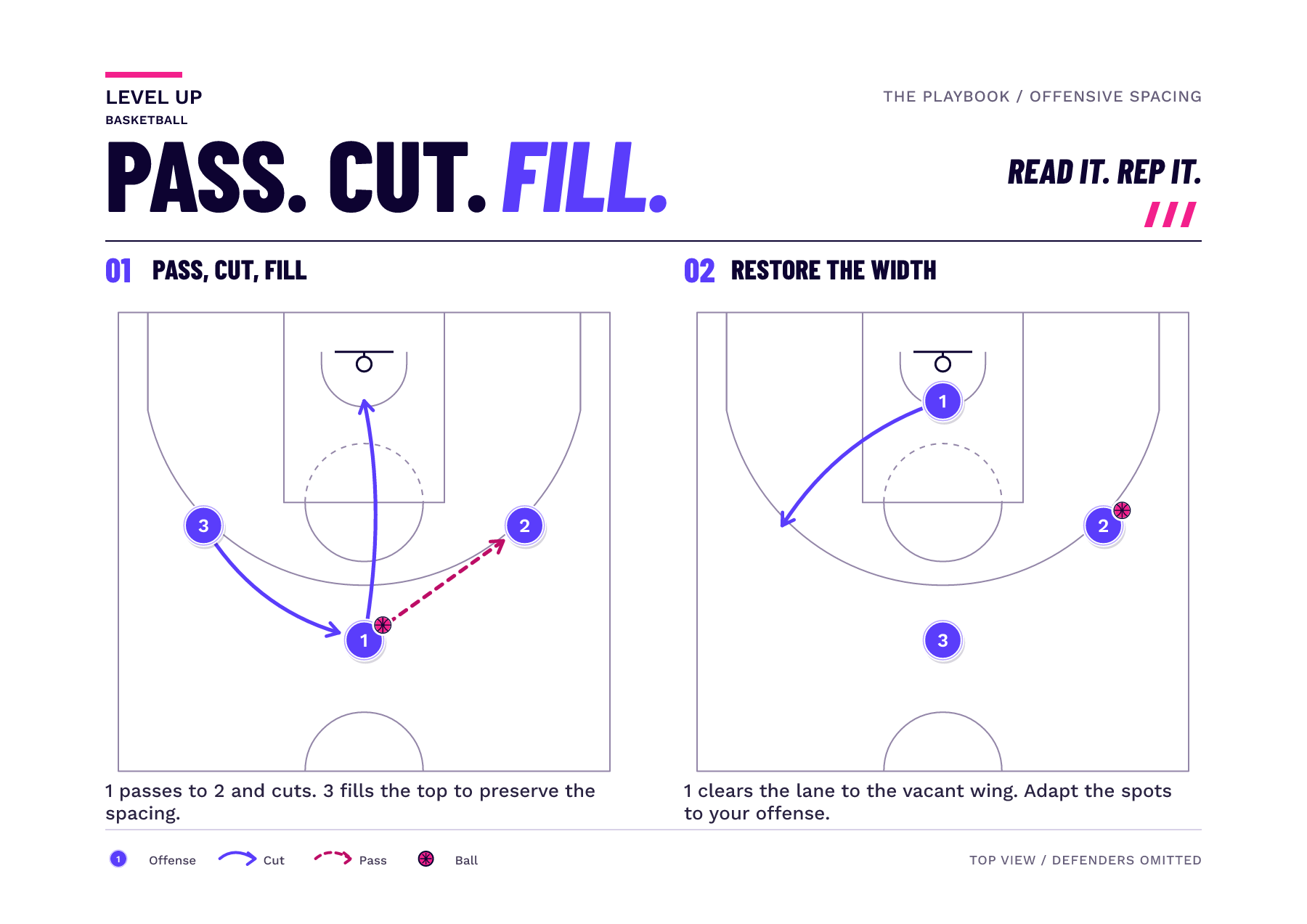
- During a pass-and-cut sequence, the off-ball wing player replaces the cutter by filling to the top of the key.
- The push-pull penetration reaction system dictates that if the ball is driven at a player, they are pushed away, and if driven away, they are pulled in the same direction.
- Dribble penetration triggers coordinated reactions like the Push-Pull system and Circle Movement.
- Playing off two feet in the paint can help slow the game down for the offense and speed it up for the defense.
The Foundations of Dynamic Court Spacing
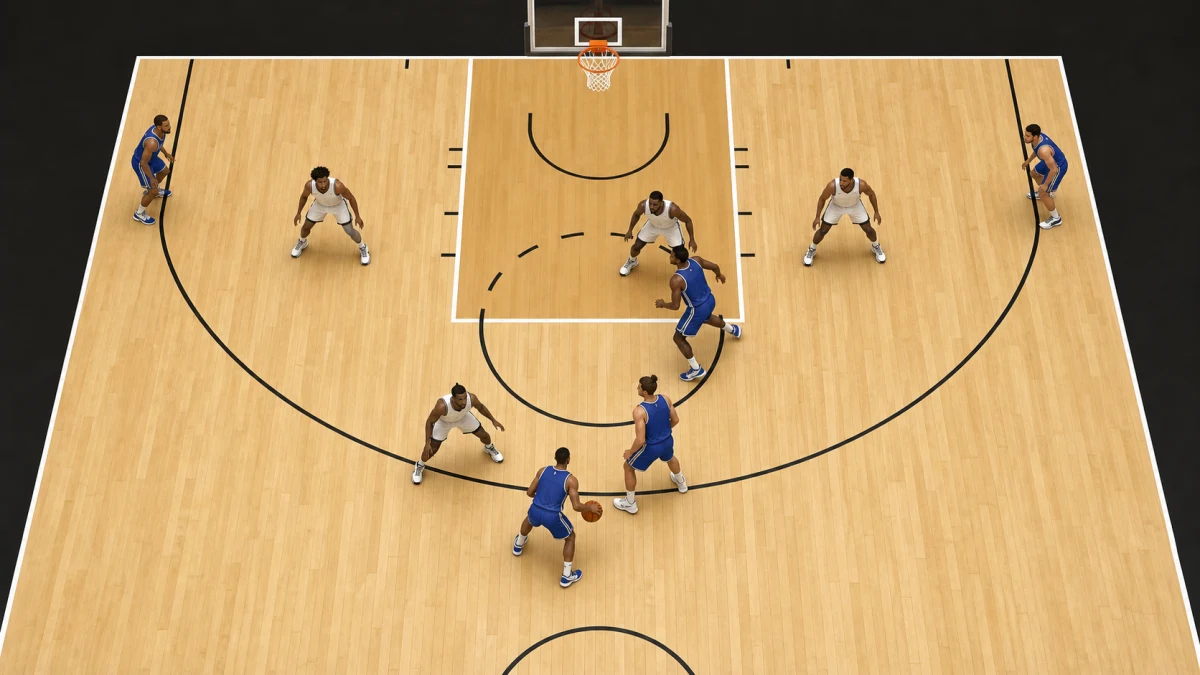
Perimeter players should generally maintain a spacing distance of approximately 12 to 15 feet apart. Basketball Spacing and Moving Without the Ball, Coach's Clipboard
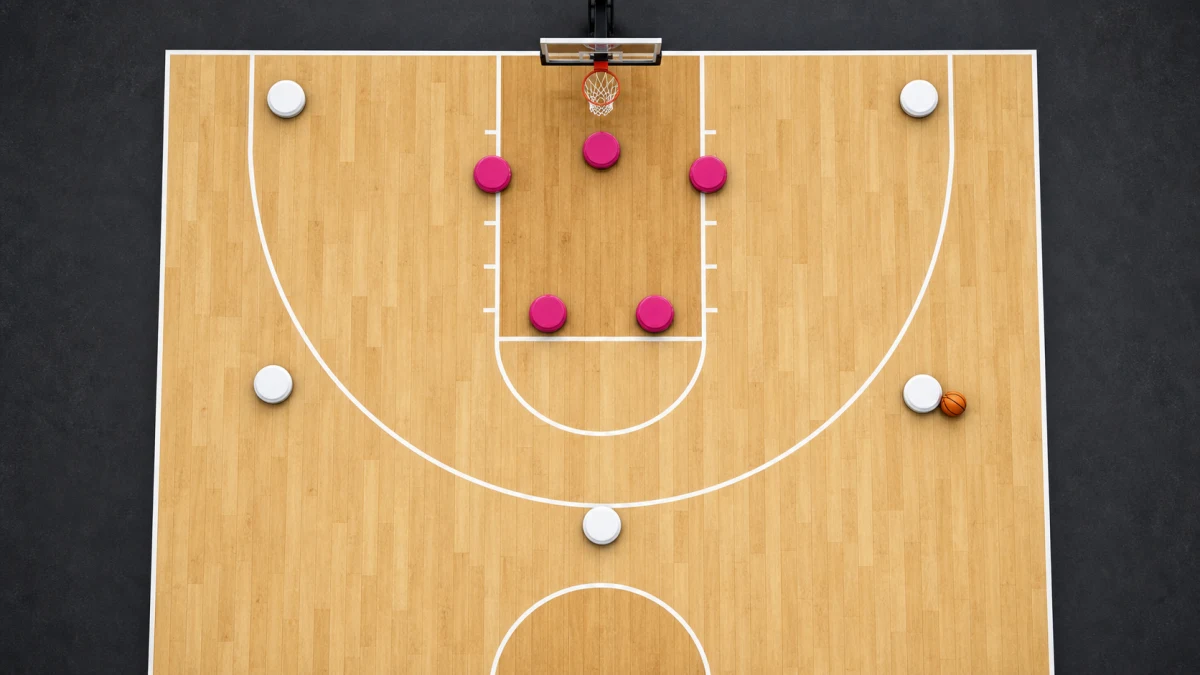
A half-court spacing drill can utilize tape on the court to mark offensive spots such as 3 around 2, 4 around 1, or 5 out. Team spacing rules depend on the coach's system, player personnel, and age group. MVP Practice Plans - NBA.com: Jr. NBA
Scaling Spacing and Court Dimensions by Age Group
USA Basketball and the NBA established working groups in the spring of 2016 to develop youth basketball guidelines. USA Basketball and the NBA recommend a size 5 ball and an 8-foot basket height for the 7-8 age segment. Youth Basketball Guidelines - USA Basketball
As players grow, the recommended equipment and court dimensions scale accordingly to match their physical development. USA Basketball and the NBA recommend a size 6 ball and a 9-foot basket height for the 9-11 age segment. This progression aligns with the natural physical growth of the athletes.
Mechanics of Pass-and-Cut Actions
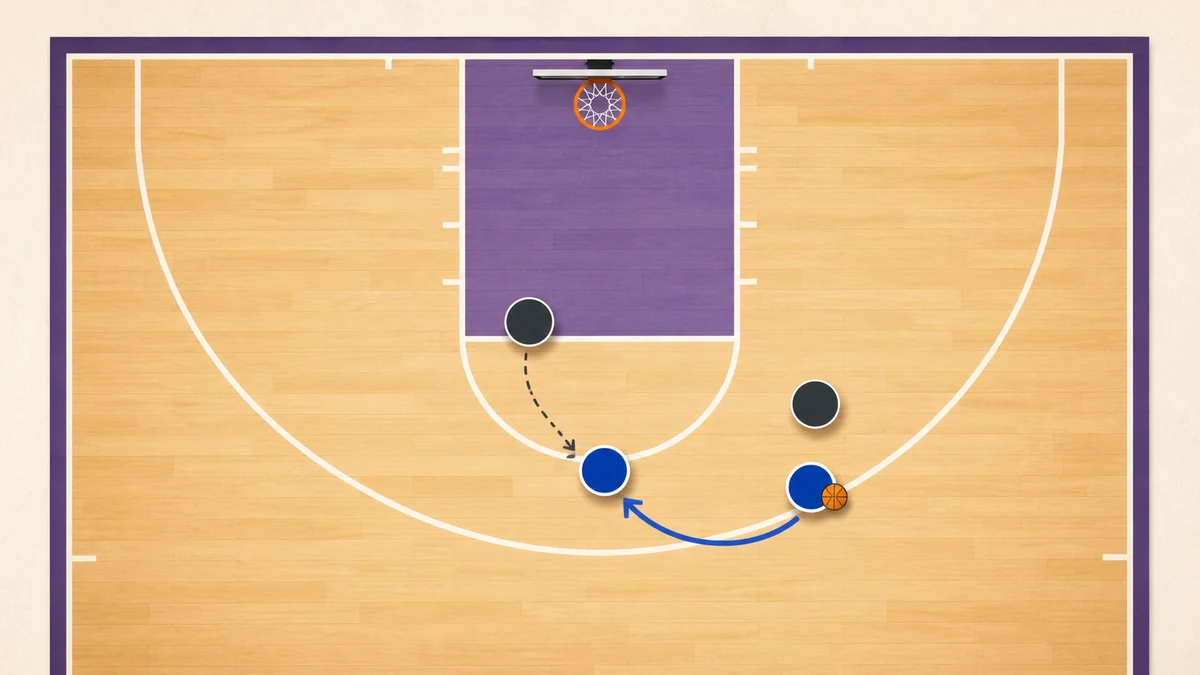
Once players understand their basic positioning, they must master the mechanics of moving without the ball. One of the most fundamental off-ball movements is the pass-and-cut action, which requires immediate, coordinated reactions from the remaining perimeter players. During a pass-and-cut sequence, the off-ball wing player replaces the cutter by filling to the top of the key, while the cutter fills the vacant wing spot. This continuous exchange of positions helps maintain the spacing structure and makes it difficult for the defense to rest. All-Star Practice Plans - NBA.com: Jr. NBA
In addition to passing and cutting, players must understand how to react when a teammate dribbles toward them. According to tactical systems taught by PGC Basketball, dribble-at actions signal a teammate to clear space, cut through, or exchange. When a ball-handler initiates a dribble-at, the adjacent off-ball player cannot remain stationary, as doing so would bring two defenders into the same area and clog the offense. Instead, the off-ball player must read the dribbler's movement and immediately vacate the area by cutting to the basket, exchanging positions with another teammate, or clearing out to the opposite side of the court. This proactive movement preserves the necessary 12-to-15-foot spacing and creates open driving lanes. Basketball Offensive Spacing: 6 Habits That Always Work
Swipe sideways to explore the full diagram.
Drive and Kick Reactions: Middle and Baseline Penetration
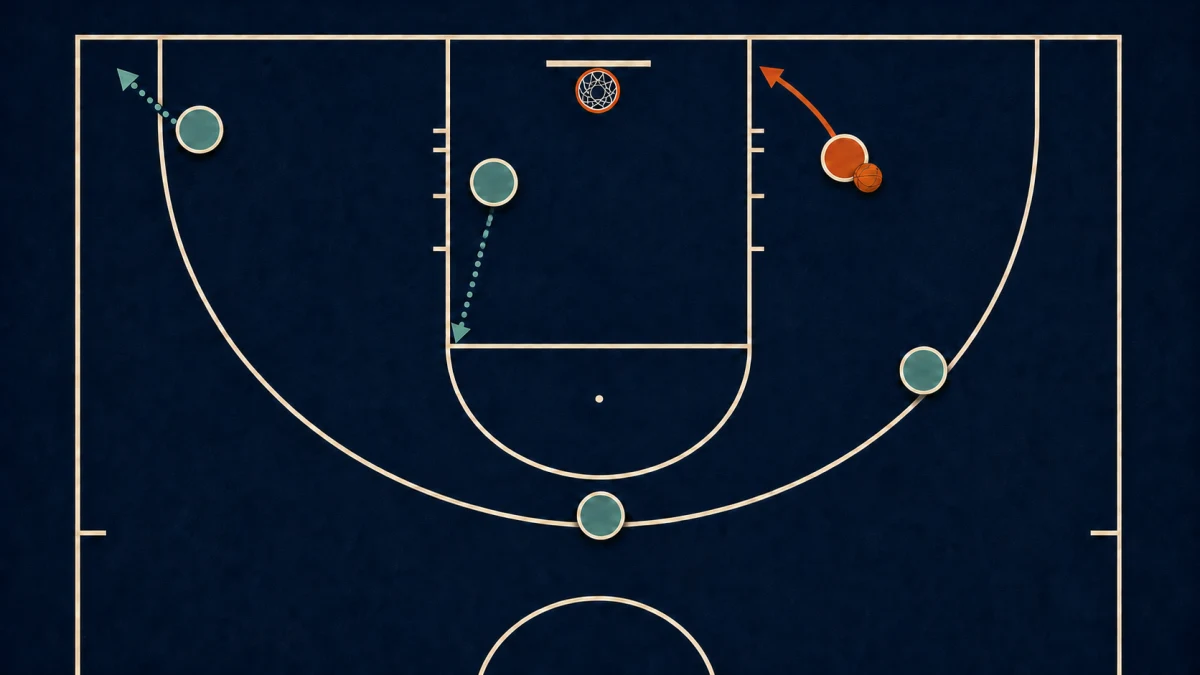
Dribble penetration requires precise, immediate reactions from every off-ball player on the floor to exploit defensive rotations. When a player drives baseline, specific rotations must occur to provide passing outlets and maintain balance. In a baseline drive filling the corner drill, when a player on the wing drives baseline, the player on the opposite wing drops to fill the corner. This movement is supported by broader spacing principles; when a wing player dribbles baseline, the opposite perimeter player should slide down to the weakside corner, and the post player(s) should I-cut to the elbow. These coordinated movements ensure that the driver has an outlet in the corner and a high-post safety valve at the elbow. MVP Practice Plans - NBA.com: Jr. NBA
In a 3 on 1 Drive and Kick Reaction drill, three offensive players are spaced around the three-point line with one at the top and one on each wing. In a drive-and-kick competition drill, if the ball-handler dribbles to the right of the elbow cone, the cutter cuts to the short corner for a jump-shot. Conversely, in the same drive-and-kick competition drill, if the ball-handler dribbles to the left of the elbow cone, the cutter cuts to the middle of the key for a pass and layup. All-Star Practice Plans - NBA.com: Jr. NBA
The Push-Pull System and Circle Movement
The 'Push-Pull' penetration reaction system dictates that if the ball is driven at a player, they are pushed away, and if driven away, they are pulled in the same direction. Similarly, PGC Basketball teaches players to shift with the drive by pushing away when the drive comes at them and pulling when the drive goes away. Basic Basketball Spacing Drill
The Read and React offense utilizes Circle Movement, which involves perimeter players moving along the perimeter in the direction of a teammate's dribble drive. In the Read and React lift drill, an offensive player passes from the corner to a coach in the lane and then lifts to the next spot along the perimeter. Read and React Basketball: Drift and Lift Drills - Teach Hoops
What This Means for Players and Coaches
For players and coaches, mastering these dynamic spacing concepts requires translating rules into aggressive, decisive actions on the court. When defenders overplay the perimeter to prevent a pass or stop a drive, players must be ready to exploit that defensive pressure. PGC Basketball advocates that players cut backdoor hard when the ball is driven directly at them. This hard cut can help create direct layup opportunities and clear out the driving lane for the ball-handler. Furthermore, once a player receives a pass inside the paint, they must maintain composure to make the right play. PGC Basketball emphasizes playing off two feet in the paint to slow the game down for the offense and speed it up for the defense.
Coaches should focus on developing the individual physical and technical skills that allow players to execute these team spacing concepts. Level Up Basketball provides skill drills and workouts that can support the individual footwork and ball skills used inside team offense. At the All-Star Level, youth basketball players begin to gain strength, quickness, and the ability to better react to game situations. Developing these individual skills helps players execute these complex spacing concepts. Without strong individual skills—such as the ability to play off two feet, make accurate skip passes, and pivot under pressure—even the most perfect spacing system will break down.
Limitations of Standard Spacing Rules
While these spacing systems and reaction rules are highly effective, coaches and players benefit from understanding their inherent limitations. First, standard spacing reactions assume a standard help-and-recover defense; if defenses switch or play a zone, static 'drift and lift' rules must adapt dynamically. Second, physical limitations can impact how these systems are executed. For instance, USA Basketball and the NBA recommend a 19'9" three-point arc distance for the 12-14 age segment. Finally, team spacing rules depend on the coach's system, player personnel, and age group.
Frequently asked questions
What does good spacing mean in basketball?
Good spacing gives teammates useful width and depth while preserving passing, driving, cutting, and screening options. It is dynamic rather than a fixed diagram, because players must react when the ball, defenders, and teammates move.
Why does standing too close to the ball hurt an offense?
Crowding the ball can allow one defender to affect multiple offensive players, shorten help rotations, and remove driving or passing lanes. Moving to purposeful space makes defensive choices clearer and gives the ball handler more room to read.
How should players react when a teammate drives?
The reaction depends on team rules, starting positions, and the defense. Common solutions include lifting, drifting, filling behind, or cutting into open space. The goal is to preserve a passing window without bringing another defender into the drive.