
The short version: Treat the dribble handoff as a two-player read against two defenders. Build approach space, meet at a protected angle, and read the receiver's defender before taking the ball. WABC gives a back cut against overplay and a giver dive when the giver's defender helps. Progress from guided coverages to live two-on-two and three-on-three while scoring the recognition, spacing, timing, and next pass.
Key takeaways
- Create enough starting space for the receiver to approach with pace and vision.
- Read the receiver's defender before completing the exchange.
- Use the back cut when top-side pressure removes the handoff path.
- Use the giver's dive when that defender helps on the receiver.
- Progress from declared coverages to live two-on-two and three-on-three decisions.
What is the real decision in a dribble handoff?
A basketball dribble handoff looks like a short pass, but its value comes from the screening relationship created during the exchange. The ballhandler approaches a teammate with control; the receiver times the route close enough to use the giver's body; and both players read how the two defenders protect the exchange. FIBA's WABC Level 3 material makes the central rule explicit: the offense should react to the defense. FIBA WABC Coaching Documents WABC Coaches Manual Level 3
That means the goal is not to complete a handoff at any cost. The best answer may be the exchange, a keep, a back cut, a dive, or a pass after the defense commits. Jr. NBA uses the same decision logic in a guided game: denial triggers a back cut, while space can trigger a dribble handoff. A clean practice rep preserves those choices long enough for the offense to identify the coverage. If players start too close, too early, or on a flat path, the defense can guard both players with one action and the read disappears. Jr. NBA Starter Practice Plan 9 basketball offensive spacing
Think of the action as four connected questions. Is the receiver's defender attached, under, over, or switching? Is the giver's defender staying home, showing, switching, or helping? Is the lane open behind the coverage? Where is the next pass if a help defender leaves a teammate? The ball exchange is only one answer inside that decision tree.
Build useful spacing before the exchange
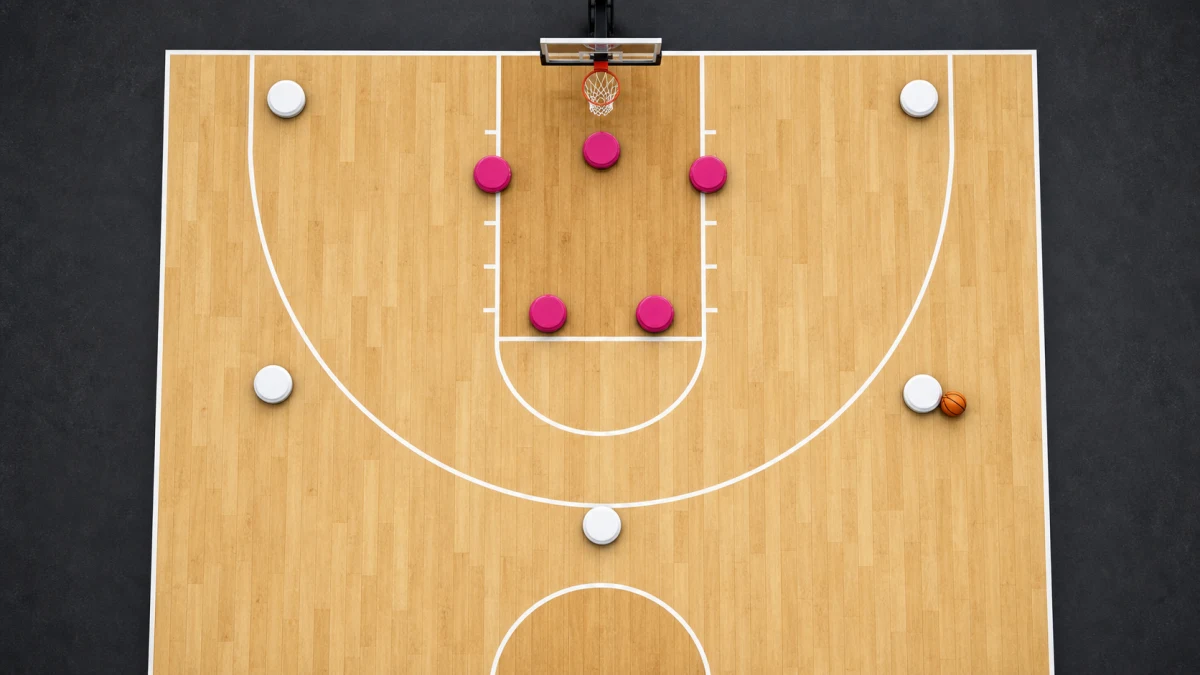
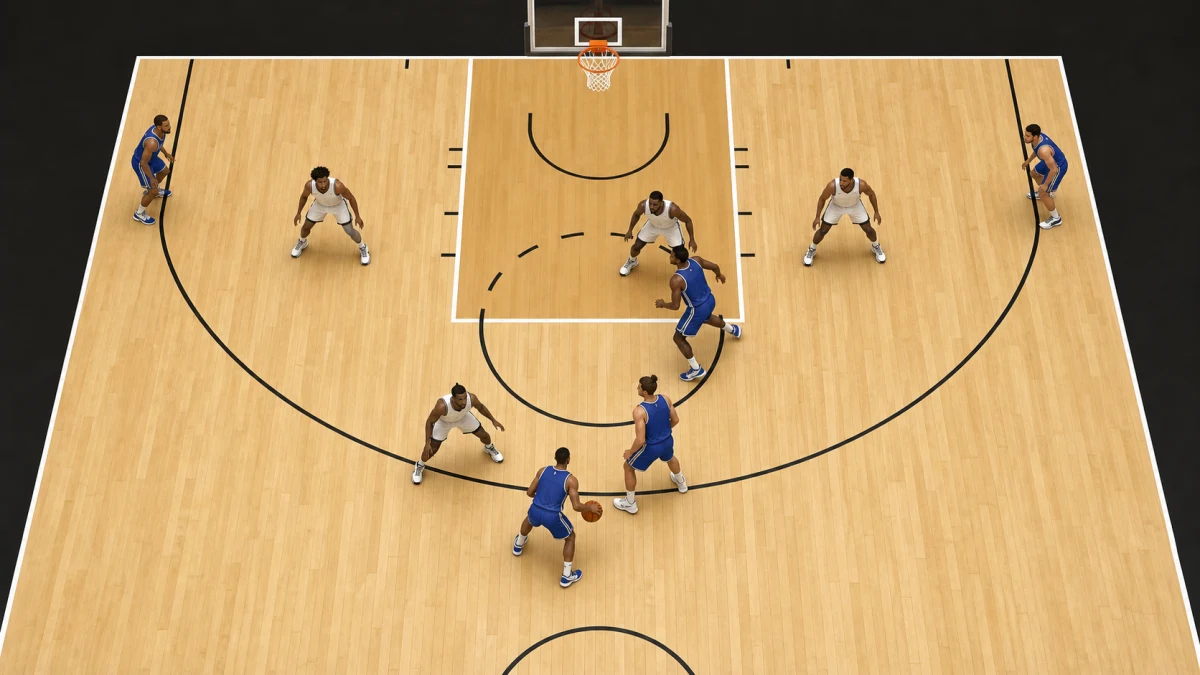
The receiver needs enough starting space to create speed and see the defender. Standing beside the giver eliminates the approach and makes the exchange crowded. Starting too far away can turn the action into a slow chase. Use an alignment that lets the receiver arrive with pace, pass close to the giver, and continue downhill or away from pressure without stepping into a teammate.
The giver's approach should threaten space rather than drift sideways. A controlled dribble toward the receiver forces the on-ball defender to move and determines where the exchange can occur. The final dribble should leave the ball protected and the body stable. If the giver arrives upright or exposes the ball early, the defense can reach through the exchange and disrupt it before any read develops.
Keep the middle and the next passing window visible. Other offensive players should not occupy the receiver's driving lane or the giver's dive. The exact locations depend on the offense, but the principle is constant: teammates create value by stretching help defenders away from the two-player action and by staying available when those defenders commit.
Time the meeting point, not a memorized count
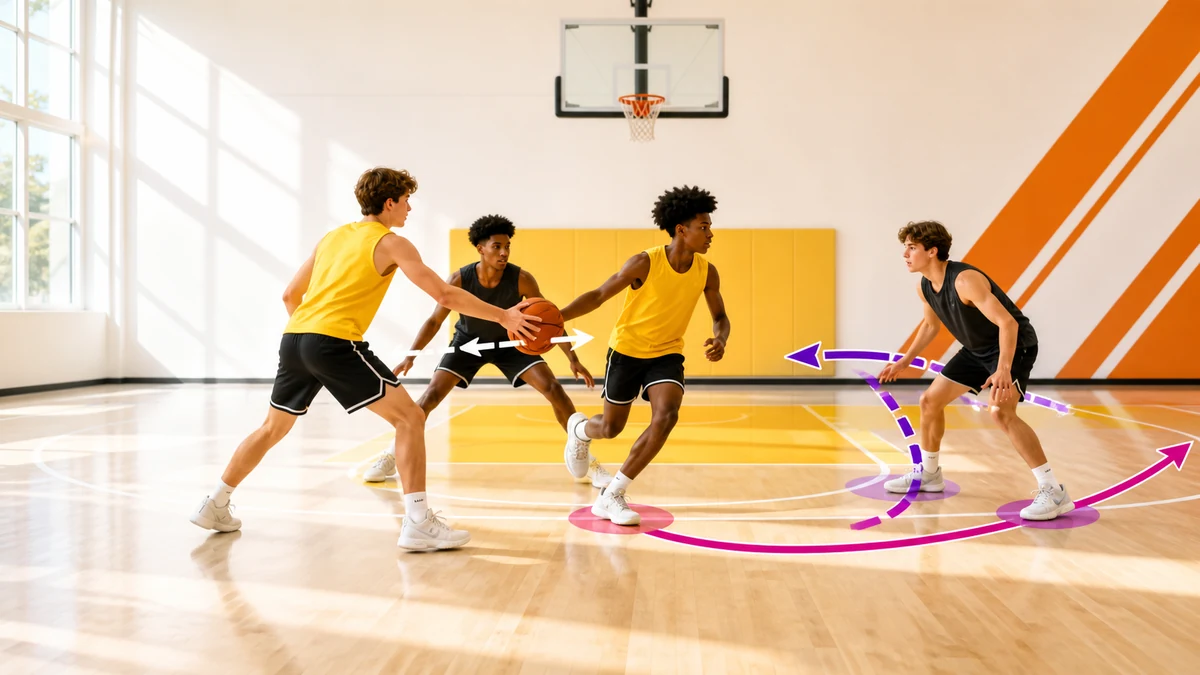
Good timing means both offensive players reach the exchange with options. If the receiver leaves too soon, the route can outrun the giver and flatten near the sideline. If the receiver waits, the defense can load into position and see the handoff coming. The giver should communicate with movement and eye contact, while the receiver changes pace and arrives close enough to use the screening angle.
Avoid prescribing one universal verbal count. Different starting spots, players, and coverages change the travel time. Instead, define observable landmarks: the giver has control, the receiver has a clear lane to the exchange, the two arrive shoulder-to-hip rather than shoulder-to-shoulder, and the receiver can see the defender before committing to the catch.
Film the action from the baseline or a high sideline angle. Freeze one step before the exchange. There should be usable space behind the receiver, separation from help, and a protected ball. If the only possible continuation is a wide loop away from the basket, the problem often began with the approach rather than the final handoff.
Read the receiver's defender
Start with the defender guarding the receiver. If that defender trails or fights over the giver, the receiver may be able to turn the corner, but a hard top-side position can also open the space behind the defense. WABC's Level 3 manual specifically offers a back cut when the receiver's defender fights over the screening action. The counter works only if the receiver sees the pressure before taking the ball automatically.
If the defender goes under, the receiver may gain space outside the exchange. Whether that becomes a shot, a re-handoff, or another advantage depends on range, personnel, and team rules. Do not invent a predetermined answer that ignores the player's actual skill. The coaching point is to name the coverage early and keep the ball protected while the offense chooses a useful response.
Use guided defense to make the read visible. The defender gives a clear trail, under, or top-side denial for two repetitions, then varies the choice. The receiver must call or demonstrate the answer before the rep is scored. Jr. NBA's advanced curriculum also lists reading screens and backdoor cutting as explicit skills, reinforcing that recognition and movement belong together. Once recognition is reliable, remove the announcement and allow live defense. Jr. NBA All-Star Practice Plans
Read the handoff giver's defender
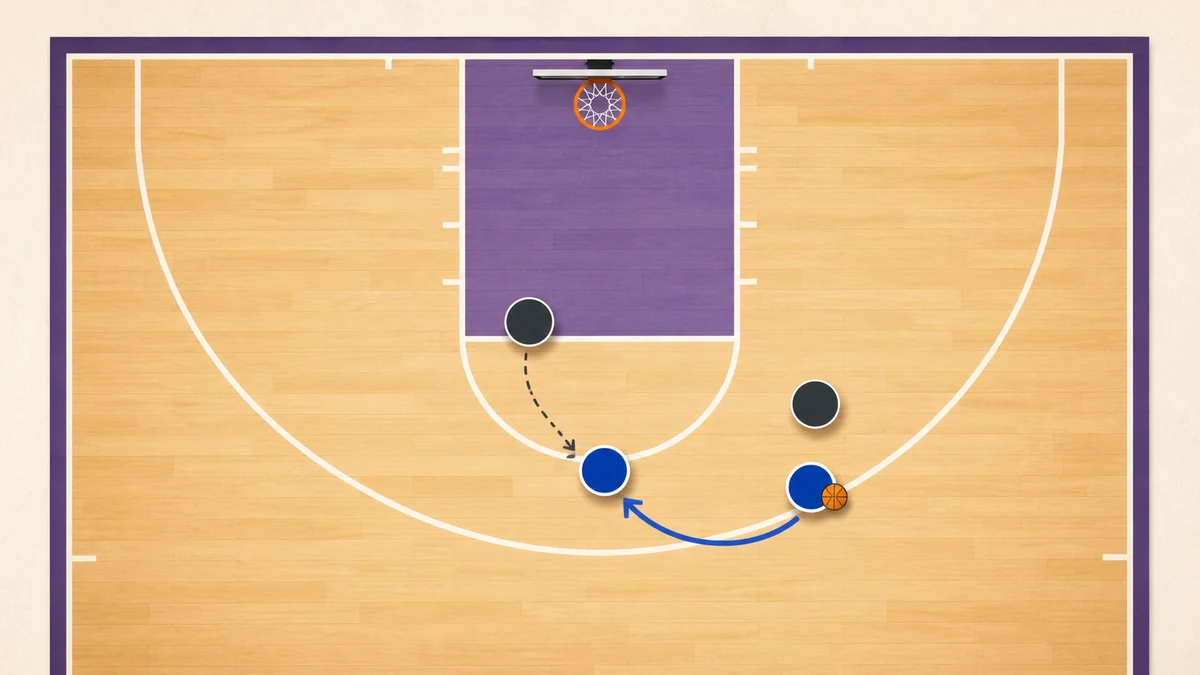
The second defender can erase the receiver's apparent advantage. A defender who shows high may stop the turn. A switch may place a new matchup in front of the ball. A defender who leaves the giver to help on the receiver creates a different opening. WABC's Level 3 answer is direct: when the giver's defender helps on the receiver's cut, the giver dives to the basket.
The dive is a read, not an automatic roll after every handoff. Leaving early can narrow the receiver's path and allow one defender to cover both players. Leaving late can waste the help commitment. The giver should see the defender turn attention toward the receiver, open a direct lane, and present a target where the receiver can deliver the ball without throwing through traffic.
Against a switch, the immediate goal is often to maintain spacing and identify the new advantage rather than force a difficult split. The receiver protects the ball and pulls the switched defender into space; the giver seals, slips, or relocates according to team rules. Practice the switch as its own constraint so players learn who now guards whom instead of continuing the original pattern blindly. basketball screen coverages
A progressive dribble-handoff practice
- Air timing: giver and receiver rehearse approach paths, protected exchange position, and spacing without defenders; score the meeting point, not speed alone.
- One guided defender: the receiver's defender shows trail, under, or top denial; the offense exchanges or back cuts according to the read.
- Two guided defenders: add help or stay-home behavior by the giver's defender so the giver must hold spacing or dive at the right moment.
- Live two-on-two: begin from the same alignment, allow every coverage, and play until a score, turnover, or controlled defensive rebound.
- Live three-on-three: add a help-side teammate and defender so the ballhandler must see the next pass when help collapses.
Keep the early repetitions short. One clean decision at game-like pace is more informative than a long pattern where everyone knows the answer. Score recognition, spacing, timing, ball protection, and the next pass separately. If the players read correctly but cannot complete the pass, preserve the recognition win and isolate the technical pass in the next block.
Common dribble-handoff breakdowns
- Automatic exchange: the receiver takes the ball despite top-side denial. Repair it with a guided overplay and require the back cut before the catch.
- Wide route: the receiver loops away from the giver and loses the screening angle. Mark a safe meeting corridor, then remove it once the shoulder-to-hip relationship is consistent.
- Early dive: the giver rolls before the defender helps and crowds the receiver. Require the giver to identify the help commitment before leaving.
- Exposed ball: the giver presents the ball before body position protects it. Slow the final dribble, establish balance, and shorten the exchange window.
- Two-player tunnel vision: both attackers miss a help defender leaving a teammate. Add a third offensive player and score the correct next pass.
Correct the first event that removed the choice. A turnover at the handoff may begin with poor starting spacing. A crowded drive may begin with an early dive. A missed back cut may begin with the receiver looking only at the ball. The film question is not merely what failed, but when did the offense lose the ability to react to the defense?
Frequently asked questions
Is a dribble handoff a pass or a screen?
It is an exchange that creates a screening relationship. The receiver takes the ball close to the giver while both offensive players read two defenders. Treating it as only a short pass removes the spacing, angle, and counter decisions that make the action useful.
When should the receiver back cut?
WABC Level 3 identifies the back cut when the receiver's defender fights over the screening action. The receiver must see the overplay before taking the ball, keep the lane open, and make the cut decisive enough that the giver can keep or pass safely.
When should the giver dive?
The WABC progression uses the dive when the giver's defender helps on the receiver's cut. The giver should react to that help rather than roll automatically, preserving enough spacing for the receiver to see and deliver the pass.
What is the best way to make the reads live?
Begin with declared defensive coverages, then vary one defender, add the second defender, and finish with live two-on-two or three-on-three. Score the decision before the result so a correct read remains visible even when the execution needs more work.