
The short version: In a basketball dribble handoff, the ballholder approaches a teammate and transfers the ball as that teammate runs past. The action behaves like a pass and a screen at once. Good spacing creates a narrow shoulder-to-hip path, complementary hand positions protect the ball, and the receiver reads whether to use the handoff, back cut, curl, reject, or create space. Defensive terms vary by team, so learn the coverage principles and use your coach's vocabulary.
Key takeaways
- The ballholder and receiver should meet on a deliberate angle, not drift toward the same crowded spot.
- A secure north-south presentation and east-west take keep the exchange compact and visible to both teammates.
- The receiver reads the defender before reaching the handoff and can cut backdoor when the path is denied.
- Because the action functions like an on-ball screen, defenses can travel through, behind, switch, show, or use another team coverage.
- Practice the exchange without defense, add one guided read, then play it live so technique stays connected to decisions.
What is a dribble handoff in basketball?
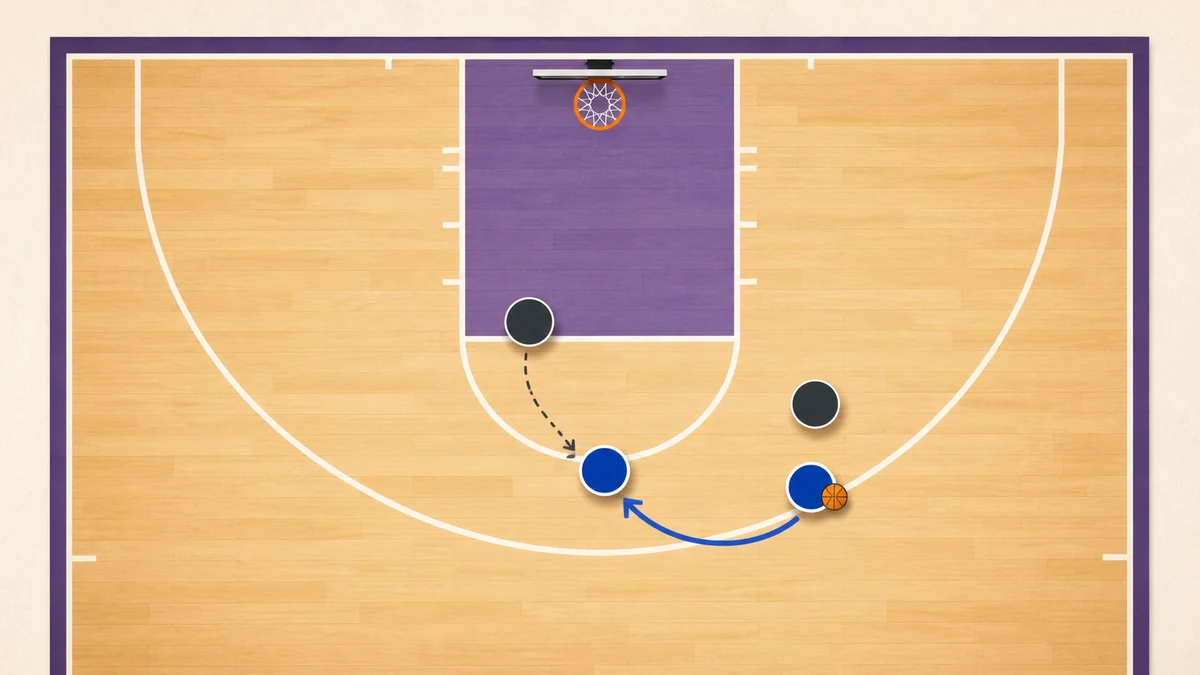
A dribble handoff, often shortened to DHO, begins with one player dribbling toward a teammate. The teammate cuts past, takes the ball, and becomes the new ballhandler. The WABC glossary notes that handoffs can begin from a stationary player, while a dribble handoff is often completed with both players moving. Its Level 3 manual describes the dribbler arriving, stopping, and transferring the ball immediately to the runner. The exchange is therefore not a pause between actions; it is the action. WABC Coaches Manual — Glossary of Common Basketball Terms WABC Coaching Manual Level 3 — Defending Dribble Hand Offs how offensive spacing creates usable driving lanes
The DHO combines three problems in a fraction of a second. It is a pass because possession changes. It resembles a screen because the first ballhandler's body affects the defender's route. It is also a live dribble decision because the receiver may turn the corner, reject the exchange, or see that no safe handoff exists. WABC explicitly says the action can be defended with techniques similar to those used against an on-ball screen. That is why a casual, wide exchange gives the defense so much room to recover. the coverage ideas shared with ball screens
How should the two players space and angle the handoff?
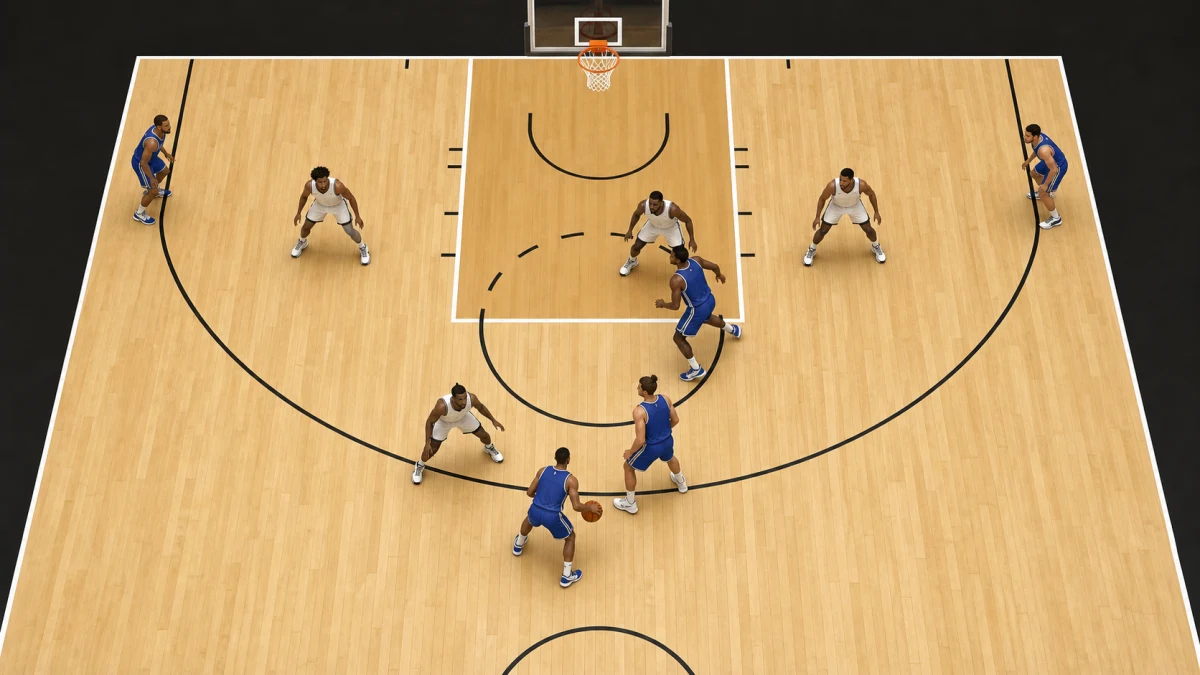
Start with the meeting line. The dribbler should approach a spot that gives the receiver room to run past rather than straight into the ballholder's chest. The receiver should change pace and arrive close enough that a defender cannot comfortably squeeze through the middle. Coaches often describe a shoulder-to-hip relationship because it makes the path compact: the receiver's inside shoulder clears the ballholder's outside hip as the ball changes hands. The exact court spot depends on the offense, but empty space behind the action and a clear next lane are always useful.
Timing protects the geometry. If the receiver leaves early, the ballholder may chase the exchange and expose the ball. If the ballholder arrives early and waits, the defense can load into the route. The two players should see each other, arrive under control, and complete the exchange on the receiver's path. Teammates away from the action must preserve their own gaps; pulling an extra defender beside the handoff can erase the advantage before the receiver touches the ball. how cutters and screeners coordinate timing
How do you protect the ball during the exchange?
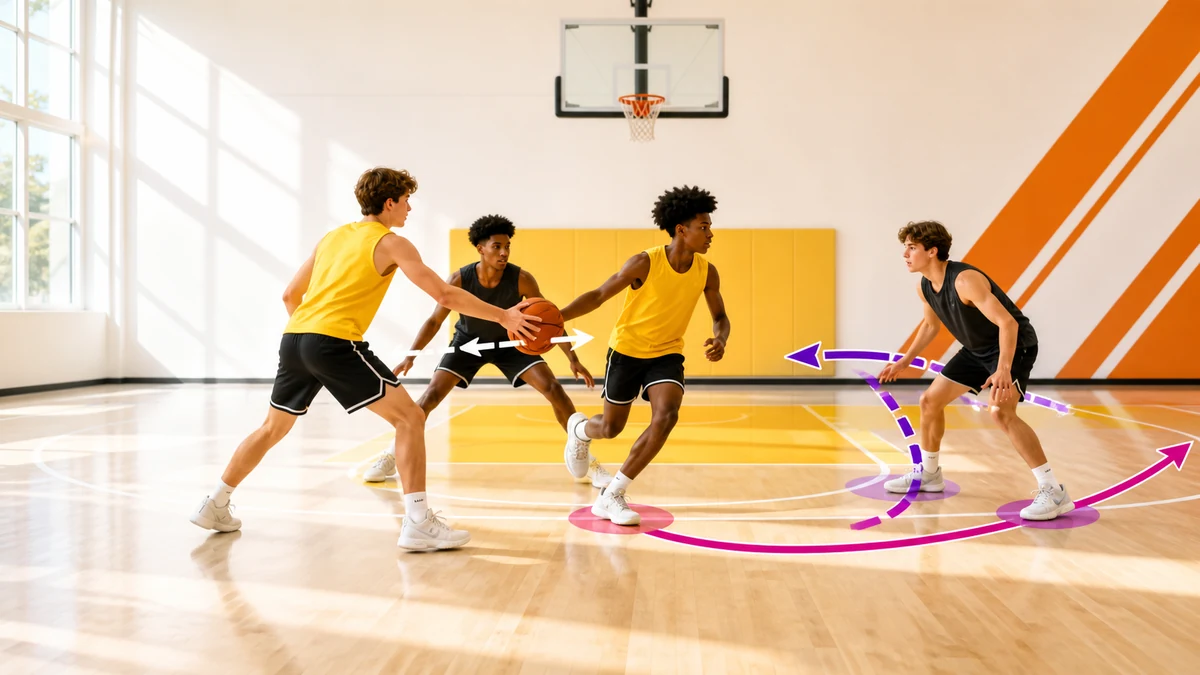
WABC gives the two players complementary grips. The ballholder presents with one hand above and one below the ball—a north-south grip. The receiver takes from the sides with an east-west grip. This is a useful teaching picture because the receiver is taking possession instead of waiting for a soft toss. Keep the ball tight to the meeting point, keep eyes up, and do not swing it into open space where the defender can reach between both players.
Calling the action screen-like does not give the ballholder permission to move into a defender. FIBA's legal-screen rule requires a screener to be stationary inside the cylinder with both feet on the floor when contact occurs; moving contact and failures of required time or distance can make the screen illegal. In a DHO, the ballholder should stop or hold a legal position through contact instead of leaning, widening a leg, or turning a shoulder into the defender. The receiver uses the established path—the ballholder does not manufacture it with a moving collision. FIBA Official Basketball Rules 2024 — Legal and Illegal Screening
What should the receiver read?
Read the receiver's defender before reaching the exchange. Jr. NBA's Pass & Cut Decision Game makes one contrast clear: if the defender denies the return path, the offensive player back cuts; if the defender drops back, the player runs into the dribble handoff and attacks. The lesson is larger than those two answers. A handoff is valuable because the threat of using it changes the defender's position. If the defense has already taken away the route, forcing the exchange can reward the denial. Jr. NBA Starter Practice Plan 9
- Use the handoff and turn the corner when the defender trails and the next driving lane is open.
- Back cut when the defender jumps high into denial and the lane behind that pressure is clear.
- Curl tightly when the defender follows over the exchange and the ballholder has established a legal position.
- Reject or keep the ball when the defense overplays the expected path; terminology and exact responsibility depend on the offense. FIBA Europe Basketball Terminology
- Abort the exchange when spacing collapses or the ball cannot be transferred securely. Resetting is better than handing the defense a live turnover.
How can a defense cover the dribble handoff?
One coverage lets the receiver's defender travel through the action. WABC diagrams the ball defender stepping back from the dribbler so the teammate can pass through and stay attached to the receiver. Another sends that defender behind: the ball defender jams toward the dribbler, creating a rear path for the teammate. Both choices trade something. Going through can protect attachment but asks the ball defender to yield space; going behind can invite a clean turn or shot if the receiver is dangerous from that range.
Teams may also call a switch, show, trap, under, or another coverage borrowed from their ball-screen system. Those labels are not universal, and the same word can carry different footwork or help rules. Focus first on the information: Which defender has the receiver after the exchange? Is the lane temporarily crowded? Did the ballholder's defender stay, step out, or retreat? The offense then chooses spacing and a counter from what actually happened, not from a memorized label announced too late.
How should you practice dribble handoffs?
- Walk through the approach, complementary grips, and shoulder-to-hip path with no defender. Switch sides and roles.
- Add a guided defender who either denies high or drops back. Require the receiver to back cut or use the handoff from that visible cue.
- Make the exchange live one-on-one with a coach or teammate as the ballholder, then score the possession rather than ending at the handoff.
- Progress to live two-on-two so both defenders can coordinate and the ballholder must space, keep, roll, or become a passing option after the exchange. Jr. NBA All-Star Practice Plan 5
- Finish with short-sided play inside the team's real spacing and coverage vocabulary. Track clean exchanges, useful advantages, turnovers, and illegal-screen habits.
Coach what happened before coaching the preferred answer. Ask the receiver where the defender was, whether the handoff path was open, and which shoulder cleared the ballholder. Ask the ballholder whether the ball stayed protected and whether contact occurred from a legal position. A successful DHO is not simply one that avoids a turnover; it should create a useful next decision without breaking spacing or relying on an illegal moving screen.
Frequently asked questions
Is a dribble handoff the same as a ball screen?
No. Possession changes during a handoff, while the original ballhandler keeps possession when using a ball screen. They are tactically related because the ballholder's body can affect the receiver's defender, and WABC says similar defensive techniques can apply. That connection explains shared coverage language, but the exchange and turnover risk make a DHO its own action.
Who should hold the ball during a handoff?
WABC's teaching picture has the ballholder present it with a north-south grip and the receiver take it from the sides with an east-west grip. The important outcome is a compact, controlled transfer in which both players know when possession changes. Avoid a loose toss or a wide presentation that exposes the ball between defenders.
When should a player back cut instead of taking the handoff?
A strong denial is one clear cue. Jr. NBA's decision game teaches the passer to back cut when the defender prevents the return path and to use the handoff when the defender drops back. In live play, the cutter also checks whether the lane behind the denial is open and whether the teammate can deliver the ball safely.
Can the ballholder move while screening in a dribble handoff?
The approach can be dynamic, but contact still has legal limits. Under FIBA rules, a legal screener is stationary inside the cylinder with both feet on the court when contact occurs. A ballholder who leans or steps into the defender at contact risks an illegal screen. Teach the player to arrive under control and let the receiver use the established path.