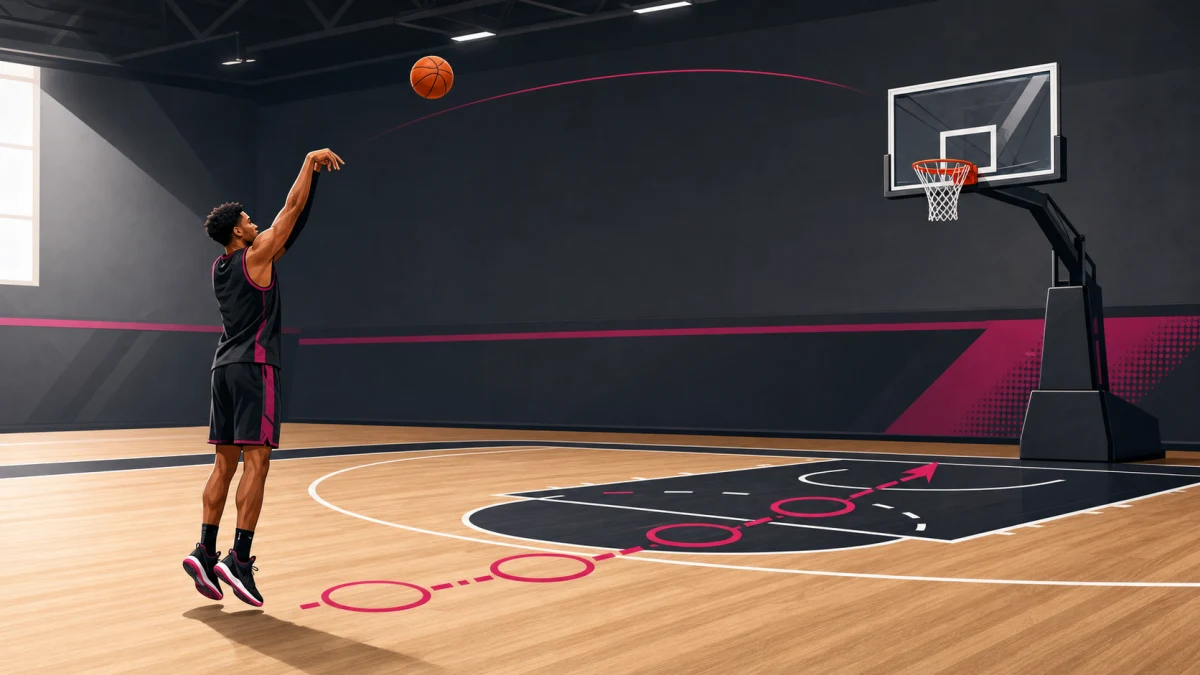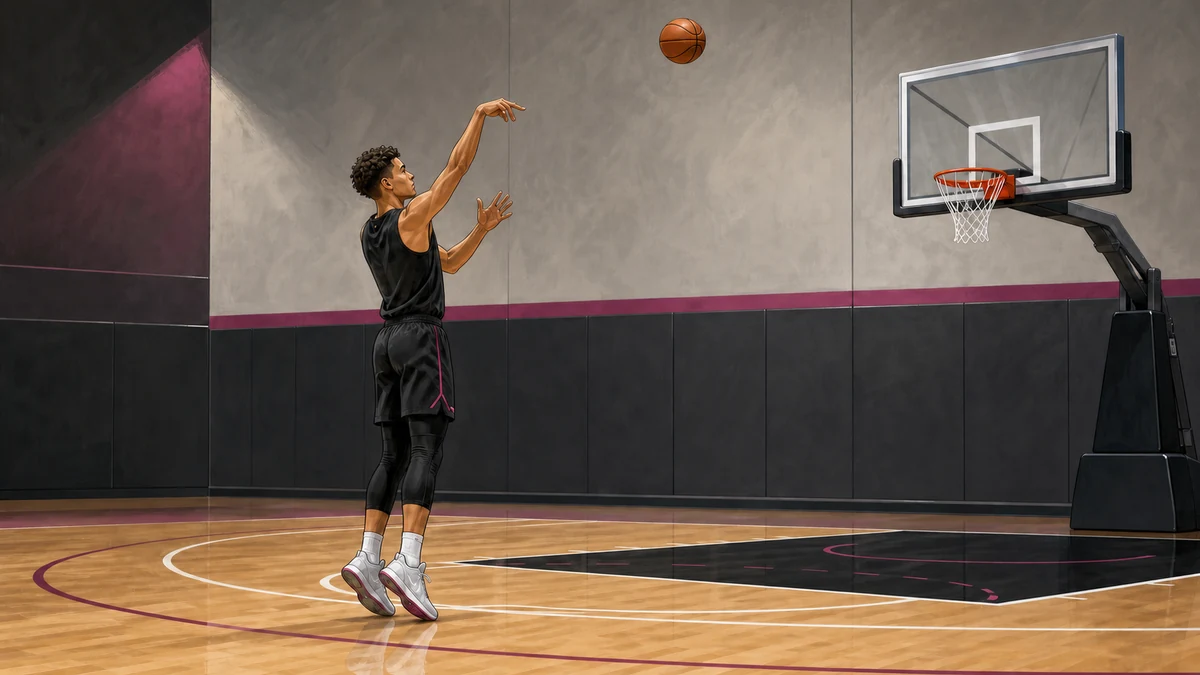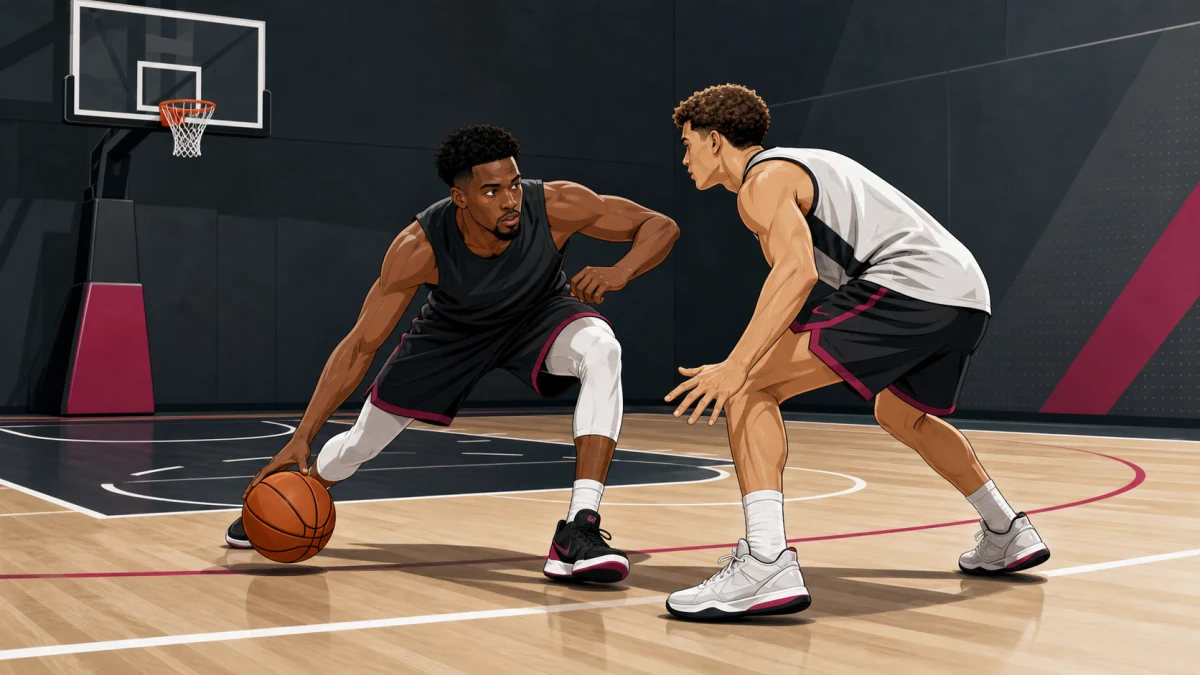

The short version: Keep your dribble alive, retreat into available space and look again. Protect possession with controlled movement, then pass through an available lane or consider reattacking if the defense gives you room. Retreating does not automatically defeat pressure.
Key takeaways
- The retreat’s purpose is to improve your next decision, not to guarantee an escape.
- Practice controlled backward movement while keeping the defender and passing options in view.
- Read the passing lane and the help defense before choosing to pass or reattack.
- Vary defensive responses in practice so the retreat does not always lead to the same move.
Create room for a decision
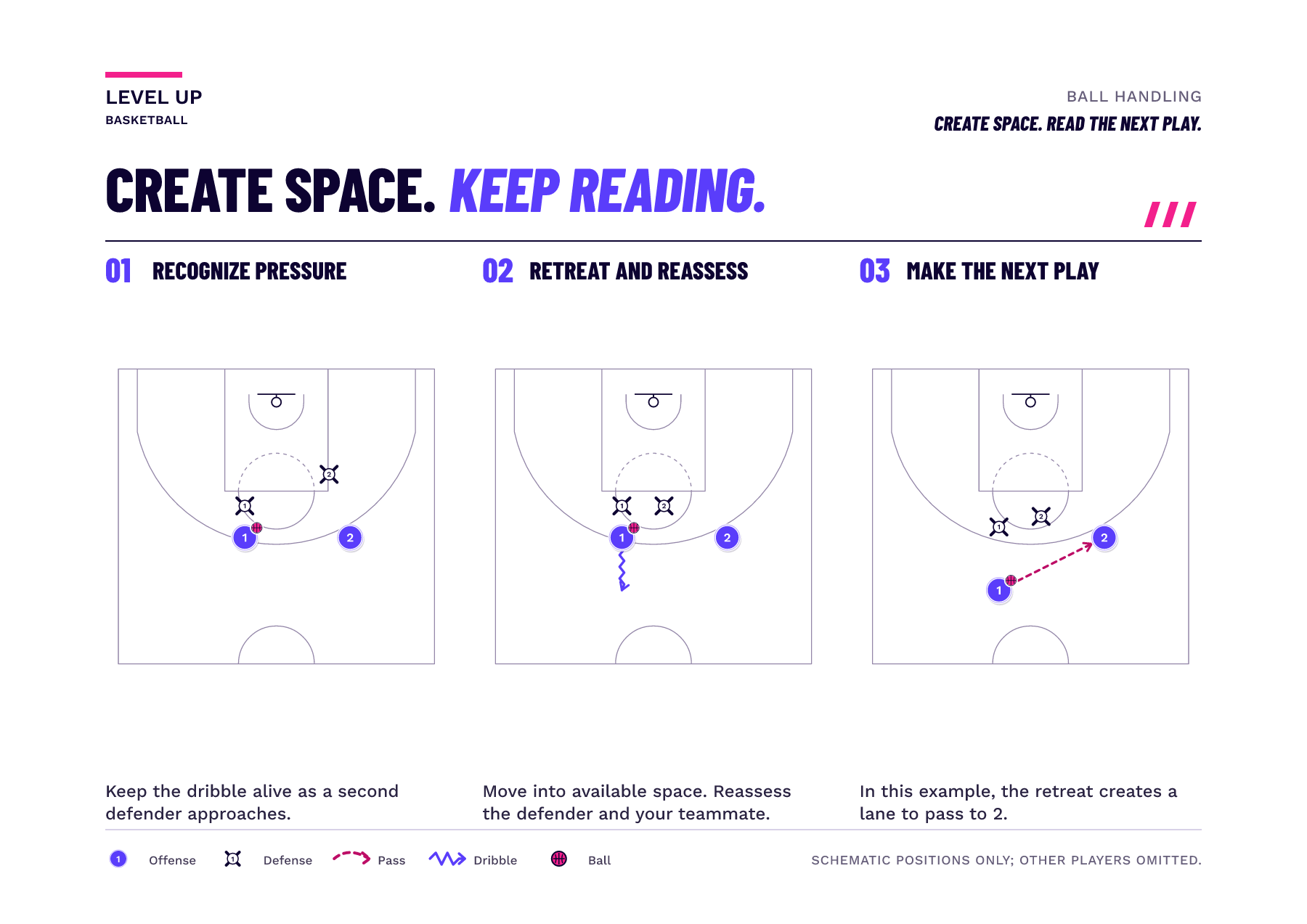
A retreat dribble means moving backward while continuing to dribble. Its immediate purpose is to create space for the next play; the WABC Level 1 manual specifically describes dribbling backward when necessary to make room for a pass. WABC Coaching Level Manuals Level 1 English
Think of the retreat as a chance to look again. You have not necessarily beaten the defender, and moving backward does not guarantee an escape. The useful question is whether the new space gives you a better next action.
Protect possession while you move
As coaching cues, start in a balanced stance with your knees comfortably bent. Keep your body between the defender and the ball where possible, and choose a retreat direction with room behind you. Use controlled backward steps that let you remain ready to change direction. Keep the bounce close enough to manage beside your body rather than reaching out for it. Avoid using your free arm to shove the defender away. Practice slowly enough that you can watch the defender and your teammate instead of following every bounce with your eyes.
Swipe sideways to explore the full diagram.
Decide whether to pass or reattack
The WABC manual describes keeping the dribble alive as a trapping defender commits, then retreating to create space for a pass to an open teammate. That makes the second defender part of your read: watch both the pressure coming toward you and the teammate it may leave available.
- Pass when you can see both an available teammate and a usable lane. Do not assume that a teammate is reachable just because they look open.
- Consider reattacking when the defender gives you a route forward and the help defense leaves room. As a practice cue, redirect from your balanced retreat without adding an automatic pause or another backward step.
- If pressure follows and neither option is available, keep reassessing the space you have. Avoid retreating toward a boundary simply because backward movement was your first answer.
You do not need to complete a predetermined number of retreat steps before acting. If the passing window appears early, use it. If a route forward opens, organize your next dribble toward that space. The point is to connect the retreat to what you see, rather than perform a retreat-and-attack combination regardless of the defense.
Practice a retreat with a real next choice
Try this adaptable practice setup with a ball handler, a defender and a passing partner. Start with controlled pressure and room to retreat. The defender can follow the retreat or give ground; the passing partner can adjust position to offer a target. The ball handler responds by passing or attacking available space. Begin slowly enough to make a deliberate choice, then adjust the pace to the players.
You retreat, the defender follows, and your teammate becomes available through a clear passing lane. What should you consider next?
Consider the pass if the lane is available. The retreat has created a chance to move the ball; there is no need to reattack simply to finish a rehearsed combination.
Was this useful?