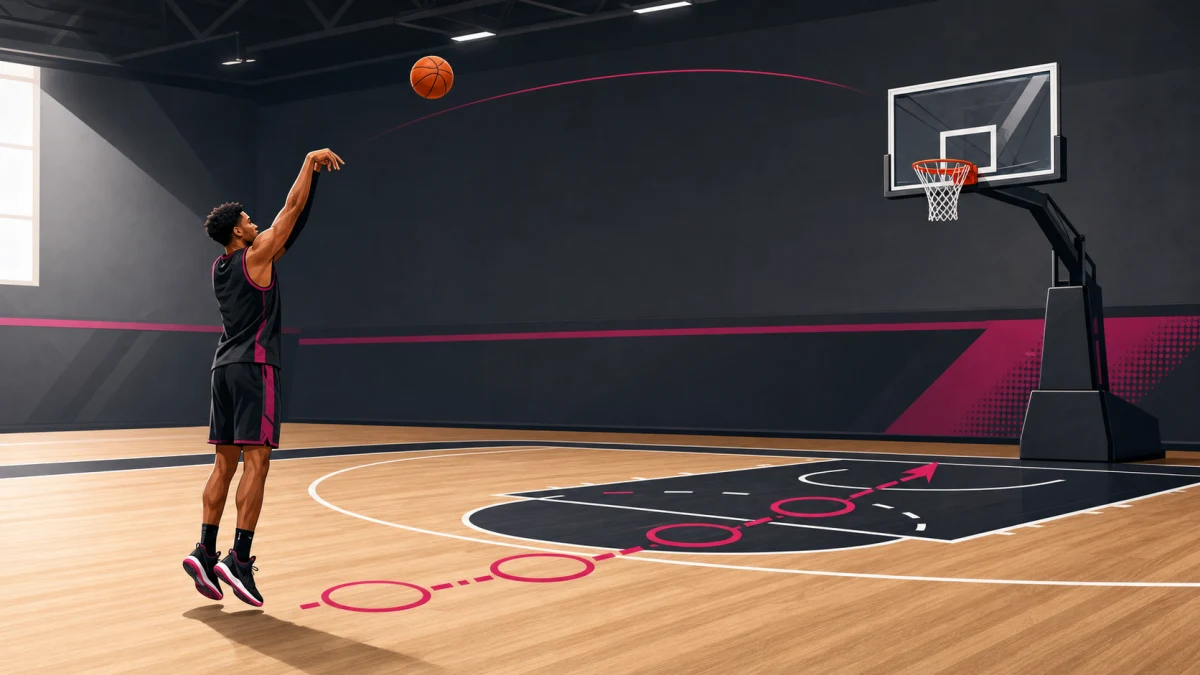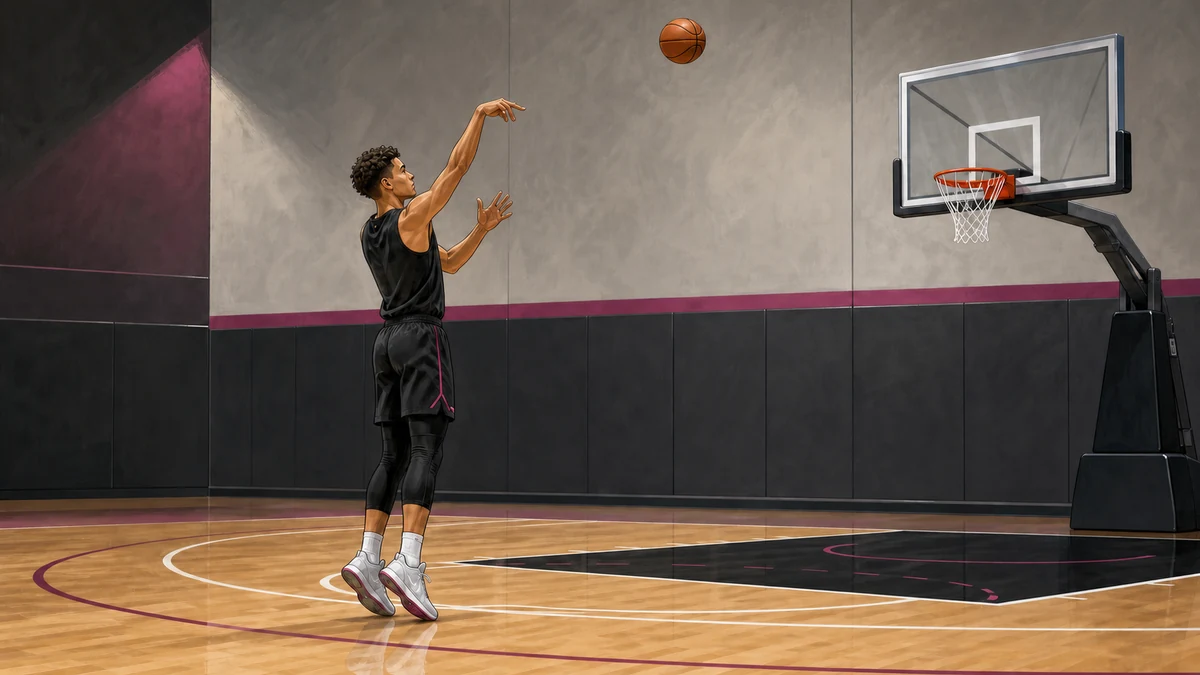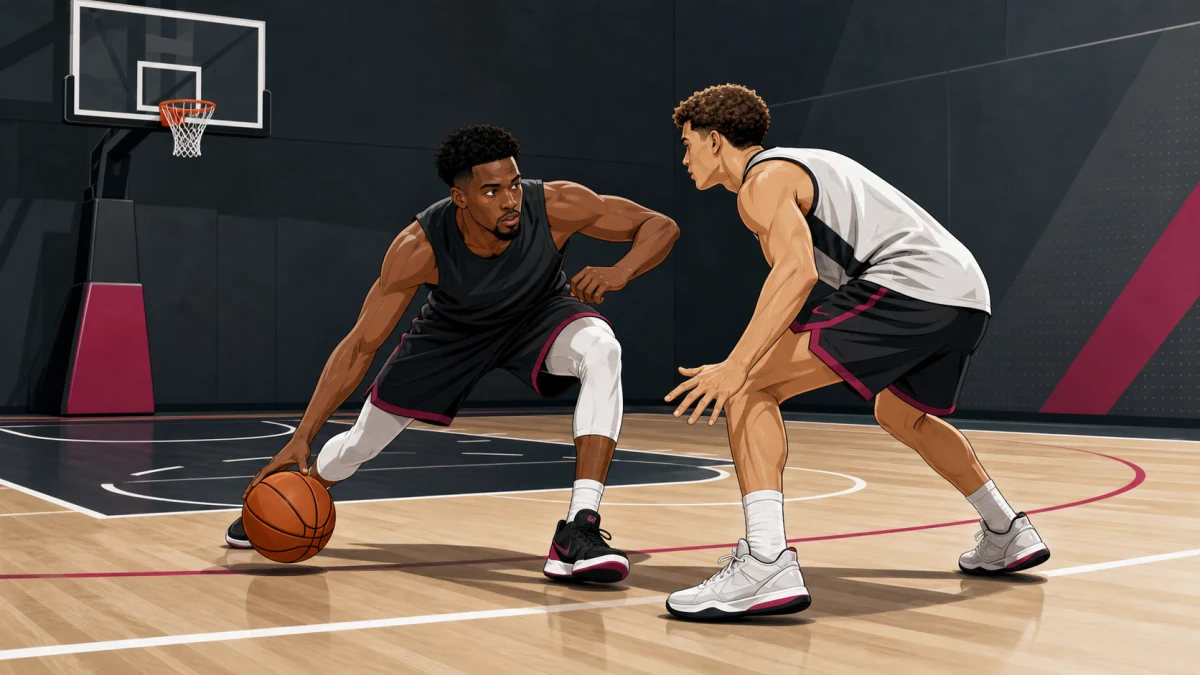

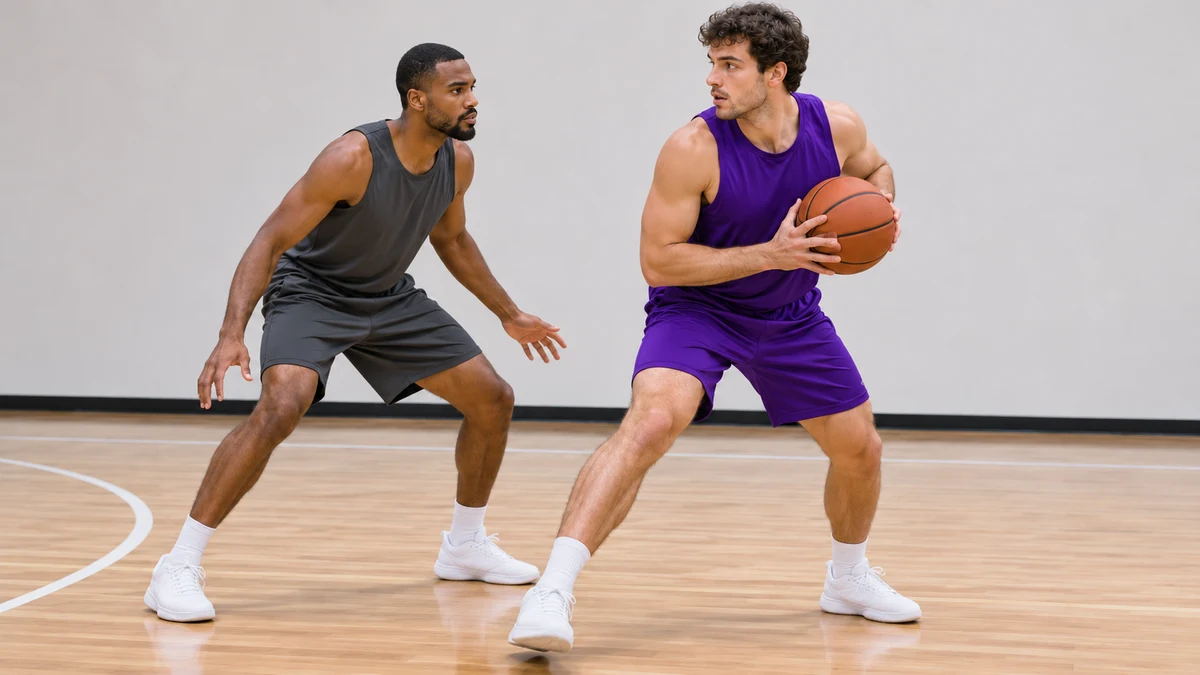
The short version: Secure the catch, establish one pivot foot, and keep its contact point anchored. Step the free foot forward around it, open your body under control, locate the defender, and only then choose the pass.
Key takeaways
- Secure the catch and establish the pivot before trying to create a passing angle.
- In a front pivot, the free foot moves forward with the toes leading; a reverse pivot sends the free foot backward with the heel leading.
- Keep the pivot foot's contact point anchored while the free foot and body turn together.
- Use the open stance to locate the defender and evaluate the lane before releasing the pass.
- Progress from isolated footwork to partner passing, then add guided defensive pressure.
Open the floor before choosing the pass
A front pivot is useful when your first view after the catch is crowded. Instead of forcing a pass from a closed stance, you use one controlled turn to see more of the floor while keeping the ball protected.
The order matters: secure the catch, establish the pivot, open your body, then read the pass. If you decide where to pass before you are balanced, the pivot becomes rushed and the ball often moves before your eyes have confirmed the lane.
Front pivot versus reverse pivot
A front pivot and a reverse pivot turn around the same basic idea—a stable pivot foot—but they travel in different directions. In a front pivot, the toes of the free foot lead as that foot steps forward around the pivot. In a reverse pivot, the heel leads as the free foot moves backward. This lesson stays with the forward turn; the reverse pivot deserves its own decision and footwork lesson. 3 Beginner Basketball Drills that Teach How to Pivot | MOJO Sports
For the front pivot, keep the pivot foot's contact point in place. Step the free foot forward around that anchor and allow the body to turn with the step. Think of the planted foot as the center of a compass: it may rotate at the contact point, but it should not slide across the floor. Basketball Footwork Drills: Jump Stops & Partner Pivots
Swipe sideways to explore the full diagram.
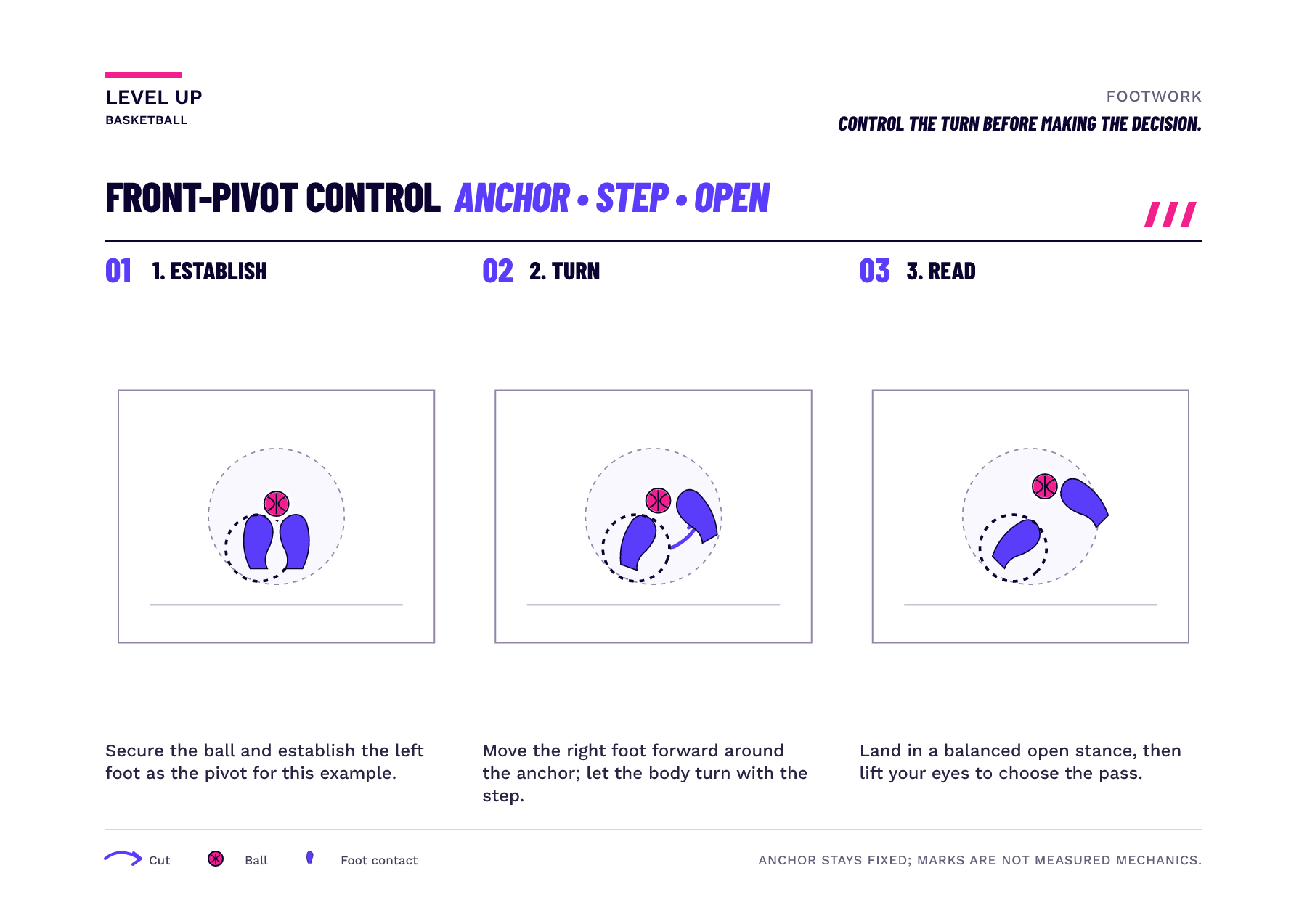
Turn first, then read the passing angle
- Secure the ball first. Use a strong receiving stance so contact or pressure does not dictate your next step.
- Establish the pivot foot. Keep its floor contact point where it is while the free foot prepares to move.
- Open with the free foot. Step forward around the pivot and turn the hips and shoulders with the step.
- Finish balanced. Keep the ball close enough to protect it and avoid leaning past your base.
- Read after the turn. Find the defender, the target, and the space between them before releasing the pass.
Level Up Basketball’s footwork fundamentals guide recommends bringing the chin toward the shoulder before pivoting so you can locate the defender. Treat that look as part of the turn: do not spin into space you have not checked, and do not let your eyes stay on the ball once the catch is secure. Basketball Footwork Fundamentals: Stops, Pivots, and Balance
Swipe sideways to explore the full diagram.
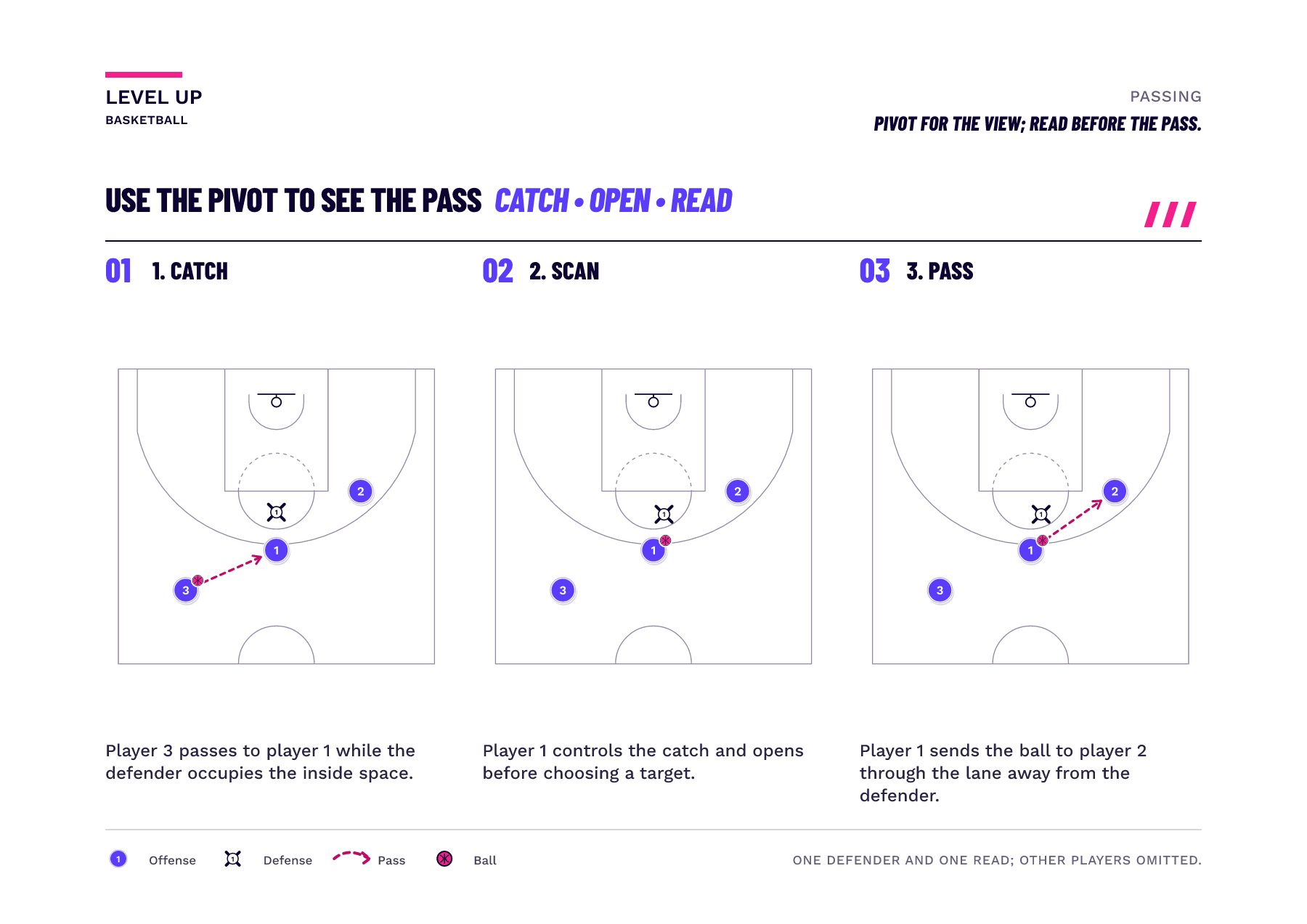
You front pivot and can now see your target, but the defender has shifted into that lane. What should happen next?
Keep the pivot foot anchored, finish the front pivot under control, and read the defender again. The new angle does not guarantee that the first target is open; it gives you a better view from which to choose.
Practice control before adding pressure
Start with a stationary tape drill. Mark the pivot-foot position and ask the player to catch, anchor, step forward around the mark, and freeze in the open stance. The freeze makes a slide, narrow base, or off-balance finish easy to see.
Next, use a partner receive-and-pivot drill. The partner passes from different angles; the receiver secures the ball, front pivots, names the visible target, and passes. Add a guided defender only after the player can control the anchor and finish balanced. The defender can close one lane, forcing the receiver to pivot, scan, and choose rather than perform a memorized pass.
Common mistakes usually break the sequence. A sliding pivot loses the anchor. Twisting the shoulders before the free foot moves pulls the body off balance. Swinging the ball away from the torso exposes it. Passing during the turn replaces a read with a guess. Correct one problem at a time, beginning with the foot that must stay connected to the floor.
Keep building your footwork
Was this useful?