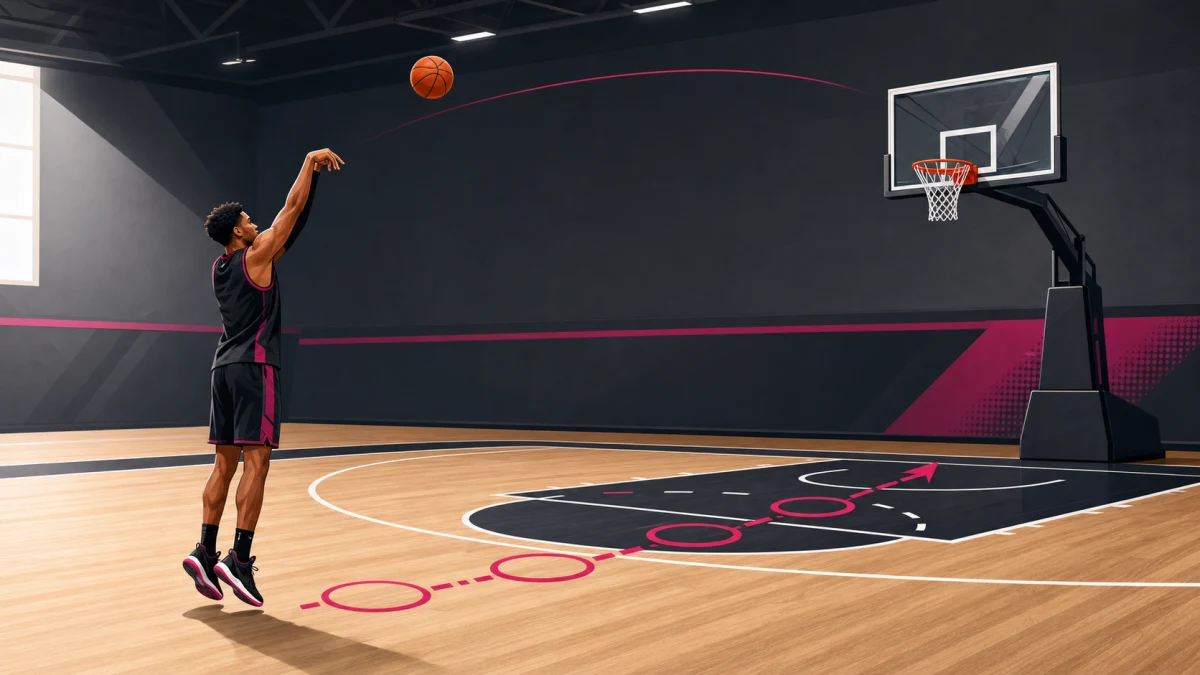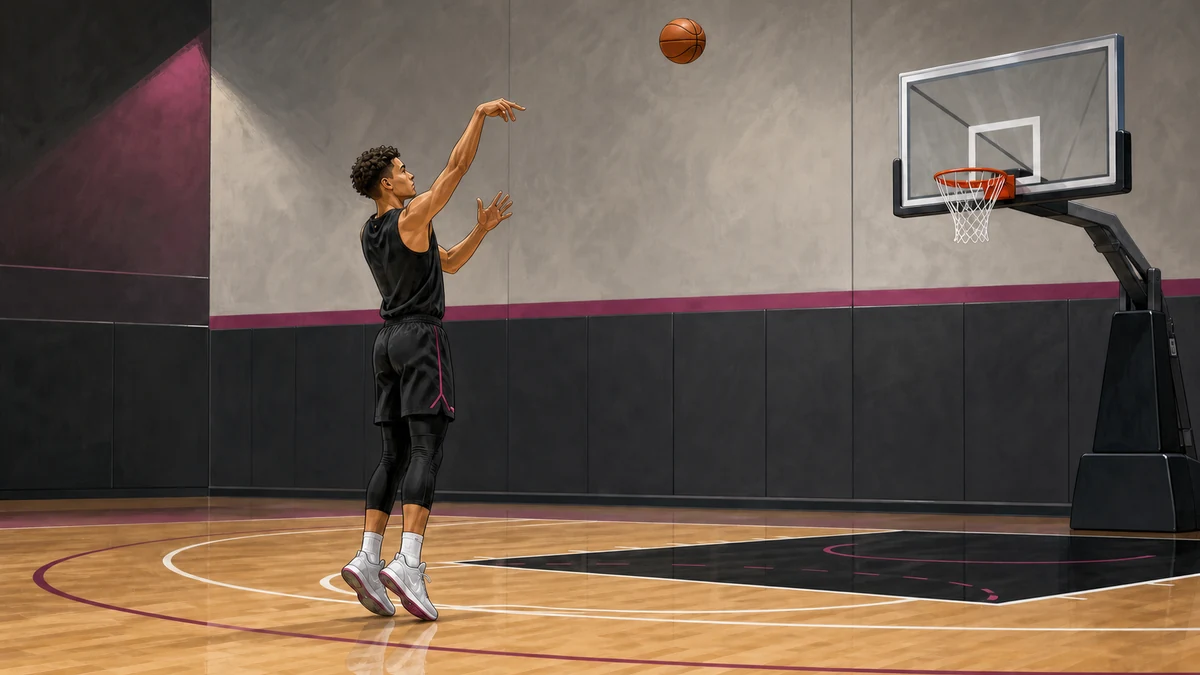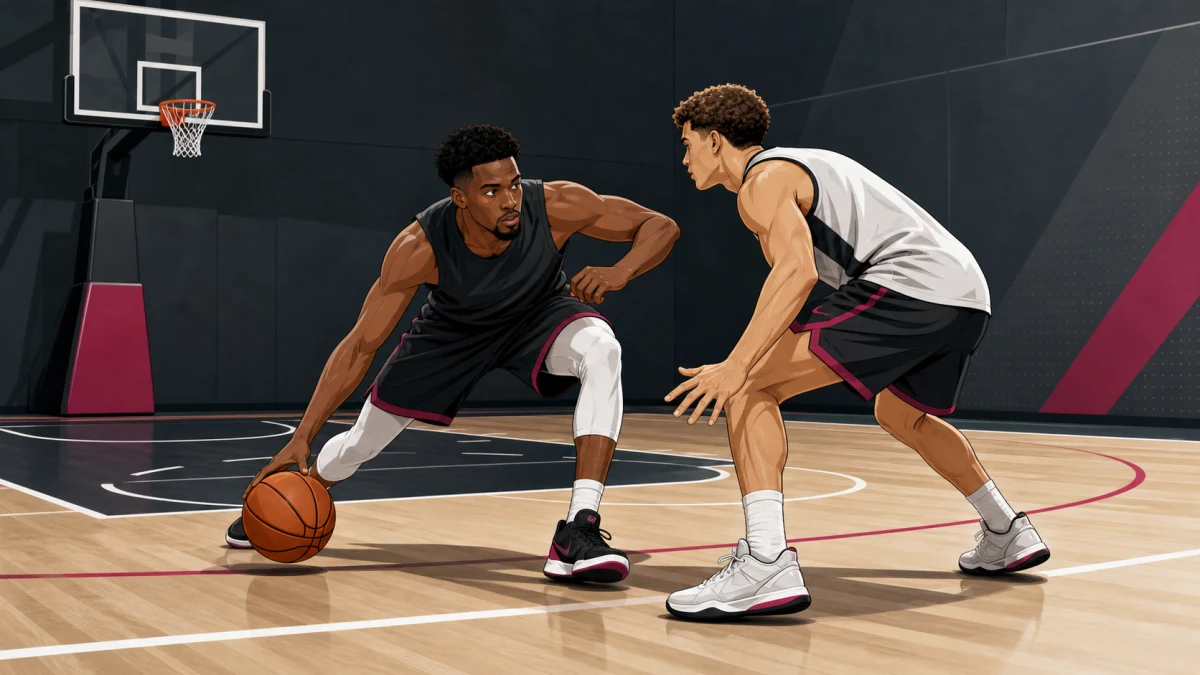
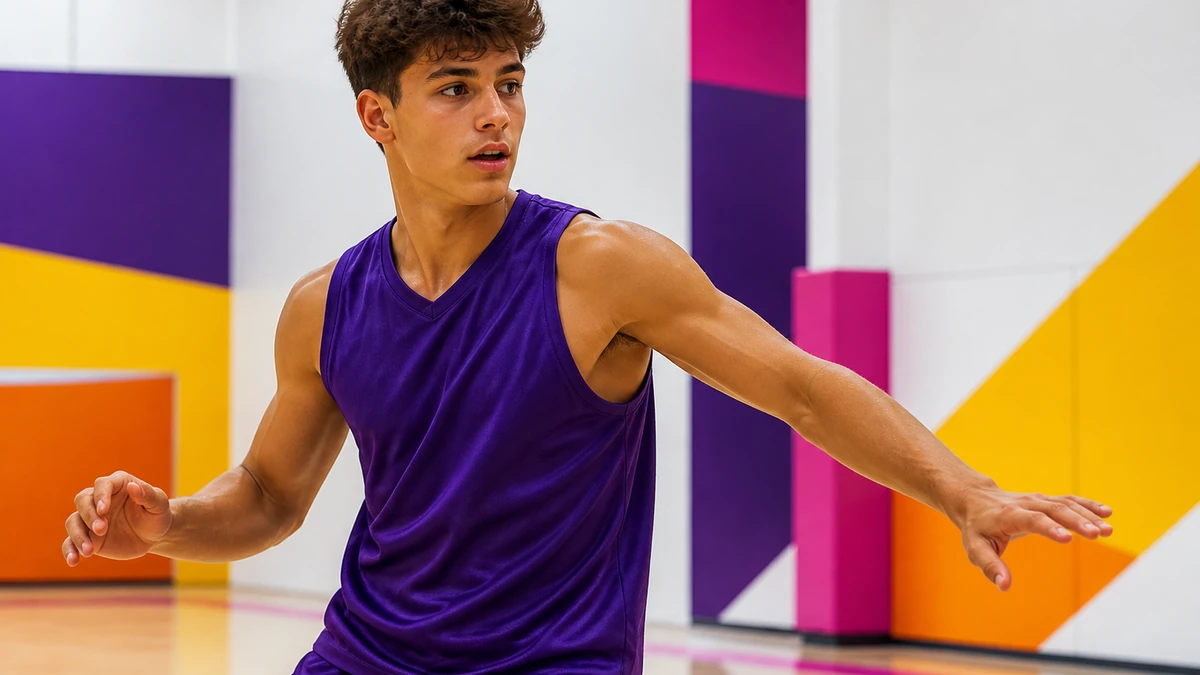
The short version: Deceleration is controlled braking: cover ground fast, then shorten and widen the last steps so the hips stay loaded and the feet stay ready. Treat the stop as the setup for the next dribble, closeout, or finish, match the braking room to the speed and situation, and train it as a progression from controlled footwork to live reads.
Key takeaways
- Deceleration is a braking-and-repositioning skill, not simply stopping in a straight line.
- A balanced jump stop and a low, wide athletic base are the footwork that keep a stop under control.
- How much braking room a player needs changes with speed, angle, and the situation, so it is a read rather than one fixed distance.
- The same braking skill shows up on the change-of-pace dribble, the closeout, and the finish at the rim.
- Build it as a progression: controlled footwork first, then added speed, then live reads in small-sided play.
What deceleration means in basketball
Deceleration in basketball is the controlled braking a player uses to slow the body so it can stop, hold a position, or push off in a new direction. It is the quiet half of speed. Covering ground quickly only helps when the player can also gather that speed and stay balanced enough to do the next job. Most players spend their time training the acceleration and ignore the brake, which is why so many drives, closeouts, and cuts end in a stumble instead of a balanced next move. Jr. NBA Footwork & Conditioning
The clearest example of controlled braking is the jump stop. A jump stop lands on both feet at the same time, and coaches have players land in that position and hold it for a moment so the body learns what a balanced stop feels like. That is deceleration in miniature: the momentum is absorbed into a low, stable base instead of carrying the player past the spot. Once a player can find that balanced landing on purpose, the same feel transfers to stops that happen on the move at game speed. Jr. NBA Rookie Practice Plans
The footwork that keeps a stop under control
Good braking is built on the same footwork that underpins the rest of the game. The jump stop, the pivot, and the jab step are the fundamental movements that let a player move and create space without travelling or losing balance, so training the brake is really training that footwork under a little more speed. The mechanics below are the pieces to rehearse before the pace climbs. footwork fundamentals
- Set a balanced athletic base by bending the ankles, knees, and hips so the weight settles low instead of staying tall.
- Shorten and widen the last two or three steps into the stop so the feet land under a stable base rather than stretched out ahead of the body.
- Come to a complete jump stop and stay low and balanced, which keeps the option to hold the spot or pivot into the next action. Jr. NBA Jump Stop, Pivot and Pass Drill
- Keep the feet from crossing so the loaded hips can push off immediately into a slide, a pivot, or a new direction.
The point of the brake is to arrive ready to do the next thing. If the player only needs to stop, the low, wide base holds the position. If the player needs to keep playing, the balanced landing and uncrossed feet make the first pivot or push-off fast. Treat the stop as a setup for a move rather than an end in itself.
How much braking room does a play need?
There is no single correct stopping distance for every play. The faster a player is moving, the more room the brake needs, so a full-speed sprint into a closeout asks for an earlier gather than a jab step at the elbow. The angle of the cut, the surface, the player's size, and the defender's next threat all change the answer. Team rules can narrow the choices, but the player still has to feel the speed and give the brake enough space.
That is why braking is best trained as a progression rather than a single measurement. A controlled start teaches the feel of the low, wide finish. Adding speed teaches the player to begin the brake earlier as the pace climbs, and practice plans support this by letting coaches raise the technical and physical load a step at a time. The distance is a decision the player learns to make, not a number to memorize.
Deceleration on the dribble, the closeout, and the finish
The reason deceleration is worth training is that it shows up everywhere. On a change-of-pace dribble, the whole move works because the ball handler can brake hard and stay balanced, which is what freezes a defender before the next burst. Losing the brake turns a change of pace into a wild, out-of-control drive, so the same balanced-stop footwork sits underneath that skill too. change-of-pace dribble
- On a defensive closeout, a controlled brake lets the defender arrive low and balanced with the feet uncrossed instead of flying past the shooter.
- On a drive to the rim, a jump stop lets the finisher gather under control and keep both a pivot and a pass available instead of leaving the feet out of balance.
- On a cut off the ball, a sharp brake and a balanced base are what let the player change direction cleanly rather than drifting through the catch.
None of these is a separate skill. Each is the same controlled brake applied to a different job, which is exactly why it pays to train the stop on its own before asking a player to use it inside a busy action.
How to train deceleration from control to live reads
Begin with a short, controlled approach so the player can feel the shift from running steps to shorter braking steps and a low, wide jump-stop finish. Hold the balanced landing for a beat before moving on, and keep the ankles, knees, and hips bent so the base stays stable. This is the same complete-jump-stop-and-balanced-pivot habit taught in basic footwork drills, just performed with a little approach speed.
From there, raise the difficulty a step at a time. Add speed and require the player to still hold the landing, then connect the brake to one action such as a pivot, a slide, or a change of direction so the stop always leads somewhere. Practice plans make this easy by letting a coach dial the technical and physical load up or down to match the individual or the team, so no player is stuck at a level that is too easy or too hard. Jr. NBA / Jr. WNBA Instructional Curriculum
Finish with small-sided play. Let a defender close out and contain a live driver, or let a cutter brake and read a defender, so the player has to choose the stopping point instead of performing a rehearsed one. Curricula deliberately build in small-sided games and start many drills from an unpredictable motion or action, which is what forces the brake to become a real decision rather than a memorized pose. Change the speed, angle, and opponent instead of just adding volume. structured basketball workouts
Frequently asked questions
What is deceleration in basketball?
Deceleration is the controlled braking a player uses to slow the body so it can stop, hold a spot, or push off in a new direction. It is the counterpart to acceleration, and it lives mostly in the last few steps before a stop. The clearest example is the jump stop, which lands on both feet at once and, held for a moment, teaches the body what a balanced stop feels like before it has to happen at game speed.
What footwork keeps a stop under control?
Stay low with a balanced athletic base by bending the ankles, knees, and hips, and come to a complete jump stop while staying low and balanced. Keep the feet from crossing so the hips can push off into the next action. This is the same jump-stop, pivot, and jab-step footwork that lets a player move and create space without travelling or losing balance, so training the brake is really sharpening those fundamentals.
How much room should a player give the brake?
There is no single distance. The faster the player is moving, the earlier the gather has to start, so a full-speed closeout needs more room than a slow jab step. Size, angle, surface, and the defender's next threat all change the answer. Train it as a progression from a controlled start and step the pace up gradually so the player learns to feel the distance rather than memorize one number.
How should players practice deceleration?
Use a progression instead of one drill: a controlled approach and balanced jump-stop finish, then added speed and load, then the brake connected to a real action, and finally small-sided play with a live read. Curricula build in small-sided games and start drills from unpredictable motion, which turns the stop into a decision. Adjust the difficulty up or down so the challenge matches the player.