
The short version: This guide outlines the technical mechanics of basketball cutting, catching on balance, and executing the next offensive action, utilizing official coaching frameworks from the World Association of Basketball Coaches.
Key takeaways
- Execute back door cuts by stepping away, showing a target hand, and pushing off the foot furthest from the basket.
- Establish a legal pivot foot immediately upon catching by mastering jump stops and stride stops.
- Initiate dribbles legally by ensuring the ball leaves your hand before your pivot foot rises from the floor.
- Use structured partner activities like the Guard the Catch drill to practice catching the ball with feet in the air and landing in a stride stop.
How do you time a basketball cut against denial defense?
In competitive basketball, defenders frequently employ a denial stance to prevent an offensive player who is one pass away from the ball from receiving a pass. According to the WABC Coaches Manual English, a defender in a denial stance positions their back to the ball, faces their chest directly toward their opponent, and stretches out the arm closest to the ball with the thumb pointed down toward the ground. WABC Coaches Manual English
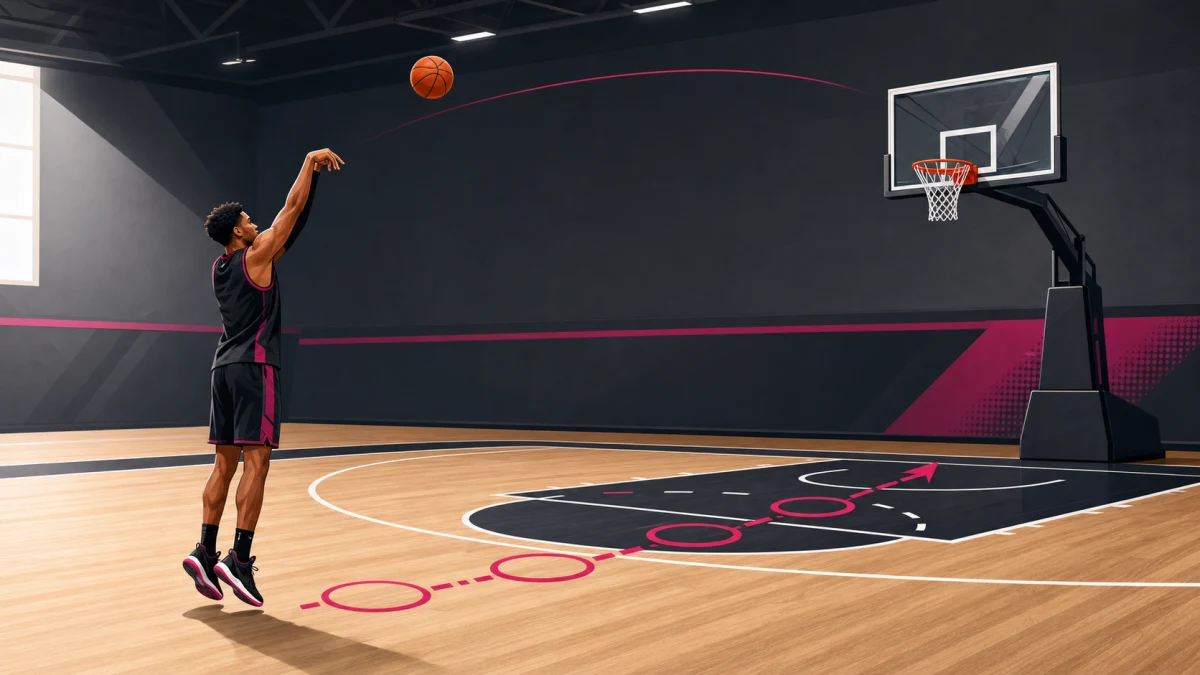
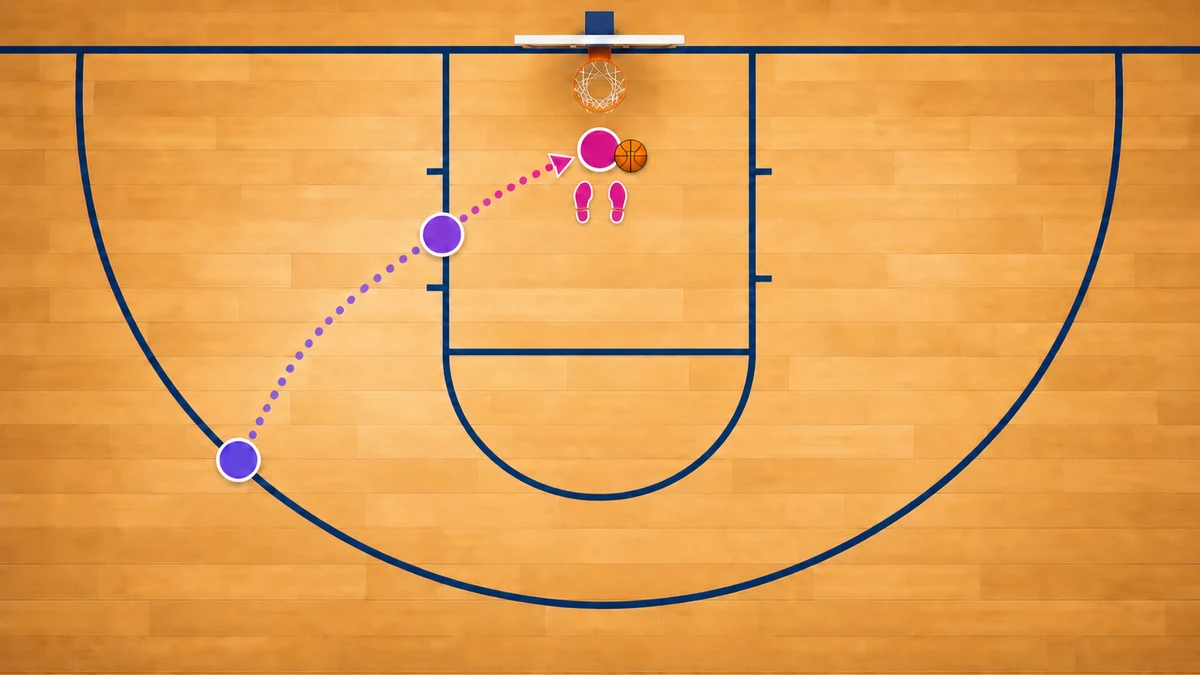
When a player is being denied and cannot receive a pass, they can execute a "Back Door" cut, which is a quick cut directed toward the basket. According to the WABC Coaches Manual English, the offensive player first steps away from the basket and shows a hand as a passing target. They then push off the foot furthest from the basket and cut sharply to the hoop. The manual emphasizes that a player should not take only one or two steps when executing this cut.
How do you execute cuts off screens based on defender positioning?
Offensive players can also execute a back cut off a screen. According to the WABC Coaches Manual English, this cut can be performed when a defender steps in the path of the cutter to prevent them from going over the top of the screen. To execute this action, the cutter steps into their defender as if cutting over the top of the screen, and then changes direction to back cut towards the basket.
According to the WABC Coaches Manual English, if a defender stays below a screen to stop a back cut, the cutter steps toward them and then cuts off the top of the screen. Conversely, if a defender locks to a cutter to run behind them, the cutter curls to cut to the basket to prevent the defender from interfering with the pass.
What footwork is required to catch on balance and establish a pivot?
Receiving a pass on balance involves specific stopping techniques. According to the WABC Start Coaching English Coach Workbook, a jump stop is when both feet land at the same time in stance. Alternatively, a stride stop is when one foot lands and then the other foot lands. When stopping, a player should drop their weight by bending their knees and keeping their nose behind the toes. WABC Start Coaching English Coach Workbook stopping techniques
Establishing a legal pivot foot is determined by how the player lands when catching the ball. Under the rules outlined in the WABC Start Coaching English Coach Workbook, if a player has one foot on the ground when catching the ball, that foot becomes their pivot foot. If they catch the ball while in the air and land with one foot and then the other, the first foot to touch the floor is the pivot foot. If they have both feet on the ground when catching, or catch it in the air and land on both feet simultaneously, they may pivot on either foot, but they cannot change their pivot foot once the first pivot movement is initiated.
How do perimeter players square up and initiate the next action?
According to the WABC Coaching Level Manuals Level 1 English, basic perimeter skills that all young players should be taught include getting open, facing the basket, passing, dribbling, and shooting. The manual highlights that the use of fakes, including drive fakes and shot fakes, is very important on the perimeter. Once they have received the ball, perimeter players must be able to square up by facing the basket with both a forward and reverse pivot. WABC Coaching Level Manuals Level 1 English
Before starting a dribble or after finishing one, a player can pivot by keeping their pivot foot on the ground and stepping with the other foot to turn in any direction and avoid a defender. However, as detailed in the WABC Start Coaching English Coach Workbook, if a player lifts their pivot foot, they must either pass or shoot the ball before that pivot foot touches the floor again. To start a dribble legally, the ball must leave the player's hand before their pivot foot leaves the floor.
When initiating a drive from the perimeter, players can use specific footwork patterns. The WABC Coaches Manual English defines a crossover move as stepping across the body to change direction or start moving. The WABC Coaching Level Manuals Level 1 English explains that an onside step involves beginning a dribble by stepping with the foot in the direction the player is moving, such as stepping with the right foot to move right while executing a right-hand dribble. A crossover step involves beginning a dribble by stepping with the opposite foot to the direction of movement, such as stepping with the right foot to move left while dribbling with the left hand.
How do you deliver accurate passes to cutters?
According to the WABC Start Coaching English Coach Workbook, when passing, a player should step forward to give the pass strength and straighten their arm or arms. Additionally, a player should pass to a teammate who is looking at them and point their toe toward them. To make it easier to complete the actual pass, players can fake a pass to make a pass, as pretending to throw a pass can get opponents to move.
According to the WABC Start Coaching English Coach Workbook, lob passes are more easily intercepted because they are in the air for a long time, which is referred to as flat not loopy. Furthermore, to throw a pass to the left, a player should move the ball to the left-hand side and pass with the left hand, following the rule not to pass across your body.
How do coaches design drills for cutting, catching, and defensive reads?
According to the WABC Coaching Level Manuals Level 1 English, in the Guard the Catch drill, players are in pairs with one ball, and the offensive player throws the ball to one side, moves after it, and catches it with feet in the air, landing in a stride stop (two count) and facing the basket. In the Guard the Corner drill, players are in pairs with one ball and move to an area on the court where there is a marked corner. In the Guard 1 Step drill, players are in pairs without a ball, and one player is designated offence and takes one step to whichever side they wish. partner drills
According to the WABC Coaching Level Manuals Level 1 English, coaches can use questions to set challenges regarding game aspects, such as asking players when they should move to receive a pass. Coaches can also manipulate game rules within activities to emphasize specific skills. For instance, a coach can restrict the number of dribbles in an activity to emphasize passing, or require that no shot be taken outside the keyway unless the ball has been passed or dribbled into the keyway first. shot be taken outside the keyway
How do defenders counter perimeter footwork and drives?
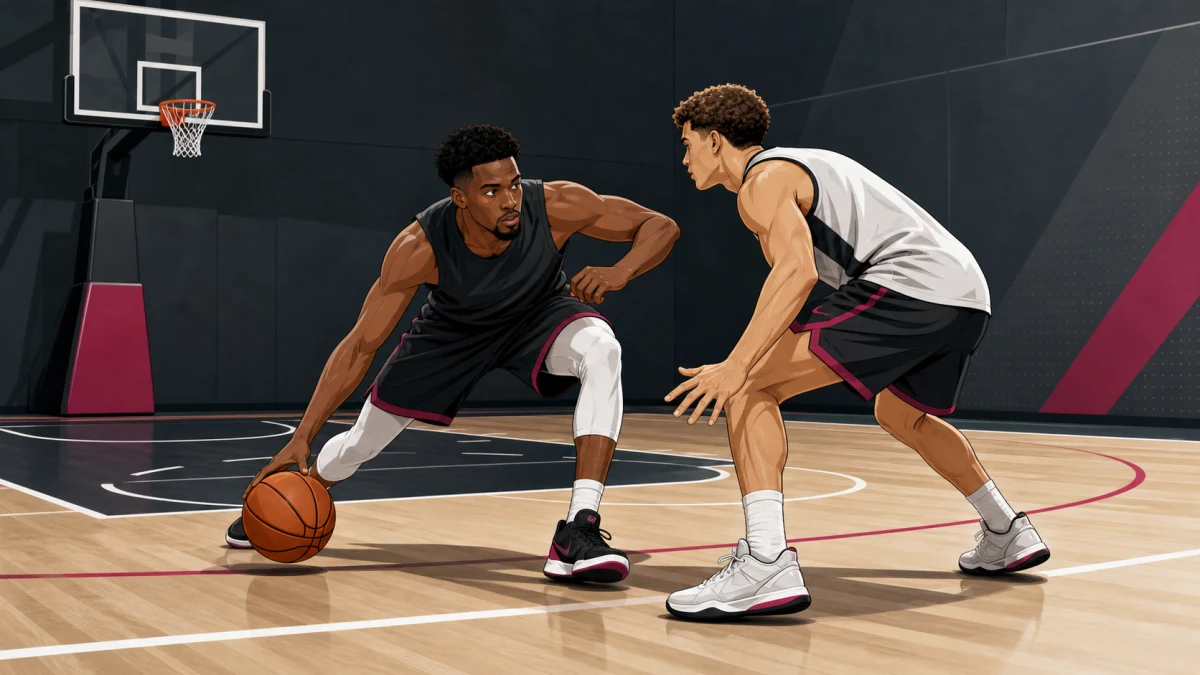
According to the WABC Coaches Manual English, a common mistake that defenders make is reaching for the ball, which takes them off balance. The manual states that active hands must always be used in combination with moving the defender's feet, meaning that when the offensive player moves their feet, the defender must first move their feet. If guarding an active dribbler, the defender should keep the hand opposite the ball low to prevent a crossover and the other hand up to prevent a pass.
According to the WABC Coaching Level Manuals Level 1 English, when channelling a dribbler, the hand closest to the dribbler should be kept low to stop a crossover dribble, while the other hand should be held at shoulder height to stop a pass. If the dribbler attempts to move to the middle of the court, the defender must step into their path.
Frequently asked questions
What is a back door cut and when should you use it?
According to the WABC Coaches Manual English, a back door cut is a quick cut toward the basket used when a defender is denying you and preventing a pass. To execute it, step away from the basket to show a target hand, then push off the foot furthest from the basket and cut to the basket.
How is a player's pivot foot determined when catching a pass?
As detailed in the WABC Start Coaching English Coach Workbook, if one foot is on the floor when catching, that is your pivot foot. If you catch the ball in the air and land one foot at a time, the first foot to touch is the pivot. If you land on both feet simultaneously, you can choose either foot to pivot on.
What is the difference between a jump stop and a stride stop?
Under the guidelines of the WABC Start Coaching English Coach Workbook, a jump stop occurs when both of your feet land on the floor at the exact same time in stance. A stride stop occurs when one foot lands first, followed by the second foot landing.
How should a defender position their hands when guarding a dribbler?
The WABC Coaches Manual English states that when guarding a dribbler, you should keep the hand opposite the ball low to prevent a crossover. Additionally, the WABC Coaching Level Manuals Level 1 English notes that the other hand should be held at shoulder height to stop a pass.