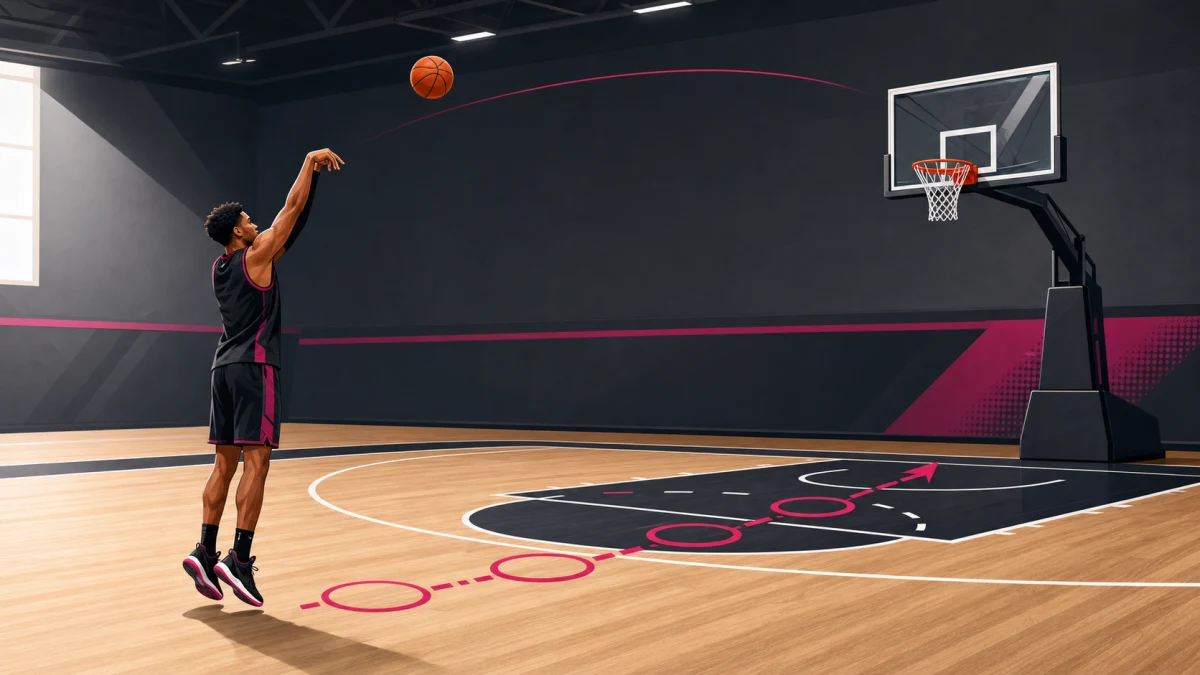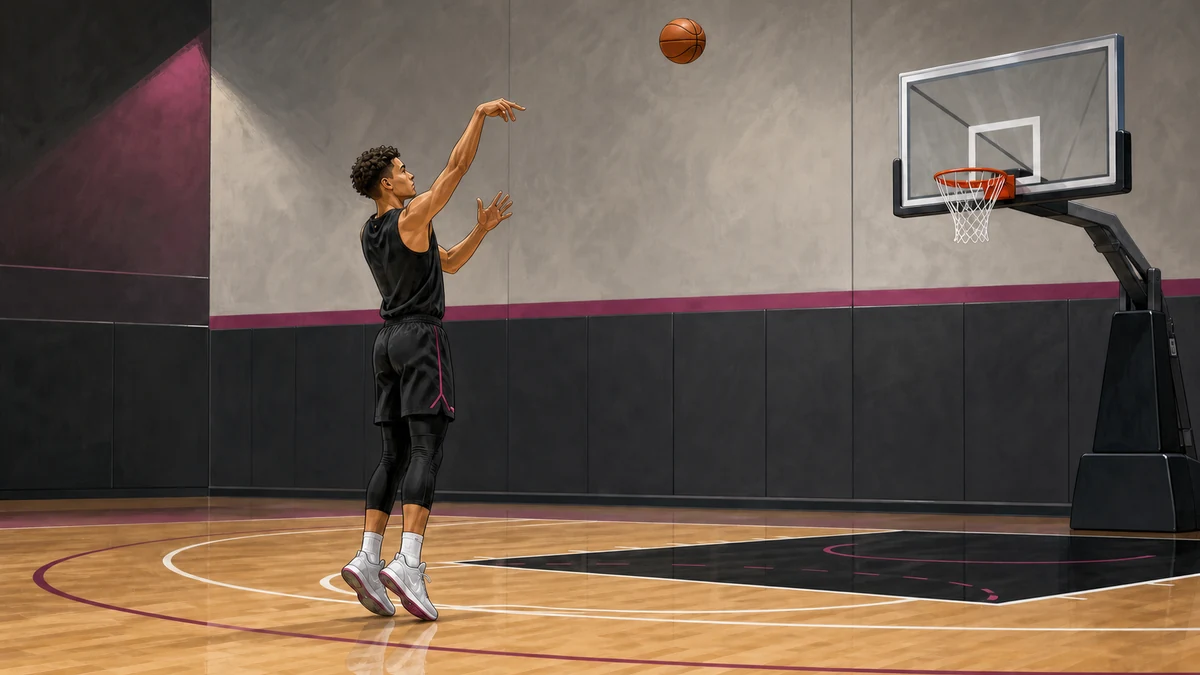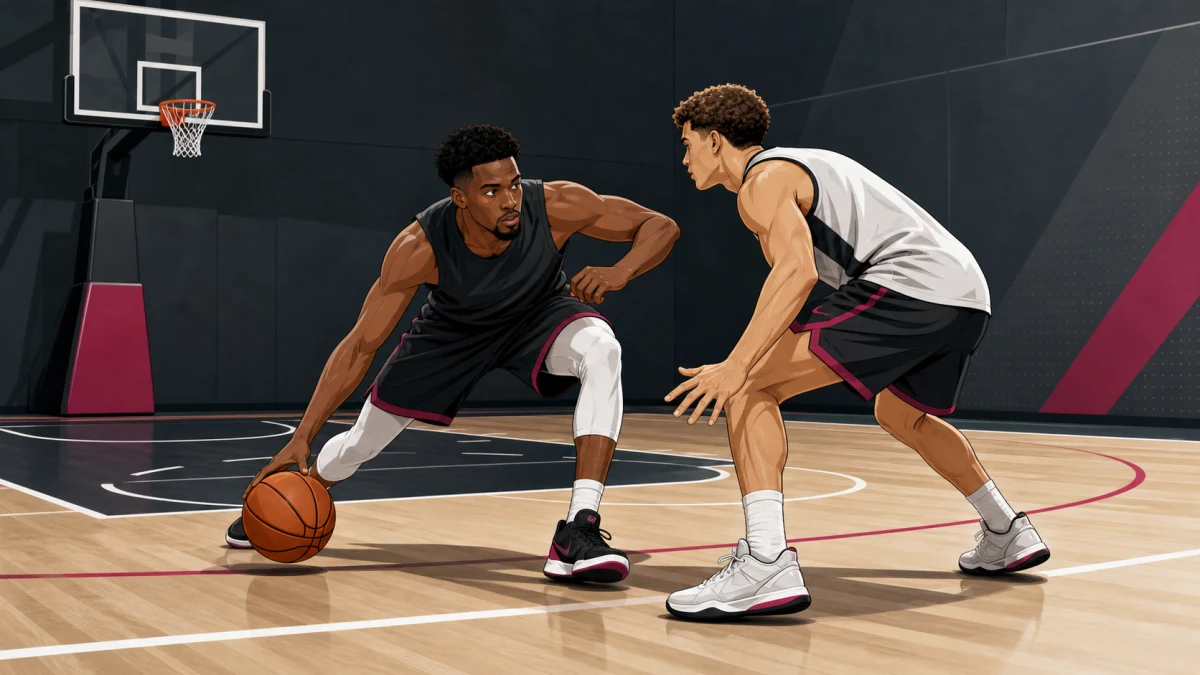
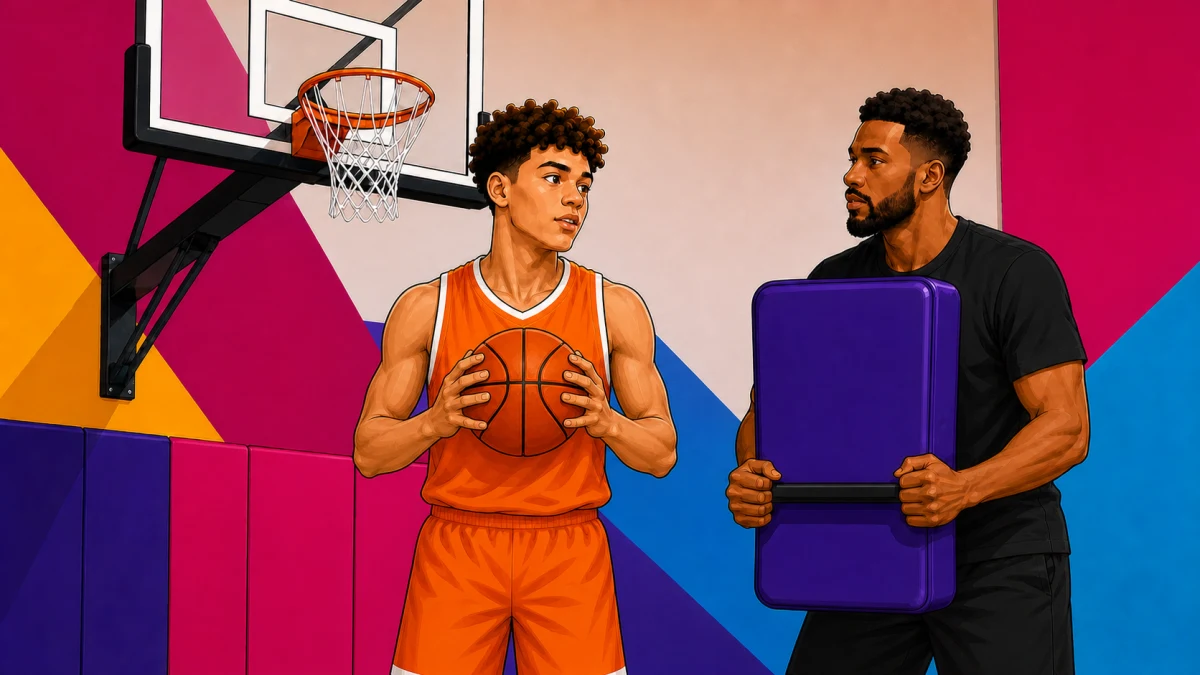
The short version: Build contact finishing from control to chaos. First establish legal pickups and balanced finishes, then add a pad, moving defenders, and pass-or-finish reads while keeping contact age-appropriate and supervised.
Key takeaways
- Train the pickup and body position before adding any pad or defender.
- Use contact as information: finish, pass, stop, or change the release.
- Progress difficulty only when balance, ball security, and decision quality remain intact.
- Separate controlled basketball contact from unsafe collisions or medical advice.
Contact finishing starts before the collision
Finishing through contact means completing the right basketball decision while legal pressure changes your path, balance, vision, or release. The skill begins before bodies touch. Your pickup has to arrive on time, the ball needs a protected home, and your final steps must leave enough control to finish, pass, or stop. A made layup with a loose pickup is not proof of a good repetition; it may simply hide the problem until the defender is stronger or better positioned. WABC Coaching Development Project Video Series progress drills toward game transfer
Treat contact as information rather than a dare. A defender on your outside shoulder may invite a protected inside-hand finish. A second defender at the rim may turn the correct play into a pass. A chest that closes the lane may require a stride stop, pivot, or retreat instead of a forced attempt. This distinction matters because contact-finishing training can become empty toughness theater when every repetition ends with the same predetermined shot. Jr. NBA/Jr. WNBA Instructional Curriculum
Build the skill in five layers
- Own the pickup without contact. Attack from both wings, gather the ball outside the defender's reach, and arrive at the rim under control. USA Basketball Player Development Curriculum
- Add a stable body target. Use a two-foot stop or another finish that lets the player absorb light pad pressure without falling across the lane. Jr. NBA MVP Practice Plan: Finishing Through Contact
- Vary the contact point. Move the pad from hip to shoulder height while keeping force controlled, predictable, and appropriate for the player.
- Add a defender and a choice. Reward the player for recognizing finish, pass, stop, or change-of-hand options rather than forcing a shot.
- Move to live advantage play. Start from different angles and actions so the player must locate the rim, help defense, and teammates before deciding.
Do not confuse sequence with a fixed calendar. One player may be ready for a moving defender on the right side but still expose the ball on the left. Another may handle pad contact yet lose the next-pass read. USA Basketball's mastery-based model supports progressing the skill that is stable and modifying the part that is not. The useful question is not whether the team completed the drill; it is whether the drill's next constraint can be added without erasing the behavior you wanted. basketball footwork fundamentals
Use contact without losing the decision
The best cue is often one the player can see or feel immediately. Ask where the defender's chest was, which side of the ball was exposed, and what happened to the player's eyes after contact. If the player cannot answer, slow the repetition or remove one variable. If the answer is clear but the execution fails, repeat the same read with slightly less pressure. This keeps the learning target visible instead of turning every miss into a command to be stronger.
- Pickup: secure the ball before the defender can swipe down, and keep it away from the pressure side.
- Balance: finish the stop or takeoff without the torso spilling beyond the base of support.
- Vision: find the rim, low defender, and available teammate before committing the release.
- Choice: use the finish that fits the angle, or pass and keep the advantage when the rim is closed.
Avoid grading only makes and misses. Film the repetition from an angle that shows the pickup, defender, and rim. Tag the decision first, then the execution: correct read and good execution, correct read and poor execution, or wrong read. A missed open finish after a clean pickup may deserve a different correction from a made attempt thrown into a waiting shot blocker. That review language helps players understand what to repeat instead of chasing a result that may not repeat.
A practical contact-finishing session
Begin with a short movement and pickup check from both sides. Continue only when the player can gather without drifting into the help defender's space or bringing the ball back toward pressure. Next, add a soft pad at one known point and let the player choose a balanced finish. Then change the pad timing or location. Finish with a small-sided game in which a second defender or corner teammate creates a real pass-or-finish decision. finishing drills
Use quality to control volume. End a set when the player can no longer protect the pickup, land or stop safely, or identify the open read. That is a reason to rest, reduce speed, or return to the previous layer, not a reason to increase collisions. The Jr. NBA example supplies a specific pad drill and two-foot emphasis, but its numbers are an example inside one practice plan, not a universal prescription for every age, body, or training day.
| Layer | Pressure | Pass condition |
|---|---|---|
| Pickup control | No contact | Ball protected and body under control |
| Pad finish | Light, known contact | Balance and release choice remain stable |
| Variable pad | Light, changing contact | Player adjusts without exposing the ball |
| Live read | Defender plus outlet | Player recognizes finish, pass, or stop |
Safety and common mistakes
Controlled basketball contact is not a substitute for reckless fouling. The pad holder should be stable, visible, and working at an agreed intensity. Do not strike a player who is airborne, blindside the player, or create contact near walls, equipment, or another line. Younger or less experienced players need lower speed and simpler reads. Pain, dizziness, or a recent injury is a stop signal and belongs with a qualified health professional, not an internet drill progression.
Three mistakes appear repeatedly: adding force before the pickup is secure, rewarding a forced shot because it went in, and using the same contact angle every time. The repair is straightforward. Remove contact until the ball is protected, grade the decision separately from the result, and change only one constraint at a time. Progression should make the player more adaptable, not merely more familiar with one coach holding one pad in one place.
Frequently asked questions
How do you practice finishing through contact in basketball?
Start without contact and establish a protected pickup plus a balanced finish. Add light pad pressure at a known point, then vary the contact and finally add a live defender and passing option. Advance only while the player can stay under control and make the correct read.
Should players always jump off two feet through contact?
No. The Jr. NBA practice example uses a two-foot finish to emphasize balance, which is a valuable layer, but live basketball includes one-foot, two-foot, same-foot-same-hand, reverse, floater, stop, and pass solutions. Train the two-foot option without presenting it as the only correct answer.
How hard should the contact pad hit?
Use the minimum controlled pressure needed to challenge the current skill. The player should know the drill, the holder should remain stable, and the repetition should not create a dangerous fall or uncontrolled collision. Reduce force when balance, ball security, or decision quality disappears.
What should coaches grade besides makes?
Grade the pickup, ball protection, balance, vision, finish or pass choice, and execution. A make can follow a poor decision, and a miss can follow a correct read. Film review is most useful when those parts are separated before the final result is discussed.