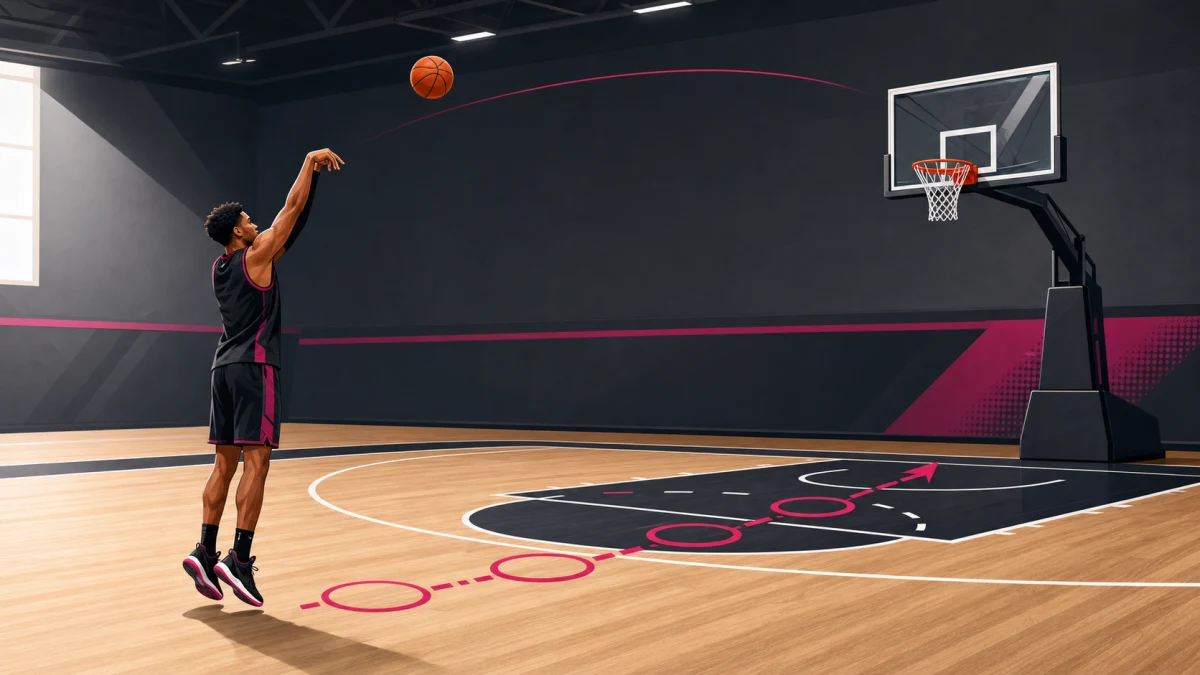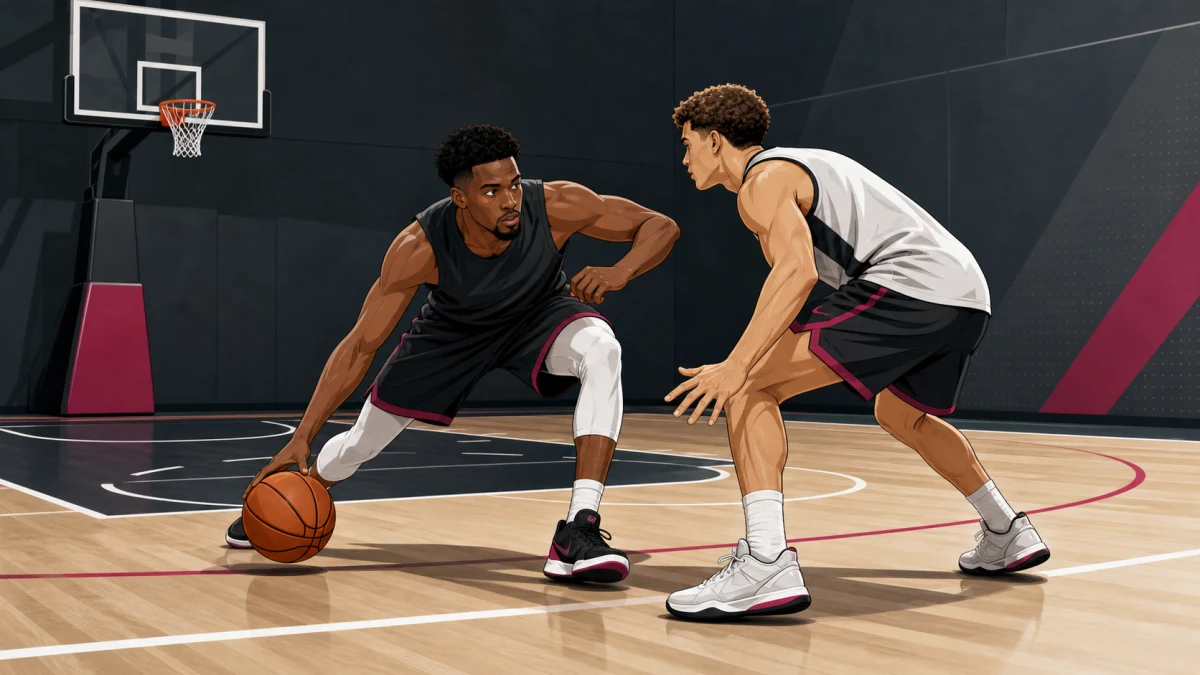

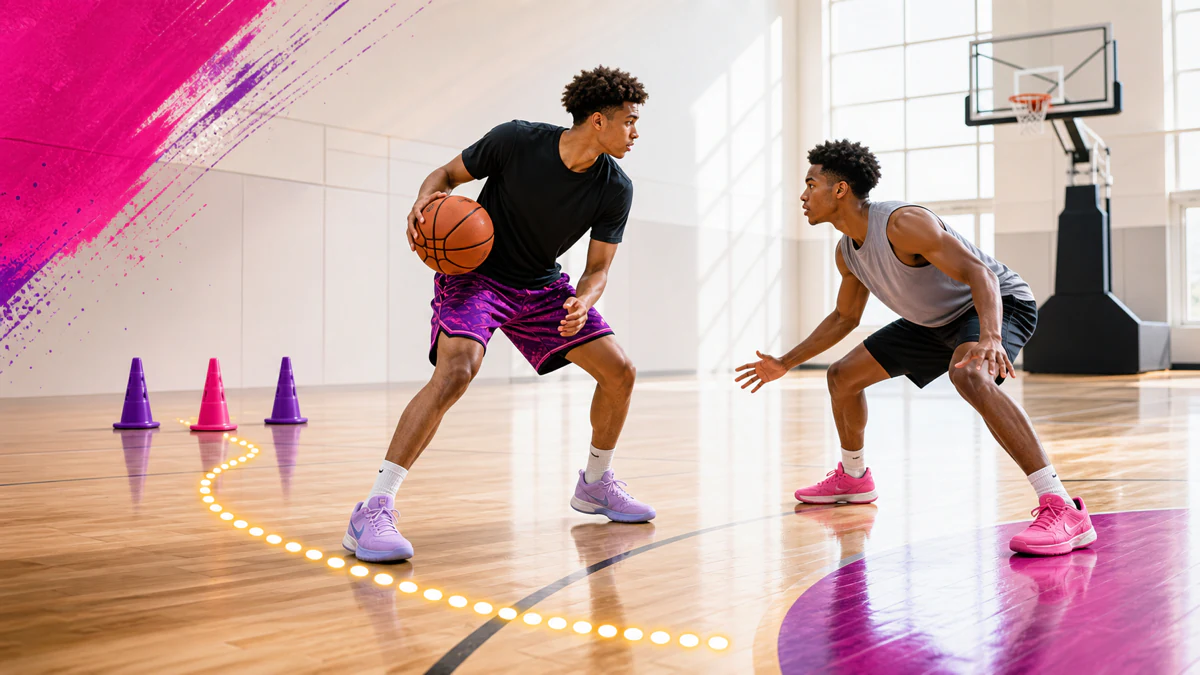
The short version: Start with a clear skill objective, establish control, then add movement, perception, defensive pressure, and decisions one layer at a time. Progress when the player can keep the objective under the current challenge; deload when the task hides the skill you meant to teach.
Key takeaways
- Progress the skill, not the player's age or the drill's entertainment value.
- Add one meaningful source of complexity at a time so you can see what changed.
- Use a coach or guided defender as a bridge between isolated technique and live play.
- Random starts and small-sided games can create reads that scripted repetitions remove.
- Game transfer is a testable goal, not a promise that any single drill can guarantee.
Start with one observable skill objective
Before adding cones, clocks, defenders, or scoring, name the basketball action you want to survive the progression. It might be arriving on balance for a catch-and-shoot, protecting the ball on a change of direction, or reading the help defender before a pass. USA Basketball's curriculum is organized by mastery rather than a fixed age ladder: begin with the simplest drill that reveals the player's current level, then progress when performance justifies it. That makes the objective observable and keeps a flashy setup from hiding whether the skill is actually improving. USA Basketball Player Development Curriculum build a basketball practice plan
Write a success condition that is challenging but attainable. Instead of 'finish the drill,' use a cue connected to the action: land under control, keep the dribble outside the defender's reach, or make the pass when the help commits. The standard can be qualitative; it does not need invented percentages. USA Basketball also notes that one player may be advanced in one skill and foundational in another, so progression should be specific to the action in front of you rather than applied to an entire team at once.
Build the drill in five layers
| Layer | What changes | What stays visible |
|---|---|---|
| 1. Technique | Stable start and a clear movement pattern | The core footwork, handle, pass, or finish |
| 2. Movement and timing | Add an approach, relocation, transition, or recovery | The same technical objective at a realistic tempo |
| 3. Perception | Add a visual cue or random start | The player must see before acting |
| 4. Defensive pressure | Move from coach or guided defender to live pressure | The skill remains connected to space and an opponent |
| 5. Decision and consequence | Allow multiple valid reads and a basketball outcome | The player solves the situation instead of reciting a route |
Jr. NBA/Jr. WNBA Instructional Curriculum WABC Coaching Manual Level 2
Treat the layers as adjustable, not as a one-way staircase. Jr. NBA's current curriculum explicitly uses loading and deloading to increase or decrease difficulty. If a new visual cue causes the player to lose the original footwork on every repetition, remove or simplify the cue, restore the action, and try a smaller step. If the player can execute without looking at the relevant defender or space, the task may be too predictable. The useful challenge is the one that keeps the teaching point visible while asking for a slightly more realistic solution. Jr. NBA Starter Practice Plans
Progress the defender instead of jumping straight to chaos
A defender should first clarify the read, not erase the rep. The WABC manual describes a practical bridge: beginners may work in a stable setting, then respond to a coach or static stimulus before variability increases. For a finishing drill, the coach might occupy the help spot without contesting, then show one of two guided positions, then allow a live defender to choose. For shooting, a controlled closeout can arrive from a known angle before the defender receives freedom to contest or take away the shot. Each step adds information the offensive player must perceive. structure a basketball shooting workout
- No defender: establish the starting stance, ball position, footwork, and finish without rushing the explanation.
- Coach as a landmark: place a body in the help or closeout space so the player connects technique to court geometry.
- Guided defender: limit the defender to a small set of honest actions so the player must read but can still find the target skill.
- Live advantage: begin with a realistic edge, such as a late closeout or shifted help defender, and let both players compete from there.
- Live neutral play: remove the designed advantage only when the skill remains recognizable under the earlier pressure.
Create reads, not choreography
A player can memorize a route without learning when to use the skill. Jr. NBA's curriculum updates address that gap with random starts, explicit decision-making, and more 1v1, 2v2, 3v3, and advantage games. A random start does not mean chaos. It can be as simple as beginning from one of two cuts, receiving the ball on an unpredictable side, or reacting to a defender's stance. The key is that the cue changes before the decision, so the player must scan and select rather than launch a rehearsed response.
Keep the instruction broad enough to preserve a basketball solution. Tell the player what problem matters—create an angle, protect the ball, force help, or find the open teammate—then let the defender's position shape the answer. The WABC manual recommends game-like environments when appropriate and warns that task difficulty should match the performer. If the rule produces frantic movement with no usable read, simplify the space or the defender. Complexity only counts when it makes perception and action more representative of the game.
Know when to progress, hold, or deload
| What you observe | Likely response |
|---|---|
| The objective stays visible and the player recognizes the cue | Add one new layer of movement, perception, or pressure |
| Technique disappears as soon as the cue arrives | Reduce the cue set or slow the entry, then rebuild |
| The player succeeds without looking at the defender or space | Change the start or add an honest read |
| The task is too easy for one player and overwhelming for another | Load and deload individually rather than moving the whole group together |
| Competition changes the drill into an unrelated race | Reset the scoring rule around the intended basketball action |
Do not confuse a missed shot with a failed progression. The question is whether the player recognized the information and executed the intended solution with enough control to learn from it. A correct read can still end in a miss; a make can hide a poor read. Review the decision, the technique, and the outcome separately. That protects the teaching point and makes it easier to choose the next load for each player rather than rewarding only the final result.
Run a simple game-transfer audit
- Did the drill present a cue the player can actually see in a game, such as defender position, open space, or a teammate's movement?
- Could more than one response be correct, or did the setup force a single choreographed answer regardless of the defense?
- Did the defender or constraint change the timing and space in a basketball-realistic way?
- Could you make the drill easier or harder without changing the skill objective?
- When pressure increased, could you still identify the original teaching point in the player's solution?
No single drill guarantees game transfer. This audit gives the coach a better test: the practice should preserve the information, timing, space, and pressure that make the skill useful. The WABC manual frames the ultimate aim as transfer and recommends game-realistic factors, while USA Basketball ties progression to demonstrated mastery. Use those principles to revise the task, then watch what the player does in later live play.
Frequently asked questions
When should I add a defender to a basketball drill?
Add a defender when the player can show the core action clearly enough that pressure will create a useful read rather than erase the skill. A coach or guided defender can be the bridge. The WABC manual describes stable practice for early learning, a static stimulus for inexperienced players, and progressively greater variability as proficiency develops.
Does game speed mean every repetition must be maximal?
No. The relevant speed is the speed at which the player can perceive the cue and execute the current objective with control. Task difficulty should match the player's level. If speed removes the read or destroys the movement pattern, deload the entry or simplify the decision, then raise the challenge again when the action is visible.
How do I make an isolated drill more game-like?
Add one representative feature at a time: movement into the catch, a random start, a visual cue, a guided defender, or a small-sided advantage. Keep the original skill objective unchanged while the player gains more information to read. Jr. NBA specifically uses random starts, decision-making, and small-sided games, while the WABC manual recommends game-realistic factors when appropriate.
What if players on the same team need different progressions?
Load and deload the same activity by player. USA Basketball notes that an athlete can be advanced in one skill and foundational in another. Jr. NBA practice materials also provide technical, competitive, and deload options. Change the cue set, defender freedom, starting advantage, or space while keeping the team's shared objective intact.