The short version: An effective shooting workout transitions from close-range calibration to dynamic movement, decision-making, and competitive constraints.
Key takeaways
- Begin with close-range form shooting close to the rim to calibrate mechanics, rather than taking long shots away from the basket.
- Incorporate functional movement variability to help players adapt to unpredictable game environments.
- Add technical and competitive loads, like defensive contests, to introduce variability and decision-making options.
- Use decision-making drills to couple perception with action and simulate real game-speed scenarios.
- Set realistic development timelines, as shooting form changes take four to six weeks to feel natural.
Redefining the Shooting Workout: Beyond Empty Repetitions
USA Basketball defines training to include all activity related to a player's technical skill development, which forms the foundation of any effective court session. For young athletes in Stage 3 (Learning to Train, ages 8-12), USA Basketball recommends a 70:30 training-to-competition ratio to ensure they spend enough time honing these fundamental skills. However, simply standing in one spot shooting hundreds of uncontested shots does not prepare players for real games. To bridge this gap, coaches and players can design structured shooting workouts that transition from closed technical calibration into dynamic, representative practice. By organizing these sessions effectively, players can maximize their court time and build shooting skills that actually transfer to competitive environments. USA Basketball Player Development Curriculum - USA Basketball
At the Starter Level, the fundamental skills will be honed and expanded upon while the players develop an understanding of what it means to be a part of a team. This development involves moving away from static, repetitive shooting drills that lack game-like context. Instead of chasing a high volume of low-effort shots, players can use a structured framework that introduces representative elements. By organizing a session into distinct phases—calibration, movement variability, and decision-making—coaches can simulate the physical and mental demands of live play. This approach is designed to help players adapt their mechanics to the unpredictable nature of a real basketball game. Starter Practice Plans - NBA.com: Jr. NBA
Phase 1: Technical Calibration and Close-Range Form
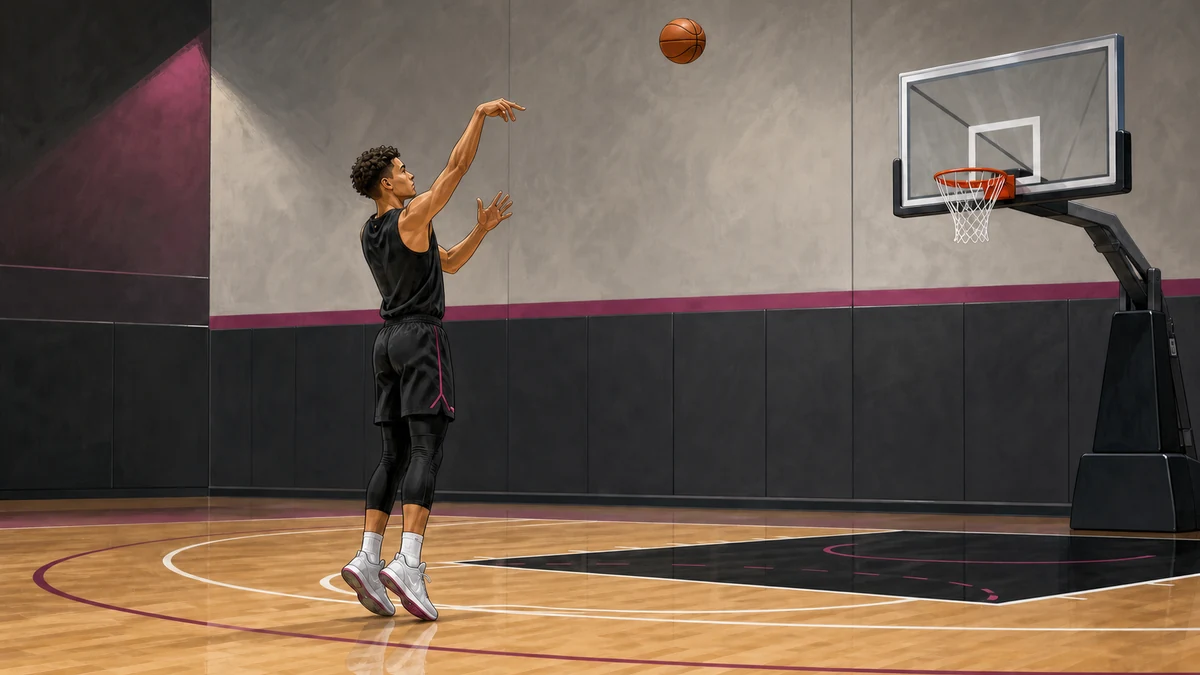
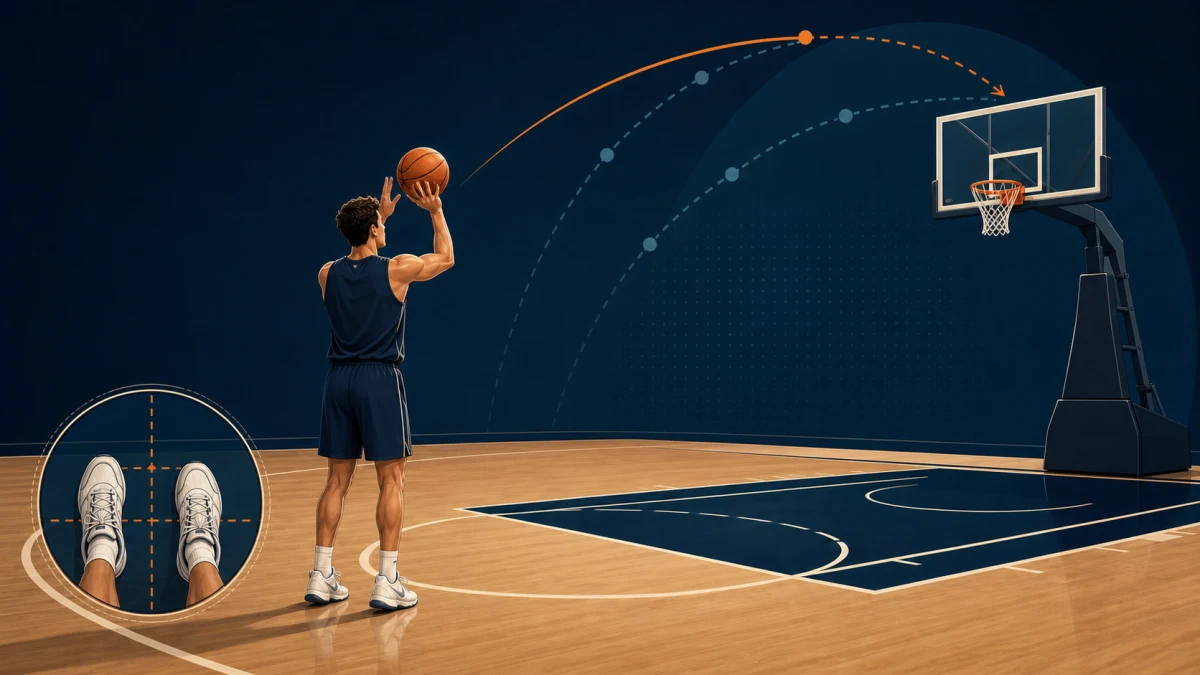
Every high-quality shooting session should begin with a brief calibration phase to establish proper mechanics. Taking long shots away from the basket at the beginning of development is a sure way to develop poor shooting habits. To prevent this, players should start close to the rim. One-hand form shooting involves standing within a few feet of the basket and putting the ball in the dominant hand in front of the player. In one-hand form shooting, players lift the ball in one hand so that their elbow is underneath it and their palm is facing the sky. This close-range focus allows players to concentrate on their release and alignment before adding distance or speed. How to Shoot a Basketball - NBA.com: Jr. NBA
During this initial calibration, players focus on their base and foot alignment. For example, a right-handed shooter's right foot should be slightly, and not more than five inches, in front of the left foot, facing the basket. Establishing this stance close to the rim allows players to focus on their physical alignment and release path rather than rushing to the three-point line.
Phase 2: Introducing Movement and Functional Variability
Once calibrated, players must transition to dynamic movement. Functional movement variability allows performers to adapt to fluctuations in the environment, enabling the task goal to be successfully achieved. It is desirable to create practice tasks that promote movement variability and exploratory activity to encourage the learner to discover individualized and functional solutions. Instead of shooting from the exact same spot repeatedly, players should move around the court, catching and shooting from different angles and distances. This variability forces the body to constantly adjust, which is exactly what happens during a live game. 1 S2 0 S1469029225000275 Main
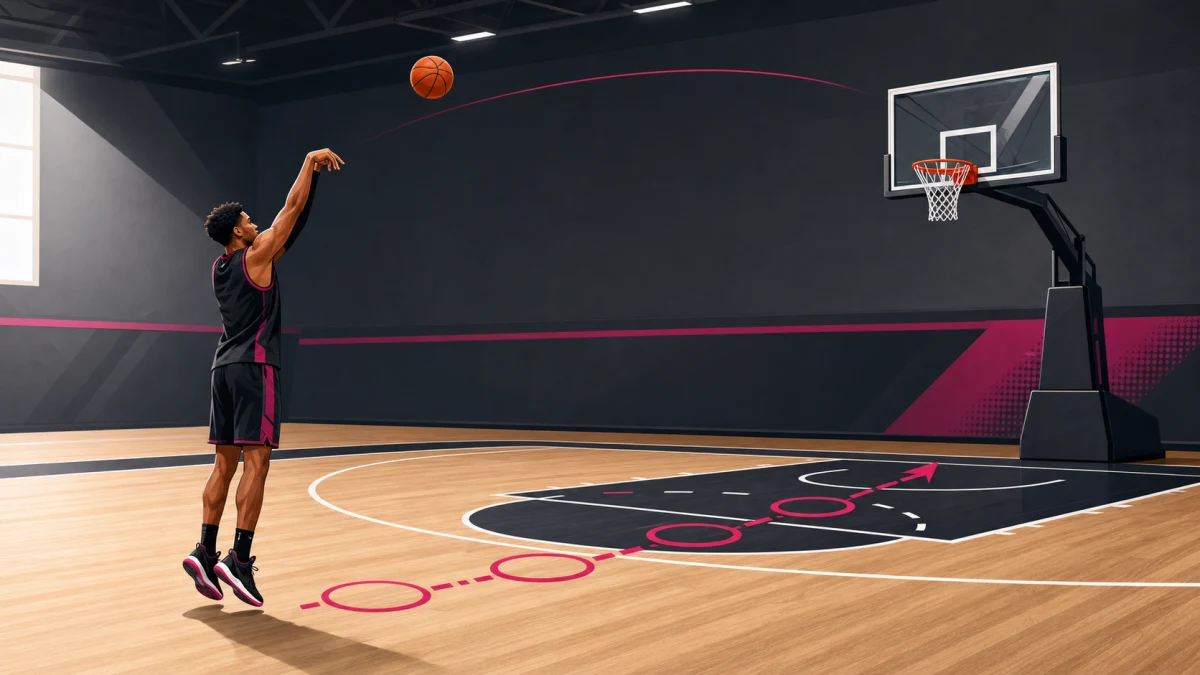
To challenge players, coaches can introduce specific technical loads that demand precise footwork and control. For instance, a technical load for shooting ladders can require every shot to be off the dribble as a pull-up, side step, or step-back. To increase the focus on accuracy, a technical load can require players to score a swish in order to move back to the next shot on the ladder. These constraints force players to maintain their mechanics while executing complex movements, bridging the gap between static form shooting and game-speed execution. Starter Practice Plans - NBA.com: Jr. NBA
Phase 3: Perceptual Scanning and Decision-Making
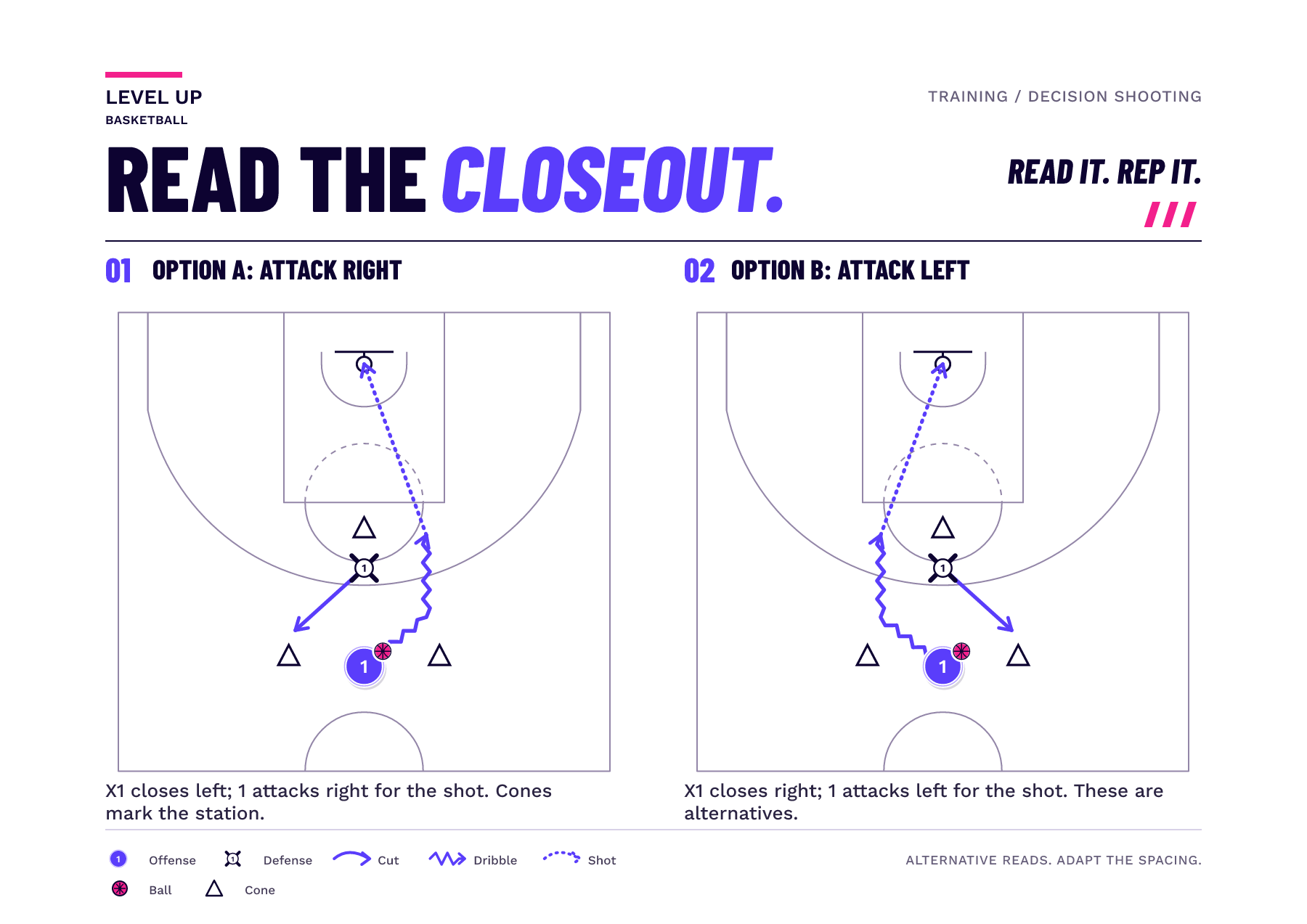
A representative shooting workout must include decision-making to simulate game conditions. In Triangle Decision Shooting, the offensive player must read which direction the defense goes and take one or two dribbles towards the hoop in the opposite direction for a jump shot. This drill forces the shooter to scan the floor and react to a visual cue rather than executing a pre-planned movement. By coupling perception with action, players learn to make quick decisions under pressure, which is a critical skill for success in competitive games.
Increasing the challenge point of a task can be achieved by adding variability, increasing the number of players involved in the contest, or including more decision-making options. During shooting drills, coaches should emphasize the speed of the shot release and the quality of passes to maintain a high standard of play. By incorporating these elements, players learn to handle the cognitive load of reading the defense while maintaining a quick, efficient release. This ensures that their shooting technique remains robust even when faced with defensive pressure and rapid decision-making requirements.
Swipe sideways to explore the full diagram.
Phase 4: Competitive Constraints and Representative Design
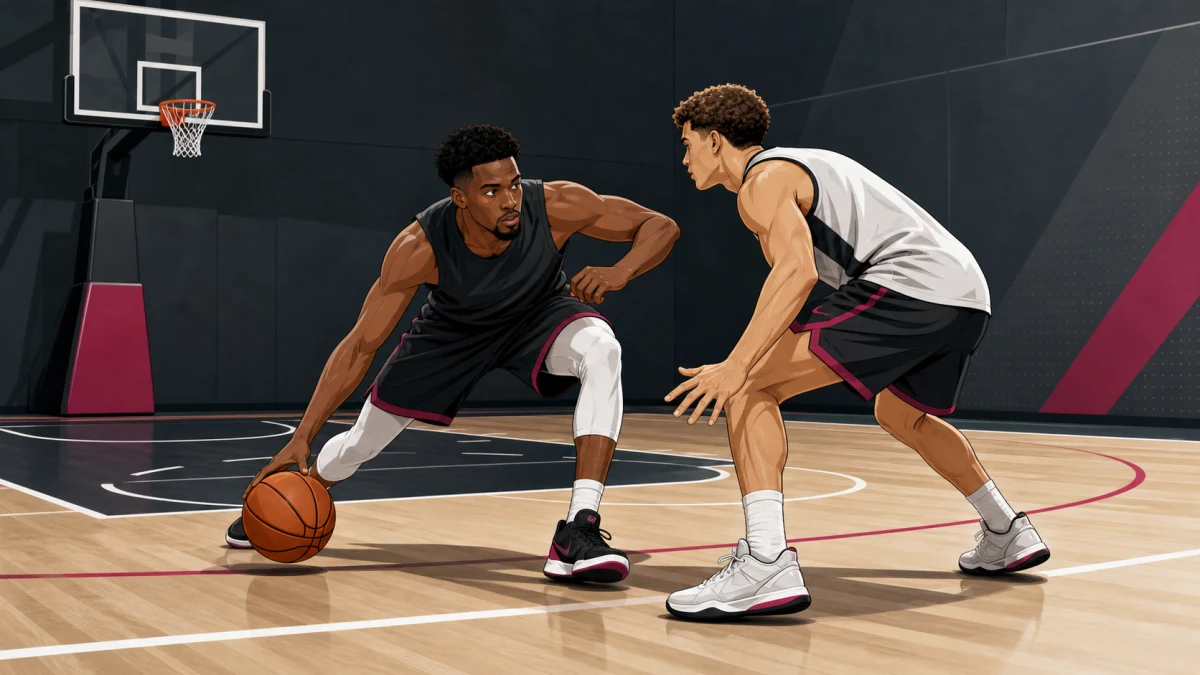
To fully prepare players for competition, workouts must feature representative design. Introducing a defender in practice tasks can create a representative environment that provides attackers with relevant information. A competitive load can involve waiting players or coaches contesting shots so shooters have to shoot over them. This presence of a defender forces the shooter to adjust their release height and speed based on real-time visual feedback. It also teaches players how to maintain their composure and shooting form when faced with physical pressure.
Adding a competitive scoring element further enhances the representative nature of the workout. In a shooting drill, players can count their makes, and the team with the most makes after a designated time wins. This simple constraint introduces game-like pressure and encourages players to maintain their focus and technique when fatigued. By combining defensive contests with competitive scoring, coaches can create a highly engaging environment that closely replicates the emotional and physical demands of a real game.
What This Means for Players and Coaches
Designing an effective shooting workout requires a balance of volume, variability, and realistic expectations. According to Pro Skills Basketball, a realistic target for a focused 60-minute workout is 200 to 400 quality makes per session for high school players. However, players and parents must understand that development is a long-term process. Pro Skills Basketball notes that as a general example, shooting form changes can take about 4 to 6 weeks to feel natural, and make percentage improvements might show up in 2 to 3 months, though individual progress varies. There are no shortcuts to becoming an elite shooter, and consistent, structured practice is essential. D1-Level Basketball Shooting Workouts (60-Min Plan)
Understanding the competitive landscape can also help players maintain perspective on their development journey. According to NCAA 2024-25 estimated probability data, only about 1.1% of high school boys basketball players go on to compete at the NCAA Division I level. This statistic highlights the importance of focusing on long-term skill acquisition rather than chasing immediate results or unrealistic promises. By structuring workouts around functional variability, decision-making, and competitive constraints, players can maximize their potential and build a resilient shot that stands up to game-day pressure.
Limitations of Solo Workouts and Practice Design
While highly representative drills with live defenders are ideal, solo players face inherent physical limitations. Without a partner or coach, it is difficult to replicate true perception-action coupling or receive high-quality, unpredictable passes. Additionally, coaches must be careful not to over-complicate drills with too much cognitive load too early, which can frustrate developing players and degrade basic shooting mechanics. However, it remains desirable to create practice tasks that promote movement variability and exploratory activity to encourage the learner to discover individualized and functional solutions.
Frequently asked questions
What order should a basketball shooting workout follow?
A useful session moves from preparation and close-range calibration into footwork, movement, game actions, and pressure. The order should raise complexity while preserving mechanics, with enough recovery to keep the intended shot recognizable.
Should a shooting workout count makes, attempts, or time?
Each method can work. Makes create an outcome target, attempts support percentage tracking, and time can organize stations. Choose the measure that matches the objective and keep conditions consistent enough for the result to mean something.
How can players make shooting drills more game-like?
Add realistic footwork, movement into the catch, a decision cue, a closeout, or a consequence after the basic shot is stable. Game-like does not mean uncontrolled speed; the constraint should represent a real read without destroying technique.