
The short version: Choose a repeatable free-throw routine, decide your attempt count before starting, and log every shot in the recorded set. Track makes and attempts alongside one routine note, then use that note to choose your next practice focus.
Key takeaways
- Choose a short preparation sequence and one shooting cue.
- Plan a fixed number of attempts so each recorded set has a clear boundary.
- Count every attempt in the set, including awkward shots and misses.
- Pair the score with one observation and one action for the next session.
Make the routine the unit of practice
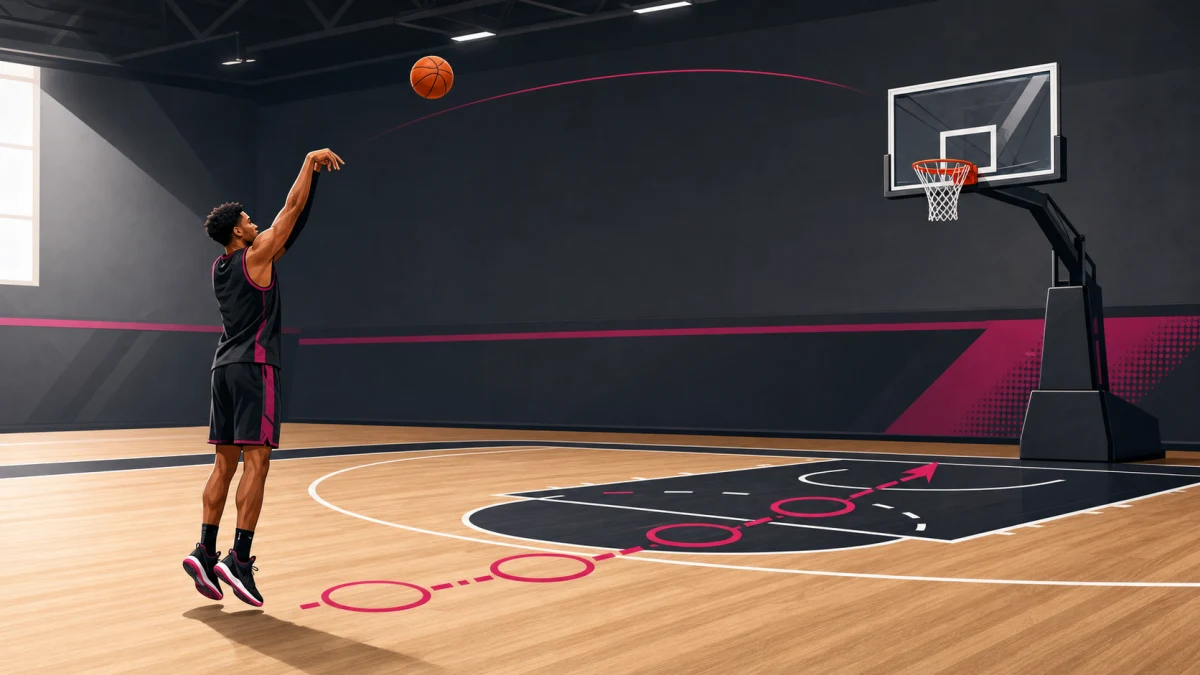
Give each free throw a complete sequence: get set, use your chosen preparation, shoot, record the result, then reset. Decide how many attempts you will take before starting. Count every shot in that recorded set, and use one brief note to choose what to work on next.
Choose a routine you can explain and repeat
Choose a short preparation you can describe without a long checklist. For example: settle your feet, look at your target, take your chosen dribbles, breathe and shoot. That is a suggested sequence, not a required technique. Use a comfortable setup and a manageable rhythm rather than copying someone else's gestures.
Pick one cue for the shot itself, such as “finish toward the target.” Save detailed discussion for the break between sets. After a miss, return to the same preparation on the next attempt. If you want to change something, name the change and try it in the next set instead of rebuilding your routine after every result.
Set the number of attempts before you shoot
As an adaptable coaching starting point, try three sets of 10 attempts, with a brief pause to record and reflect after each set. This is a planning example, not a scientific dosage or a target every player must reach. Choose a smaller or larger session to suit the time and attention available. coaching starting point
Use attempts as the stopping point for the recorded block. “Make 10” leaves the number of shots open; “take 10” gives the record a clear boundary. If you enjoy a make-based challenge afterward, keep it as a separate activity and record its attempts too. separate activity
Give every repetition the full routine, including the reset. A partner can return the ball and keep the tally, but the shooter should choose when to begin the next preparation. For coaches and families, agree on the cue beforehand and leave discussion until the set ends.
Keep a record that includes the uncomfortable shots
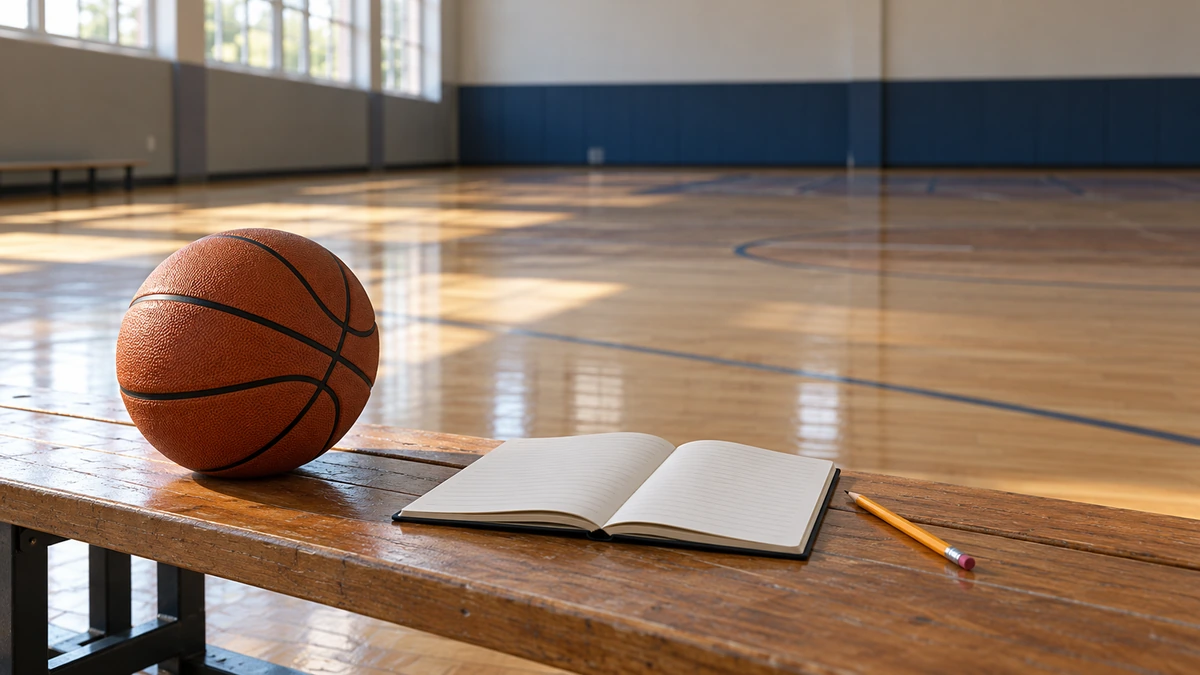
Declare when warm-up ends and recording begins. Within the recorded set, a miss counts even if the shot felt awkward or the routine broke down. Mark an interruption beside the attempt instead of quietly removing the result. If you stop early, record the actual number taken.
- Date and context: note whether this was standalone practice or part of another session.
- Makes and attempts: write both numbers for each set, then total them.
- Routine note: record one specific observation, such as “rushed preparation after two misses.”
- Next-session cue: choose one action, such as “settle before starting the dribbles.”
For example, a hypothetical entry might read: “Standalone practice. Sets: 6/10, 7/10, 5/10. Total: 18/30. Started rushing late in the final set. Next time: settle before each attempt.” It preserves the results and gives the next session a clear focus.
Use the log to choose the next practice focus
Read the result alongside the routine note. Did you complete your preparation? What did you actually notice? What will you try next time? Avoid treating one good set as proof that a change works or one poor set as a reason to abandon it. Keep the conditions visible when comparing sessions, and let the record describe what happened.