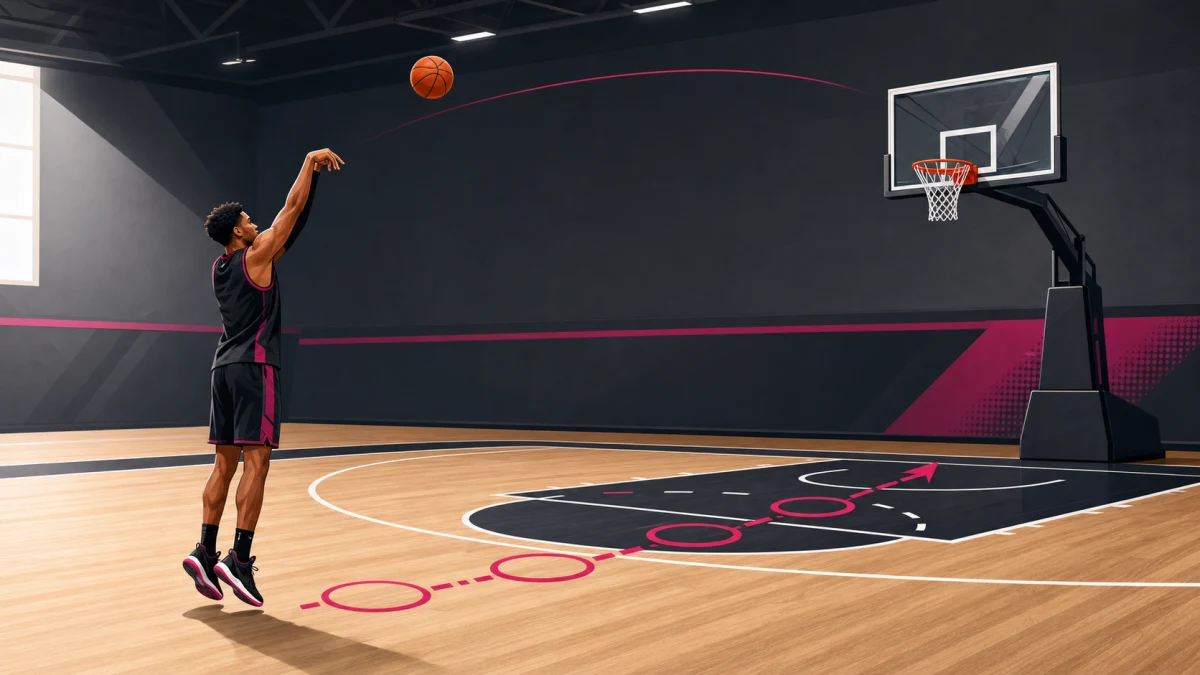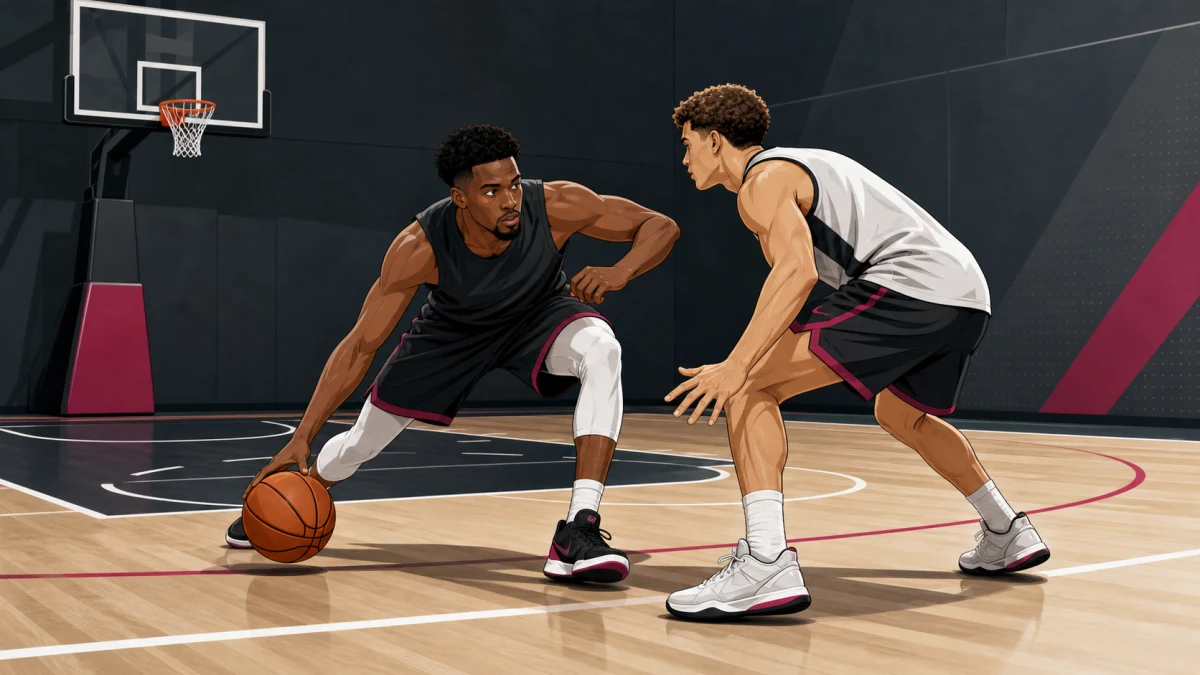

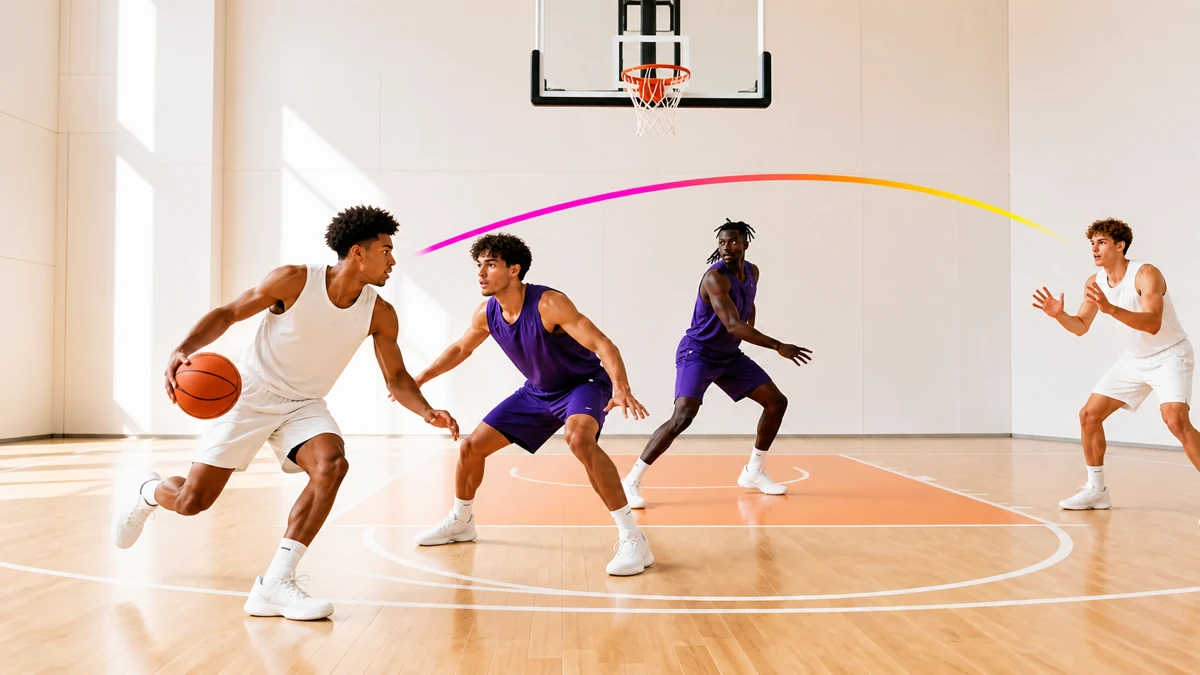
The short version: Small-sided basketball games use fewer players—often 1-on-1, 2-on-2, 3-on-3, or an advantage such as 3-on-2—to make a specific read repeat more often. Choose the format from the decision you want to teach, start the possession in a representative way, and use only one or two constraints. Keep score or consequence connected to the skill, adjust difficulty from observation, and return to five-on-five so you can test whether the read survives the full game.
Key takeaways
- Choose player numbers from the basketball relationship you want to expose: individual leverage, two-player cooperation, help rotation, or an advantage read.
- A constraint should amplify one decision without deleting the valid options players need in a real possession.
- Random starts and live finishes keep perception in the activity; scripted movement alone can hide whether a player recognizes the cue.
- Load or deload space, time, dribbles, defender freedom, or scoring one variable at a time.
- Small-sided play complements skill work and five-on-five—it does not guarantee transfer or replace every team-practice segment.
What is a small-sided basketball game?
A small-sided basketball game is a live or guided possession with fewer than five players per team. One-on-one isolates the ballhandler-defender relationship. Two-on-two adds a teammate, a helper, and the first pass-or-finish decision. Three-on-three adds a second layer of spacing and rotation without filling every five-on-five spot. An advantage format such as three-on-two temporarily makes one read clearer. The format is useful only when the coach can name the problem it is designed to reveal. Jr. NBA/Jr. WNBA Instructional Curriculum progress a basketball drill toward live decisions
Do not use small-sided and official 3x3 as perfect synonyms. USA Basketball's FIBA-style 3x3 game uses a half court, a 10-minute clock, a 12-second shot clock, and a race to 21 unless time expires first. A coach can also run a two-minute three-on-three practice game with a special start or scoring rule. Both have three players per side, but only one is the official competition format. USA Basketball's 3X Play initiative recognizes that range through tournaments, leagues, and skill-development jamborees adapted for age and level. USA Basketball introduces 3X Play
Which format matches the decision you want?
| Format | Best teaching lens | Representative start |
|---|---|---|
| 1-on-1 | Create or contain an advantage | Late closeout, hip advantage, rebound, or unpredictable facing relationship |
| 2-on-1 | Force help and find the open finish | Ball at the top, teammate in short corner, one defender protecting both |
| 2-on-2 | Pass, cut, screen, help, recover, and rebound | Closeout-to-live, drive-and-kick, or box-out-to-possession |
| 3-on-2 | See the extra player and move the defense | One defender delayed, shifted, or recovering |
| 3-on-3 | Connect strong-side action to weak-side spacing and help | Random ball entry, scramble, post touch, or change of possession |
Jr. NBA Starter Practice Plan 3 Jr. NBA Starter Practice Plan 6
The relationship matters more than the label. Jr. NBA's closeout activity becomes live two-on-two after players have shifted between ball and help positions. Its two-on-two box-out game makes the rebound decide which team attacks. Its three-on-two Scramble Game tells the offense to decide quickly and find the open player. Each start creates the information the coach wants the players to read; none asks them to run through a pattern and then pretend the decision happened.
How do constraints teach without distorting the game?
Start with the decision, then choose the smallest rule that makes it visible. A three-dribble maximum may keep a three-on-two advantage moving. A point for a paint touch followed by an open pass can reward collapse-and-kick timing. Starting from a closeout can create a real catch-drive-shot read. The constraint is doing useful work when it changes attention toward the target without making the correct basketball answer illegal.
- Space: shrink the court to increase pressure or widen it to let developing players see a passing lane.
- Time: use a short possession or hold limit only when faster recognition is the target.
- Dribbles: cap them to emphasize advantage decisions, but restore purposeful dribbling before the transfer test.
- Defender freedom: begin guided, delayed, or outnumbered, then give the defense more choices as the offense recognizes the cue.
- Scoring: award the basketball behavior—such as a stop plus rebound—not noise such as finishing a cone race first.
Change one major variable at a time. If the court gets smaller, the shot clock gets shorter, the dribble limit drops, and the defense gains another player in the same round, you will not know which change taught the read or destroyed it. Jr. NBA explicitly uses loading and deloading to raise or lower difficulty. Use that as a feedback loop: observe, adjust one lever, and watch the next possession.
What can an 18-minute small-sided block look like?
- Four minutes, 1-on-1 from a late closeout: offense reads shot or drive; defense arrives under control and contains the first move.
- Five minutes, 2-on-2 closeout-to-live: the off-ball defender starts in help, the offense reads the drive and kick, and play ends on a score or secured stop.
- Five minutes, 3-on-2 advantage: offense finds the open player; defense protects the rim and makes two cover three for as long as possible.
- Four minutes, 3-on-3 with normal options: keep the same scoring focus but remove the advantage and dribble cap to test whether the read survives.
This is a progression example, not a universal prescription. A beginner who cannot protect the ball in the first game may need more space, a guided defender, or a simpler start. A more experienced group that recognizes every picture before it forms may need random entry locations or freer help defense. USA Basketball's development curriculum is mastery-based and allows a player to be advanced in one skill but foundational in another. Adjust the relationship in front of you rather than assigning one difficulty to the entire roster. USA Basketball Player Development Curriculum build the rest of the basketball practice plan
What should the coach watch during play?
- Touches with purpose: does each player catch with a next action, or does the same player dominate while teammates become landmarks? USA Basketball 3X Play
- Eyes and timing: does the ballhandler see the helper before picking up the dribble, and does the receiver move early enough to create a passing window?
- Spacing: do teammates create two usable lanes, or do they drift into one defender's reach?
- Defensive finish: after forcing a miss, does the group secure the rebound before treating the possession as over?
- Transfer: when the special rule disappears, does the player still recognize the same cue in three-on-three or five-on-five?
Pause sparingly and ask for the information behind the action: Where was the second defender? Which teammate became open? What changed after the closeout? A player who can name the cue is giving the coach more useful evidence than a player who merely repeats the route. Let the next possession test the answer before adding another speech or rule.
Where do official 3x3 and five-on-five fit?
Official 3x3 is more than a teaching drill. Its half-court game, quick possession clock, and positionless responsibilities create their own sport and competitive demands. USA Basketball emphasizes that every player must dribble, pass, shoot, and defend, and its 3X Play resources are designed to help programs run genuine 3x3 opportunities. Use those rules when the goal is to play 3x3; do not casually borrow one rule and claim the activity is the official game.
Five-on-five remains the transfer environment for five-on-five teams. It adds transition roles, more help defenders, weak-side traffic, full offensive structure, and the spacing consequences of ten bodies. A focused two-on-two game can make one read repeat; the later team segment asks whether the player still finds it among everything else. Jr. NBA presents small-sided games, random starts, loading, and decision-making as elements inside a broader curriculum, which is the right relationship: use the focused game as one part of a complete development plan. structured basketball workouts
Frequently asked questions
Are small-sided basketball games the same as 3x3?
Not always. Official FIBA-style 3x3 has a defined half-court format, 10-minute game clock, 12-second shot clock, and 21-point target. A coach's three-on-three practice game may use a shorter round, a special start, or a constraint tied to one skill. Call the first official 3x3 and describe the second by its practice purpose.
Which small-sided format should beginners use?
Use the simplest relationship that reveals the intended skill without overwhelming it. One-on-one can clarify ball protection and containment; two-on-one can make the help decision visible; two-on-two can add cooperation. USA Basketball's mastery approach supports assessing the specific skill first, and Jr. NBA's loading and deloading framework supports adjusting space, pressure, or options for the players in front of you.
Should I limit dribbles in every small-sided game?
No. A dribble cap is useful when it exposes an advantage read or keeps the ball moving, and Jr. NBA uses limits in specific activities. It can also teach players to give up the ball before creating an advantage or make a developing handler afraid to explore. Use the cap for a named purpose, observe the effect, and later restore normal options.
Do small-sided games replace five-on-five practice?
No. They can concentrate touches, relationships, and decisions, but a five-on-five team must also coordinate all five players in transition and half-court structure. Use a small-sided game to teach or test a focused problem, then revisit that problem in a larger game. No single format guarantees development or transfer.