
The short version: Deny the pass only as aggressively as you can manage the space behind you. Keep the ball and your matchup in the same shoulder-line view; if the matchup cuts backdoor, turn with the cutter, protect the route to the basket and then rebuild your position.
Key takeaways
- Denial is a tactical choice: crowding the passing lane can disrupt a catch, but it also increases the space available behind you.
- Use shoulder-line vision to keep the ball and your matchup in the same picture while denying.
- When the matchup cuts backdoor, turn and travel with the cutter, protect the basket-side route, then locate the ball again.
- Choose a more open support position when help, vision or backdoor protection matters more than denying the next pass.
- Practice live pass-or-cut reads so defenders learn decisions and recovery, not just a static stance.
The purpose—and price—of denial
Denial defense is pressure with a purpose
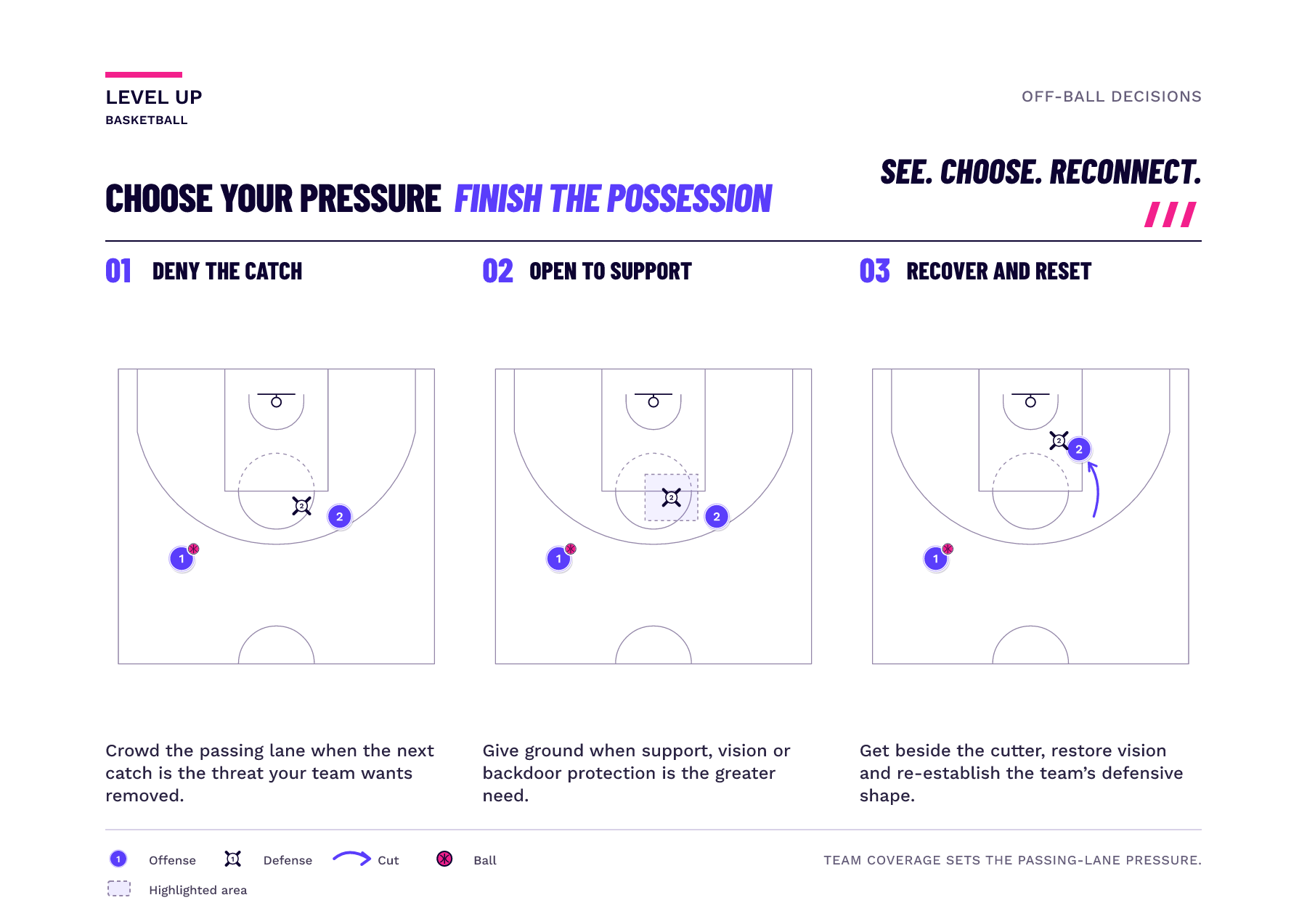
When you deny, you are trying to make the next pass difficult or unattractive. That can interrupt timing and force the offense to use another option. It also changes the space behind you: the harder you lean into the passing lane, the more attractive a backdoor cut may become. Good denial defense therefore is not a command to overplay every pass. It is a choice about which threat matters most right now.
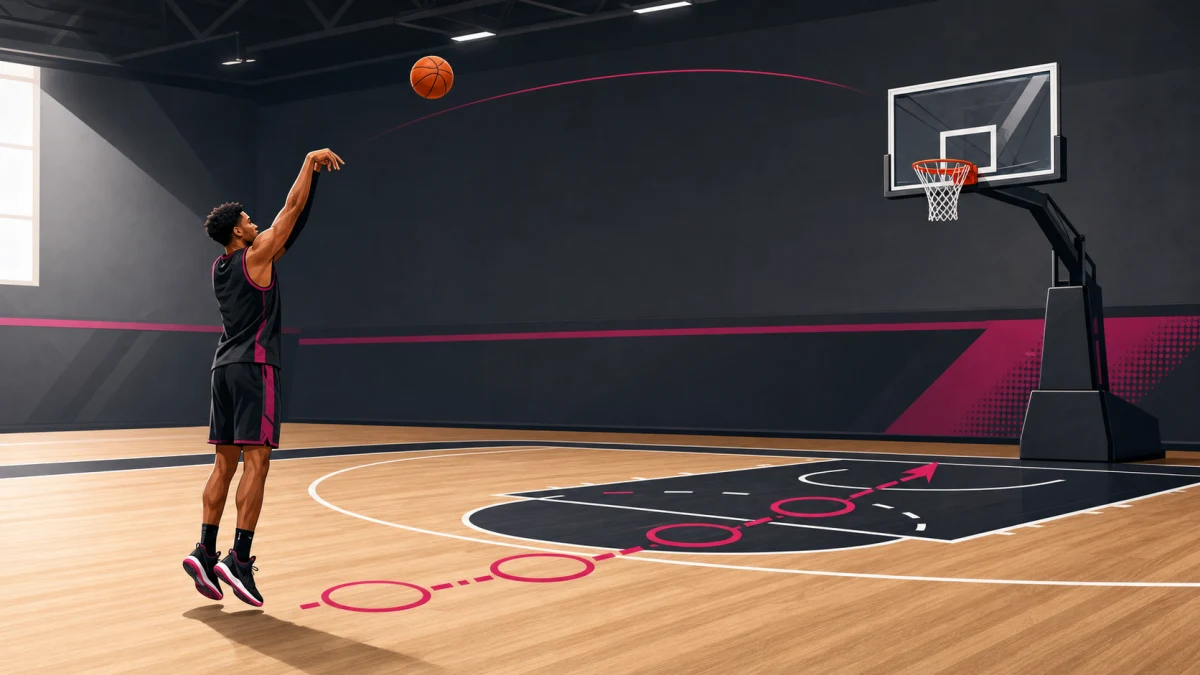
Picture an imaginary line from the ball handler to your matchup. Moving closer to that passing line makes the denial more aggressive. Moving farther off it gives you more room to see the floor, help and protect against a cut. Neither position is automatically correct; your location should match the ball pressure, spacing, scouting plan and help behind you. WABC Coaching Level Manuals Level 1 English
Position your body without losing the picture
Build a stance that preserves vision Defensive Denial Drill Defense - Basketball Drills, | Sportplan
Swipe sideways to explore the full diagram.
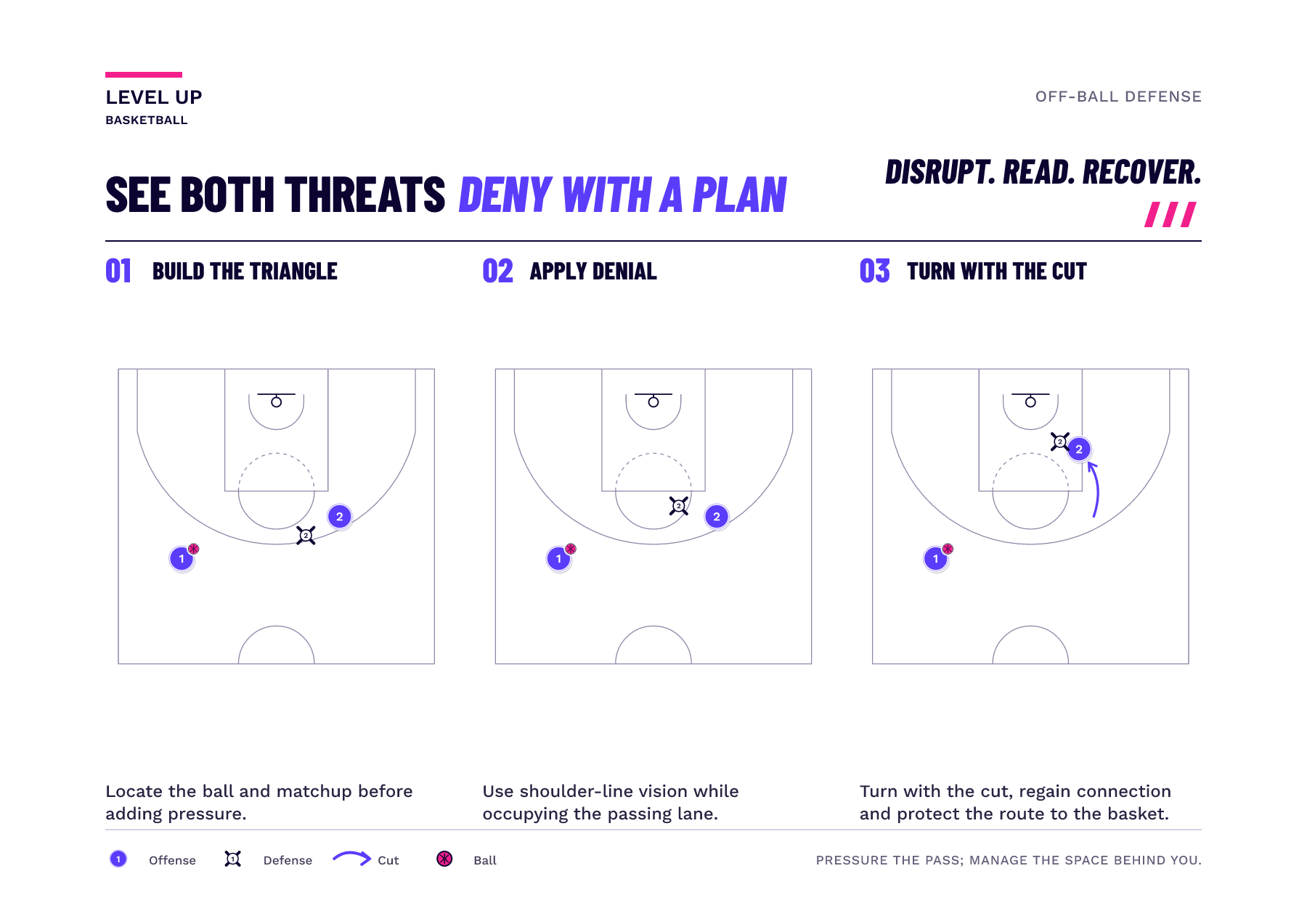
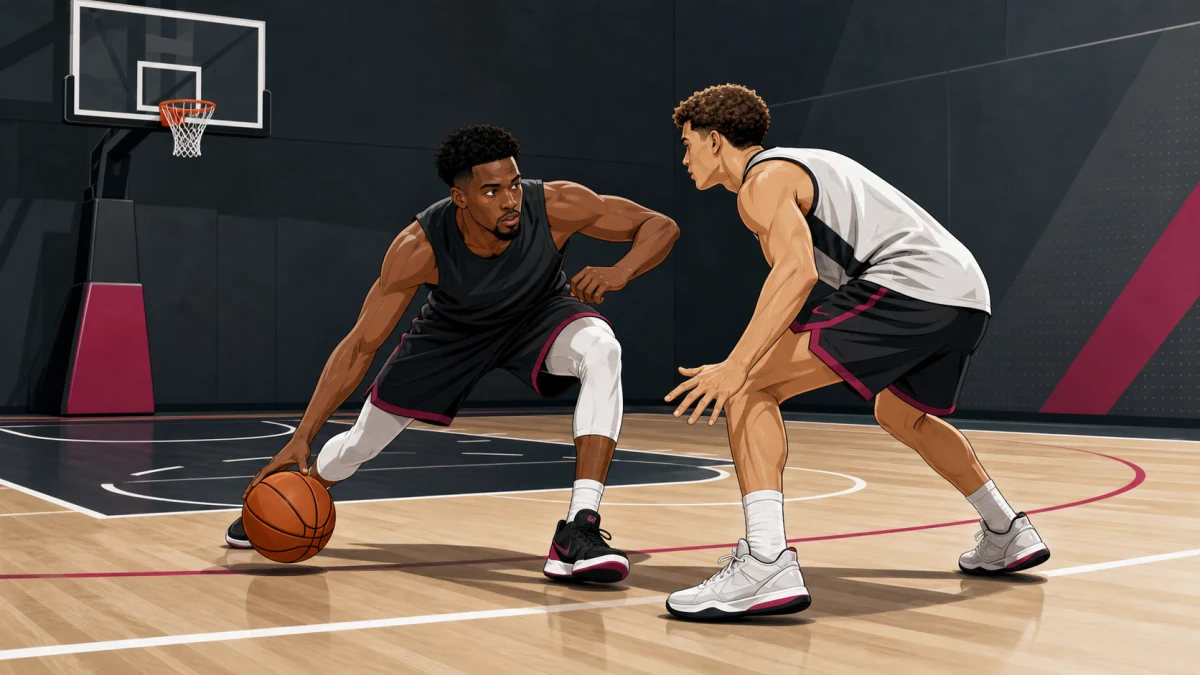
In a denial stance, your chest faces your matchup and your back is oriented toward the ball. That makes vision an active skill. Turn your head so your sight line runs along your shoulder and includes both the ball and the player you are guarding. Coaches often shorten this cue to “chin on shoulder.” It is a visual checkpoint, not a demand to freeze your head in one position.
Anticipate the backdoor cut and recover with purpose
Read the cut before chasing the pass
Swipe sideways to explore the full diagram.
A backdoor cut is the natural counter to an overplayed passing lane: the offensive player leaves the denied side and cuts behind the defender toward the basket. The earliest warning is often the matchup’s change of pace or direction. If you watch only the ball, the cutter can leave your vision. If you stare only at the matchup, you may miss the pass. Keep the two-player picture for as long as possible.
When the cut happens, turn your head and body through the cutter’s path so you can travel with them. During that turn, there may be a brief moment when you cannot see both the cutter and the ball. Reconnect beside the cutter, protect the route to the basket, then find the ball again. The goal is not to win a race to the original denial spot; it is to remove the immediate scoring threat and rebuild useful position.
Read the play: Your matchup is one pass away, the ball handler has clear vision and there is no teammate protecting the space behind you. Should you move tighter to the passing line or open your angle?
Open your angle, give yourself more space to see both threats and prepare to travel with a backdoor cut. Maximum denial is no longer the useful priority in this hypothetical possession.
Match the pressure to your team’s plan
Choose denial or support from the possession
| Game picture | Useful starting choice | Reason |
|---|---|---|
| The next catch would trigger the offense, and the ball is pressured | Tighter denial | Make the preferred pass harder while the passer has limited time or vision. |
| The ball handler can see the floor and the backdoor is open | More cushion and a wider view | Protect the cut before trying to erase the pass. |
| A teammate needs help against penetration | Open support position | Be available to help while staying ready to recover to the matchup. |
| Your matchup begins a hard backdoor cut | Turn, travel and reconnect | Remove the immediate path to the basket, then rebuild vision. |
These are starting choices, not fixed rules. A coach may ask for full denial, gap support, switching or another coverage based on the opponent and the rest of the defense. Players need one shared answer to two questions: Which pass are we trying to remove, and who protects the space behind the denial?
Disrupt without becoming blind
The best denial defenders are not simply aggressive. They know what they are taking away, keep the ball and matchup in the same visual picture, recognize when the backdoor becomes the greater danger and recover without panic. Pressure is valuable only when the whole defense can manage what that pressure invites.
Was this useful?