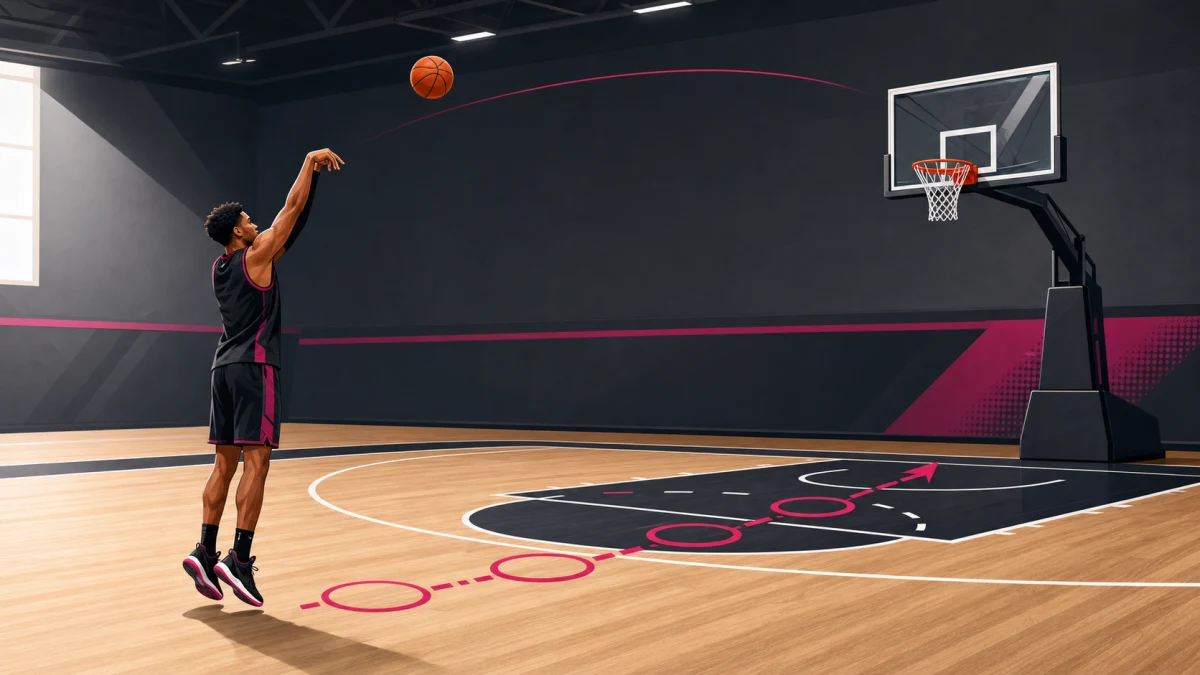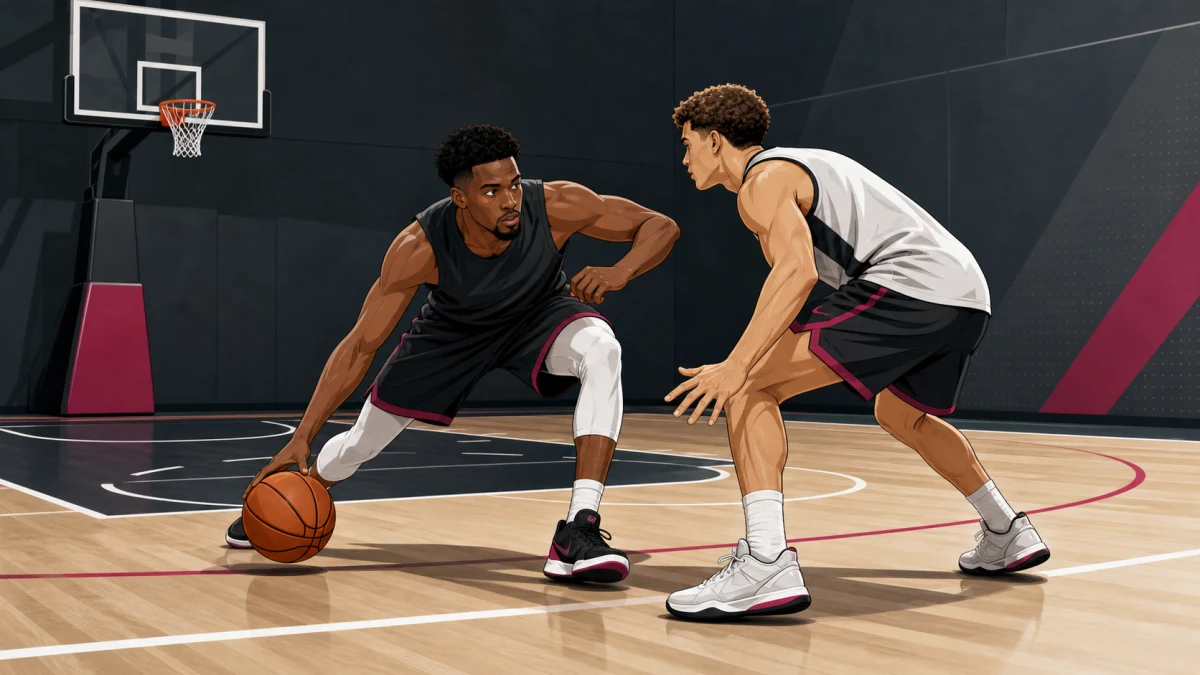


The short version: A jab step is a fake from triple threat. Square up, protect the ball, stay balanced, and choose an onside step, crossover step, shot, or repeat fake from the defender's reaction.
Key takeaways
- Square up before the jab so the fake starts from organized footwork.
- Legal deception still has to respect dribble and boundary rules.
- Onside and crossover steps differ by which foot starts the drive.
- A useful jab sells the drive while keeping balance and ball control.
- The defender's lead foot and the court edge shape the read.
Why the jab step begins with square-up footwork
A jab step starts from triple threat, where the player keeps the options to shoot, drive, or pass. The move itself is a fake drive toward the basket, used to get a defender off-balance before the offensive player decides what comes next. Mastering the Jab Step in Basketball (6 Important Tips)
According to WABC Coaching Level Manuals Level 1 English, once perimeter players receive the ball, they must be able to square up by facing the basket with both a forward pivot and a reverse pivot. WABC Coaching Level Manuals Level 1 English essential basketball footwork
Where legality ends and deception begins
According to RULE NO. 10: Violations and Penalties | NBA Official, a player is not permitted to run with the ball without dribbling it. RULE NO. 10: Violations and Penalties | NBA Official
According to RULE NO. 10: Violations and Penalties | NBA Official, a player in control of a dribble who steps on or outside a boundary line cannot return inbounds and continue that dribble, even if they are not touching the ball while on or outside the boundary line.
According to WABC Coaching Level Manuals Level 1 English, an offensive player can throw the ball to one side, move after it, catch it with both feet in the air, and land in a stride stop while facing the basket.
How onside and crossover first steps differ
FIBA's WABC manual identifies the onside step as a way to begin the dribble by stepping with the foot in the direction of movement. Its example is direct: a right-foot step to move right with a right-hand dribble.
The same FIBA WABC material identifies the crossover step as a way to begin the dribble by stepping with the opposite foot to the direction of movement. Its example is a right-foot step to move left with a left-hand dribble.
According to WABC Coaching Level Manuals Level 1 English, after a shot fake, a player can use an onside dribble such as stepping the right foot to move right, or a crossover dribble such as stepping the right foot to move left.
Which first action matches the defender's reaction
According to WABC Coaching Level Manuals Level 1 English, after a drive fake, a player can shoot if the defender steps back, use an onside dribble such as a right-foot step to move right, or use a crossover dribble such as a right-foot step to move left.
According to WABC Coaching Level Manuals Level 1 English, after a shot fake, if the defender does not react and leaves the player open, the player can shoot. structured practice drills
If the defender does not react to the first jab, the player can jab multiple times or try another move.
How to sell the fake without losing balance or the ball
A convincing jab step copies the first part of a real drive: the jab is fast and aggressive, the hips engage, the shoulders go down, the ball moves in the drive direction, and the head and eyes help sell the fake.
Balance is part of the jab-step fake. If the player loses balance during the fake, any advantage the jab may have created can be negated.
Ball exposure is the other guardrail. Over-exposing the ball during a jab step can lead to turnovers, and moving the ball across the body raises the risk of a steal. To reduce that risk, keep the ball close to the body, hold it firmly, and avoid showing too much of it to the defender.
What the defender and the court change
A defender's stance can guide the jab-step direction. The offensive player should read the stance and, ideally, attack the lead foot to disrupt balance. If the defender does not show a lead foot, the player can attack the side they are most comfortable with.
According to WABC Coaching Level Manuals Level 1 English, one player is designated offense and takes one step to whichever side they wish, while the defender uses lateral footwork to maintain position.
According to WABC Coaching Level Manuals Level 1 English, a corner drill can place the offense in the corner trying to dribble out while the defender uses a lateral step to take the charge. The same source states that if the offensive player steps on the line, they are out of bounds.
How to practice the jab step as a complete threat
Triple-threat play includes more than the jab step alone. A player needs to keep improving dribbling and shooting to use those options, and pressure may require an immediate pivot into a better position to retake control. Beating a defender one-on-one involves creating an off-balance advantage and having the ability to use it. targeted basketball workouts
Frequently asked questions
Is a jab step legal if I do not dribble?
According to WABC Coaching Level Manuals Level 1 English, perimeter players who receive the ball must be able to square up by facing the basket with both a forward and reverse pivot. According to RULE NO. 10: Violations and Penalties | NBA Official, a player may not run with the ball without dribbling it.
Should I use an onside step or a crossover step?
According to WABC Coaching Level Manuals Level 1 English, an onside step begins the dribble by stepping with the foot in the direction of movement, while a crossover step begins the dribble by stepping with the opposite foot to the direction of movement.
What makes a jab step convincing?
A convincing jab looks like the first part of a real drive. The supported cues are a fast and aggressive jab, engaged hips, lowered shoulders, ball movement in the drive direction, and a fake sold with the head and eyes.
What should I read before choosing a side?
Read the defender's stance first. The supported guidance is to attack the defender's lead foot when one is available, because that target disrupts balance. If the defender does not show a lead foot, attack the side you are most comfortable using.