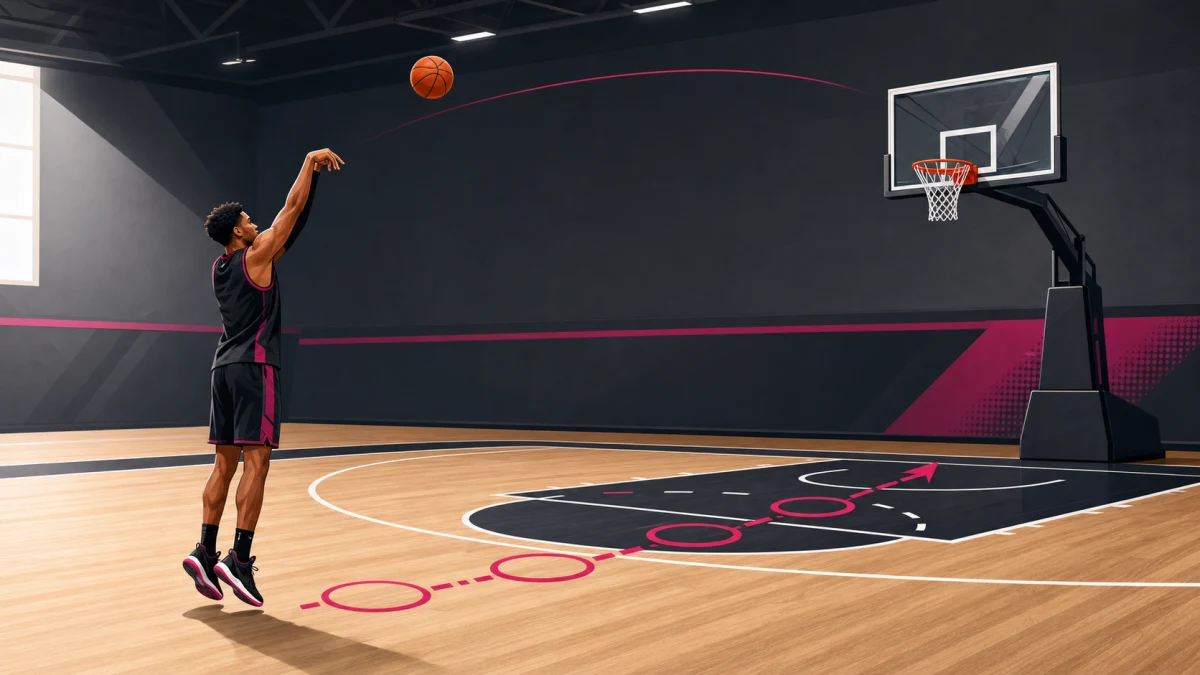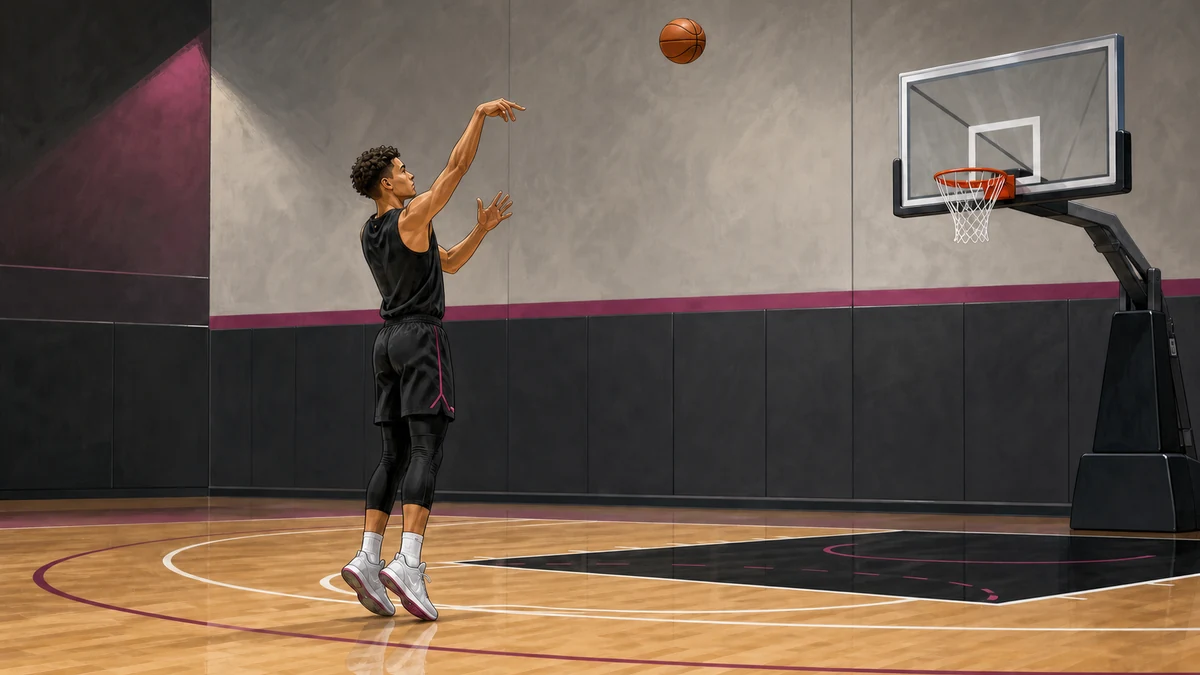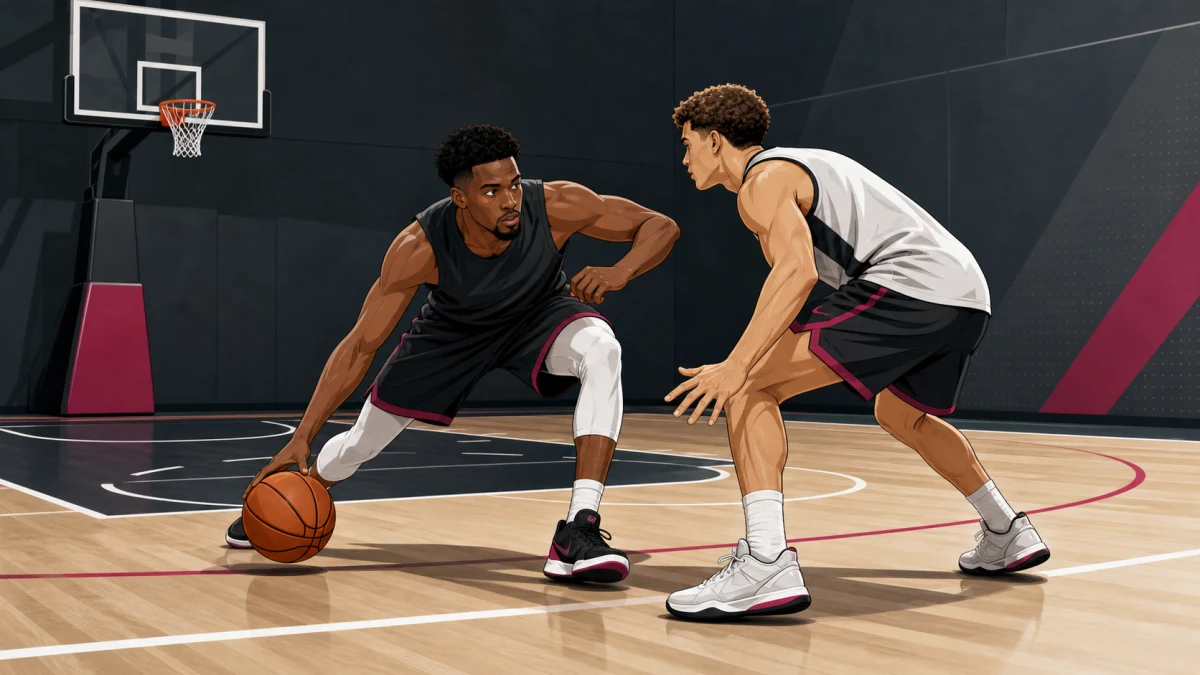
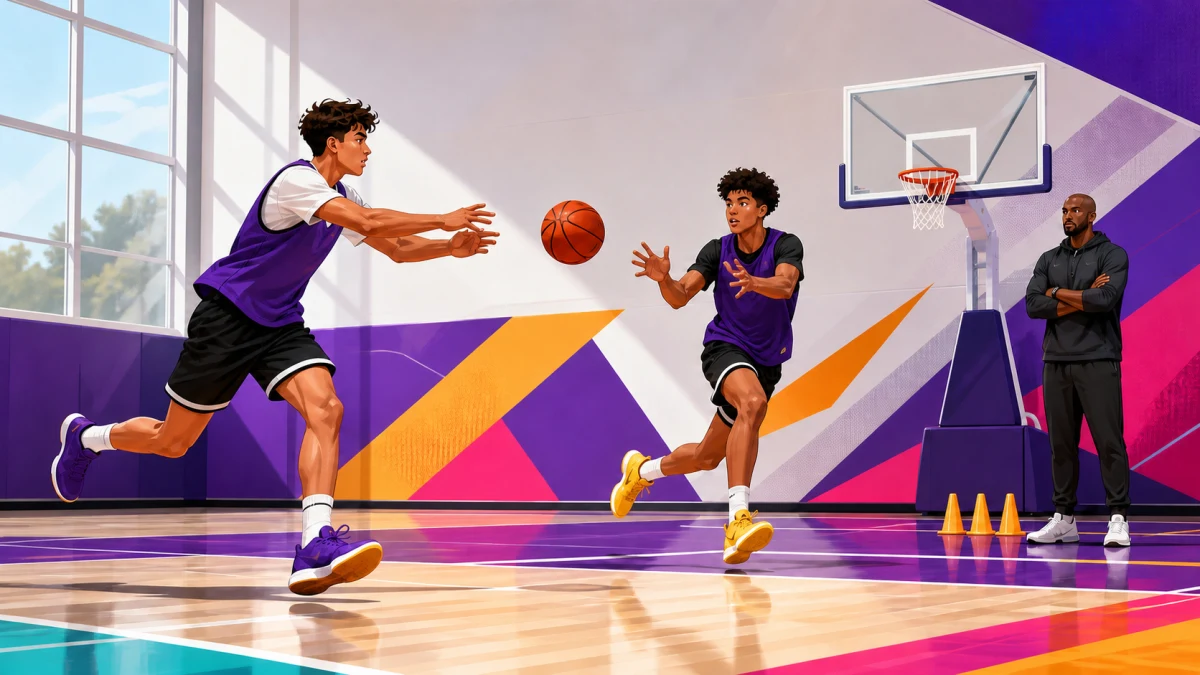
The short version: Train passing on the move in layers. First connect the pass to a balanced stop, pivot, or controlled running base. Then make the receiver move through a visible target window. Add one decision at a time: pass ahead, jump stop and pass, continue the drive, or change the angle. Finish with small-sided play in which a defender can take away the expected option. Judge the rep by balance, timing, target, and decision quality rather than speed alone.
Key takeaways
- Passing on the move is a connection between footwork, vision, timing, and the receiver's route.
- A jump stop is one useful solution when the passer needs balance, but not every moving pass requires the same footwork.
- Pass to the receiver's available window and path instead of aiming only at where the player started.
- Progress from a known route to a live read so the drill tests a basketball decision, not just a memorized pattern.
What does passing on the move mean?
Passing on the move means delivering the ball while the passer, the receiver, or both are changing position. That sounds simple, but the target is no longer fixed. The passer must control speed and body angle, locate a usable passing lane, and place the ball where the receiver can continue the play. The receiver must show a target, keep the route readable, and arrive when the lane is open. A technically clean chest pass can still be a poor game pass if it reaches the receiver late, behind the route, or directly into help defense. Jr. NBA Starter Practice Plans Jr. NBA Rookie Practice Plans USA Basketball Player Development Curriculum basketball footwork fundamentals
Do not reduce the skill to throwing while running at maximum speed. Sometimes the correct solution is a pass off the dribble. Sometimes it is a controlled jump stop, pivot, and pass. Sometimes the passer should slow down so the receiver can clear a defender. USA Basketball treats passing and receiving and footwork and body control as connected but distinct development areas. That separation is useful: first identify whether the miss came from the hands, the feet, the eyes, the route, or the decision, then choose the next constraint.
Build a base the passer can control
Start with a route short enough that the player can see the target and stay balanced. On a jump-stop repetition, the final dribble should finish under control, both feet should land together, the knees should remain bent, and the player should organize the ball before pivoting or passing. Jr. NBA uses this footwork in Diamond Passing and asks players to complete the stop before the pass. The pause is not the final game goal. It is a teaching tool that makes balance visible before speed and pressure hide the problem.
Then keep the route but remove the forced stop. Let the player pass after one or two controlled dribbles while the chest and eyes stay connected to the target. The feet may run through, gather, or angle across the court depending on the passing window. Coach the outcome you can observe: the player should not fall across the pass, expose the ball to a defender, or throw before the receiver can see it. If accuracy disappears, shorten the distance or slow the approach instead of adding another technique cue. Jr. NBA Starter Practice 7
Pass to a moving target, not an empty spot
Give the receiver a clear route and a next action. A wing filling the sideline may need the ball in front of the outside shoulder so the catch continues up the floor. A cutter entering traffic may need a shorter pass away from the nearest defender. A teammate settling behind the ball may need a pass that stops their momentum safely. The target is the receiver's usable window, not simply the jersey. Ask the receiver to show hands early enough that the passer can read the window but not so early that the route becomes slow and predictable. Jr. NBA Rookie Practice 11
Jr. NBA examples connect the pass to a player filling the sideline and to drills that require eye contact and visible hands. Those details matter because timing belongs to both players. If the receiver turns late, the passer may hesitate or throw blind. If the passer releases late, the receiver may have to stop, reach behind, or enter a defender's path. Review the pair as one action: route, target shown, release point, catch location, and the first step after the catch.
A four-step passing progression
- Controlled stop and pass: dribble to a marked area, jump stop, pivot, make eye contact, and pass to a stationary target.
- Moving receiver: keep the passer's route known while the receiver fills a lane, cuts through a gate, or changes pace.
- Moving passer and receiver: allow a pass off the dribble or after a stop, but score placement and the receiver's next action.
- One live read: add a defender who can take away the pass, the drive, or one passing lane so the player must choose.
Advance only when the current layer stays understandable. USA Basketball's curriculum is based on mastery, and Jr. NBA practice plans repeatedly change one technical, physical, social, or competitive load at a time. That does not require a perfect rep count. It means the player can explain the cue, produce the action with reasonable control, and recognize why the next variable is being added. A fast but confused drill is not more game-like than a slower drill with a real read. build a basketball practice plan
Train the pass-or-continue decision
The simplest live read is a coach or guided defender stepping toward one of two threats. If the defender stops the ball, the passer delivers to the moving teammate. If the defender stays attached to the receiver, the ball handler continues into the open lane. Jr. NBA uses that choice in a rookie drill built from a dribble, jump stop, and pass to a sprinting teammate. The point is not to copy the drill forever. It is to let the same footwork and target habits survive when the expected pass is no longer guaranteed.
Later, add a second defender or a time limit, but keep the scoring honest. Reward the correct read and a catchable pass, not only a made shot after the catch. A receiver who is covered should clear or change the angle rather than demand the ball. A passer who sees the lane close should protect the dribble and find the next option. This is where passing on the move becomes team offense: recognition, spacing, and timing determine whether the technique is useful. basketball workouts
What should coaches track?
- Balance: can the passer stop, pivot, or run through without drifting into the throwing lane?
- Vision: does the passer locate the receiver and nearby defender before releasing the ball?
- Placement: can the receiver catch without stopping, reaching behind, or moving toward pressure?
- Timing: does the ball arrive while the target window is open and before help closes it?
- Decision: when the lane changes, does the player pass, continue, or reset for a basketball reason?
Use one or two of these checks per block. Too many corrections can make a player stare at the coach instead of reading the court. A useful review names the first breakdown in the chain. If the feet are uncontrolled, repair the approach. If the route is late, repair timing between partners. If the player saw the defender but chose the wrong window, simplify the read. The aim is not one universal passing style; it is a repeatable connection between movement and the next team action.
Frequently asked questions
Should players always jump stop before passing on the move?
No. A jump stop is a useful balance and pivot tool, especially while teaching a controlled gather. Players also need passes off the dribble and running passes. Choose the footwork that fits the angle, pressure, and next action, then verify that the player remains balanced and the pass is catchable.
Where should I lead a moving receiver?
Lead the receiver into a usable catch window, not automatically as far forward as possible. Consider the route, the nearest defender, the boundary, and what the receiver should do next. The receiver should be able to catch under control and continue without turning toward pressure.
When should a passing drill add a defender?
Add guided pressure when the player can control the route, find the target, and deliver a catchable pass in the simpler version. Begin with one clear choice, such as pass if the defender stops the ball or continue if the defender stays with the receiver. Expand the options only when the first read remains visible.
How can I make passing drills more game-like without making them chaotic?
Change one constraint at a time. Move the receiver, add a route choice, introduce one defender, or connect the catch to a finish. Keep a clear scoring rule for balance, placement, timing, and decision quality. The drill becomes more representative because the player reads a real variable, not because every variable appears at once.