
The short version: An empty-corner pick-and-roll places the ball handler and screener on one side with no teammate in the corner behind them. That removes the nearest strong-side helper, opening the roll and forcing help to travel from the weak side. The offense must still read ice, switch, show, drop, and pre-switch coverage rather than treating the spacing as an automatic score.
Key takeaways
- The empty strong-side corner removes the closest helper from behind the roll.
- The weak side must stay spaced enough to punish early tags without becoming static.
- Screen angle and the ball handler’s rejection read determine whether ice coverage works.
- Switches and pre-switches trade rim help for possible mismatch and rebounding problems.
What empty-corner pick-and-roll means
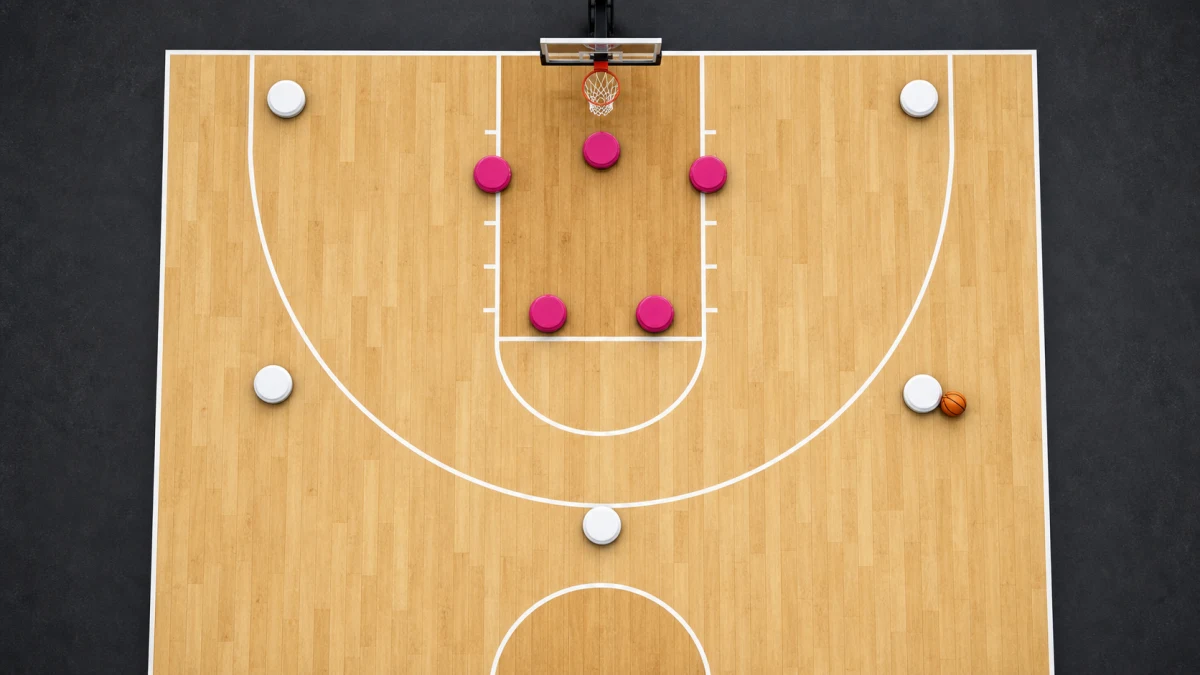
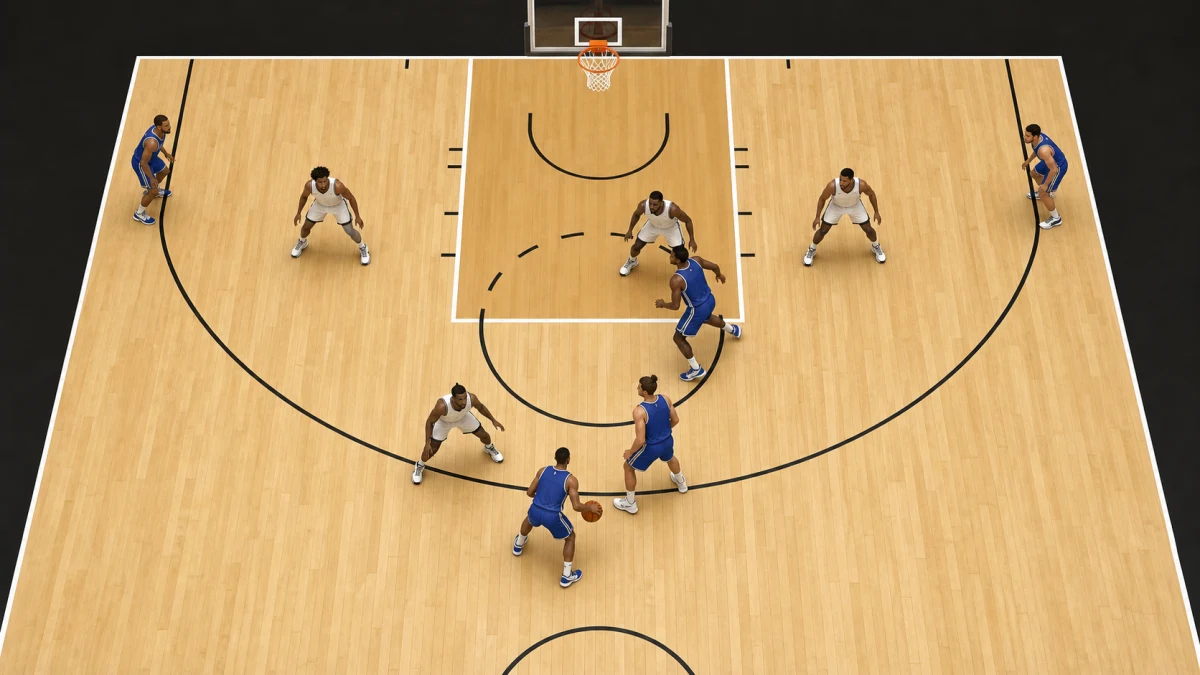
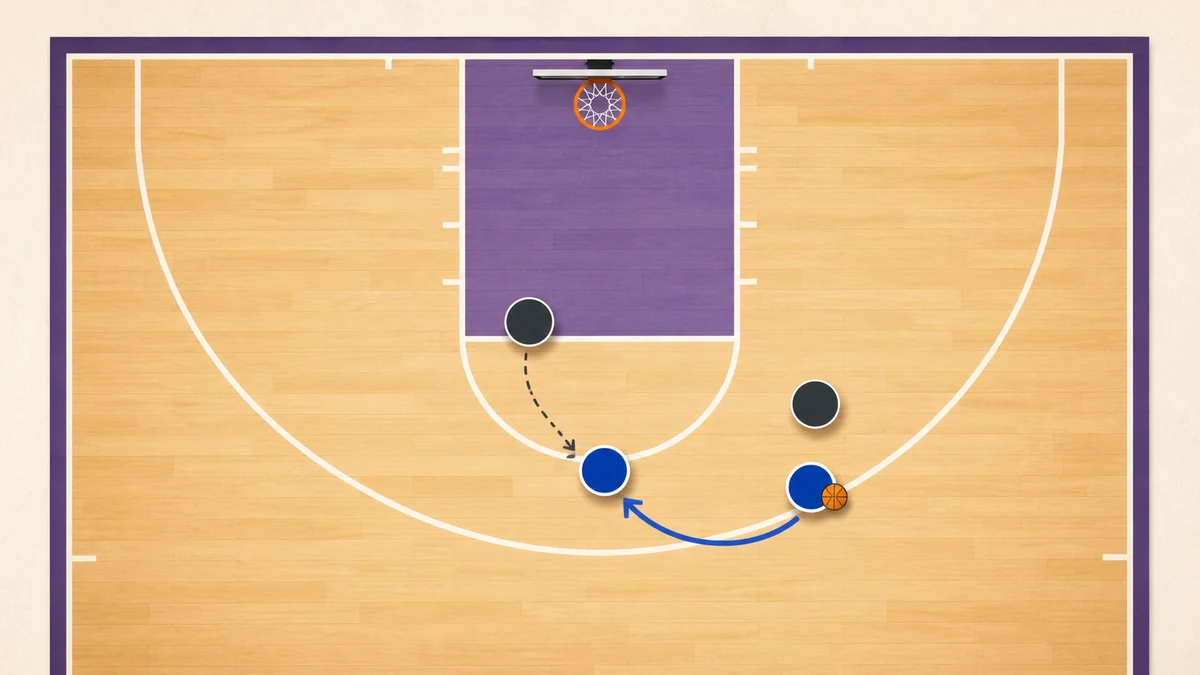
An empty-corner pick-and-roll is a two-player ball-screen action run toward a side where the strong-side corner is unoccupied. The other three offensive players are usually arranged on the weak side or above the action. The empty corner matters because there is no offensive player—and therefore no assigned defender—standing directly behind the screener’s roll. The defense loses its shortest help route and must solve the action with the two screen defenders or bring a longer rotation from the weak side. NBA Finals Film Study: Empty Corners and Screen Angles pick-and-roll basics
The spacing does not guarantee a layup. It clarifies the decisions. If the screener’s defender contains the ball, the roll may open. If a weak-side defender tags the roll, a shooter may be available. If the defense switches, the offense can attack the new matchup or use the big’s size on the glass. If the defense pre-switches, the original screen may no longer create the matchup the offense wanted. The same starting picture can lead to several different finishes. NBA Film Study: Key Plays and Actions in the 2023 Playoffs offensive spacing
Why the empty corner changes help defense
In a conventional side pick-and-roll, a teammate may occupy the corner behind the action. That player’s defender can stunt at the ball, body the rolling big, or rotate to the rim before recovering. Emptying the corner removes that nearby defender. NBA Finals film study showed the practical result: Miami had to defend the roll with the two players in the action or leave someone on the weak side to help, opening another pass.
The weak-side alignment must still be disciplined. Three teammates crowded on the same line make one defender capable of guarding two. Good spacing creates distinct windows: a high safety, a wing or slot receiver, and a deep corner threat. Those players are not spectators. They lift, drift, or hold according to the tag. A premature cut can bring a helper back toward the roll; a late relocation can make the kickout pass arrive after the defense has recovered. NBA Finals Film Study: Murray and Jokic in Game 1
The ball handler and screener reads
- Read the on-ball defender before using the screen. If that defender jumps to the high side to ice the action, reject the screen or let the screener flip the angle.
- Read the screener’s defender at the point of contact. Drop creates pull-up, pocket-pass, and downhill decisions; a show or two-man contain asks for a quick pass or retreat dribble.
- Read the weak-side tag. If a defender leaves early to meet the roll, move the ball to the space that defender abandoned.
- Read the switch after the action settles. Attack the guard-big mismatch that actually exists rather than forcing the first planned pass. NBA Film Study: No Point Guard, No Problem in Phoenix
The screener’s job is equally active. Arrive at an angle that gives the ball handler a usable path, hold a legal screen, then react to the coverage. Roll behind a high show, short-roll into available space, pop when the defender protects the lane, or slip before contact when the defense overplays the screen. In the NBA examples, the screener also flared to the empty corner or flowed into a post-up after a switch. The screen begins the decision; it does not predetermine the route.
How defenses answer the action
- Ice: keep the ball on the sideline and away from the middle. The offense can reject or flip the screen if the angle is available.
- Switch: exchange assignments to keep the ball in front, accepting a possible guard-on-big matchup or rebounding disadvantage.
- Show and recover: the screener’s defender steps toward the ball, then races back. The offense tests the recovery with a roll, flare, or quick reversal.
- Pre-switch: exchange matchups before the screen so the intended defender is not pulled into the action.
- Weak-side tag: send a distant defender to meet the roll, then rotate behind the helper and recover to shooters.
No coverage removes every option. The defense chooses which threat to emphasize and how much rotation it can support. Personnel changes the answer: a mobile big may switch, a strong drop defender may stay nearer the rim, and a weak-side unit with length may tag and recover. The offense should identify the coverage before trying to exploit the theoretical weakness. A correct read executed late can still become a poor possession. drop coverage
How to teach empty-corner pick-and-roll
Begin two-on-zero so the ball handler and screener can see the floor shape and rehearse both screen directions. Add the on-ball defender next and teach the ice read: use, reject, or flip. Then add the screener’s defender and play two-on-two from different coverages. The coach calls or signals drop, show, or switch before the possession until the players recognize the pictures. Remove the call once their communication and reads are reliable.
Finish with three-on-three or four-on-four. Place one or two defenders on the weak side and score the possession for the decision, not only the shot. Reward a clean pocket pass against drop, a weak-side kickout after a tag, a sealed switch, or a correct retreat when no advantage appears. Change the screen angle and who serves as screener. NBA film shows stars operating in both roles; flipping those roles makes the defense reveal a different matchup. small-sided games
The best checkpoint is whether all five players can explain the next read. The ball handler identifies coverage, the screener names the route, and weak-side players know who lifts, drifts, or stays. If the group can only execute the memorized first pass, the spacing is decorative. If they can preserve the empty corner and adapt to the defense, the action becomes a reusable basketball concept.
Frequently asked questions
What makes a pick-and-roll an empty-corner pick-and-roll?
The ball screen is run toward a side where the strong-side corner is unoccupied. The remaining three offensive players are positioned away from that corner, so the closest help defender behind the roll is removed.
Why does an empty corner help the roll man?
A defender assigned to a corner player would normally be close enough to stunt or tag the roll. With that corner empty, help must come from the two screen defenders or travel farther from the weak side, which can expose a pass to a shooter.
How can a defense stop empty-corner pick-and-roll?
Common answers include ice, switch, show-and-recover, pre-switch, and a weak-side tag. Each protects a different part of the floor and concedes something else, so the choice depends on personnel, scheme, and the players in the action.
Is empty-corner pick-and-roll only for professional teams?
No, but younger teams should learn basic spacing, screening, and two-player reads first. Coaches can teach the concept in two-on-two and add weak-side players only when the ball handler, screener, and defenders can recognize the coverage without relying on a memorized route.