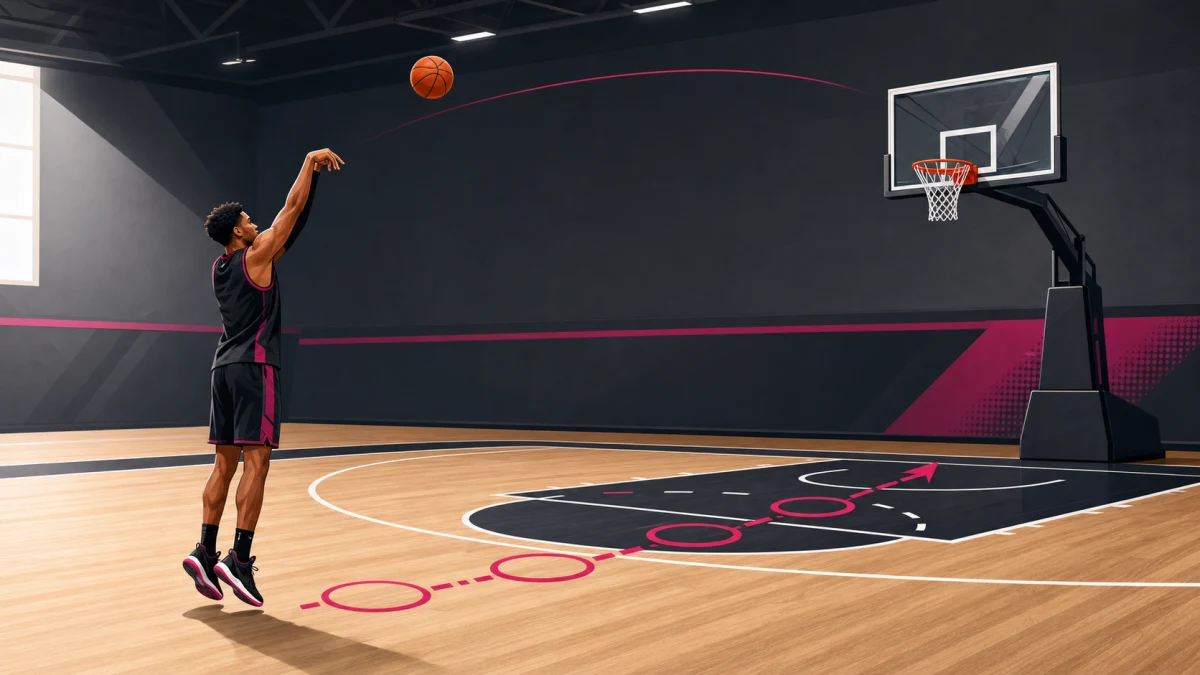

The short version: Prepare on the shot, assign rebound and safety roles, and make the first recovery step toward the defensive basket. Protect the rim before the last defender commits to the ball, then stop the dribbler and account for runners. Practice turn-and-sprint arrivals, one-on-two delays, tandem two-on-three exchanges, and temporary five-on-four recovery. Review the first lost event rather than judging only the final shot.
Key takeaways
- Begin defensive transition preparation when the offense shoots.
- Turn and sprint toward the basket before chasing matchups.
- Protect the rim before the last defender commits to the ball.
- Use active balanced footwork to delay numerical advantages.
- Review shot, first step, basket, ball, and matchup as separate events.
Transition defense begins before the turnover
Transition defense is the period between losing possession and establishing the team's half-court defense. The first useful footwork often happens while the ball is still in the air. FIBA's official WABC document library publishes the Level 1 manual used here, and that manual teaches that defensive preparation begins when the offense shoots. Some players contest the rebound while others move toward a safety position near the top of the key. That floor balance determines whether the opponent sees an open runway or a defender already connected to the basket. WABC Level 1 Coaches Manual FIBA WABC Coaching Documents
Do not make every player chase the offensive rebound by habit. Assign roles or give players a clear decision rule based on shot location, personnel, and team strategy. The safety player opens toward the developing play, sees the ball and likely runners, and begins retreating without turning the back on the action too early. Rebounders who cannot secure the ball must release into transition instead of watching the outlet leave.
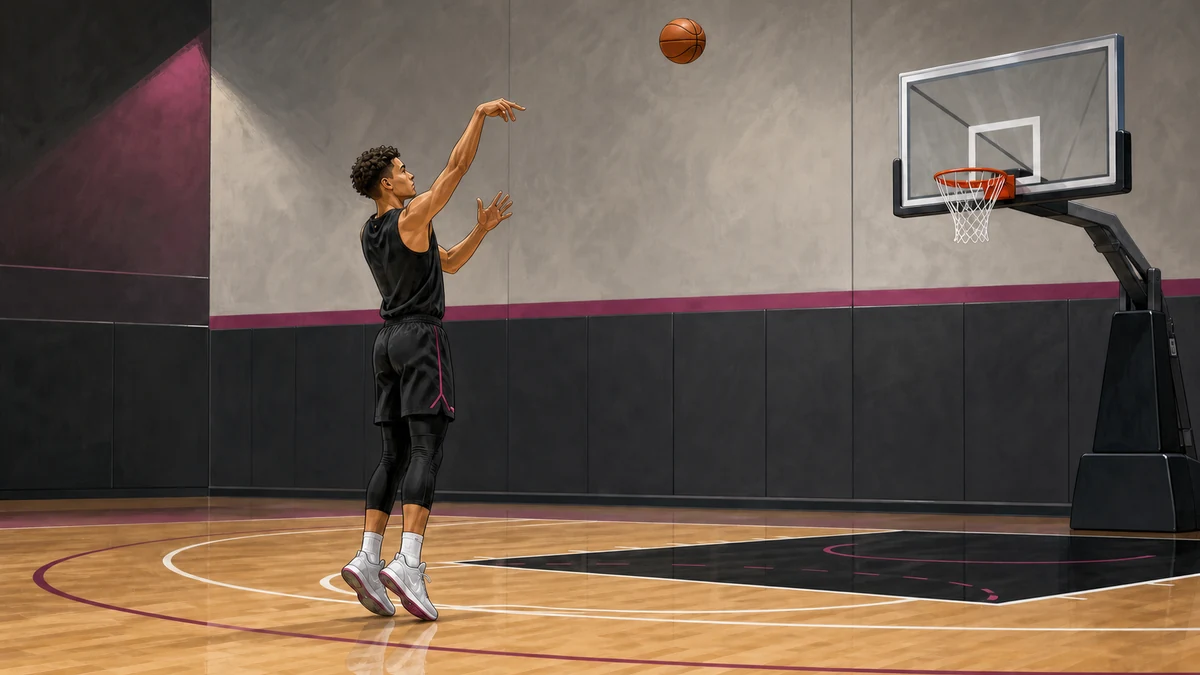
Practice should continue after the shot rather than stopping for feedback at the release. WABC recommends moving the activity into its next stage: transition. A shooting drill can therefore finish with a designated player becoming safety, another contesting the outlet, and everyone sprinting to defensive landmarks. That extra phase makes the shot, rebound decision, and first three steps part of one possession. basketball transition defense
Train the first three recovery steps
The first step should point the defender toward the urgent space, not toward the original matchup. A player below the ball may need to turn and sprint toward the basket. A player already high may open into a safety angle and retreat while seeing the advance. A rebounder may take one controlled action to slow the outlet before releasing. Give every role a starting landmark and a visual cue so the first movement can be reviewed.
Use turn-and-sprint mechanics for distance, then shorten the stride as the defender approaches the protected area. Long backpedaling over the full court is slower and makes changes of direction difficult. The defender can sprint with shoulders angled to keep useful vision, arrive near the lane with balance, and then move laterally as the ball declares a side. Footwork should serve the priority order rather than becoming a separate conditioning race. basketball deceleration footwork
Coach the recovery with exact checkpoints: first step toward the defensive basket, eyes connecting ball and rim, sprint through the center channel or assigned lane, then a controlled stance near the protection point. Film from the sideline so the distance and angle remain visible. If a player arrives late, identify whether the delay began with the shot reaction, the turn, the sprint line, or the final deceleration.
Protect the basket, stop the ball, then match up
WABC organizes the emergency around basket and ball. When possession changes, the team first protects the basket. The last defender should not fully commit to the ball before someone owns the rim, because a pass over the defender can create a layup. Once the basket is covered, the next defender can take the ball early enough to slow penetration and influence where the offense goes.
The phrase match up does not mean sprint blindly to the original assignment. It means account for the most dangerous available players as teammates recover. Communicate basket, ball, and specific runners. Point and talk early enough for a teammate to change course. When the ball is stopped and the lane is protected, defenders can fan out to receivers, exchange assignments, and rebuild normal help positions. Jr. NBA MVP Practice Plan 2 help defense and rotations
One rebound-side defender can also slow the break at its source. WABC describes jamming the rebounder with arms out to delay the outlet, emphasizing delay rather than a steal and warning against reaching. Use this only when the basket is protected and the player's role allows it. A reckless reach that removes the defender from the play defeats the transition purpose.
Footwork for one-on-two and two-on-three disadvantages
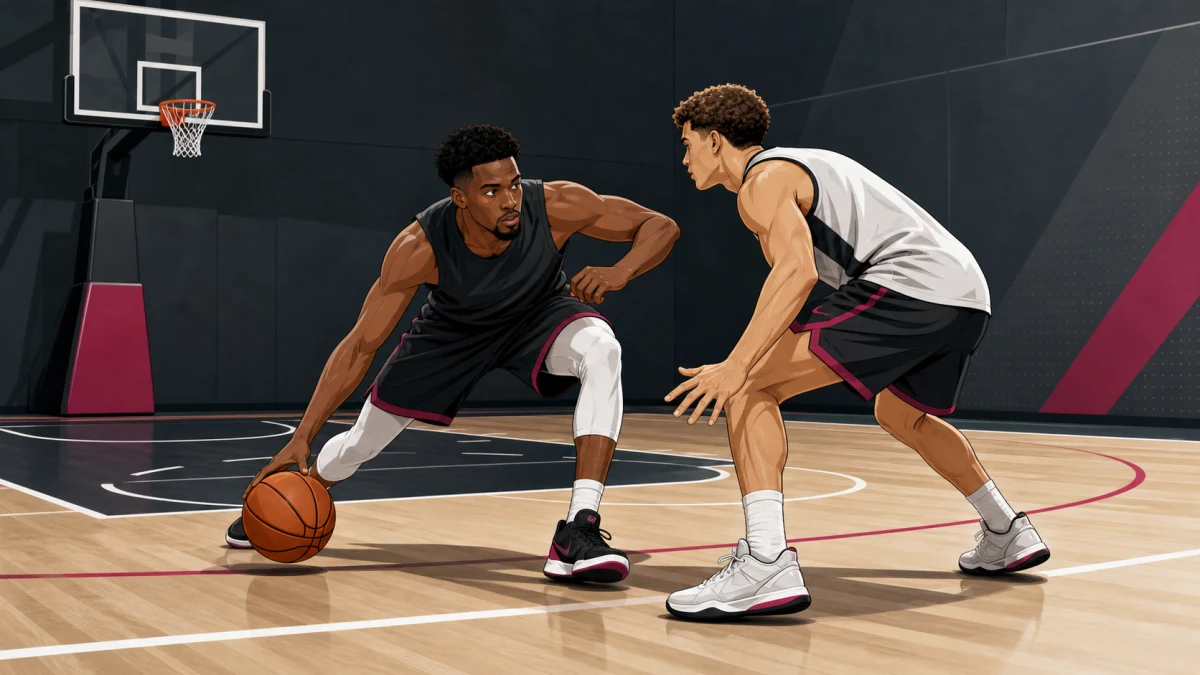
Against two attackers, one defender should retreat toward the basket rather than choosing the ball too early. WABC tells the defender to move back quickly, use active feet in and out of the driving lane, and create doubt about which attacker is covered. The offense holds the advantage; the defender's practical task is to deny a direct layup and buy time for the next teammate.
Train this with a retreat line that keeps the defender between ball and rim. The defender changes pace near the lane, shows toward the dribbler without crossing the feet, and recovers toward the receiver when the pass is released. Active hands can occupy passing space, but the feet must preserve balance. Score the defense for a delayed shot, a forced extra pass, or enough time for help to enter—not only for a steal. defensive footwork workout
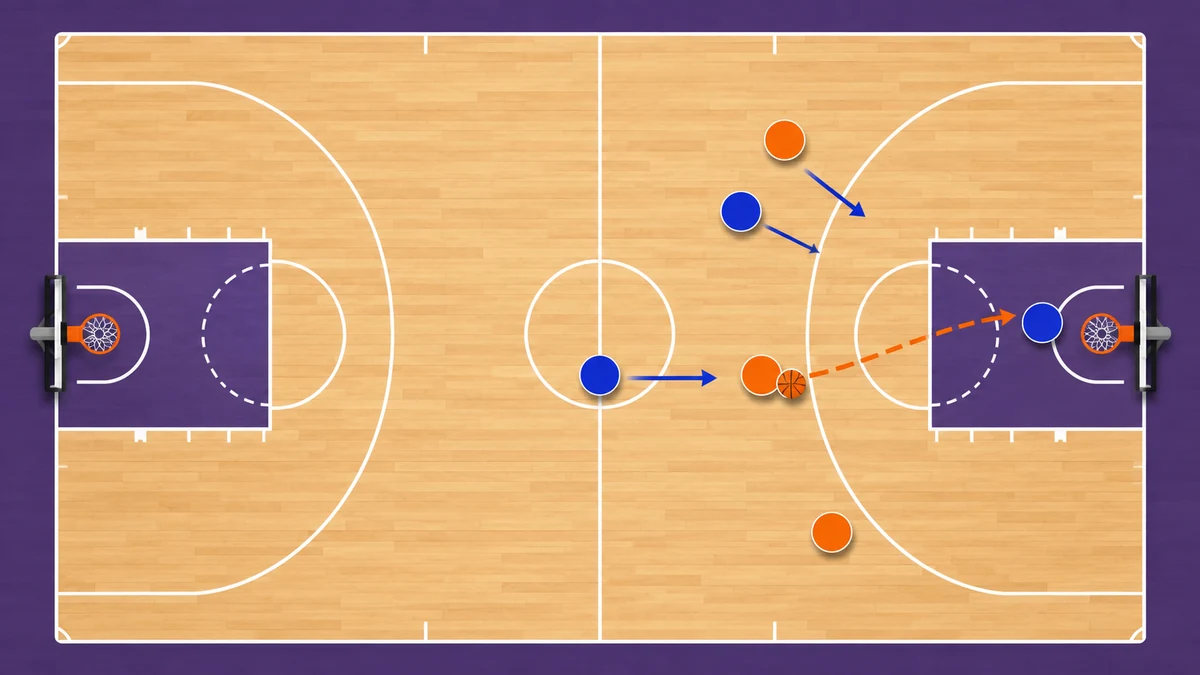
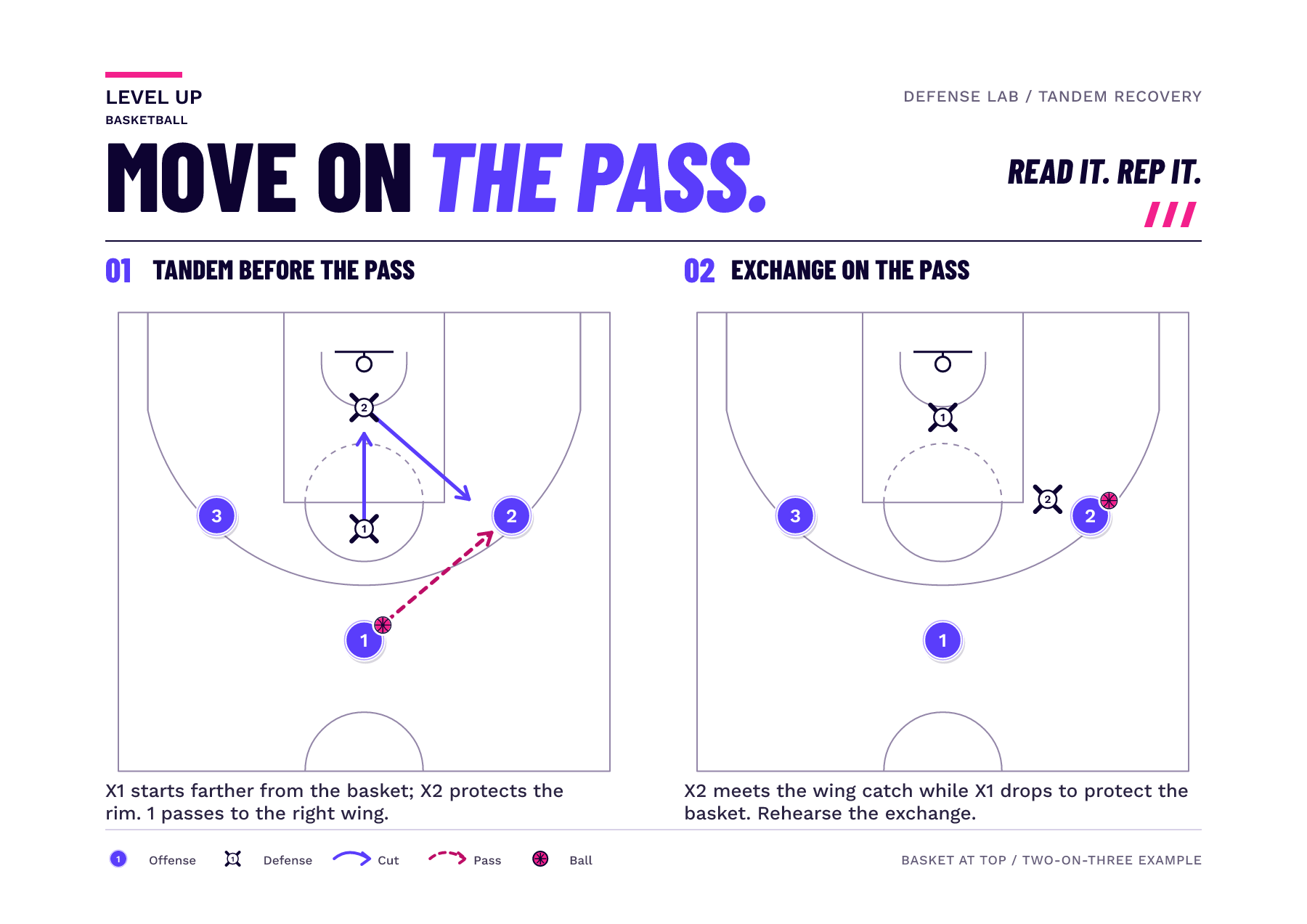
Against three attackers, WABC places two defenders in a tandem or I alignment: one higher, one at the basket. The primary goal is to prevent a layup and delay until more defenders recover. On a wing pass, the basket defender can move out while the top defender rotates down. Rehearse that exchange slowly before making it live, because both defenders must move on the pass rather than after the catch.
Swipe sideways to explore the full diagram.
A four-stage transition footwork progression
- Shot-to-safety walk-through: finish every shooting rep with one player contesting the rebound and one opening to the safety landmark.
- Turn, sprint, arrive: react to a possession-change signal, sprint toward the basket, shorten the final steps, and finish in a balanced stance.
- One-on-two delay: give the offense a controlled advantage and score the defender for protecting the rim until a trailing teammate arrives.
- Five-on-four recovery: use a trailing defender, require basket and ball communication, and play until the defense stops the ball and matches up.
Jr. NBA's line-up transition-defense drill creates a temporary five-on-four disadvantage. The defense must stop the ball and match up until the trailing player recovers. This constraint exposes the first communication and footwork decisions without scripting the full possession. Start at teaching speed, then vary which player trails so every position practices basket, ball, and matchup responsibilities.
Use continuous change-of-possession games once the landmarks are stable. Jr. NBA practice plans include immediate transitions after a shot or turnover. Keep the scoring simple: one point for a layup denied until help arrives, one for a clear ball stop, and one for all offensive players accounted for. Reset only after the defense controls the possession or the coach identifies the first broken priority. Jr. NBA All-Star Practice Plan 11
Review transition film by event
Mark six moments: shot or turnover, first defensive step, safety position, first basket protector, first ball stop, and recovered matchup. The earliest late event usually explains the later breakdown. A defender who appears slow at the rim may have watched the shot for two beats. A wing left open may reflect unclear basket ownership that forced two teammates into the lane.
Separate effort from direction. A full-speed sprint toward the ball can still open the basket. A player who retreats under control may be making the correct delay decision in a disadvantage. Grade the line and priority before grading speed: did the defender move toward the basket, see the ball, communicate the runner, arrive balanced, and transfer responsibility when help recovered? basketball closeout training
Review successful possessions too. Identify when an early safety position removed a long pass, when a controlled outlet contest bought a second, or when tandem defenders exchanged on the wing pass. Keep the clip long enough to show the shot or turnover that triggered the break. Transition defense is a chain, so the correction belongs at the first lost link rather than only at the final shot.
Frequently asked questions
Should the first defender stop the ball or protect the rim?
Protect the basket first. WABC advises the last defender not to commit to the ball until someone guards the basket. Once rim protection is established, another defender can take the ball and teammates can match up behind it.
Should players backpedal the whole way?
No fixed movement fits every position, but long recovery distance usually calls for turning and sprinting, then shortening steps into a balanced stance. Preserve vision through an angled body position and use lateral footwork once the ball declares a side.
What is a useful transition-defense scoring rule?
Reward the sequence: basket protected, ball slowed, runners identified, and matchups recovered before an uncontested layup. Jr. NBA's temporary five-on-four drill ends around defensive stops and specifically coaches stopping the ball and matching up.