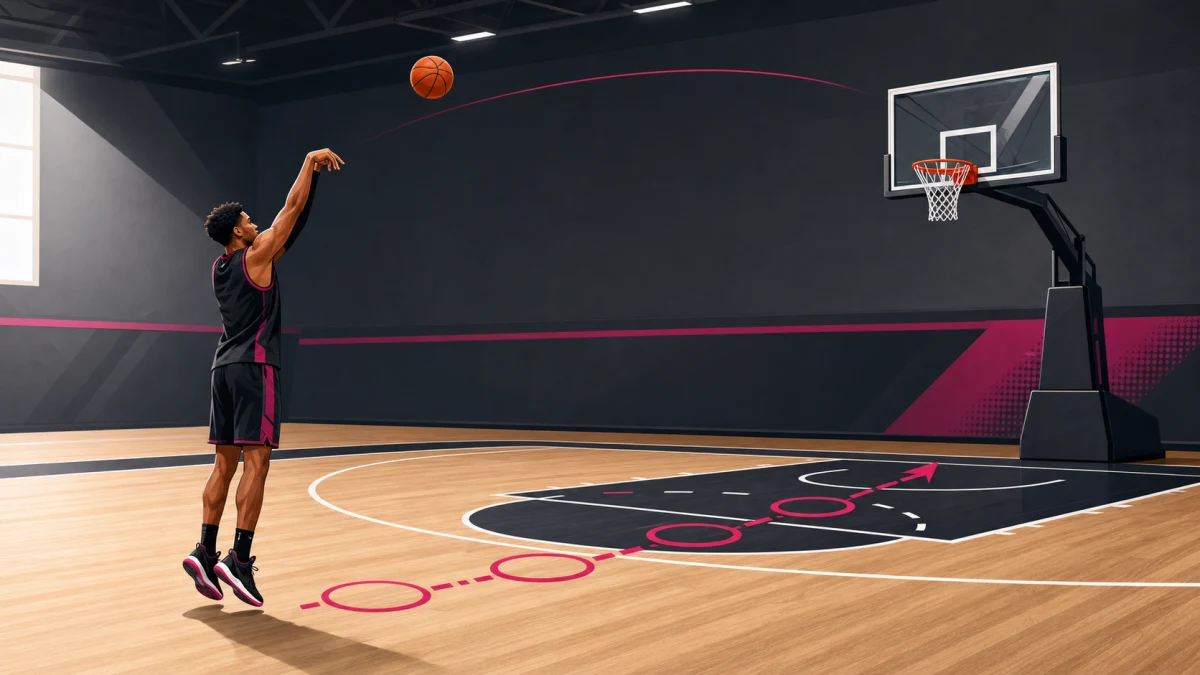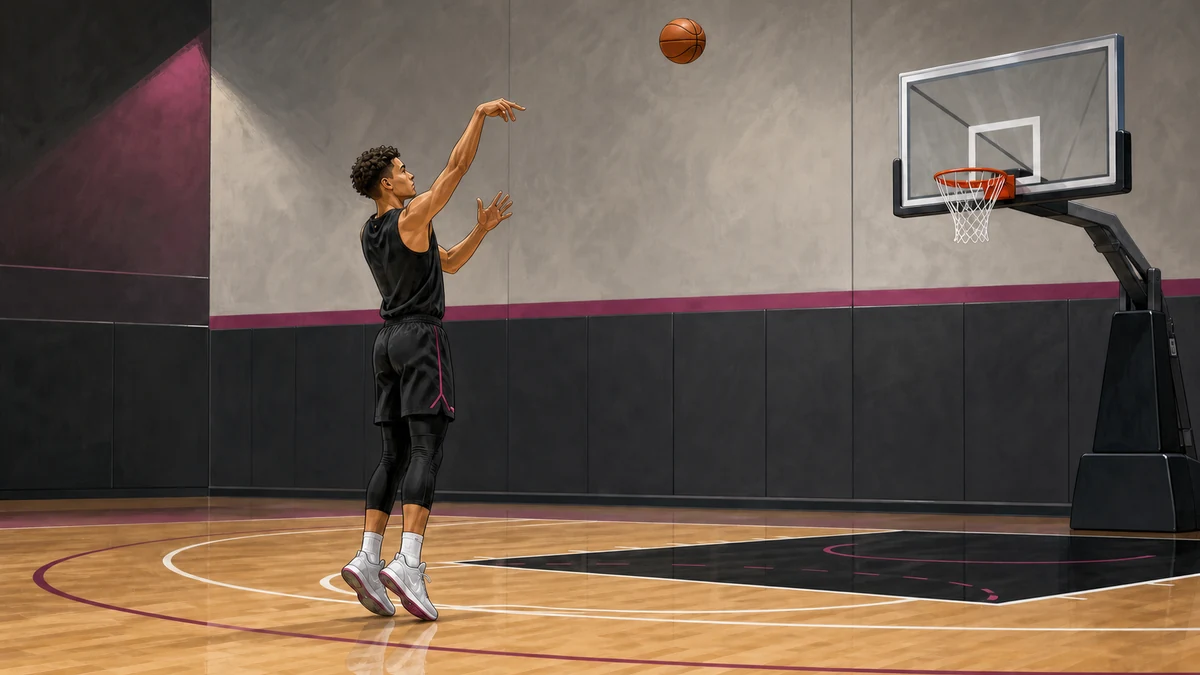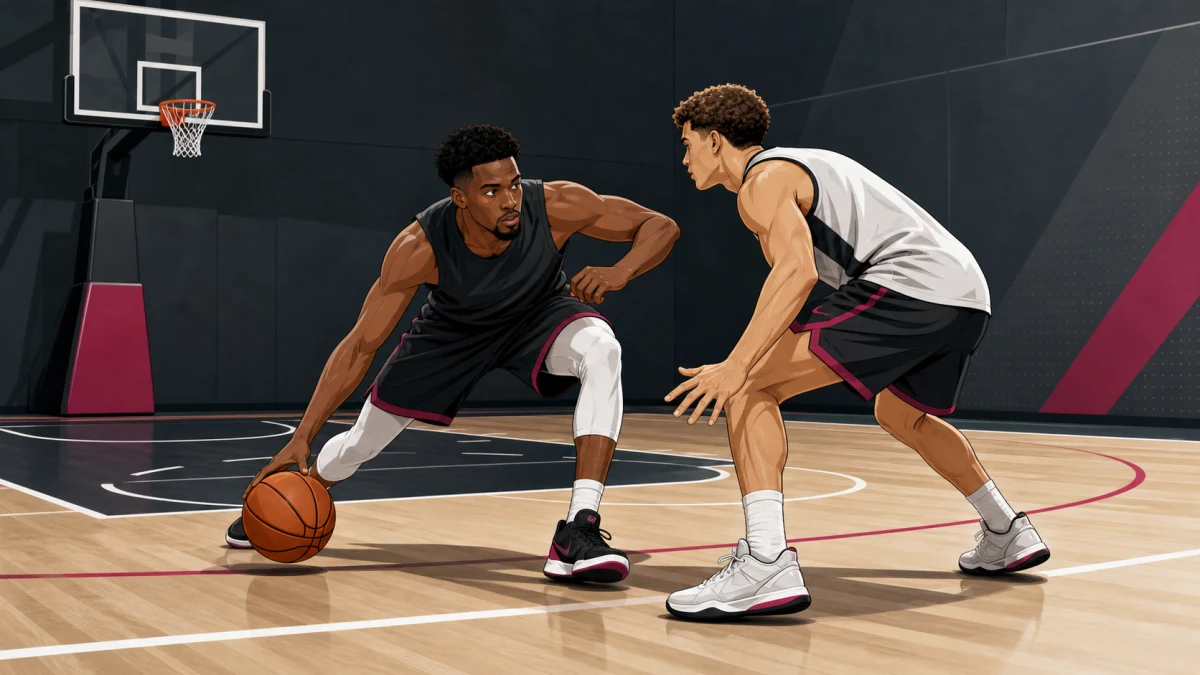
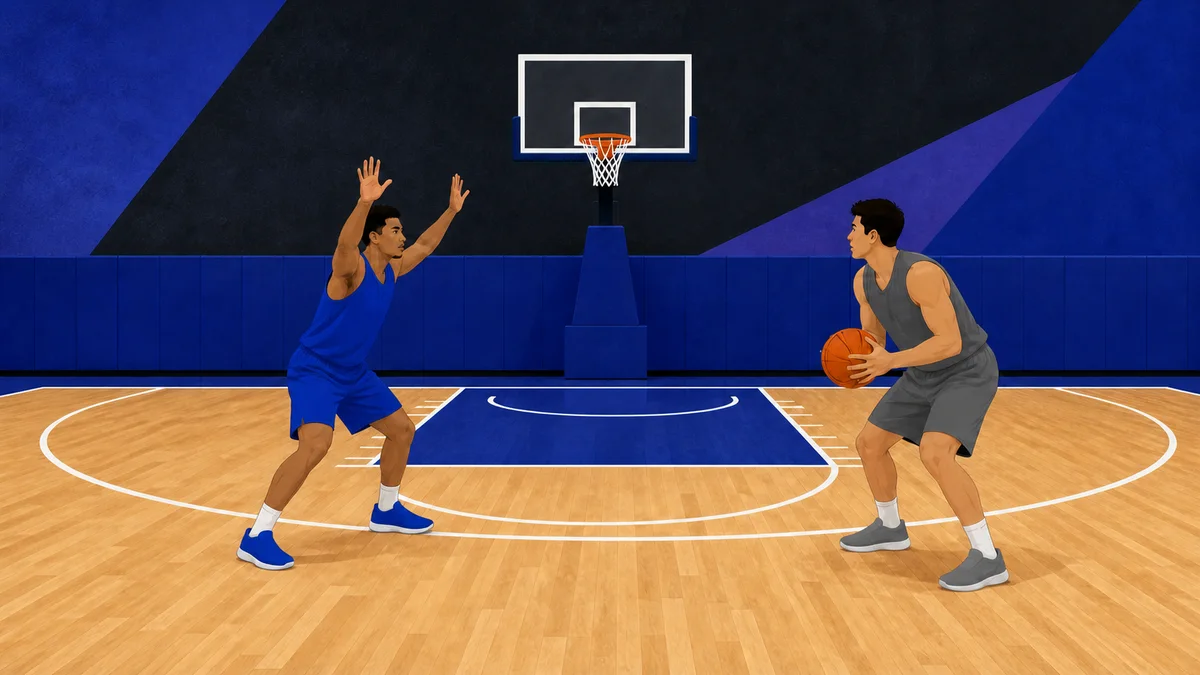
The short version: Train a closeout as a four-part decision: move while the pass is in flight, gain ground, decelerate into a balanced high-hands stance, and defend the next action. Match distance and angle to the opponent and coverage. Progress from shadow reps to guided reads, live one-on-one, and two-on-two communication. Score the read, arrival, coverage choice, first slide, and possession finish.
Key takeaways
- Start moving while the pass is in flight instead of reacting after the catch.
- Use early acceleration and late control; choppy steps are a deceleration cue, not the whole rep.
- Keep two hands high, the head and chest balanced, and the feet ready for a lateral push.
- Adjust closeout distance and angle for the offensive threat and the team's coverage rule.
- Progress into live one-on-one and two-on-two, then score the next defensive action and possession finish.
What are you training in a basketball closeout?
A closeout is the transition from an off-ball defensive position to guarding a player who receives the ball. The purpose is not to perform a pretty sequence of steps. It is to arrive under control, influence the next shot, drive, or pass, and remain able to defend the action that follows. WABC's definition centers the change of responsibility, while USA Basketball pairs the arrival with defensive slides. Together, those ideas make the standard clear: the rep continues after the defender reaches the ball. WABC Coaches Manual Level 1 USA Basketball Close Out with Defensive Slides what a basketball closeout is
Good training therefore links four phases: the read before the pass, acceleration while the ball travels, controlled deceleration near the catch, and the next defensive action. A defender can sprint hard and still lose the rep by flying past a shot fake. Another can arrive with perfect-looking feet but give up a direct drive because the angle ignores the team's coverage. Coach the whole decision, then use footwork and body-position cues to make that decision repeatable. WABC Coaches Manual Level 2
Move on the pass and win the first two-thirds
The closeout begins before the catch. WABC uses the cue fly with the ball: the defender reads the passer and starts moving while the pass is in flight. Waiting for the receiver to secure the ball gives away the only free travel time in the possession. The first foot should match the direction and body orientation of the pass so the defender can open efficiently rather than taking a false step or turning away from both ball and assignment.
Accelerate through the first portion of the distance. WABC's Level 1 progression describes sprinting roughly the first two-thirds before transitioning to smaller steps. That ratio is a teaching guide, not a universal measuring tape: a short closeout may have almost no pure sprint phase, and a long rotation may demand more speed. The usable question is whether the defender spent the early space closing distance quickly enough to reserve the final space for control.
Film the first two steps from behind or at a slight angle. Look for a late reaction, a step under the body, an unnecessary crossover that loses vision, or a path that runs to the receiver's current location instead of the expected catch window. Correct one variable at a time. A defender who starts late often compensates by lunging at the end, so improving the pass read can solve the visible finishing error without adding another footwork cue.
Control the final third with feet, head, and hands
As the defender enters the final space, speed must turn into balance. WABC teaches small choppy steps and two hands high in front of the face. The smaller steps give the defender more frequent chances to adjust to the catch, shot pocket, or first dribble. High hands occupy the passing and shooting window without requiring a forward lunge. The chest stays upright enough to see the torso, the hips remain loaded, and the feet avoid crossing so the first lateral push is available. WABC Coaches Manual basketball footwork fundamentals
Head position is easy to miss on film. The WABC coaches manual connects it to balance: when the head and shoulders drift far beyond the base, the defender needs a recovery step before changing direction. A useful freeze-frame is the instant the offense catches. Can the defender stop without bringing the feet together? Are both hands visible and active? Is the nose roughly over the center of the stance instead of chasing the ball? Can the next movement be a slide rather than a turn and run?
Avoid teaching choppy steps as a performance disconnected from distance. Beginning them too early leaves the shooter comfortable; beginning too late produces a fly-by. Add a visual boundary only long enough to teach the speed change, then remove it and make the defender read the pass, opponent, and team rule. The outcome is controlled arrival, not a prescribed number of foot contacts.
There is no universal closeout finish
The same finish does not fit every offensive threat. WABC Level 2 discusses a shorter closeout against a driver and emphasizes alignment with the team's defensive rules. Against a dangerous catch-and-shoot player, the defender may need more urgency and a tighter contest while still protecting against the first step. Against a downhill driver, the defender may stop shorter, keep more cushion, and prioritize the driving lane. Personnel, score, time, location, help, and coverage all change the answer.
Angle matters as much as distance. If the team sends the ball toward the sideline, the defender's path, top foot, and chest angle should discourage the middle. If the coverage allows middle and loads help elsewhere, the foot and body relationship changes. Do not teach a foot label without the reason behind it. Ask the defender to name the shot or driving lane being taken away, then check whether the body actually communicates that choice.
Communication completes the closeout. WABC's Level 1 material includes the call ball, and team rules may add early help or rotation language. The call tells teammates that the on-ball matchup has changed and helps the next defender organize. It also forces the closeout player to recognize the role, not simply run toward a jersey. help defense and rotations
Progress from a shadow rep to a live decision
- Shadow closeout: a coach or partner passes to a stationary receiver; the defender reads flight, accelerates, decelerates, calls ball, and freezes in balance.
- Guided read: the receiver alternates among an immediate shot pocket, one hard drive step, and a pass; the defender must arrive and make the appropriate next movement.
- Live one-on-one: begin with the defender near the free-throw-line area and the offense on the wing, then limit the offense to three dribbles so the rep stays focused. Jr. NBA Starter Practice Plans Page 4
- Live two-on-two: add a help defender and require clear ball and help communication before playing the possession to a stop or rebound. Jr. NBA Starter Practice Plans Page 3
Jr. NBA's Starter plans provide the useful bridge into live play: one-on-one closeouts with a three-dribble limit and a two-player setting with ball and help communication. Constraints should make the target decision visible, not guarantee a scripted result. Change the starting distance, pass angle, offensive threat, and help location only after players can control the simpler version.
Keep work periods short enough that stance and decisions stay honest. Alternate sides and offensive threats so athletes do not memorize one path. When fatigue causes upright posture, crossed feet, or silent defense, stop the rep and reset rather than collecting low-quality repetitions. There is no evidence-based magic number here; choose volume that preserves the skill you intend to teach.
Score the decision, not just the arrival
A simple scorecard can separate the phases. Award one point for moving with the pass, one for gaining ground early, one for arriving balanced with high hands, one for executing the team's angle, and one for winning the next action. The final point may mean forcing a contested shot, containing the assigned driving lane, triggering the correct help-and-recover sequence, or finishing with a rebound. This keeps a spectacular contest from hiding a late reaction or an uncontrolled fly-by.
For film review, mark five frames: the passer's release, the defender's first movement, the speed-change point, the catch, and the offense's first action. Review the path before the feet. Then check head and chest position, hand height, foot spacing, first slide, and communication. Compare similar situations rather than averaging every closeout together; a long rotation to an elite shooter and a short recovery to a driver are different problems.
Common closeout mistakes and the cue that fixes each
- Late start: cue fly with the ball and reward the first movement, not only the final contest.
- Chopping too early: cue win the early space, then control the final space.
- Head and shoulders lunging forward: pause at the catch and rebuild a stance that can slide immediately.
- One hand reaching at the ball: keep two hands high through arrival, then contest according to the team rule.
- Correct feet but wrong angle: name the shot or driving lane the coverage intends to remove before the rep begins.
- Stopping after the catch: connect every closeout to a slide, help, recovery, stop, or rebound.
Use the smallest cue that changes the behavior. Stacking five commands onto one rep divides attention and makes the result hard to diagnose. If the defender starts late, fix the read before discussing the hands. If the defender reaches the catch balanced but loses the first drive, coach the angle and next slide. Progress comes from making the error and its correction observable, not from adding more choreography.
Frequently asked questions
Should a defender always use choppy steps on a closeout?
Small controlled steps are a useful WABC cue for deceleration near the catch, but they are not the entire closeout. The defender still needs to gain ground early, choose the right transition point, and arrive at a distance and angle that fit the opponent and team coverage. Chopping from the start can be just as harmful as sprinting through the catch.
Should both hands be high?
WABC teaches two hands high in front of the face during the controlled finish. That posture can occupy the shot and passing window while helping the defender remain balanced and ready to move laterally. The exact contest after the offensive read still depends on the team's technique and the player's threat.
How close should the defender get?
There is no universal distance. WABC Level 2 contrasts a shorter closeout against a driver with other situations and ties the decision to team rules. Shooter range, driving ability, help position, score, time, and coverage all matter. Train the intended space with live reads instead of teaching one fixed footprint.
What is the best live closeout drill?
A strong starting point is Jr. NBA's one-on-one structure with the defender moving from the free-throw-line area to a wing catch and the offense limited to three dribbles. Once the player controls that decision, add a two-on-two setting with ball and help communication and require the defense to finish the possession.