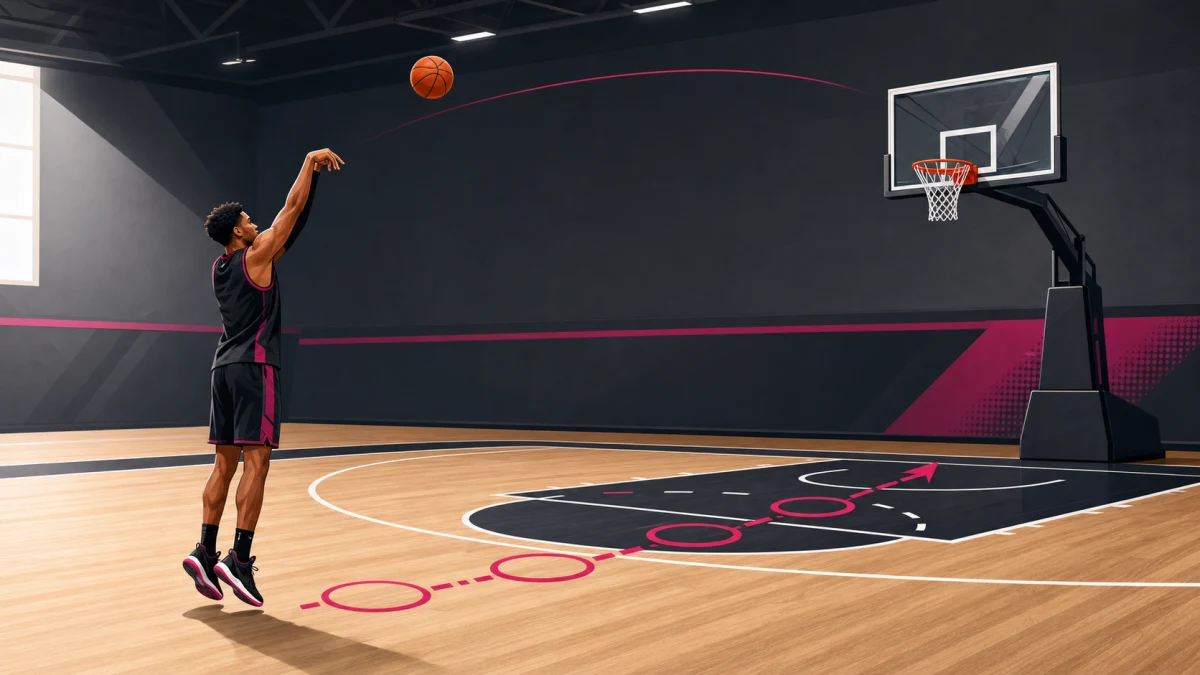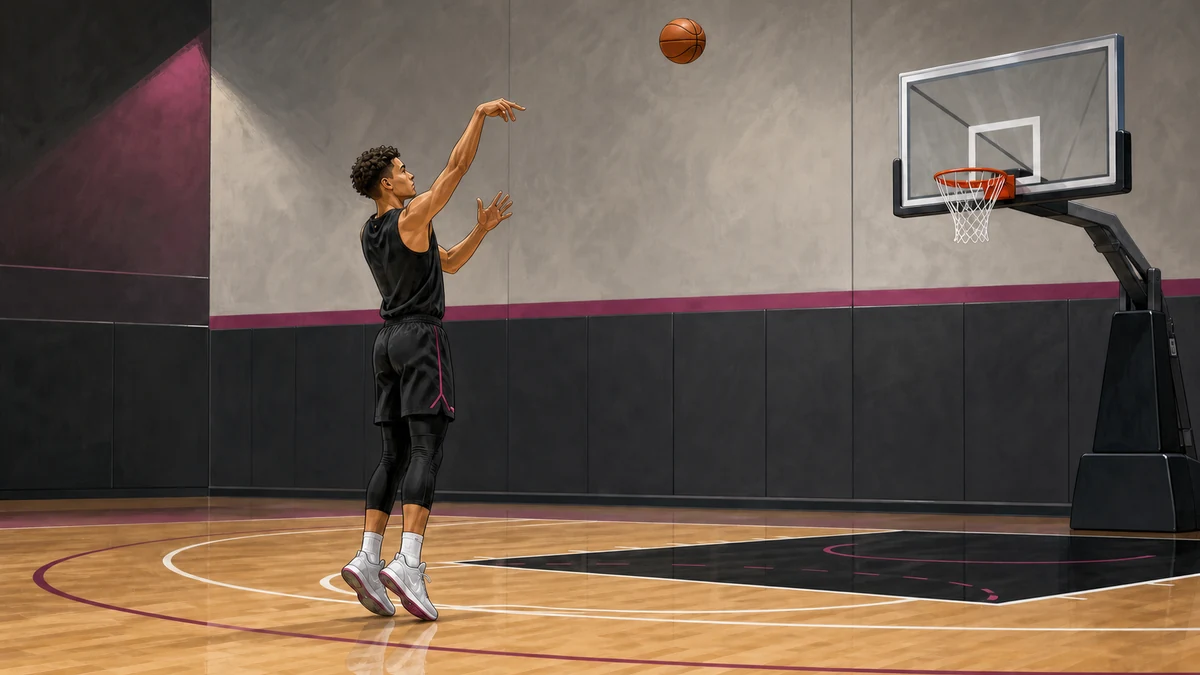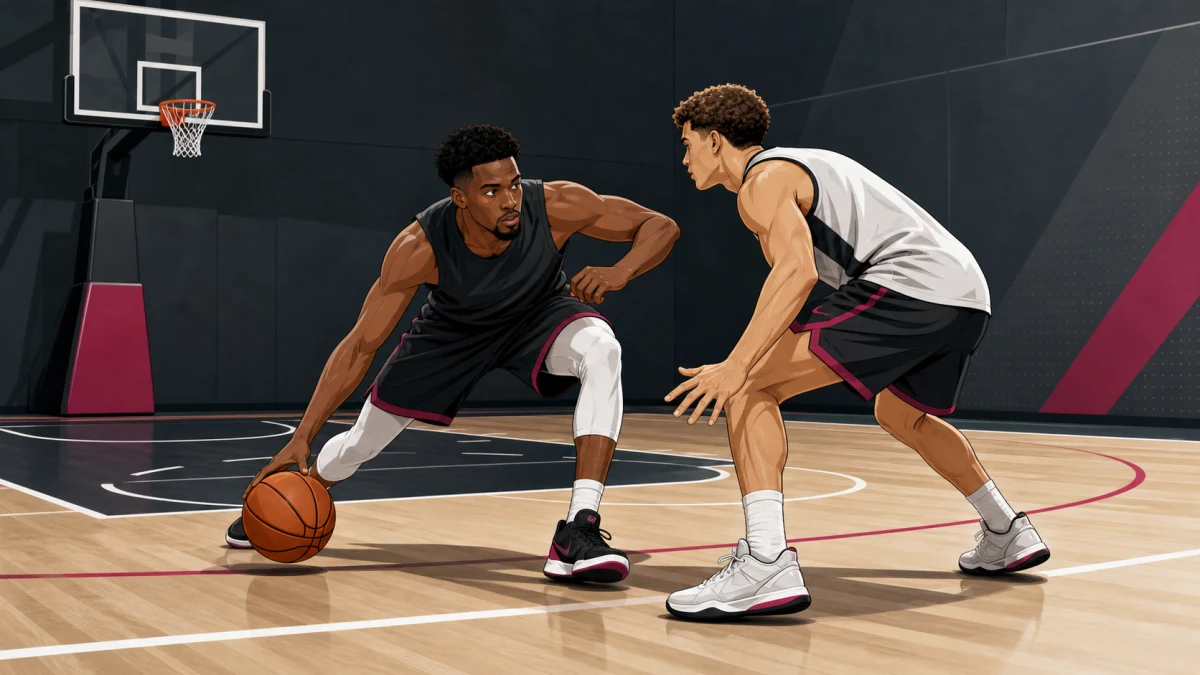

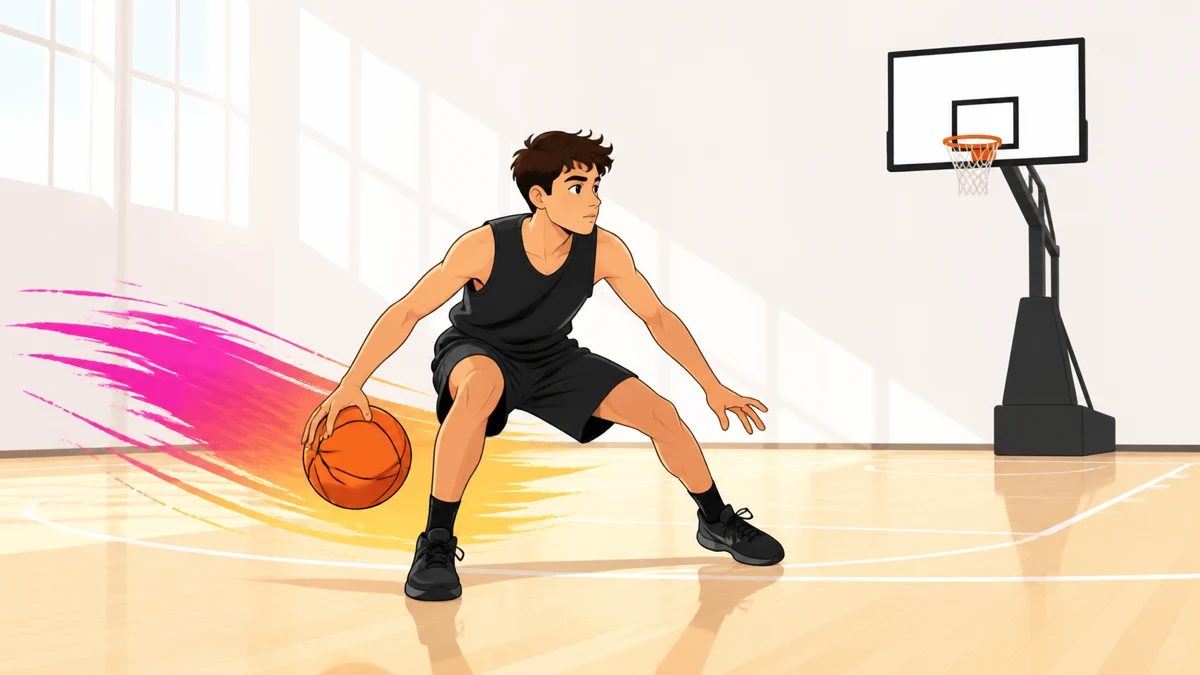
The short version: Basketball deceleration is the skill of reducing speed while keeping balance and a useful next action. Good braking starts before the final step: lower the center of mass, use several controlled contacts instead of one desperate reach, keep the feet underneath the body, and finish in a stance that still allows a pass, shot, pivot, or change of direction. Train the pattern from predictable stops to reactive game-speed decisions.
Key takeaways
- Braking is a basketball skill, not merely the absence of acceleration.
- The best stop leaves the player balanced enough to make the next decision immediately.
- Progress from controlled jump stops and stride stops to reactive cuts, closeouts, and live reads.
What deceleration means in basketball
Basketball deceleration is the ability to reduce speed while staying balanced enough to make the next play. It appears in a drive that becomes a pull-up, a closeout that must not fly past the shooter, a hard cut into a catch, and a transition sprint that turns into defensive stance. The stop is not complete merely because the player is no longer moving. It is complete when the player can pass, shoot, pivot, slide, or accelerate again without an extra recovery step. USA Basketball Player Development Curriculum change-of-pace training
That standard changes how you train. Sprinting harder is useful only when the player can organize the final contacts. Instead of reaching one foot far ahead and hoping friction does the work, the athlete begins braking earlier, lowers the hips, keeps the feet close enough to support the body, and arrives in an athletic stance. The exact foot pattern changes with the play, but balance and a useful next decision remain the test.
Build the stop before adding speed
Start with stops players can repeat and inspect. USA Basketball presents footwork and body control as a core development area, while its footwork guidance describes the jump stop as a way to move into a low, balanced ready position with both feet landing together. That does not make the jump stop the answer to every play. It makes it a clear first checkpoint: can the athlete move, stop, and own the landing without the knees collapsing, the chest pitching forward, or the feet continuing to shuffle? USA Basketball: 10 Fundamentals for Proper Footwork basketball footwork fundamentals
- Begin in an athletic stance, accelerate for three to five steps, then lower the hips before the stop rather than after it.
- Hold the landing for one count so the athlete and coach can see whether balance is real. Jr. NBA Starter Practice Plans
- Finish every stop with a named next action: pivot, pass fake, shot preparation, defensive slide, or re-acceleration.
Three progressions from controlled to reactive
1. Line stop and hold
Mark a line, accelerate toward it, and begin braking early enough to stop in balance with the final foot contacts near the line. Hold for one count, then pivot or slide on command. Change the approach angle before increasing speed. If the athlete needs a hop, a hand on the floor, or two extra steps, shorten the run and rebuild the stop.
2. Dribble, stop, and choose
Add the ball and give two possible commands late: jump stop into a pivot, or stride stop into a protected pass. The ball must arrive under control with the body; catching it after the feet are already scattered hides the real problem. Keep the first sets below full speed, then shorten the decision window.
3. Read a live defender
Use a guided defender who can retreat, close the lane, or leave a pull-up window. The ballhandler attacks with intent but earns the next option by braking under control. Score the rep for the quality of the stop and decision, not only for a made basket. Progress to live play after the athlete can preserve balance against each predictable cue. guided basketball workouts
Coaching cues that describe what players can feel
Use one cue per rep. Try “hips down before the line,” “quiet landing,” “chest over the base,” or “stop ready to play.” These phrases connect to something visible and repeatable. Avoid stacking five corrections while the athlete is still learning the shape of the movement. Ask the player what the landing felt like, compare that answer with the video, and choose the next cue from the biggest error.
The useful video moment begins several steps before the stop. Review when the hips first lower, where the final contacts land relative to the torso, and whether the head and chest continue drifting after the feet stop. Then inspect the first action after the landing. A technically tidy freeze-frame is not enough if the player still needs an extra step before making a basketball decision.
Common mistakes and practical limits
- Braking too late: the last foot reaches far ahead and the torso keeps traveling after contact.
- Stopping tall: the feet land, but the hips never lower into a stance that supports the next move.
- Practicing only one direction: the athlete looks controlled on a rehearsed path but cannot organize a different angle.
- Counting only outcomes: a made shot can hide a poor stop, while a miss can follow a strong, repeatable decision.
Deceleration training does not guarantee injury prevention or make every player faster. It is a way to practice observable control under progressively harder basketball conditions. Adjust space, speed, and volume to the athlete's current ability, and use qualified medical guidance when pain or injury is involved.
Place the work where players can execute it well. A short footwork block near the start of practice can establish the movement standard; later small-sided play can test whether that standard survives decisions and fatigue. More repetitions are not automatically better. End a set when the athlete repeatedly loses the same landing shape, reset the task, and return with less speed or more space.
Frequently asked questions
What is the best first deceleration drill for basketball?
Start with a short acceleration into a balanced stop and one-count hold. The hold exposes extra steps and loss of balance. Once the athlete can own the landing from several angles, add the ball and a named next action.
Should basketball players always use a jump stop?
No. A jump stop is a useful foundation because both feet land together in a ready position, but game situations also require stride stops, pivots, cuts, and defensive braking. Train the stop that matches the next basketball action.
How do I know whether the stop is controlled?
Look for a stable base, aligned feet and knees, a chest that does not keep falling forward, and no extra recovery step. Then require an immediate pivot, pass, shot preparation, slide, or re-acceleration. The next action is the most basketball-specific test of control.