

The short version: Late-clock organization can use flexible timing, multiple initiators and defined screening options. The evidence includes penetration and post action, with choices shaped by the possession.
Key takeaways
- The trigger for late-clock action can vary with the possession.
- Multiple initiators can save time spent returning the ball to one handler.
- Short-corner placement can move help away from a side pick and roll.
- Documented late-clock options include penetration and inside post action.
- Hoop Coach recommends using a shot clock in competitive practice.
When should the offense switch into late-clock action?
Ten seconds can define the film-study window without dictating when a team changes its offense. Hoop Coach's late-clock checklist uses the final 10 seconds as its working definition of the end of a possession. Its coaching discussion allows a different trigger: a coach might shift into late-clock action with 12 seconds remaining, with 10, or with less. That choice can also change from possession to possession. Late Clock Efficiency Checklist - Hoop Coach | The Basketball IQ Site
The quality of the action already underway is part of that decision. At 10 seconds, a coach or point guard may let a productive action continue. If the action is going poorly, they may stop it and move into the team's late-clock option. The checklist presents both choices as possibilities, with the condition of the possession determining whether the offense continues or changes.
The remaining menu is usually short. Hoop Coach says most teams have time for little beyond a screen with a roll or pop, or a clear-out. It also raises a practical personnel choice: two or three players can initiate, instead of the ball returning to the same handler every time. Having multiple initiators can save the time otherwise spent getting that player the ball.
Which offensive structures contain screening options?
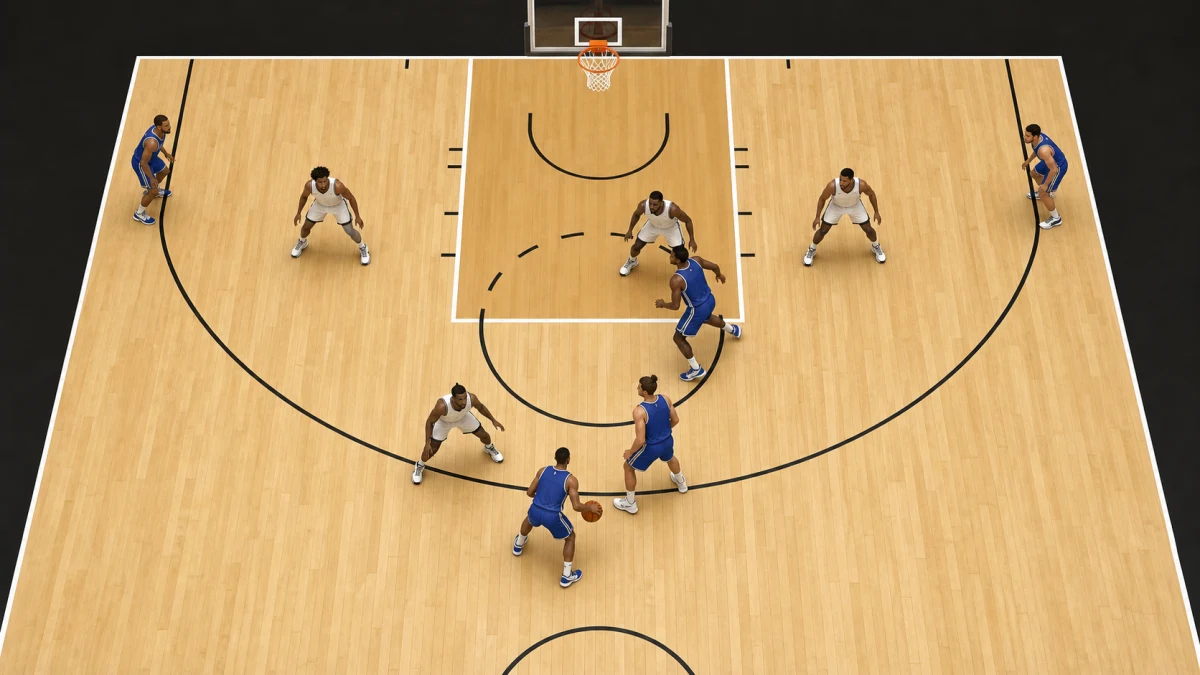
FIBA's scouting report describes a move away from quick perimeter shooting toward a more structured offense, primarily using four players out and one in. Its options included a side pick and roll, high-post screening that led to a roll or pop, and a dribble handoff from a horns set. The report documents these as options within the team's offensive structure. FIBA Women's Basketball World Cup 2022 Scouting Report
The same FIBA account includes an action it calls “gets,” followed by a down screen on the weak side. It also records screen-the-screener action within that predominantly four-out, one-in offense. Those details describe additional screening options in the report's account of the structure.
FIBA's WABC manual distinguishes an entry from a complete structured offense. It describes the zipper cut as a common professional entry into half-court offense, while calling the zipper structure relatively simple and easy to scout. The manual suggests its entry options are probably most effective when players select them through a read, rather than following a fixed instruction. WABC Coaching Manual Level 3 English
How do short-corner spacing and screen angle differ?
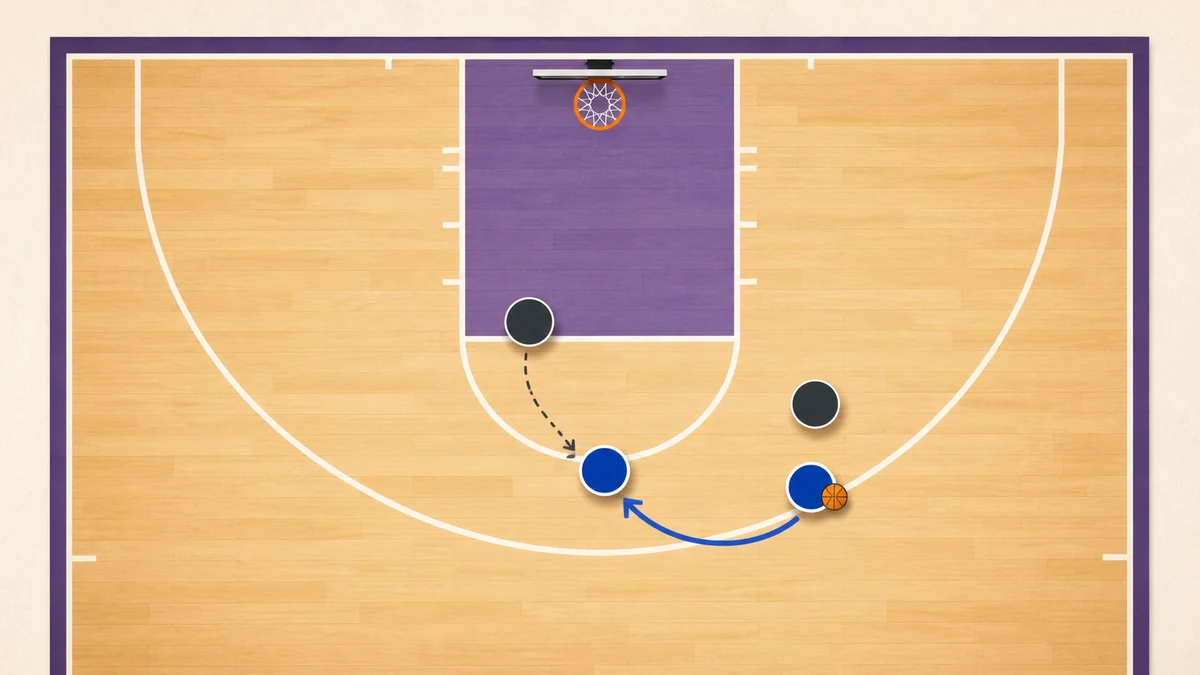
In the spread side pick and roll, FIBA's WABC manual places the low-post player in the short corner. That placement has a stated purpose: moving help defenders away from positions where they can support the defense against either the dribbler or the rolling screener. The spacing instruction concerns the player away from the ball-screen partnership and the help available against that partnership. spacing instruction
Screen orientation also varies in the FIBA manual. For the angle pick and roll, the screener faces the corner where the halfway line meets the sideline. For the step-up, also called a flat screen, the screener's back faces the baseline. FIBA describes the latter as particularly effective when the defense is directing the dribbler toward the side.
What defensive choices can shape the possession?
FIBA's WABC manual describes defensive choices aimed at opposing strengths. A coach may double a particular player or double in a ball-screen situation. The defense may deny a wing pass while permitting a corner pass, or deny access to one side while allowing the other. These are documented choices about whom to pressure and where to permit the ball. ball-screen situation
FIBA also lists zone defense as an option against a team with strong driving ability. Strong denial defense is another choice, used to disrupt the opponent's ball movement. The manual presents both as tactics a coach can select in response to the opponent.
A late-clock possession does not necessarily bring a special defensive change. Hoop Coach argues that maintaining sound basic man-to-man defense can be as effective as switching to a zone or doubling a clear-out player. In that approach, the defense maintains its basic coverage while the dwindling clock adds pressure on the offense.
Which shot-creation and receiving options are documented?
FIBA's scouting report describes two late-clock resources: a player whose penetration could produce a decent shot, and an inside option for post action. The report treats the penetrating player's ability as a luxury available to that offense. Going inside was also part of its late-clock options, alongside creating a shot through penetration.
Separately, FIBA's WABC manual describes a screener setting a screen on a perimeter player's defender to free that player for a shot. It also describes the screener flashing high to receive at the top of the key. For the high flash, the manual identifies a favorable condition: the relevant perimeter defender is away from the help line, leaving the high-post area clear.
How should coaches interpret late-clock efficiency?
Hoop Coach expects offensive performance near the end of the clock to fall below overall performance, reasoning that the urgency to attempt a shot produces more poor or hurried attempts. Its checklist nevertheless flags both a large gap between early-clock and late-clock offensive efficiency and the absence of a gap as concerns. These are the article's coaching judgments about interpreting those comparisons.
The checklist also considers the reverse pattern. If a team performs better late in possessions through ball screens or clear-outs, Hoop Coach suggests considering those actions more broadly in the offense, if they are not already being used that way. The suggestion depends on that team's better performance with those actions.
How do practice and preparation account for the clock?
Hoop Coach recommends practicing late-clock situations daily after assessing how the team performs in them. Its practice guidance calls for a shot clock in competitive five-on-five work and extends the possibility to four-on-four and three-on-three segments. This is the checklist's coaching prescription for including the clock in competitive practice.
For defensive preparation, FIBA's WABC manual distinguishes experience levels. More experienced teams focus on opposing strengths and how to challenge them, including the opponent's preferred tempo. Less experienced teams often revisit their own basic defensive structure. FIBA also cautions that changing defensive tactics too extensively can disrupt the team making those changes. basic defensive structure
Frequently asked questions
Must a team change its offense with 10 seconds left?
No fixed change is prescribed by the checklist. A coach may choose an earlier or later trigger, and the decision can vary by possession. At 10 seconds, productive action may continue; action going poorly may be replaced by the team's late-clock option.
Does the same player need to initiate every late-clock action?
Hoop Coach offers an alternative: two or three players who can initiate late-clock actions. The stated advantage is time saved by avoiding a return pass to the same designated handler.
Is penetration the only documented late-clock option?
FIBA's scouting account includes both penetration that could produce a decent shot and going inside for post action. The penetrating player's ability was a resource for that offense, while the inside option provided another documented way to approach late-clock possessions.