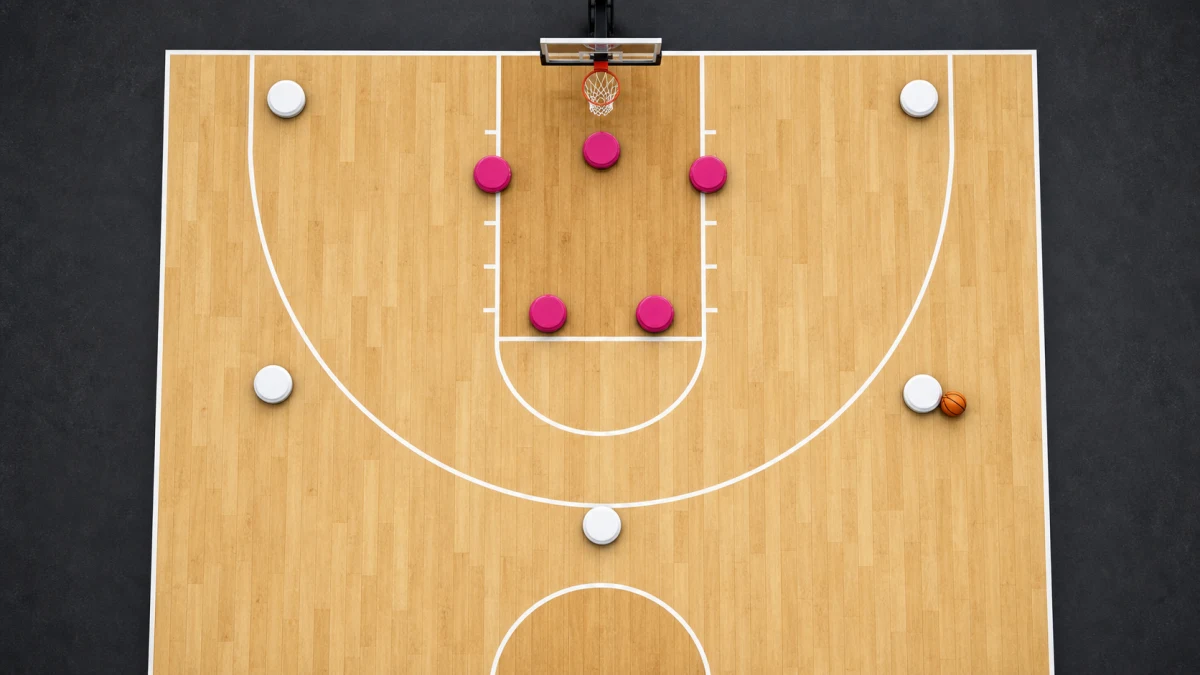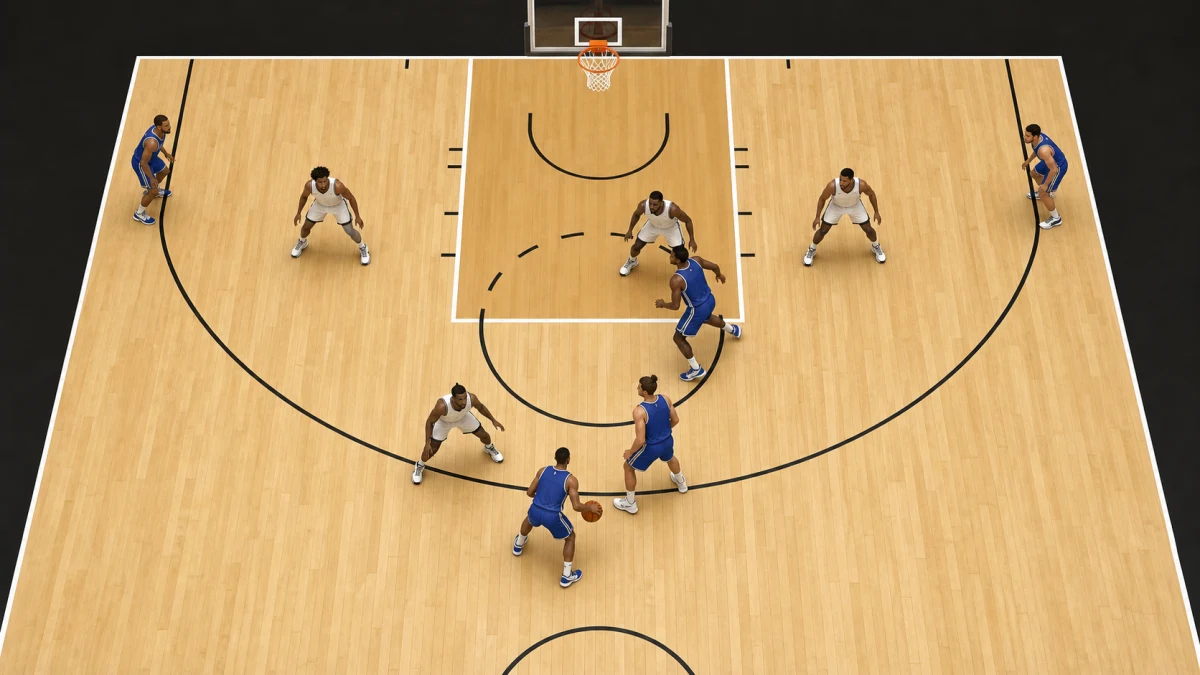

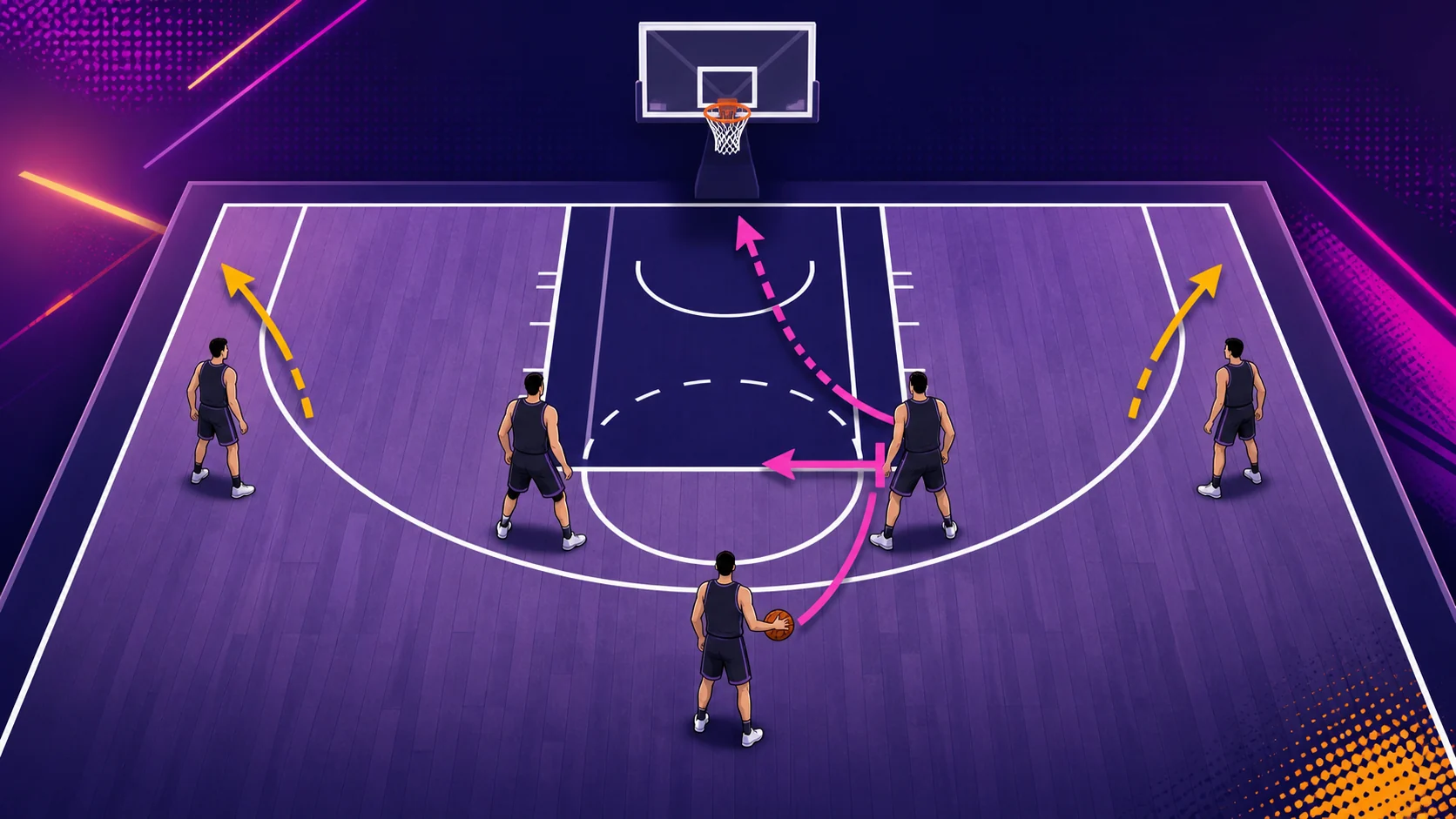
The short version: Horns offense starts with a ball handler above the top of the key, two players at the elbows, and two players spaced wide. From that shape, the offense can create a ball screen, an elbow entry, a handoff, a roll, a flare, or a cut. Read horns as a family of entries. The first action matters, but the spacing and the second action usually explain whether the possession stays organized.
Key takeaways
- Horns begins with two elbow players who can screen, receive, hand off, or dive.
- The ball handler should read the defender's position before choosing a screen, entry, or rejection.
- The unused elbow player is not a spectator: their timing creates the second read.
- Corner and wing spacing protect driving lanes and create help-side decisions.
- A horns call is successful when players preserve the next option after the first option is covered.
What is horns offense?
Horns is an offensive alignment named for the two elbow players that sit like horns on either side of the lane. A typical starting picture has the point guard above the key, one big or screening player at each elbow, and two perimeter players wide near the corners or wings. That symmetry gives the ball handler two immediate directions and gives the offense a way to hide the final action until the defense declares its coverage.
FIBA's Level 3 coaching manual describes Horns, also called A-Set, as a basic alignment with two screens for the ball handler and notes that it can grow from high pick-and-roll action into several movements by screeners and perimeter players. That is the key idea: horns is not a single diagram to memorize. It is a structure that keeps several actions available from the same opening. FIBA WABC Level 3 Coaching Manual
Start with the five-player geometry
Before talking about a counter, establish the picture. The two elbow players must be far enough apart to create a real choice for the ball handler and high enough to screen or receive without crowding the paint. The wide players must be ready to punish unnecessary help, not drifting toward the action out of habit. The ball handler must arrive with pace and space to see both elbows.
Ask five simple questions on film: Where are the elbows? Which defender is guarding the ball? Is one screen defender already at the level of the screen? Which corner is most likely to help? Where does the unused elbow player go after the first action? If those answers are unclear, the next read will look improvised even if the original call was correct.
The first read: screen, entry, or rejection
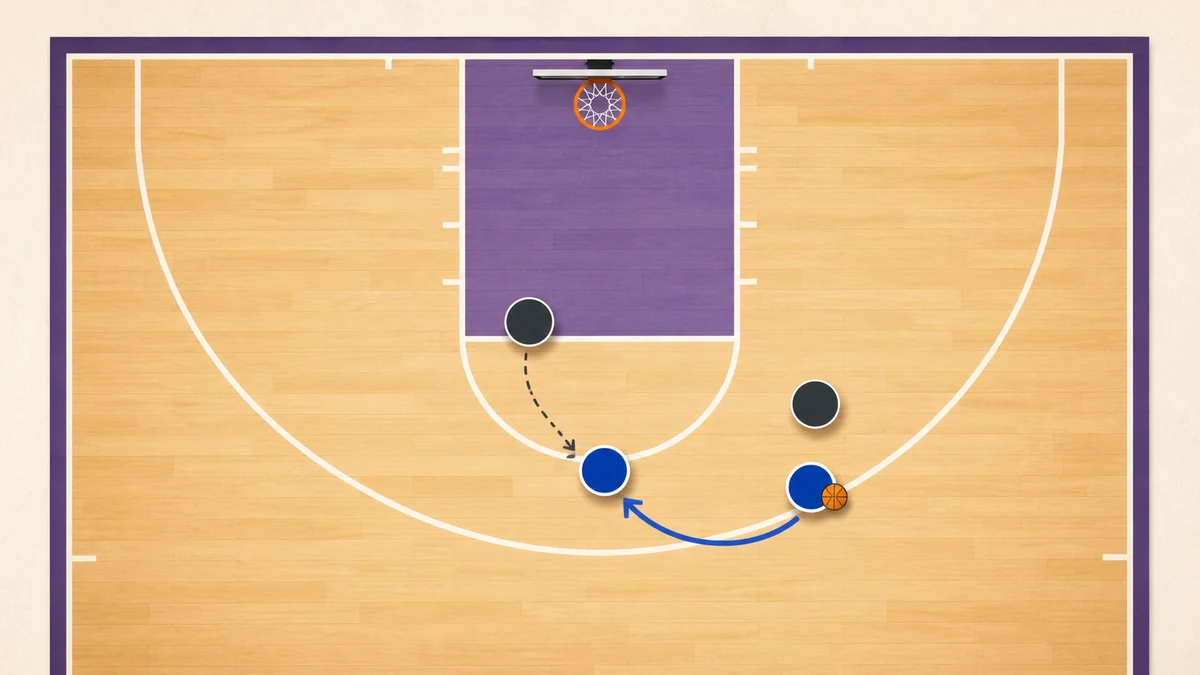
Many horns possessions begin with a ball screen from one elbow. The ball handler should not decide the direction simply because the call says left or right. Check the on-ball defender's angle, the screen defender's depth, and the help behind the action. A defender trailing over the screen may open a route to the middle. A defender sitting under may invite a pull-up or a re-screen. A switch may move a smaller defender onto the roller and create a different post or seal option.
The alignment also supports an elbow entry. Pass to an elbow player, then cut, screen away, or receive a handoff. This can slow the initial tempo just enough to make the defense reset its matchups before the next action. The entry is useful when the ball defender is pressuring the handle or when the offense wants to move the decision to a larger playmaker at the elbow.
Rejection is the third common answer. If the defender jumps to the screen side early, the ball handler can drive away from it. The action only works when the spacing holds. The near corner cannot rise into the lane; the weak-side players cannot watch. A rejected screen creates value because the defense committed to a route that the ball handler did not take. Basketball offensive spacing explained
What the second elbow player does
The most common horns mistake is treating the unused elbow player as a stationary prop. Their movement is the second read. They might dive after the first screen, lift for a handoff, set a second screen, flare a shooter, or slide into a high-low passing window. The choice depends on where the first screener rolls and where help comes from. Two players cannot occupy the same lane line and expect the defense to make a hard choice.
For example, if the first screener rolls hard and the low defender tags that roll, the second elbow player can lift into space, screen the tagging defender, or receive the reversal. If the first action is a handoff, the second elbow player can become the next screener. The exact choreography varies by team. The shared principle is timing: one action should create the space for the next action rather than duplicating it.
How wide players keep horns playable
Horns is often drawn around the top and elbows, but the wide players decide how expensive help becomes. A corner player who holds proper width stretches the helper's closeout. A wing player can lift behind penetration, cut when their defender turns their head, or exchange sides to maintain an available pass. These movements should be connected to the ball, not automatic decoration.
On film, look for the defender who is one pass away from the roller or one rotation away from the corner. That player is often the real read. If they tag the roll early, the ball may move to the perimeter. If they stay home, the roller may be open. If they rotate late, the offense may get a clean closeout attack. This is why horns needs all five players to understand the next pass, not just the player using the screen. Pick-and-roll coverages explained
Useful horns counters
A counter should answer a recognizable defensive choice. Do not add a complicated branch just because the original action looks familiar. If the defense switches, look for a seal, a slip, or a mismatch that can be used without killing spacing. If the defense goes under, use the available shot, a re-screen, or a second side that changes the angle. If the defense overloads the nail, reverse the ball before the lane becomes crowded.
Three practical counters are enough for most learning groups:
- Screen and roll: use one elbow screen, then let the unused elbow player create the next passing window.
- Elbow entry to handoff: reverse the initial responsibility by passing to the elbow, then flow into a handoff or second screen.
- Reject and reverse: drive away from an early jump to the screen side, then move the ball to the opposite elbow or wing if help closes the lane.
The counter is not a permission to freelance. It is a pre-agreed answer to a defensive picture. Players should know what they are looking for before the ball reaches the first screen. Basketball dribble handoffs explained
How to teach horns without overloading players
Teach the alignment before the playbook. Walk players into the five spots and make them name the possible first actions. Add one screen-and-roll version. Then pause the film or the live rep after the screen and ask: Where is the roller? Where is the second elbow? Which defender helped? Which pass stays available? This gives players a language for the shape before they are asked to execute several counters at speed.
Next, use guided defensive coverages. Let the defense go under for a few reps, then switch, then tag the roller from the corner. The offense should learn to identify the picture, not guess which scripted answer the coach wants. Finish with a live constraint game where a possession only counts when the team begins in horns and reaches a second action without collapsing its spacing.
Frequently asked questions
Is horns offense one specific basketball play?
No. Horns is a starting alignment with two elbow players, not a fixed play. Teams can use it for ball screens, elbow entries, handoffs, high-low actions, cuts, and several second-side options, depending on their personnel and the defensive coverage.
Who should play at the elbows in horns?
Use players who can screen, make a quick decision, roll, hand off, or threaten a shot. The right choice depends on the team's personnel, the intended first action, and which player can create a useful second read after the ball moves.
What should a young player watch first on film?
Start with the defender guarding the ball, then the screen defender, then the helper responsible for the roller or corner. Those positions reveal why the first read was open, covered, or ready for a counter.