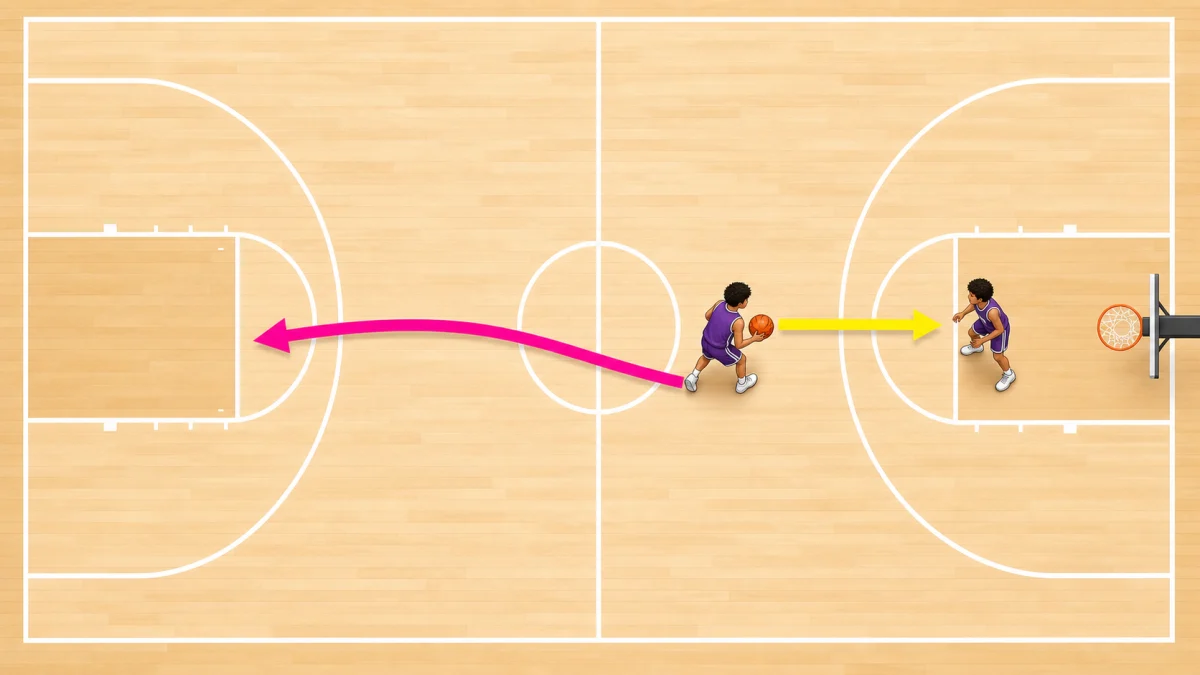

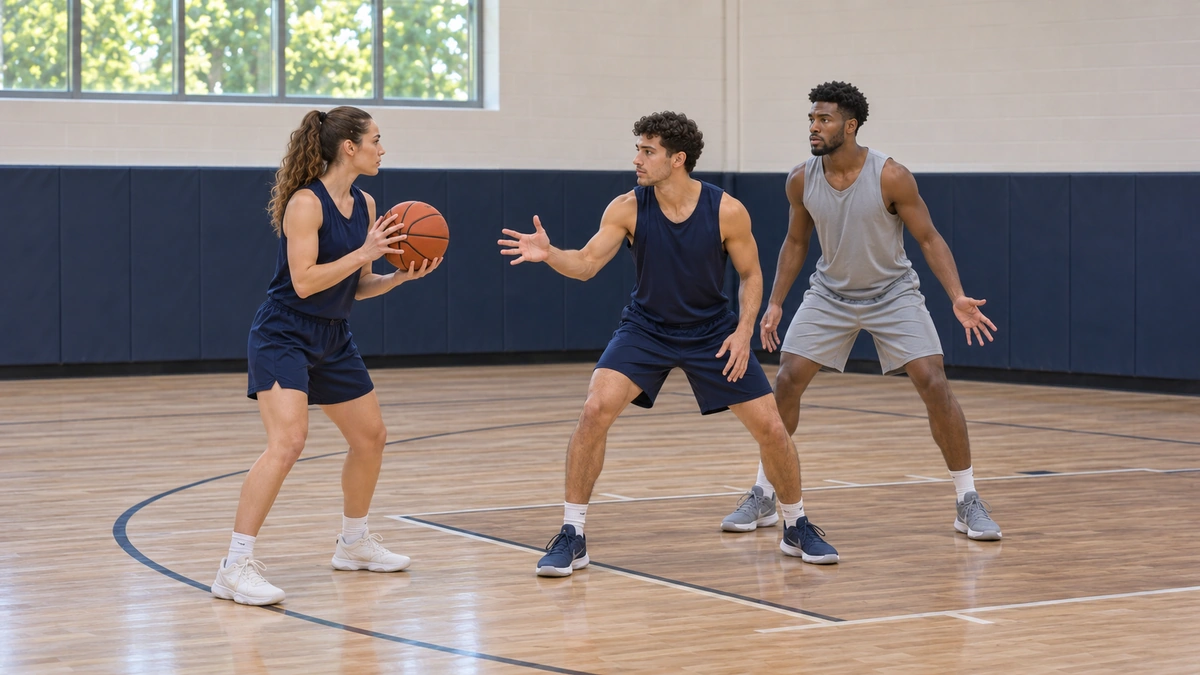
The short version: To seal a defender, establish a receiving position between the defender and the intended pass. Show a target away from the defender, stay balanced through the catch and reset if the passing lane closes. Under FIBA Official Rules 2026 V1 1, holding and pushing are illegal contact.
Key takeaways
- Judge your position from the passer’s view: can the ball reach your target?
- Present your target away from the defender and keep your balance until you control the catch.
- The passer can decline a blocked entry; the receiver can move out and start again.
- Under FIBA Official Rules 2026 V1 1, holding restricts an opponent’s freedom of movement; pushing forcibly moves or attempts to move an opponent. Both are illegal contact.
What does it mean to seal a defender?
A seal in basketball is a receiving position that puts your body between a defender and the space where you want to catch a pass. You establish that position, show the passer a target and maintain your balance as the ball arrives.
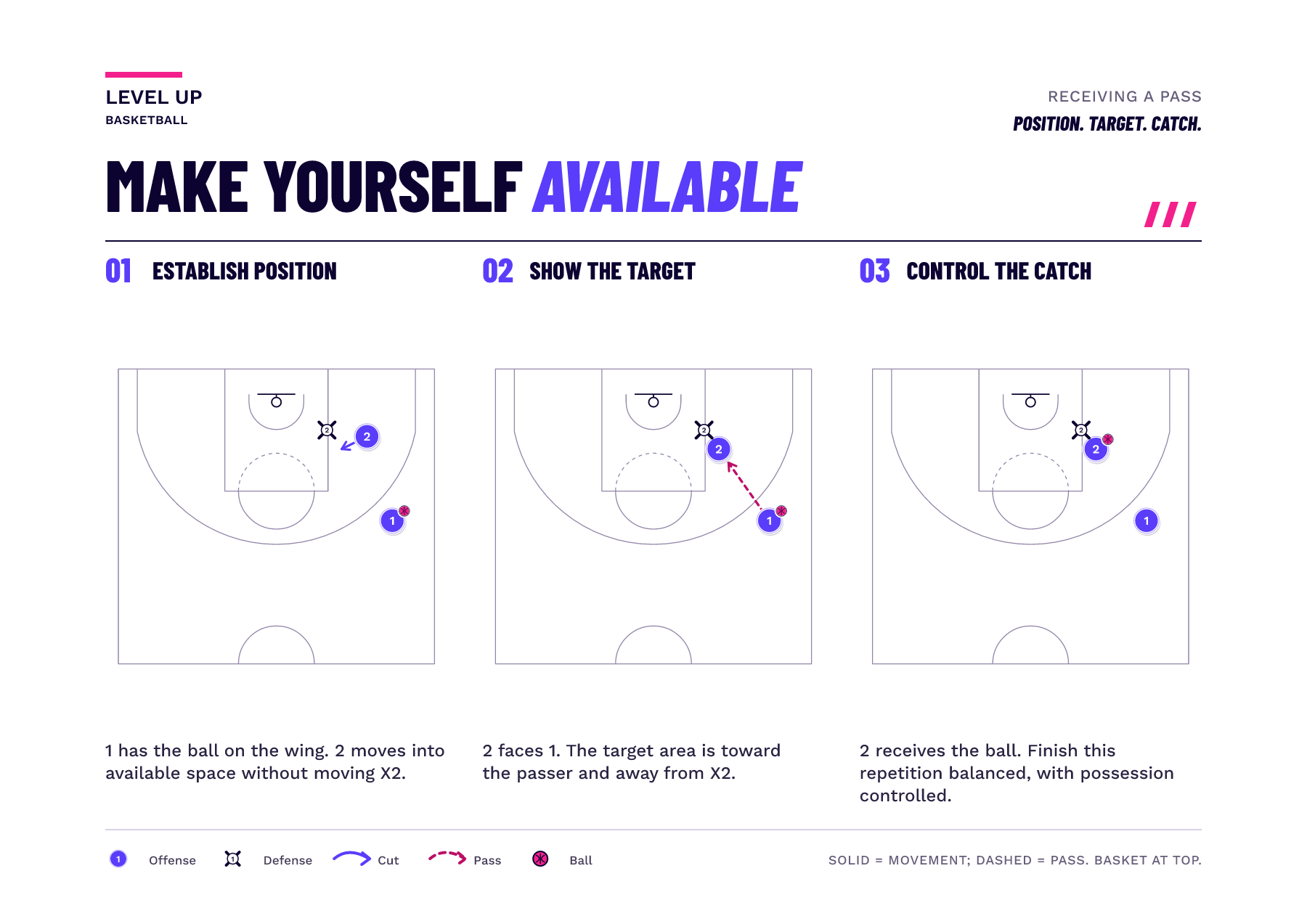
Picture a simple example: a teammate has the ball on the right wing, and you are at the right low post with your defender behind you. The WABC Level 1 coaching manual describes this defender-behind arrangement as a relatively straightforward perimeter entry. Your job is to make the receiving space clear; being near the basket alone does not do that. WABC Coaching Level Manuals Level 1 English
Where should you stand and show your target?
Start by looking at the space between the ball and your receiving position. In this example, turn toward the wing passer with the defender behind you. WABC recommends presenting a target hand away from the defender and emphasizes a balanced stance when establishing post position. As a coaching cue, settle into a stance you can maintain without leaning on the defender for support.
Keep showing that target while the passer makes the decision. When the pass comes, watch it into your hands and secure the catch before thinking about a scoring move. Practise staying balanced through that whole sequence: get available, give a target, control the ball.
Swipe sideways to explore the full diagram.
What if the defender blocks the entry?
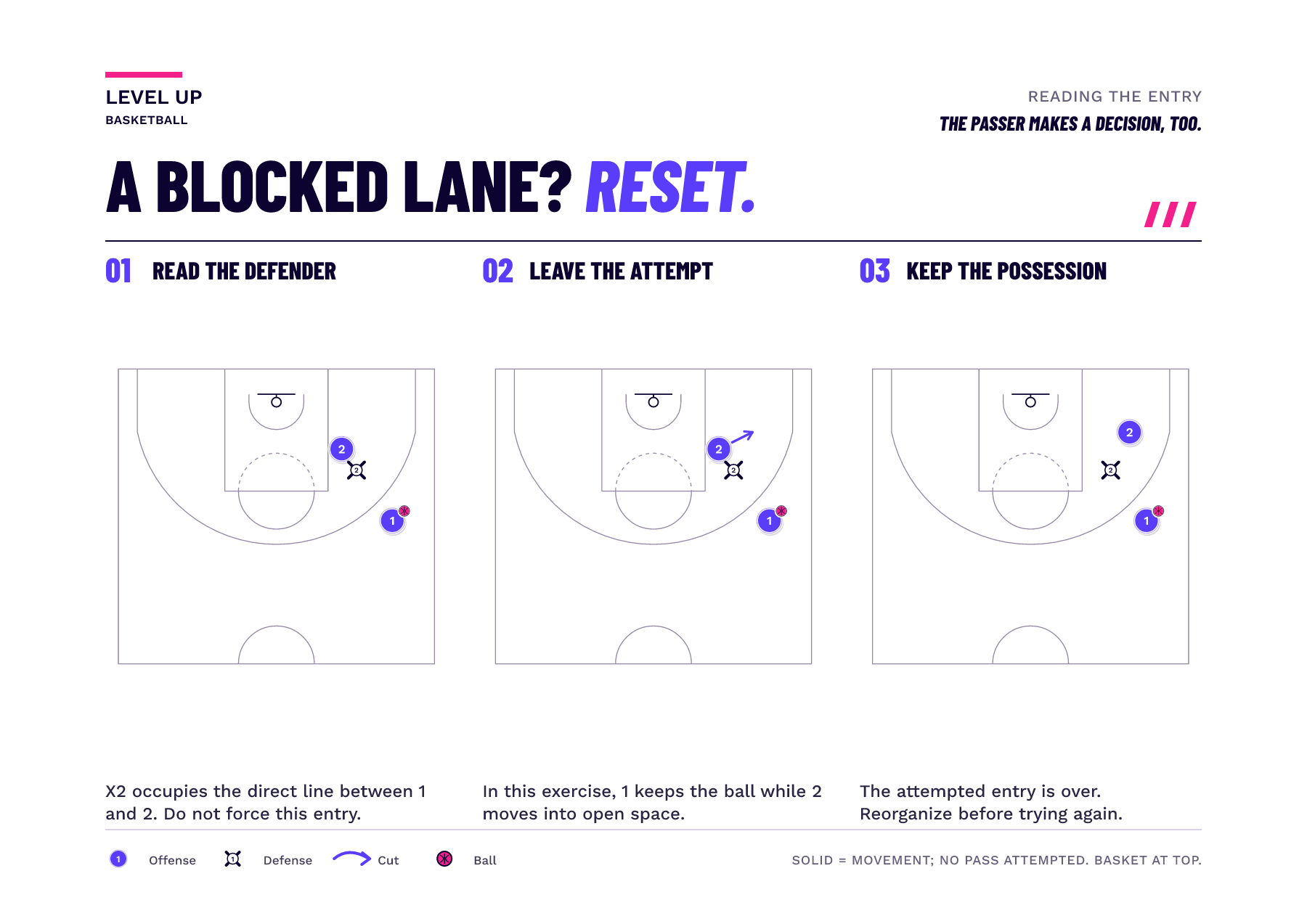
Treat the seal as an invitation to read the play, not an instruction to throw the ball. If the defender moves into the entry lane, the passer should check whether another clear angle is available. If it is not, keep the ball and continue the possession. For this practice example, have the receiver move out of the attempted seal and start again. Pulling the defender aside would restrict their movement, which falls under FIBA’s definition of holding. FIBA Official Rules 2026 V1 1
Swipe sideways to explore the full diagram.
When does a seal become holding or pushing?
Contact alone does not settle the call. According to FIBA Official Rules 2026 V1 1, touching an opponent with the hands is not necessarily a foul; officials assess whether the contact creates an advantage. Contact that restricts an opponent’s freedom of movement is a foul.
- FIBA defines holding as illegal contact that interferes with an opponent’s freedom of movement. It can involve any body part, so hooking an arm around the defender to keep them behind you can be holding.
- FIBA defines pushing as illegal contact that forcibly moves or attempts to move an opponent. Extending an arm to shove the defender away, or driving a shoulder or hip into them to move them out of the receiving space, crosses that boundary.
Use this coaching cue to apply those FIBA boundaries: establish your place, show your target and let the defender remain free to move around you. If keeping the seal requires grabbing or moving the defender, abandon that attempt and find another receiving position.
How can you practise the seal and the pass?
Try this editorial practice setup with three players and one ball, using the positions in the diagrams. Begin with a cooperative defender, then let the defender choose whether to stay behind or deny the entry as the players become comfortable with the task.
- Set the example. Put the passer on the wing, the receiver at the low post and the defender behind the receiver.
- Rehearse the catch. Ask the receiver to face the passer, show the target and finish with controlled possession. End the repetition at the catch.
- Add the decision. Let the defender deny the direct entry. The passer chooses an available entry or keeps the ball while the receiver resets.
- Rotate roles. After each attempt, discuss whether the target was available and whether the passer’s choice matched the defender’s position.
You have established your post position, but the defender moves between your target and the passer. Should the passer throw the entry because you have called for the ball?
No. Read the current lane. If a clear angle is available, use it; otherwise keep possession and reset the receiving attempt. Calling for the ball does not make a blocked target available.
Was this useful?