
The short version: A Spain pick-and-roll starts with an on-ball screen. As that screener rolls, a third offensive player sets a back screen on the roller's defender and then usually becomes a perimeter option. The ballhandler reads the on-ball coverage, the roller attacks the space created by the back screen, and the back screener relocates with timing. The action is effective only when spacing, screen angles, and all three decisions are coordinated.
Key takeaways
- Spain pick-and-roll is a three-player action: ballhandler, rolling ball screener, and back screener.
- The back screen targets the defender responsible for the roller, not the on-ball defender by default.
- Offense and defense both depend on early communication, spacing, and reading the coverage rather than memorizing one automatic result.
The action in one possession
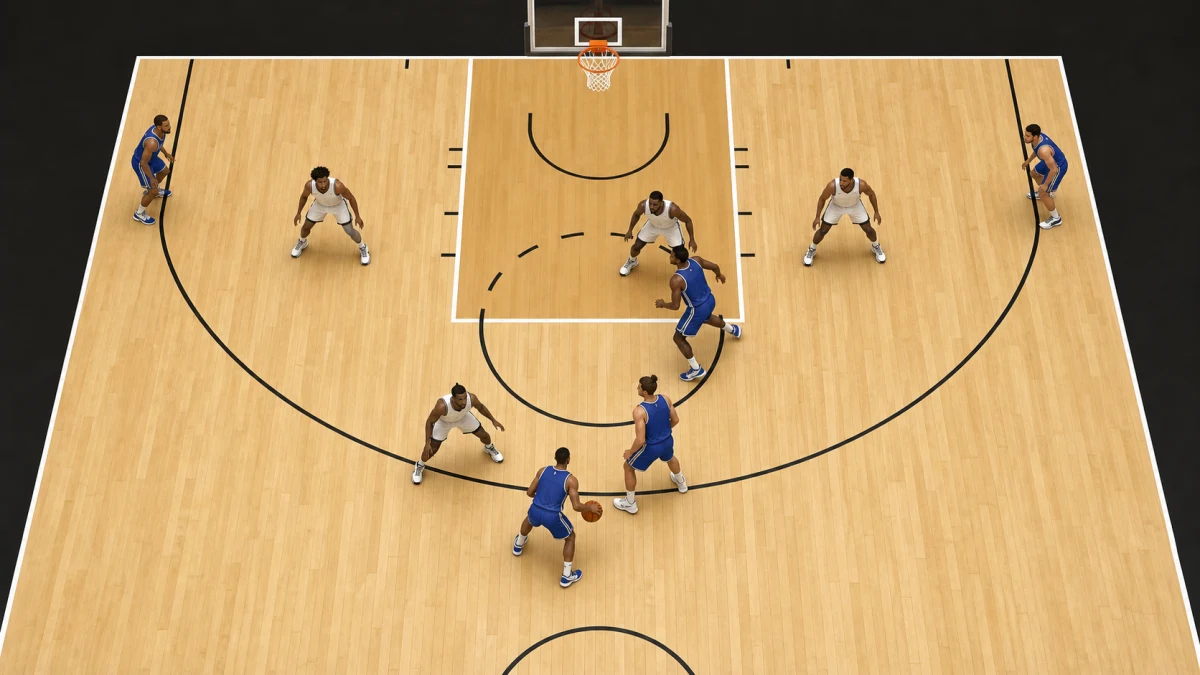
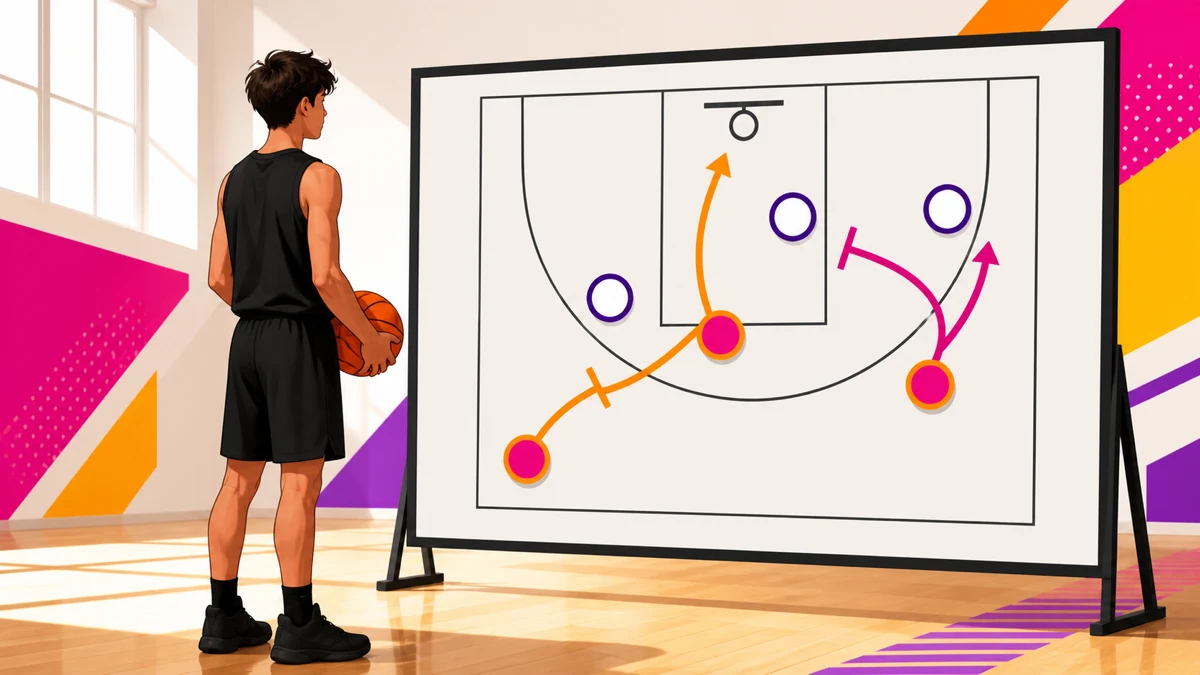
Spain pick-and-roll is a three-player screening action. The ballhandler uses an on-ball screen. The player who set that screen rolls toward the basket. At the same time, a third offensive player sets a back screen on the defender responsible for the roller, then becomes a spacing option. FIBA terminology states the definition directly: an on-ball screen plus a back screen for the ball screener as that player rolls. FIBA Europe Basketball Terminology pick-and-roll coverages
The action is not three players running independent routes. The timing links them. If the back screen arrives too early, the defense can see it and switch cleanly. If it arrives too late, the roller has already reached the traffic. If the ballhandler leaves before the first screen is useful, the possession loses the pressure that makes the second screen matter.
Teams can enter the same structure from different alignments, so recognizing Spain pick-and-roll requires reading roles rather than memorizing a starting picture. Find the live ball screen, track its screener into the roll, and look for the third attacker screening the roller's defender. That sequence remains the identifying feature even when the action begins from transition, horns, or a sideline entry.
Role 1: the ballhandler reads the first coverage
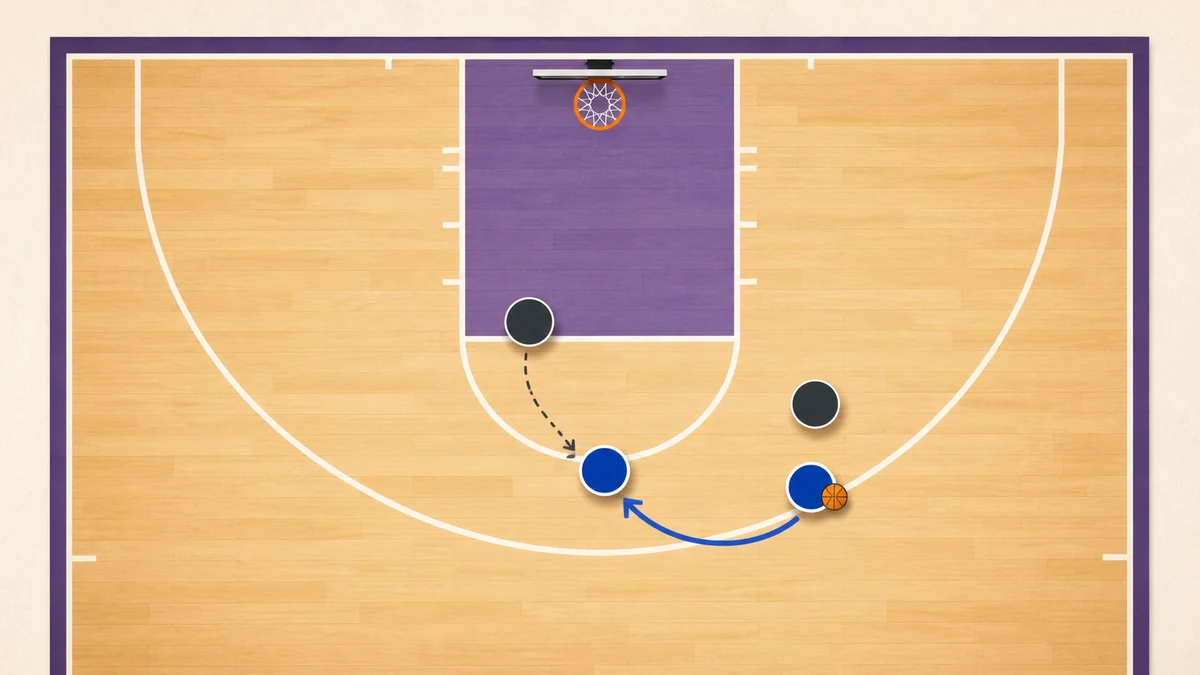
The ballhandler's first job is still to use the ball screen with pace and spacing. Read the on-ball defender and the screen defender before searching for the back screen. Against a defender who trails, the lane or pull-up may open. Against a switch, the ball can move to the matchup or to the screener before the defense reorganizes. Against a deep drop, the ballhandler must keep the roller in view while deciding whether the available shot is actually a good one. offensive spacing
The back screen adds a second layer, but it should not erase the first read. Hold the dribble long enough to see whether the roller defender is delayed, whether a weak-side defender tags the roll, and whether the back screener's defender stays attached or helps. A decisive pass follows the coverage; a pre-planned pass can run directly into the rotation. FIBA Basketball World Cup 2023 Scouting Report
Roles 2 and 3: roll hard, screen with purpose, then space
The rolling screener
Set the first screen at an angle that makes the defender choose, then turn and roll on a direct line. Do not drift sideways waiting for the back screen to solve the possession. The roller's pressure forces the defense to protect the rim and creates the defender-to-defender traffic that the action is designed to expose.
The back screener
Arrive outside the roller's path, establish a legal screening position, and target the defender who must contain the roll. After contact or a clear defensive reaction, release into useful space instead of watching the play. Many versions pop the back screener to the perimeter, but the exact relocation should preserve spacing and match the team's personnel. off-ball screening principles
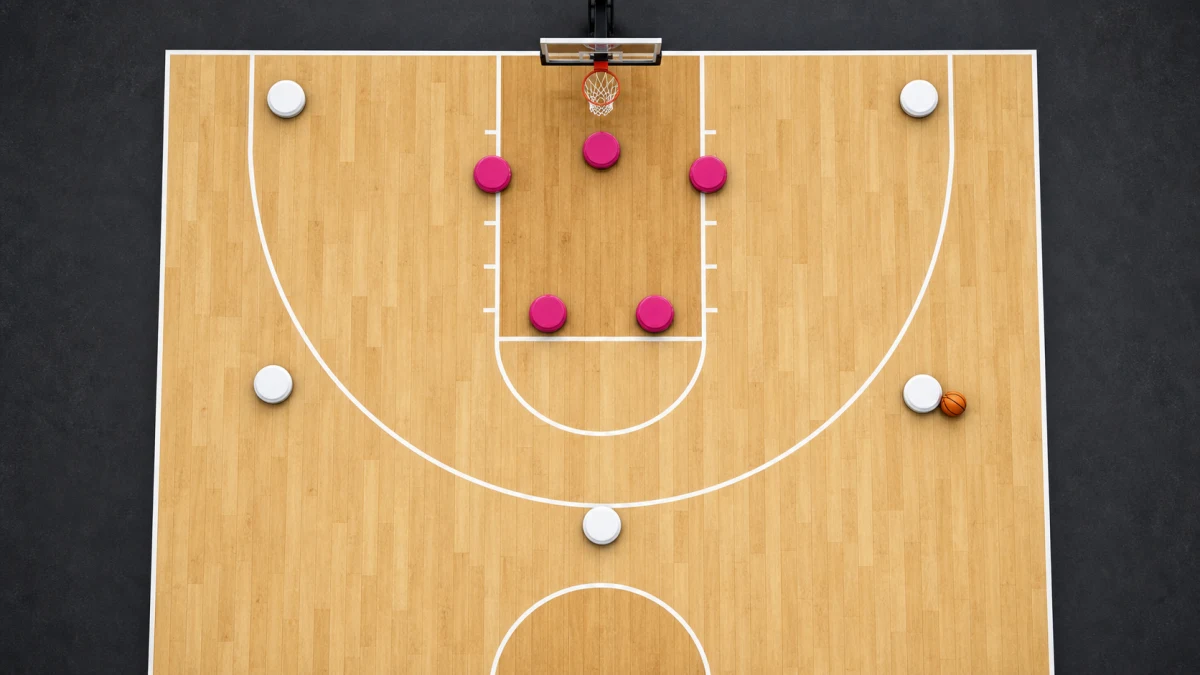
The two players outside the action still matter even though Spain pick-and-roll is named for the three-player core. They should occupy positions that stretch help without crowding the roller or the back screener's release. If both weak-side players drift toward the ball, one defender can guard two passing lanes. If they hold useful width and depth, a tag on the roller has a clearer consequence and the ballhandler can read the next pass.
How defenses can answer Spain pick-and-roll
Defense needs three connected calls: the ball-screen coverage, the roller coverage, and the response to the back screen. Teams may switch the back screen, communicate a temporary exchange, keep the roller defender attached and have another defender show help, or alter the original ball-screen coverage before the second screen forms. Each choice moves pressure somewhere else.
- Call the Spain action before the back screen lands, not after the roller is already free.
- Protect the rim first while identifying who takes the back screener when that player relocates.
- Keep weak-side defenders connected to both the roller and the next pass; over-helping creates a different open shot.
No coverage wins by name alone. Personnel, screen location, clock, and spacing change the decision. The goal of film review is to identify the responsibility that broke down, not simply to label the whole possession as bad pick-and-roll defense. World Association of Basketball Coaches Documents
A simple practice and film progression
- Walk through the three offensive paths with no defense. Freeze when the ball screen is used, when the roller turns, and when the back screener arrives.
- Add three guided defenders and give them one coverage. Require the ballhandler to name the open player after the action develops.
- Let the defense choose between two coverages, then score the offense for spacing and the correct read rather than only for a made shot.
- Finish with live play from several entries so the team recognizes the action without relying on one memorized setup.
On film, pause before the back screen. Identify all six players, predict the coverage, then play the clip forward. This prevents hindsight from replacing recognition. Review the ballhandler's pace, the roller's line, the back screener's timing, and the weak-side spacing as separate evidence. basketball workout library
Give the defense an equal learning task. Before each guided rep, assign who calls the action, who protects the roller, and who takes the back screener after the release. After the rep, ask whether the call was early enough to change movement. A correct tactical label shouted after the pass is already late. The progression should reward communication that arrives before contact and keeps all three defenders connected.
Frequently asked questions
Why is it called Spain pick-and-roll?
The label is widely used for the ball-screen-plus-back-screen action described in FIBA terminology. The useful basketball definition matters more than the nickname: one player sets the ball screen and rolls, while a third player back-screens the roller's defender.
Who does the back screener screen?
The classic target is the defender responsible for the rolling ball screener. That screen delays or changes the defender's path to the roll. The exact matchup can change after switches, so players still have to identify the live responsibility.
Does the back screener always pop for a three?
No. Popping is common because it stretches the defender who helped at the rim, but the relocation should fit the spacing, personnel, and coverage. The back screener may lift, drift, slip, or become a connector as long as the movement preserves a clear passing window.