
The short version: High school basketball tryout evaluation is not one universal score. Expect coaches to observe how you handle, pass, shoot, defend, move, and make decisions under changing pressure. They may also track communication, effort between repetitions, response to corrections, and the roles a roster needs. Prepare by practicing clean, repeatable actions and by arriving ready to listen. No checklist can guarantee selection or playing time, because each school sets its own process and roster priorities.
Key takeaways
- Tryout stations can make ball handling, shooting, movement, and defensive technique easier to compare.
- Live and small-sided play shows decisions, spacing, help, recovery, and role choices that isolated drills cannot show.
- Coaches can observe coachability through attention, questions, and whether a player applies the next instruction.
- A tryout score may inform roster selection, but it does not guarantee a starting role or playing time.
What does a high school basketball tryout evaluate?
A high school basketball tryout gives a coaching staff a short window to compare many players while planning one roster. There is no universal form used by every school. One staff may begin with timed skill stations, another may move quickly into advantage games, and another may combine both. The useful question for a player is not, “What secret drill will make the team?” It is, “What basketball actions will coaches be able to observe repeatedly, and can I perform them without hiding from the next decision?” Tryouts Procedures for the Basketball Coach USA Basketball Player Development Curriculum AAU and high school basketball
The NFHS sample procedure shows why tryouts often separate actions into stations. Its example covers jump-and-reach, control dribbling, defensive slides, strength or passing work, shooting, passing, ball handling, and endurance. That is an example, not a mandated national test. It makes individual actions visible before a coach connects them to game play. USA Basketball similarly recommends establishing a documented baseline across skill categories instead of assuming every player is at the same level in every part of the game.
How skill stations make technique observable
In a ball-handling station, coaches can see whether the player controls both hands, changes direction without standing upright, protects the ball, and follows the route. The NFHS sample times a down-and-back control-dribble course using the right hand, left hand, crossover, and obstacles. The time is only one number. The same repetition also exposes missed cones, extra dribbles, eyes fixed on the floor, or a player who becomes faster only by losing the required technique. structured basketball workouts
Shooting and passing stations can be read the same way. A coach may record makes, but can also observe foot placement, balance, shot selection, target accuracy, and whether the player is ready for the next repetition. Defensive slides make stance, direction changes, and recovery visible. None of those stations alone proves that a player will fill a game role. Together, they give the staff a repeatable set of observations that can be compared with what happens when teammates and defenders are added.
Why live decisions matter after the stations
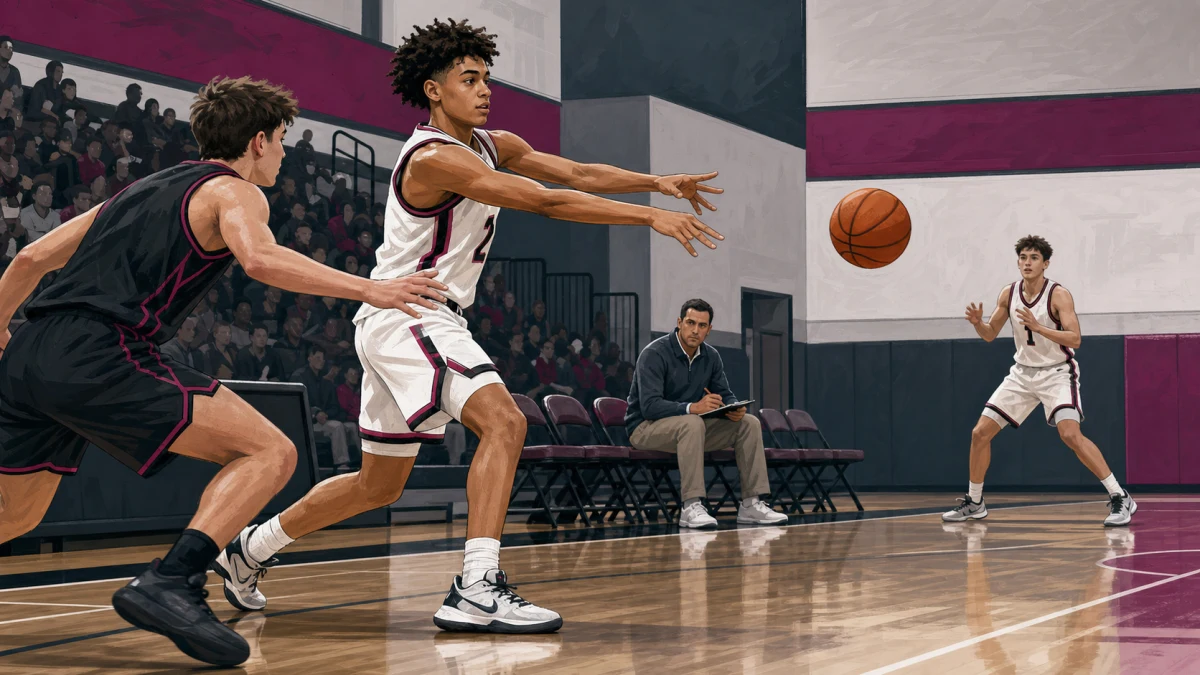
A clean drill repetition answers one question: can the player execute the assigned action in that setup? Live play answers different questions. Does the player create or preserve spacing? Can the player pass on time, cut after the pass, tag a cutter, close out under control, box out before chasing the ball, and move into the next possession? Coaches can change the format—from one-on-one to small-sided play or a full scrimmage—but the observation remains concrete: what choice did the player make when the first option changed?
Do not treat “showing out” as taking every shot. A tryout possession can reveal value through an early pass, a hard cut that clears space, a defensive call, a rebound secured with two hands, or a sprint that changes the next matchup. A player also needs to show a usable role. If the roster already has primary ball handlers, the staff may need someone who defends, rebounds, screens, moves the ball, and competes without requiring every possession. That is a roster decision, not a promise that one style always wins selection.
Communication and coachability are visible actions
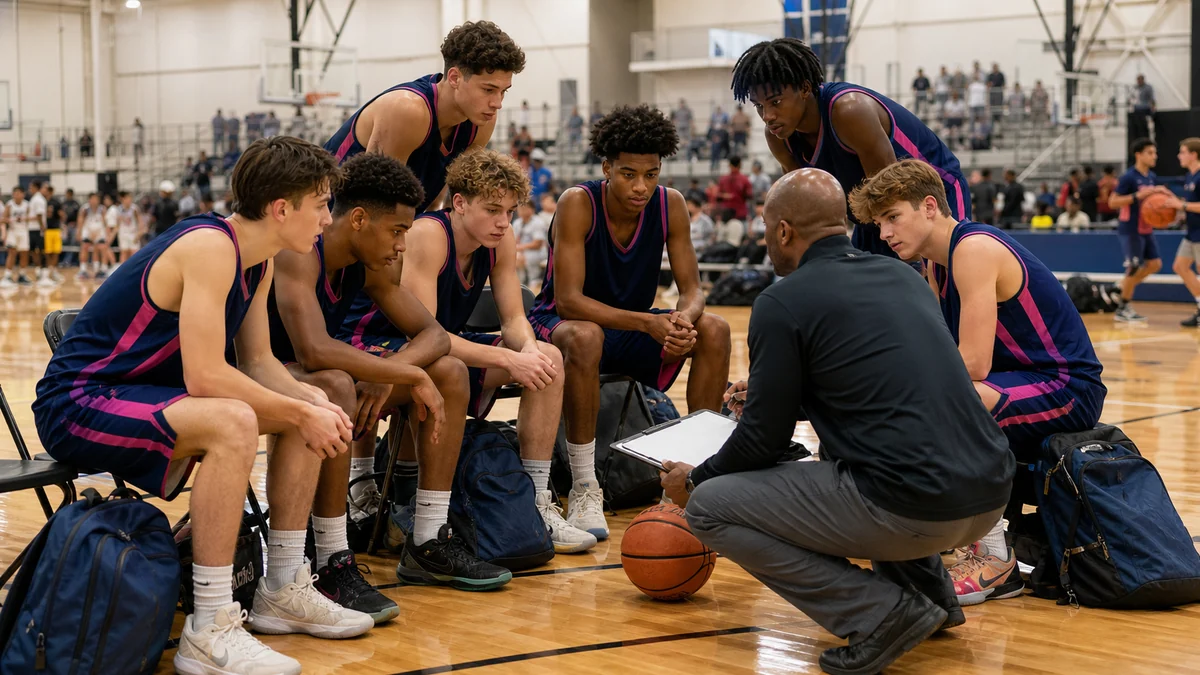
Coachability is not silent agreement or exaggerated enthusiasm. USA Basketball describes it through attention and action: a player listens during training and then applies what the coach teaches. At a tryout, that can be observed when the player faces the speaker, starts in the correct spot, asks a short clarifying question when needed, and changes the next repetition after a correction. The change may still be imperfect. What matters is that the instruction appears in the player’s next decision or technique. USA Basketball Teaching Techniques USA Basketball Imparting Life Skills
Communication with teammates should also be specific. Call the screen side, identify a cutter, point to a matchup, confirm an exchange, and acknowledge the passer. Avoid turning every possession into a speech. Coaches can hear whether the words connect to the play and see whether the player communicates after a mistake as well as after a good possession. USA Basketball’s distinction between critique and criticism is useful here: address the action—late help, missed box-out, wrong spacing—without attacking a teammate.
How to prepare during the week before tryouts
- Review the school’s published dates, eligibility instructions, required forms, arrival time, and equipment list.
- Practice a short block of two-hand ball control, passing targets, balanced finishes, catch-and-shoot footwork, defensive slides, and closeouts.
- Add live decisions through one-on-one, two-on-two, or advantage play instead of rehearsing only unopposed moves.
- Ask a teammate or coach to give one correction, then repeat the action and make the change visible.
- Prepare a simple role statement: the actions you can repeat now, the position contexts you understand, and the areas you are working on.
Keep the final preparation specific rather than trying to rebuild your game in several days. USA Basketball’s curriculum advances players by demonstrated mastery and notes that one player can sit at different levels across different skills. Use that idea honestly. Sharpen the actions you can already repeat, identify the mistakes you must avoid, and arrive ready to compete inside the staff’s instructions. A tryout is a current evaluation, not a final judgment on a player’s long-term ceiling. AAU basketball development path
What to do on tryout day
- Arrive with enough time to check in and understand court assignments without rushing the first instruction.
- Win the first controllable task: listen, line up correctly, know the score or repetition count, and finish the drill as assigned.
- Make simple basketball decisions early; move the ball, sprint into spacing, communicate on defense, and rebound before searching for difficult highlights.
- After a mistake, recover into the next play and apply any correction to the next comparable repetition.
- Treat every player and staff member respectfully and avoid evaluating your own roster chances during the session.
Remember the limit of the process. The NFHS sample explicitly says assessment scores do not guarantee a starting-five position; they are used for that sample’s roster decision. A school may consider additional observations and has its own policies. If you are selected, ask what role and priorities the coach wants you to train. If you are not selected and the school permits feedback, ask for one or two observable areas to address. Neither answer should be converted into a guarantee about a future roster.
Frequently asked questions
What do coaches look for first at basketball tryouts?
There is no universal first item. A staff may begin with movement, ball handling, shooting, or a team activity. Make the assigned action easy to evaluate: listen to the instruction, use the required technique, finish the repetition, and move correctly to the next task.
Should I try to score as much as possible?
Take good shots when the play creates them, but do not force attempts to prove confidence. Coaches can also observe passing timing, spacing, defense, rebounding, communication, and response to changing pressure. Show that you can contribute to a possession without needing every possession to end with your shot.
How can I show that I am coachable?
Give the speaker your attention, ask a concise question if the instruction is unclear, and apply the correction on the next comparable repetition. USA Basketball connects coachability to attention and acting on what is taught. You do not need to pretend every correction is easy; make the adjustment visible.
Does a strong tryout guarantee playing time?
No. Roster selection and game roles are separate decisions. The NFHS sample states that its assessment score does not guarantee a starting-five position. Coaches may change roles as the season develops, so current role expectations should be confirmed directly with the school’s staff.