
The short version: High school and club basketball offer different environments for players. Players can consider both environments based on their needs.
Key takeaways
- High school and club basketball are not mutually exclusive; they are highly complementary environments that address each other's developmental gaps.
- High school basketball provides daily structured practices, system-oriented play, defensive discipline, and certified coaching under state high school athletic association guidelines.
- Club basketball (AAU and shoe circuits) offers high-intensity game repetitions, exposure to diverse playing styles, and direct recruiting opportunities during NCAA live periods.
- USA Basketball recommends specific training-to-competition ratios, such as 50:50 for ages 14-17, which requires balancing the practice-heavy high school season with the game-heavy club season.
- Playing year-round without rest and recovery periods can be associated with physical risks.
- Players and coaches should establish a baseline of skills across USA Basketball's eight categories to strategically determine which environment to prioritize.
Beyond the Binary: Why You Need Both High School and AAU Basketball
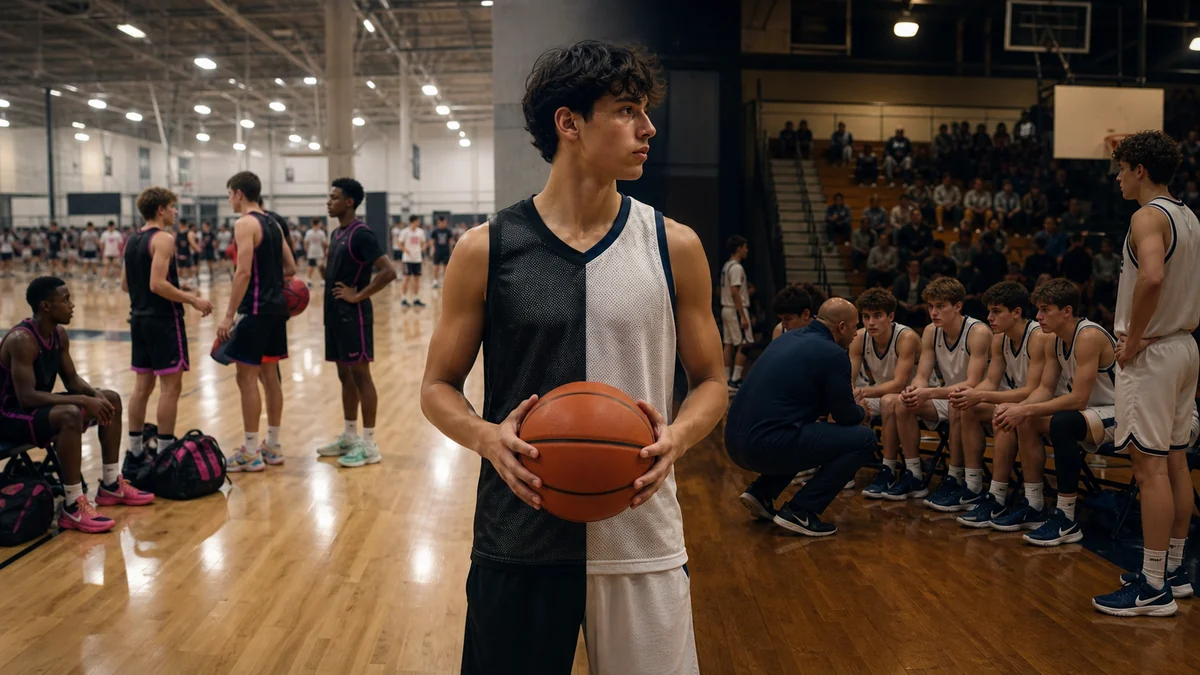
For decades, youth basketball has seen a persistent debate: high school basketball versus club basketball. Parents, players, and coaches often discuss choosing one path over the other. Proponents of high school basketball highlight its structure, discipline, and community pride, while advocates for club circuits—often referred to as AAU—point to recruitment and competition in the spring and summer. Rather than viewing them as competing paths, many analyze how high school and club basketball offer different environments.
High school basketball mirrors the collegiate environment by offering daily structured practices, system-oriented play, defensive discipline, and role stability under certified coaches. Conversely, AAU basketball provides high-intensity game repetitions, exposure to diverse playing styles, and direct recruiting opportunities during NCAA live periods. Maximizing a player's potential requires rejecting the false binary and strategically leveraging both environments based on their current developmental stage and specific athletic needs. By understanding the unique strengths of each arena, families can make informed decisions that support long-term athletic growth without sacrificing academic or physical well-being.
In this article, we will break down the structural differences between these two environments, analyze how their practice-to-game ratios align with youth sports science, and provide a clear decision framework to help you navigate your basketball journey.
High School Basketball: The Foundation of Structure and Discipline
The High School Environment: Governance and Accountability
The high school basketball environment is defined by its governance and structural accountability. Programs operate under the guidelines of state high school athletic associations, which are typically aligned with the National Federation of State High School Associations (NFHS). This regulatory framework ensures that coaches are held to strict standards, including background checks, safety certifications, and professional accountability. Unlike the highly fluid world of club basketball, high school programs offer a stable, predictable environment where players represent their schools and local communities.
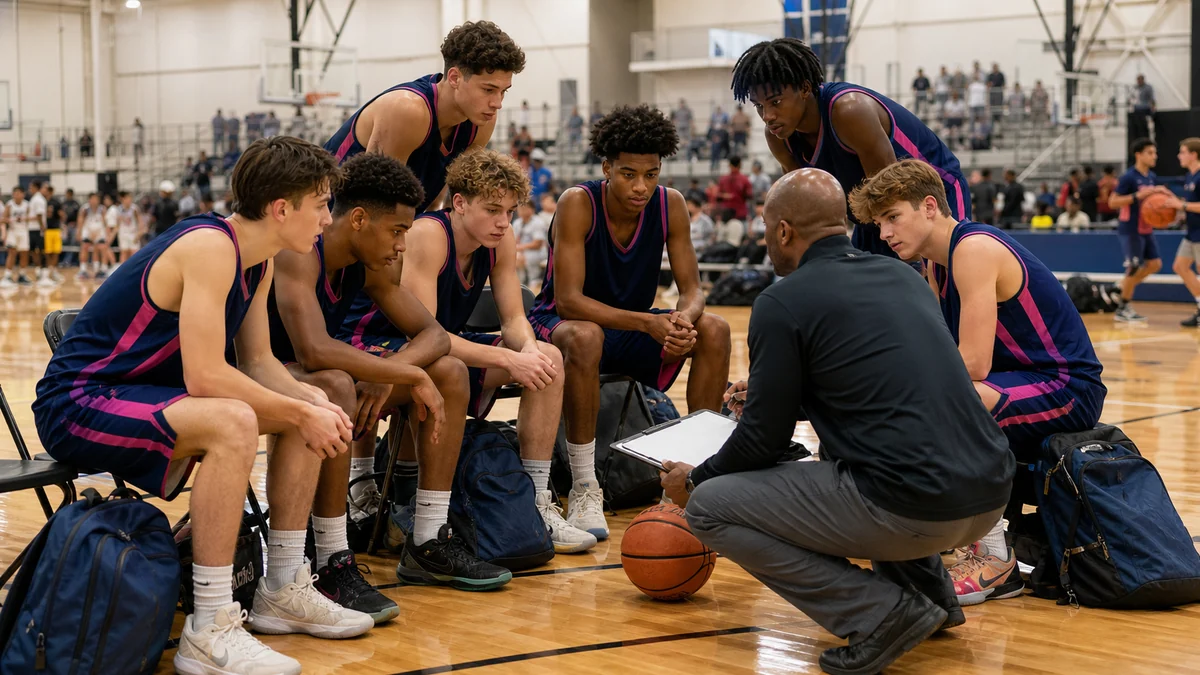
The primary developmental benefit of high school basketball is its daily training rhythm. Teams typically practice five days a week for up to two hours per session, culminating in one or two games. This structure allows coaches to install complex offensive and defensive systems, teach tactical discipline, and emphasize team-first concepts. In this setting, players learn the importance of scouting reports, defensive rotations, and executing half-court sets under pressure. This daily grind is where fundamental habits are forged, preparing athletes for the structural demands of college basketball.
Furthermore, high school basketball rosters often remain relatively consistent from year to year, meaning players frequently experience defined roles. A player who is the primary scorer on their freshman team might transition into a defensive specialist or a facilitator on the varsity squad. This experience allows players to practice adapting to different roles and contributing to a team, which are qualities that college coaches may evaluate.
AAU and Club Circuits: The Arena of Exposure and Adaptability
The Evolution of Club Basketball
To understand the club basketball landscape, it is helpful to look at its historical and organizational roots. The Amateur Athletic Union (AAU) was founded in 1888 to establish standards and uniformity in amateur sports. Today, the AAU has nearly 800,000 members and over 150,000 volunteers sharing its philosophy of 'Sports for All, Forever'. Within this structure, the AAU Boys' Basketball Executive Committee consists of the National Chairman, Secretary, Director of Competition, immediate Past Chairman, and two Members-at-Large. This committee has the authority to enforce rules and impose penalties on players, coaches, and clubs. Boys' Basketball | AAU 2024boysbskhandbook.pdf
While 'AAU' is often used as a catch-all term for all spring and summer basketball, players and parents should distinguish between official AAU-sanctioned events and independent grassroots shoe circuits, such as Nike's EYBL, Adidas's 3SSB, or Under Armour's UAA. While official AAU tournaments operate under the strict guidelines of the national handbook, shoe circuits are independent leagues run by major athletic brands. For a detailed breakdown of how to navigate these different club options, you can read our comprehensive guide to AAU basketball. comprehensive guide to AAU basketball
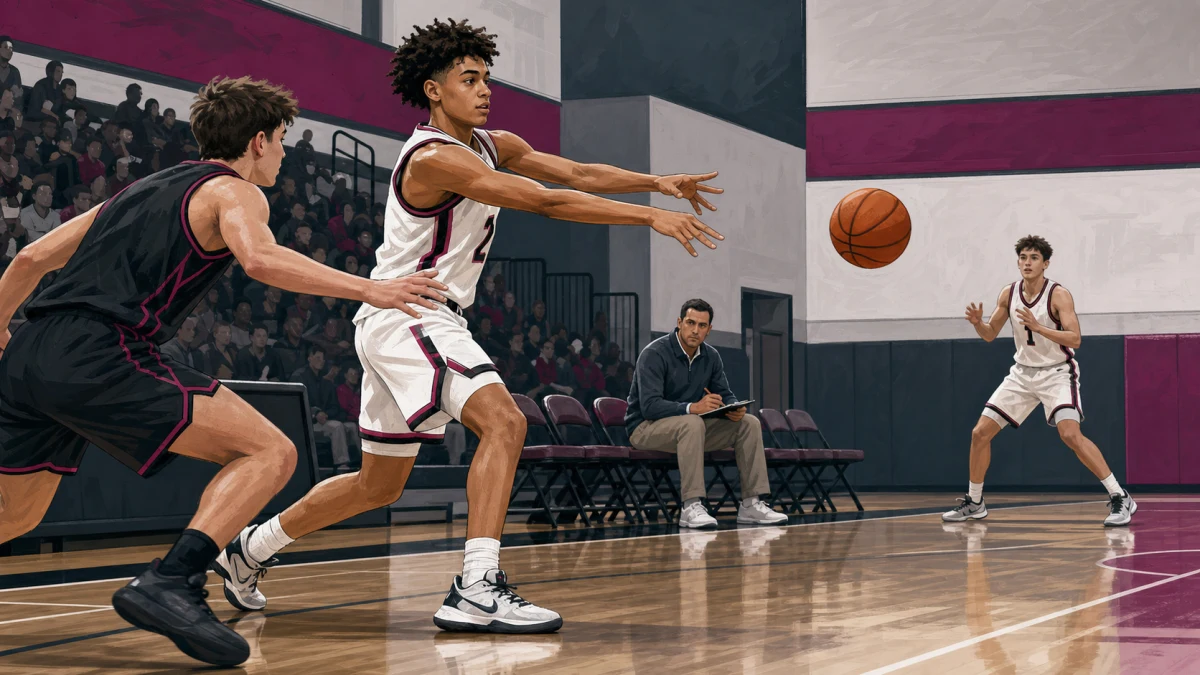
The primary advantage of the club circuit is its unmatched exposure and the opportunity to face diverse, high-level competition. During the NCAA live periods in the spring and summer, hundreds of college coaches gather at single tournament venues. This makes club basketball the most efficient environment for recruitment, as coaches can evaluate dozens of prospects in a single weekend. Additionally, playing on a regional or national circuit exposes players to different styles of play, elite athletic profiles, and high-tempo, transition-heavy game situations that they rarely encounter in local high school leagues.
The Training-to-Competition Ratio: What the Science Recommends
Defining Training vs. Competition
A major point of contrast between high school and club basketball is the ratio of practice time to game play. To evaluate the developmental impact of these environments, we can look to USA Basketball's player development curriculum. USA Basketball defines competition as competing against another team or teaching team strategies to prepare for competition. Conversely, USA Basketball defines training as all activities related to a player's technical skill development. USA Basketball Player Development Curriculum - USA Basketball
USA Basketball recommends specific training-to-competition ratios tailored to a player's age and developmental stage. For Stage 3 (Learning to Train, ages 8-12), USA Basketball recommends a 70:30 training-to-competition ratio. As players mature into Stage 4 (Training to Train, ages 12-15), USA Basketball recommends a 60:40 training-to-competition ratio. For Stage 5 (Training to Compete, ages 14-17), the recommended training-to-competition ratio shifts to 50:50. Finally, for Stage 6 (Training to Win, ages 17+), the recommended training-to-competition ratio changes to 25:75.
When we analyze high school and club basketball, we see that both environments offer different structures. High school basketball often emphasizes practice and system installation, while club basketball is typically tilted toward competition. Players can consider how each environment fits into their overall development.
Comparing the Environments: A Structural Breakdown
Key Differences at a Glance
| Metric | High School Basketball | AAU / Club Circuits |
|---|---|---|
| Season Structure | Winter (November to March); structured league play | Spring & Summer (April to July); weekend tournaments |
| Practice-to-Game Ratio | High (typically 4-5 practices per week, 1-2 games) | Low (typically 0-1 practices per week, 4-5 games per weekend) |
| Role Stability | High; multi-year continuity within a defined system | Fluid; rosters and roles can change rapidly |
| Coaching Qualifications | NFHS-aligned, district background checks, certified | Varies widely (from elite former pros to parent volunteers) |
| Exposure & Recruiting | Local/regional scouting; relies on film and high school coach outreach | Direct exposure to college coaches during NCAA live periods |
| Financial Cost | Low; heavily subsidized by schools or booster clubs | Moderate to High; travel, lodging, tournament fees, and club dues |
| Workload & Intensity | Controlled; daily structured sessions with built-in recovery | High peak load; multiple games in a 48-hour window |
Managing the Load and Avoiding Burnout
The Physical Toll of Year-Round Play
Because high school and club seasons occupy different parts of the calendar, many players choose to participate in both. This allows players to experience different team environments throughout the year.
Parents and coaches can manage a player's schedule. Ensuring rest and focusing on strength and conditioning are options to consider. Developing the skills that college coaches look for can be supported by a healthy body and mind. Deliberate recovery periods can be part of a player's routine.
What This Means for Players and Coaches: A Strategic Decision Framework
Evaluating Your Developmental Needs
To build a balanced development path, players and coaches should use a structured approach to evaluate their current needs. USA Basketball's progressive coaching method requires coaches to establish and document a baseline of skills for each player. This evaluation should cover the core areas of player development. Specifically, USA Basketball categorizes player skills into eight distinct categories, including Ball Handling & Dribbling, Footwork & Body Control, Passing & Receiving, Rebounding, Screening, Shooting, Team Defensive Concepts, and Team Offensive Concepts.
Once a coach or trainer has established this baseline, families can use the following framework to determine which environment to prioritize based on the player's current developmental stage, budget, and long-term goals:
- If a player wants to focus on practice and system installation, they can consider emphasizing the high school environment.
- If a player has established solid fundamentals but wants to test their skills against elite, diverse athletic profiles and gain recruiting exposure, they can consider seeking a reputable club team on a shoe circuit.
- If a player is in Stage 4 or 5 of development, families can consider maintaining a balance close to the recommended 50:50 or 60:40 training-to-competition ratios.
- If financial constraints are a primary concern, families can focus on high school basketball and supplement their development with structured individual workouts rather than taking on the high costs of travel club teams.
Limitations and Nuances in Youth Basketball
Navigating the Realities of Local and Club Programs
It is important to avoid over-generalizing either environment. High school basketball quality can vary by state, region, and school. Therefore, players can evaluate their local high school program individually.
Similarly, club coaching quality can vary. Families can research club programs when selecting a team, focusing on coaching and player development.
Level Up Basketball Resources
Take Control of Your Development
To support your journey, Level Up publishes public basketball drill and workout pages with video demonstrations. Additionally, Level Up offers a mobile AI basketball coach app, and the official download links are on the Level Up download page.
Frequently asked questions
Is AAU basketball better than high school basketball?
Neither environment is universally better. High school and AAU basketball offer different schedules, team roles, coaching relationships, competition, and evaluation opportunities. Players should compare how each setting supports their current development instead of treating the two as substitutes.
What can high school basketball provide that AAU may not?
High school basketball can provide a longer team season, daily connection to a school community, defined practice routines, and continuity with one coaching staff. The exact experience still depends on the program, the player's role, and the competition level.
Can a player develop without playing AAU basketball?
Yes. Development can come through high school basketball, club programs, individual skill work, strength training, film study, and appropriate competition. AAU is one pathway, not a universal requirement, and the value of any pathway depends on the quality of the environment.