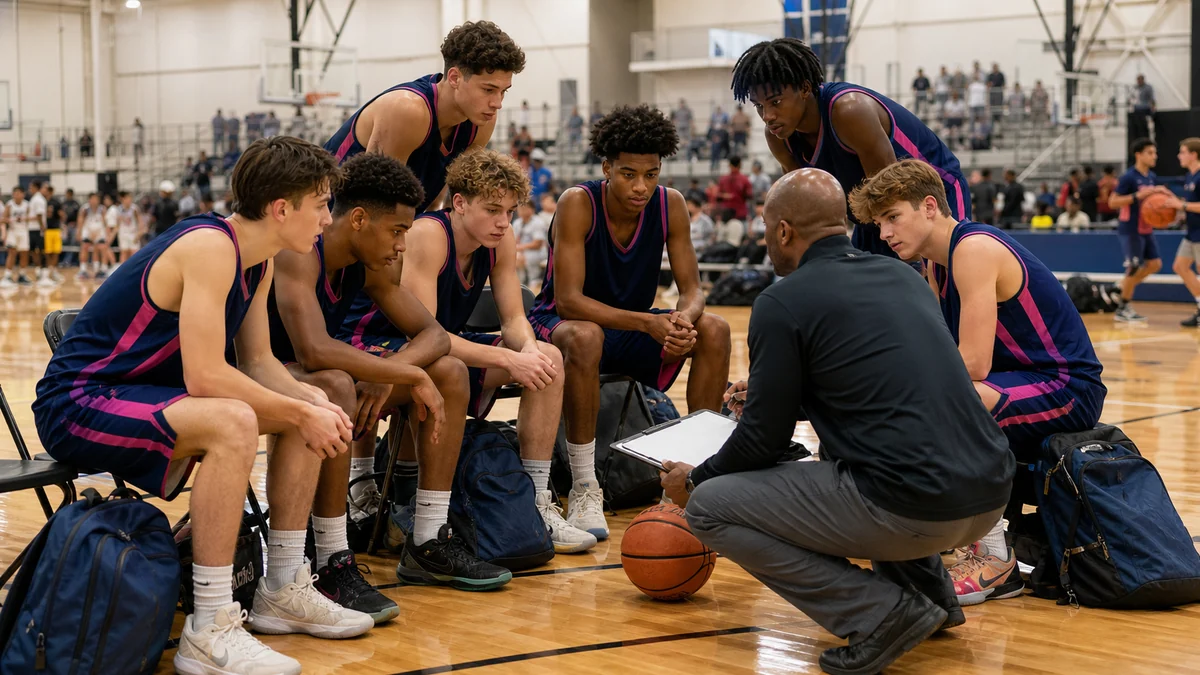

The short version: College basketball recruiting is not one showcase, ranking, or message. It is a process in which coaches evaluate whether a player can help their program, confirm academic and eligibility fit, communicate with the player and family under the applicable recruiting rules, and decide whether to offer a roster opportunity and financial aid. Your job is to make those decisions easier with honest film, steady development, strong academics, targeted communication, and reliable follow-through.
Key takeaways
- Start eligibility and academic planning early. A highlight reel cannot repair missing core courses or an incomplete Eligibility Center record.
- Build a small evidence package: concise highlights, at least one full-game link, verified measurements, schedule, academics, and contact information.
- Contact programs where your level, position, academic profile, geography, and likely role make sense. A shorter researched list is more useful than mass email.
- Certified events can create evaluation opportunities for Division I coaches, but certification is not an endorsement and attendance does not guarantee recruitment.
- Evaluate the entire opportunity - admissions, cost, development, role, coaching stability, roster competition, and campus fit - not only the division label.
How the college basketball recruiting process actually works
Recruiting has five connected parts: eligibility, evaluation, communication, mutual fit, and enrollment. They overlap, but none replaces the others. A coach may like your game and still need an academic fit. A school may admit you without offering an athletic roster spot. A recruiting service may distribute your profile, but it cannot make a staff need your position.
The practical goal is not to look recruited. It is to help the right coaches answer four questions: Can this player contribute at our level? Will the player be eligible and admissible? Does the player fit our roster and style? Can we build a trustworthy relationship with the player and family?
Step 1: Protect eligibility before chasing exposure
Players who want to compete in NCAA Division I should understand the academic requirements while there is still time to shape a high-school schedule. The current NCAA Division I initial-eligibility requirements include 16 NCAA-approved core courses, a minimum 2.3 core-course GPA, and the 10/7 course-timing rule: ten core courses must be completed before the seventh semester, including seven in English, math, or science. The Eligibility Center also needs proof of graduation and a final transcript.
Do not assume every class with an academic-sounding name counts as an NCAA core course. Ask your school counselor to review the high school's approved core-course list, then revisit the plan when classes change. Keep your own record of completed courses, current grades, test information if relevant to a school, and graduation progress.
The NCAA Eligibility Center offers different account types, and the correct one depends on where you plan to compete and what activities you will take part in. The Eligibility Center questions and resources page explains account selection, required information, international records, and when certification is needed. Registering is an administrative step, not a recruiting signal; coaches still evaluate you independently.
Step 2: Build evidence a coach can review quickly
Your recruiting package should be easy to verify and easy to forward. Use your real name, graduation year, position, height, school and club teams, current schedule, academic summary, coach contact information, and links that work without requesting access. Keep every fact current.
A useful video package has two layers. The first is a concise highlight video that identifies you immediately and shows repeatable decisions: defending, moving without the ball, passing, rebounding, finishing, shooting, and playing through mistakes. The second is at least one full-game video with normal possessions, substitutions, and defensive sequences. Highlights create interest; full games help a staff test whether the highlights represent your actual play.
Choose clips for basketball information, not editing effects. Start with your strongest relevant actions, keep the player marker brief, preserve enough court context to see the decision, and avoid music or graphics that obscure communication and game flow. If you are a guard, show pace and reads, not only made shots. If you are a wing, show defensive versatility and off-ball value. If you are a post player, show screening, positioning, rim protection, rebounding, and decisions after the catch.
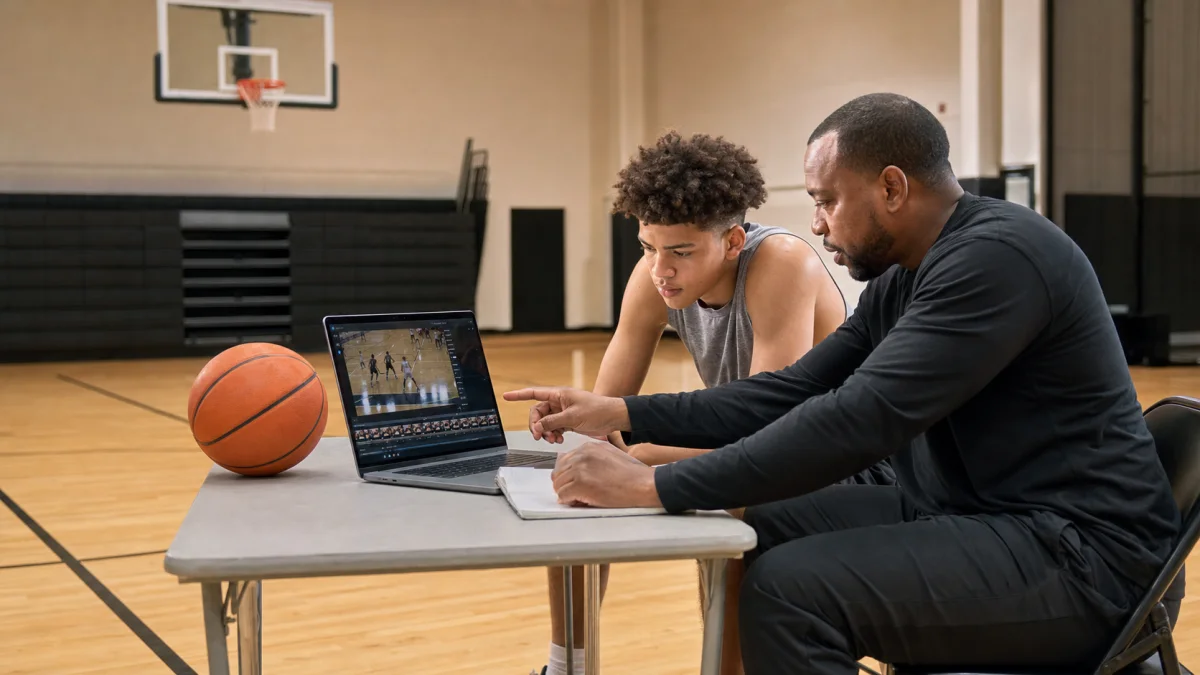
Before sending film, ask a coach who knows your game to review it. Our guide to basketball skills that get players recruited can help you audit what the video demonstrates, while the Level Up AI basketball coach can provide an additional technique review of recorded training. Neither replaces honest evaluation from qualified coaches who have seen you compete.
Step 3: Contact programs with a reason
Start with fit, not prestige. Build a list across realistic levels and school types, then learn each program's roster, style, academic options, location, recent recruiting classes, and positional needs. Your list should include schools you would want even if basketball changed tomorrow.
A first message should be short enough to read on a phone. Introduce yourself, state your graduation year and position, explain one specific reason the program fits, provide the essential academic and basketball facts, and include working film and schedule links. End with a direct question, such as whether the staff is evaluating your class and position. Follow up when you have meaningful new information: new film, a schedule update, an academic result, or a coach introduction.
Coaches must follow division- and sport-specific communication and evaluation rules. The NCAA's recruiting overview explains recruiting activity and calendars and makes an important point for families: prospects are not required to use a recruiting service. A reputable service may help organize or distribute information, but no service can guarantee an offer, scholarship, or coach response.
Step 4: Use high school, club, and certified events strategically
College coaches evaluate players in several settings: high-school games, club or AAU competition, camps, showcases, film, practices where rules permit, and direct recommendations from trusted coaches. The best event is not automatically the biggest one. It is the event where appropriate programs can evaluate you against credible competition and where the cost makes sense for your family.
For certain Division I evaluation settings, event and team certification matters. The NCAA's basketball certification guidance explains the Basketball Certification System and the role of NCAA-certified events. Certification permits Division I coaches to evaluate at qualifying events during applicable periods; it does not rank the event, validate every marketing claim, or promise that a particular coach will attend.
Before paying, ask: Which programs attended the same event last year? Is the current coach list confirmed or merely invited? Will games be recorded? Is the competition appropriate? What is the total travel cost? Could the same money buy better training, academic support, or several closer evaluation opportunities? Our AAU basketball guide provides a broader framework for choosing teams and events.
Step 5: Understand what an offer does and does not mean
Recruiting language is often imprecise. Interest, an invitation to camp, a roster conversation, admissions support, a walk-on opportunity, and an athletic scholarship are not the same thing. Ask for clarity without treating every conversation as a negotiation.
When a program becomes serious, discuss the expected role, development plan, position, roster competition, coaching and support staff, admissions process, total cost, aid terms, housing, travel, medical support, and what happens if a coach leaves or your role changes. Athletic aid can differ by school and division, and many student-athletes combine multiple forms of financial aid. The NCAA's scholarship and financial-aid overview is the right starting point; the school's financial-aid and compliance staff should confirm the actual package in writing.
Compare net cost, not the headline percentage. A school with less athletic aid can be less expensive after academic grants and institutional aid. Also compare the basketball opportunity honestly: practice quality, pathway to minutes, strength and medical support, player retention, and whether the academic program still works if your playing career changes.
A 2026 eligibility change families should know
In June 2026, Division I adopted an age-based eligibility model. According to the NCAA's age-based eligibility rules, the eligibility period begins at first full-time collegiate enrollment or the academic year after a prospect's 19th birthday, whichever comes first. Prospects first enrolling in 2026-27 receive the more favorable result under the previous or new model; prospects first enrolling in fall 2027 and later use the age-based model.
This matters most to players considering delayed enrollment, a gap year, prep school, international competition, or other nontraditional paths. Do not make a timing decision from social-media summaries. Ask the Eligibility Center and each school's compliance office how the rule applies to your dates and competition history.
A grade-by-grade recruiting plan
Freshman and sophomore years
- Build sound skills, decision-making, physical habits, and a consistent role on a competitive team.
- Map NCAA-approved core courses with your counselor and protect your GPA.
- Save full games and keep accurate basic information, but do not manufacture daily recruiting activity.
- Explore school types, majors, locations, and costs so your future list reflects more than basketball branding.
Junior year
- Create the first credible film package and update it when your game materially improves.
- Build a researched program list across multiple levels and begin targeted outreach under the applicable rules.
- Coordinate high-school and club schedules, event choices, and coach introductions.
- Complete the appropriate Eligibility Center steps and check transcripts and core courses.
Senior year
- Keep expanding the list until an opportunity is real and documented.
- Ask direct questions about admissions, aid, roster status, role, and decision deadlines.
- Submit required applications and financial-aid materials on time; recruiting interest does not replace admission.
- Compare the complete student, basketball, and financial experience before committing.
Red flags to avoid
- A guaranteed scholarship, guaranteed exposure, or guaranteed coach attendance.
- Pressure to pay immediately before you can verify who runs an event or service.
- A service that will not show where your profile is distributed or what work it performs.
- Advice to ignore academics because a coach can fix eligibility later.
- Edited film that hides player identity, opponent level, or game context.
- Verbal claims about money or roster status that the school will not explain through the proper staff and written process.
Your next seven actions
- Meet your counselor and verify core-course progress.
- Create or confirm the correct Eligibility Center account.
- Ask a trusted coach for an honest level and role assessment.
- Assemble highlights, a full game, schedule, academics, and contact details in one clean profile.
- Research an initial list across several realistic levels.
- Send individual messages with a specific reason for each school.
- Track replies, next actions, dates, and verified costs in a simple spreadsheet.
The recruiting process becomes more manageable when you replace rumors with evidence. Develop into a player who helps teams win, protect your academic options, show your real game, communicate clearly, and judge every opportunity as both a student and an athlete.
Frequently asked questions
When should a high school player start college basketball recruiting?
Players should build strong habits, academics, and usable film before treating recruiting as a campaign. The practical timeline depends on graduation year, competition level, and NCAA calendar rules, so prospects should verify current dates rather than follow one universal schedule.
What should a basketball recruiting profile include?
A useful profile includes accurate contact details, graduation year, school and team information, academic information, measurements, schedule, and concise game film. Every item should be easy for a coach to verify and current enough to support a decision.
How many college coaches should a player contact?
There is no single correct number. A focused list of realistic academic and basketball fits is more useful than sending the same message everywhere. Players should research programs, personalize communication, and keep an organized record of responses and next steps.