
The short version: Pause before the release and grade six things: advantage, defender distance, balance, clock and score, teammate spacing, and the next pass. Then review execution separately from the decision and look for patterns across possessions.
Key takeaways
- Freeze the film before the result changes your opinion.
- Grade decision quality and shot execution as separate questions.
- Use team context, not a universal map of good and bad shots.
- Review patterns across possessions before changing a player's shot profile.
Judge the decision before the result
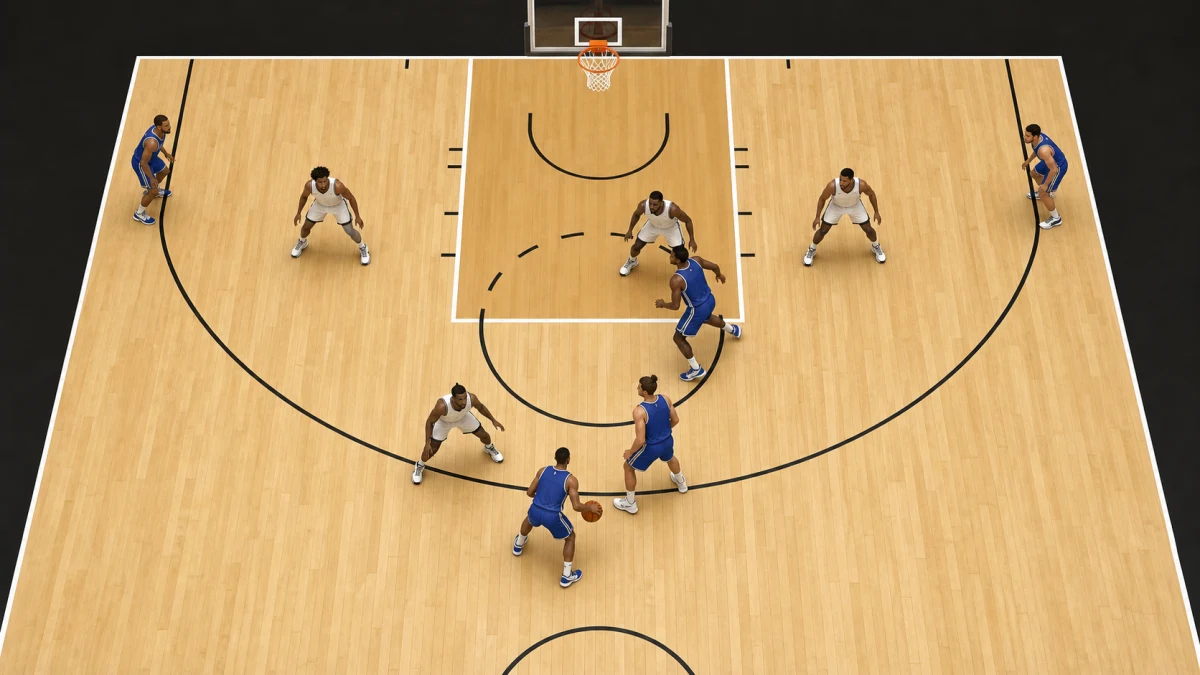
The first rule of shot-selection film study is simple: freeze the possession before the ball reaches the rim. A made shot can reward a poor read, while a missed shot can come from a clean advantage that the offense should create again. Ask what the shooter knew at release: where the nearest defender was, whether the feet and torso were organized, what the clock required, how teammates were spaced, and whether a better pass remained available. FIBA Basketball: Analytics structure a basketball shooting workout
This does not mean the result is irrelevant. Execution still matters, and repeated misses from the same conditions may reveal a training need or a range that is not ready under pressure. The point is sequence: grade the choice first, then grade the shot. When those questions are blended, players learn to defend makes and apologize for misses instead of understanding which decisions the team wants to reproduce. FIBA Descriptive Analytics Report
Use a six-part shot-selection check
- Advantage: did the offense force a closeout, rotation, mismatch, paint touch, or numbers advantage before the shot?
- Defender distance and direction: was the contest late, square, from the side, or already in the shooter's space?
- Balance and preparation: were the feet, torso, pickup, and sightline organized for that player's shot?
- Clock and score: was there time to improve the advantage, or did the possession require an immediate attempt?
- Team spacing and rebound coverage: did the shot preserve driving lanes, floor balance, and a realistic chance to contest the rebound?
- Next pass: was a teammate available for a clearer shot or a second advantage without giving the defense time to recover? Jr. NBA/Jr. WNBA Instructional Curriculum
Keep the labels short enough to use consistently. The FIBA statistics manual separates basic and advanced shot types because more detail is not automatically better; the right amount depends on the level and purpose. A youth team might tag advantage, contest, balance, and next pass. An advanced team may add action type, defender technique, clock band, rebound coverage, and expected counter. Consistency across reviewers is more valuable than a complicated system used differently by every coach. FIBA Statisticians' Manual 2024 basketball advanced statistics
Separate decision quality from execution
| Decision | Execution | Film-room response |
|---|---|---|
| Good | Good | Reinforce the read and the repeatable preparation |
| Good | Poor | Keep the read; train the footwork, range, or release condition |
| Poor | Good | Acknowledge the make, then show the better available decision |
| Poor | Poor | Repair the read first before adding more shot volume |
The matrix prevents two common errors. First, it stops a make from ending the conversation when the shot ignored a clear teammate or created transition risk. Second, it protects a player who made the right read but missed. That player still needs execution feedback, but the team should not train away the correct decision. Over several games, the categories reveal whether the main issue is perception, preparation, range, pressure, or simply normal variation.
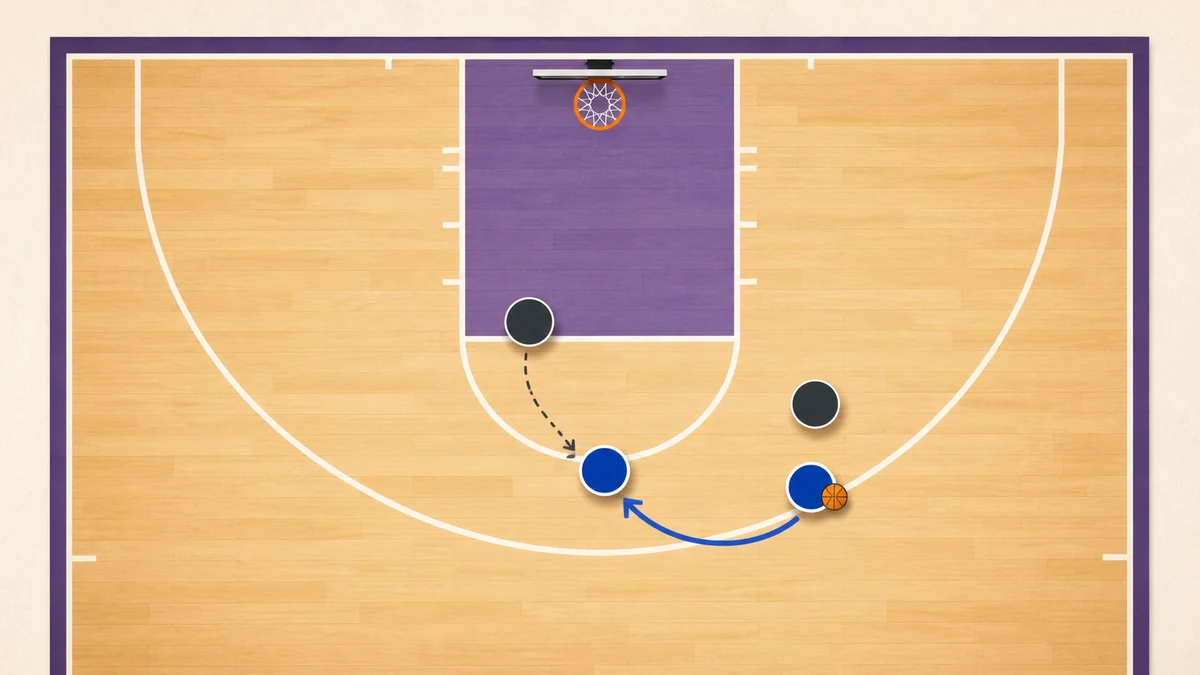
Avoid giving every player the same answer. A catch-and-shoot attempt may fit one player's role and range but be a low-quality choice for another in the same spot. A pull-up can be the correct late-clock solution and the wrong early-clock solution. Team offense also matters: a shot that abandons an empty corner, leaves nobody balancing the floor, or bypasses a rolling teammate cannot be evaluated from location alone. offensive spacing
Run a film session that changes practice
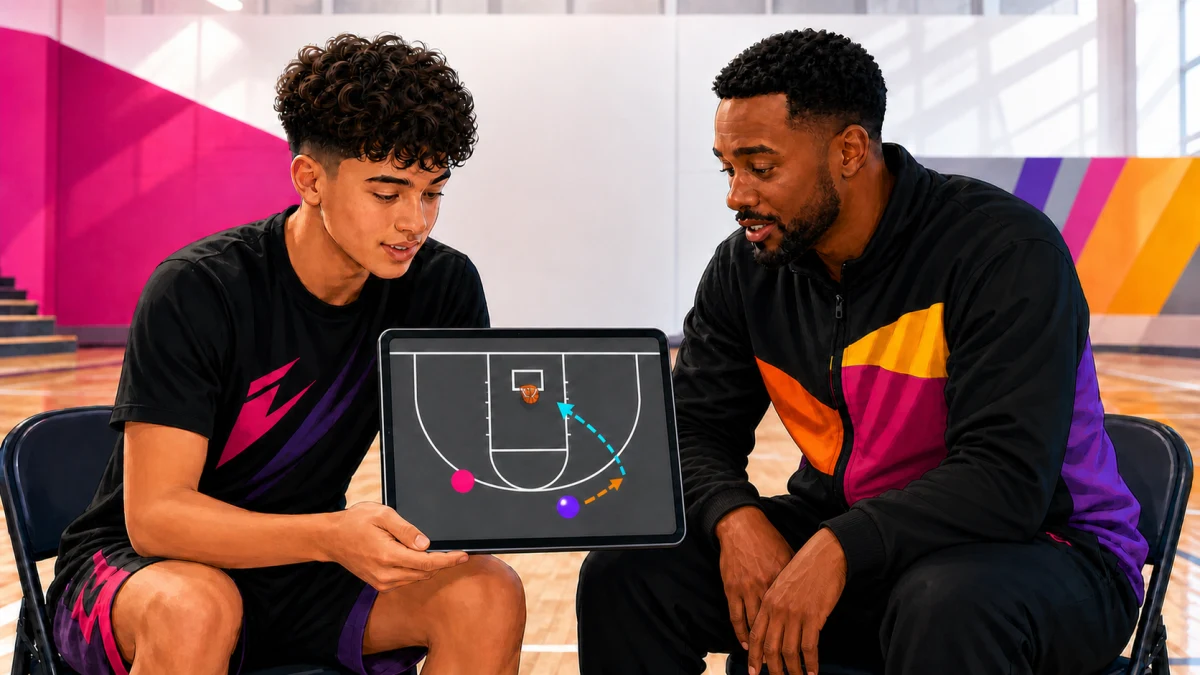
Start with a small sample of possessions from the same role or action. Hide the final result when possible and let the player call the advantage, defender, clock, spacing, and next pass. Compare the player's read with the coach's, then replay through the result. The goal is not to win an argument. It is to discover which cue the player missed and whether the practice environment has made that cue visible often enough.
- Tag the possession before discussing the make or miss.
- Compare similar actions instead of mixing unrelated shots into one percentage.
- Write one practice change tied to the missed cue, such as reading the low defender after a paint touch.
- Revisit the same tag after practice and look for a pattern across several possessions. FIBA Approved Player Performance Platforms
Practice should recreate the decision, not just the shot location. If film shows a player rushing open catch-and-shoot attempts after long closeouts, begin with the same closeout and include drive or extra-pass options. If the problem appears late in the clock, add a visible countdown and a teammate who can receive the bailout pass. Jr. NBA's use of random starts and small-sided decisions supports this approach: preserve the perception-action problem while adjusting difficulty.
What data can and cannot tell you
Shot charts, effective field-goal percentage, points per shot, and action tags can expose patterns that memory misses. FIBA's descriptive analytics work uses shooting location and efficiency measures to compare performance, while its approved platform catalogue shows how video and data now live in the same review ecosystem. Those tools are valuable because they help coaches find possessions worth watching; they do not explain the decision by themselves.
A chart cannot see every assignment, injury limitation, scouting instruction, or communication failure. A high-value location does not automatically make a contested attempt good, and a lower-value area is not automatically wrong when the clock, matchup, or player skill supports it. Use data to locate the pattern, video to recover context, and coaching conversation to understand intent. Then test the proposed change in practice before rewriting a player's entire shot profile.
Frequently asked questions
What makes a good shot in basketball?
A good shot fits the advantage, defender distance, shooter's preparation and range, clock and score, team spacing, rebound coverage, and available next pass. No single location or result answers every part. Evaluate the information available at release before judging whether the ball went in.
How do coaches grade shot selection on film?
Use a small shared set of tags, pause before the result, and grade the decision separately from execution. Compare similar actions across several possessions, then identify the cue that should be recreated in practice. The labels should be detailed enough to help but simple enough for different reviewers to apply consistently.
Is every open shot a good shot?
No. Openness matters, but so do range, balance, time, score, role, teammate positioning, rebound coverage, and the next pass. An open attempt can still be the wrong team decision, while a contested attempt may be required late in the clock. Context defines the choice.
Should players review makes as well as misses?
Yes. Reviewing only misses creates outcome bias and hides poor choices that happened to score. Include makes, misses, fouls, passes, and possessions where the player declined a shot. The useful question is whether the same decision should be repeated under the same conditions.