
The short version: Advanced basketball metrics are models of reality. By understanding the technology behind player tracking and metrics like Gravity, players and coaches can better interpret on-court performance.
Key takeaways
- Gravity tracks defensive pressure on and off the ball using AWS AI and Machine Learning.
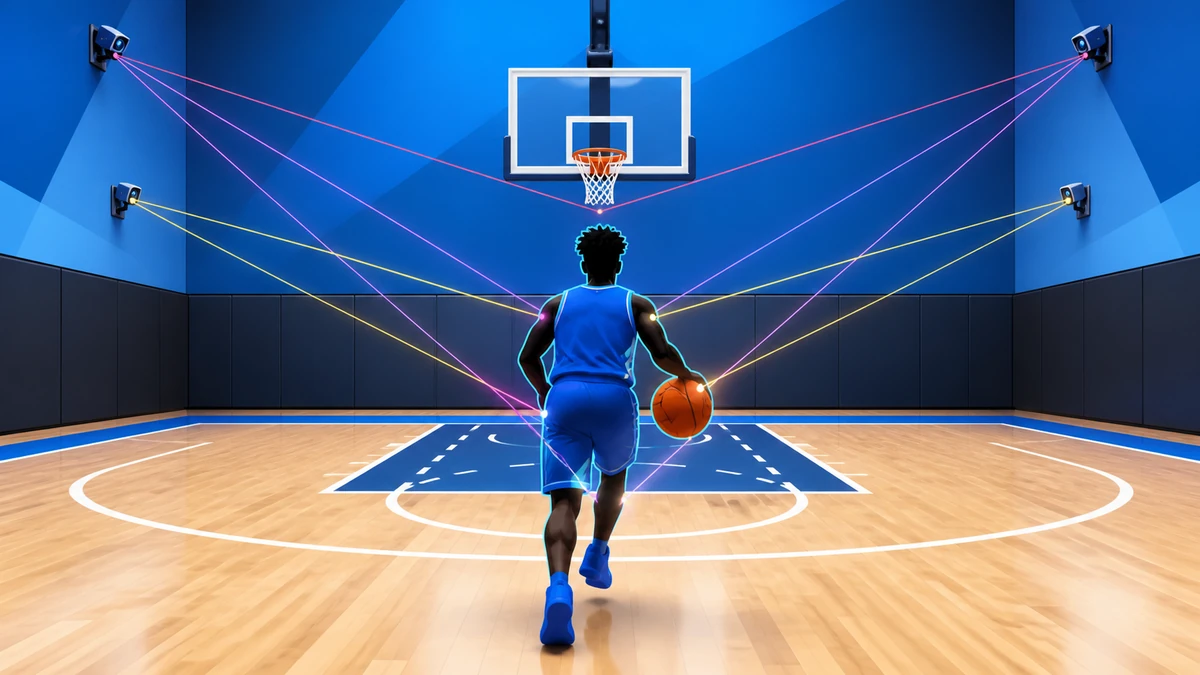
- The NBA's optical tracking system tracks 29 points on every player's body, 60 times per second.
- CourtOptix measures advanced metrics like Expected Shot Value, double teams, and passing accuracy.
- Advanced metrics are models of reality and should not be used to establish player value in isolation.
The Evolution of Basketball Data and APIs
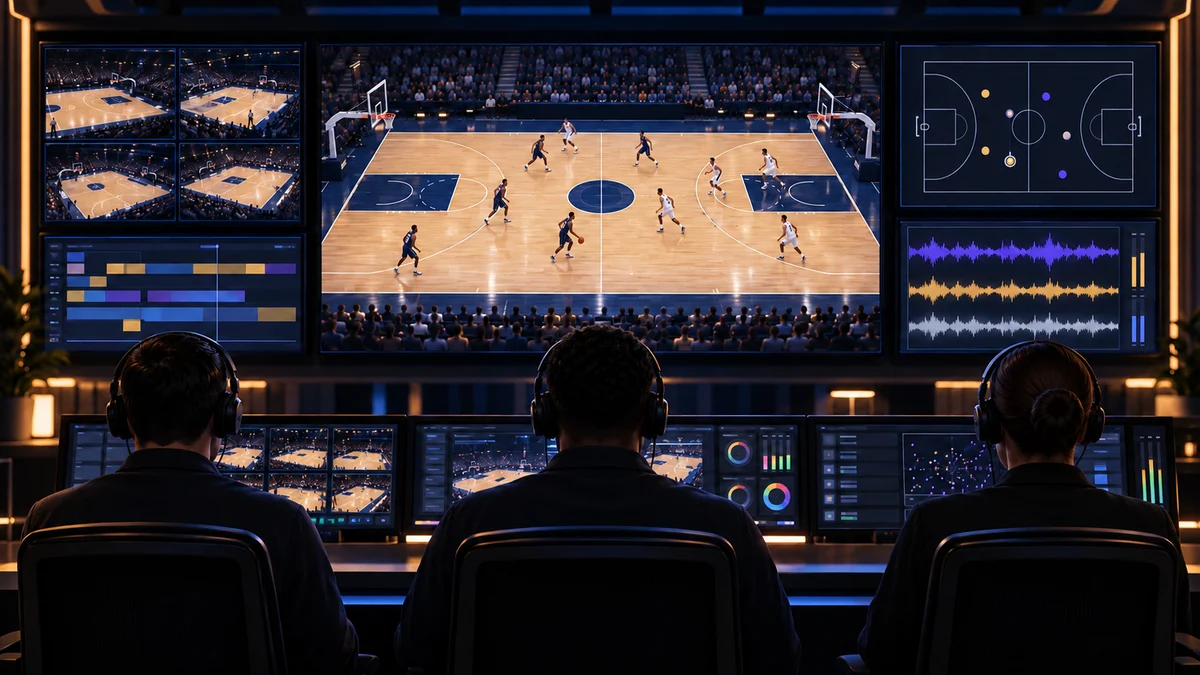
Sportradar's League Specific API format provides play-by-play coverage, scores, and statistics in near real time. This system is designed to deliver comprehensive coverage of game events as they happen. However, Sportradar's APIs are a B2B service and are not intended to be called directly from client applications. This architecture ensures that the high-volume, near real-time play-by-play data, scores, and statistics are processed through business-to-business channels rather than being accessed directly by end-user client applications. This distinction is crucial for understanding how professional-grade sports data is distributed and integrated across the basketball technology landscape. Get Started
Beyond traditional play-by-play coverage and basic box score statistics, the NBA's official tracking stats include categories such as Drives, Passing, Touches, Rebounding, and Speed and Distance. These official tracking categories provide a deeper layer of information than standard box scores. By categorizing on-court actions into Drives, Passing, Touches, Rebounding, and Speed and Distance, the tracking system allows analysts, coaches, and players to look at specific aspects of physical performance and ball movement. These categories represent a shift from simple event recording to detailed tracking of player movement and interaction on the court. Quick Links | Stats | NBA.com | NBA.com
The Technology Behind Player Tracking
The NBA's optical tracking system uses 3D pose detection to track 29 points on every player's body, 60 times per second. This advanced tracking technology captures highly detailed spatial and movement data during games. By tracking 29 points on every player's body at a rate of 60 times per second, the 3D pose detection system can record precise physical movements and postures. This high-frequency optical tracking provides the raw spatial data necessary to analyze player speed, distance, and positioning with extreme accuracy, forming the foundation for modern advanced basketball metrics. Intro to Gravity | NBA.com
According to NBAstuffer, NBA CourtOptix is powered by Microsoft Azure, utilizing AI and Machine Learning to analyze events. This platform processes the vast amounts of tracking data generated during a game to provide deeper insights. By using Microsoft Azure's cloud infrastructure alongside artificial intelligence and machine learning models, CourtOptix can monitor and analyze any event that occurs on the basketball court. This integration of AI and machine learning allows the system to transform raw optical tracking data into structured, analytical insights about player behavior, positioning, and event outcomes. NBA CourtOptix Explained | NBAstuffer
Demystifying the Gravity Metric
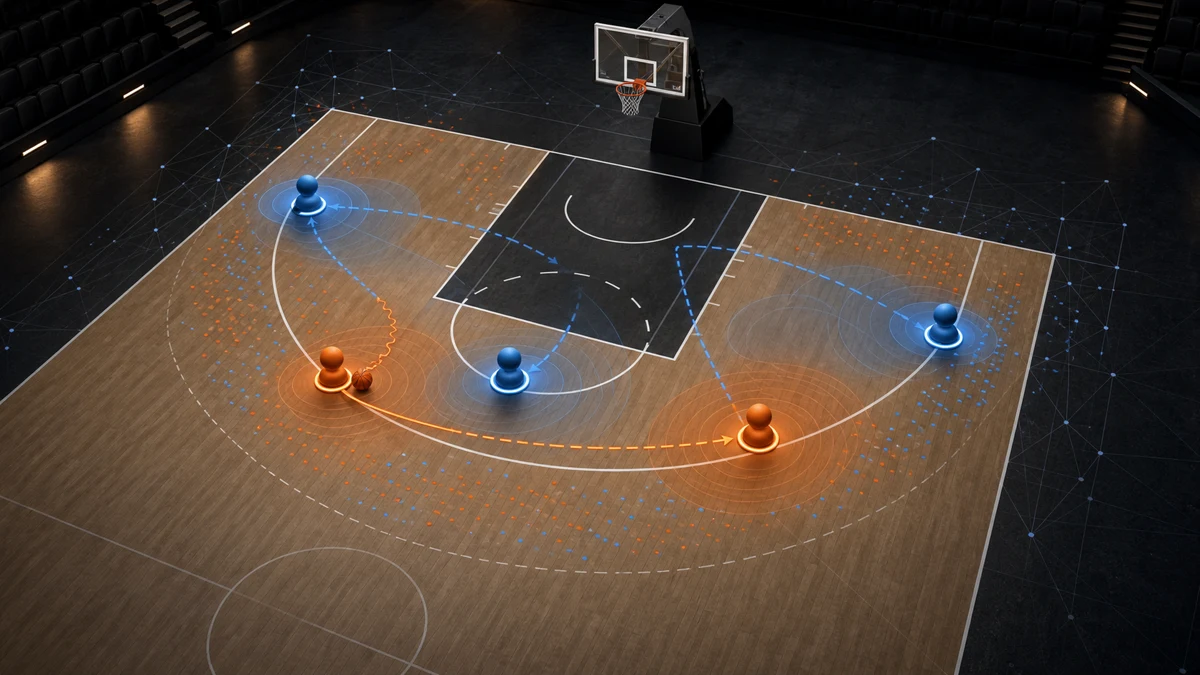
Gravity is a metric that tracks how much defensive pressure an offensive player draws both on and off the ball. This metric helps quantify the off-ball and on-ball impact of players. According to NBA.com, the Gravity stat is powered by AWS AI and Machine Learning, which analyzes player positioning and defensive reactions. By utilizing AWS AI and Machine Learning, the system can process complex spatial relationships on the court to measure how much defensive pressure an offensive player draws, whether they have the ball or are moving without it.
Gravity measures how much a player pulls defenders out of their normal assignments compared to what floor spacing predicts. This metric provides a way to quantify the defensive attention a player commands. By comparing actual defensive positioning to the predicted floor spacing, Gravity evaluates how much an offensive threat disrupts the defense's planned positioning. If a player pulls defenders away from their normal assignments more than the standard floor spacing model predicts, this metric captures that specific defensive adjustment, showing the player's spatial influence on the court.
The Gravity Calculation and Scoring System
The Gravity model compares the Expected Defensive Pressure Score to the actual Defensive Pressure Score. The Expected Defensive Pressure Score represents the defensive pressure a player would receive on average based on the location of the ball and their position on the floor. The model then compares this expected value to the actual Defensive Pressure Score, which is the pressure the player actually draws during the play. By analyzing the difference between the expected pressure and the actual pressure drawn, the model quantifies how much extra defensive attention a player commands.
The Gravity score is expressed as a normalized value on a -100 to 100 scale, with 0 reflecting the league average. This normalized scale allows for easy comparison across different players and teams. A score of 0 means the player draws exactly the average amount of defensive pressure predicted by the model. Scores above 0 indicate above-average defensive pressure, while scores below 0 indicate below-average pressure. This standardized -100 to 100 scale provides a clear framework for evaluating a player's spatial impact frame-by-frame during a game.
Interpreting High Gravity Scores
An off-ball Gravity score above 80 indicates defenses are highly reactive to a player before they catch the ball. This high score shows that the player commands significant defensive attention even without possession of the basketball. When a player has an off-ball Gravity score above 80, it means the defense is highly focused on their movements and positioning, reacting strongly to prevent them from getting open. This level of off-ball gravity indicates that the player's mere presence on the floor alters the defensive alignment before any pass is made.
A Gravity score above 90 indicates a player is bending the floor and drawing extreme defensive attention. This elite score represents the highest level of defensive focus an offensive player can command. When a player's score rises above 90, they are drawing so much defensive pressure that they actively bend the floor, forcing the defense to commit multiple resources or make extreme adjustments. This score highlights players who command constant, intense defensive coverage and cannot be left open under any circumstances.
Advanced Spatial Metrics in CourtOptix
Expected Shot Value calculates a player's expected shot value on any potential shot attempt compared to the league average under the same circumstances. This metric takes into account defensive pressure, proximity of defenders, and the location of the shot attempt. By analyzing these spatial factors, Expected Shot Value determines what the average outcome of the shot would be under those exact conditions. This allows analysts to compare a player's actual shooting performance against the expected baseline, evaluating shot selection and shot-making ability in context.
CourtOptix tracks double teams by quantifying how many times and how long players are double-teamed, as well as the outcomes of those possessions. This tracking goes beyond simple observation to measure the exact duration and frequency of double teams. It also records what happens during those possessions, such as whether the double-teamed player passes, dribbles, or shoots, and whether the possession results in a basket, a turnover, or a missed shot. This data provides a complete picture of how players handle defensive pressure.
CourtOptix measures passing metrics beyond simple totals, including pass type, distance, trajectory, and accuracy. This detailed measurement goes beyond counting the number of passes or assists a player accumulates. By tracking the specific type of pass, such as an outlet pass, pass ahead, ball reversal, or draw-and-kick, along with the distance, trajectory, and accuracy of each pass, CourtOptix provides a comprehensive view of a player's passing ability and decision-making on the court.
What This Means for Players and Coaches
While professional B2B APIs and tracking systems are not intended for direct client applications, players and coaches can still benefit from advanced technology. Level Up is a mobile AI basketball coach app that provides basketball-specific video feedback. Level Up does not claim that one camera or one metric captures every part of basketball performance, emphasizing that tracking metrics should be used as tools alongside traditional coaching. Understanding these advanced metrics helps players and coaches interpret on-court performance and spatial dynamics more effectively.