
The short version: Build a basketball recruiting film as a short evaluation entry point, not a promise of exposure. Identify the player immediately, keep enough action before and after each moment to show the read, organize clips around role evidence, and pair the highlights with complete game film. Put verified contact and academic information beside the link, then tailor the message to programs that fit the player's level and goals.
Key takeaways
- Open with the player's name, graduation year, team, jersey number, position, height, and a clear way to make first contact.
- Use a brief identification marker before each clip, then let the possession run long enough to show spacing, decision, execution, and transition.
- Group clips by the role a college coach is evaluating instead of arranging only makes, blocks, or dramatic moments.
- Treat the highlight reel as an index and provide complete recent games so a coach can inspect off-ball work, defense, pace, and consistency.
- Keep recruiting rules and eligibility information outside the video and verify them from current division-specific official resources.
What question should a recruiting film answer?
A useful basketball recruiting video answers a coach's first evaluation question quickly: should I spend more time watching this player? The NCAA names film as one form of recruiting exposure, but film is not a recruiting outcome by itself. Your job is to make the player easy to identify, the competition easy to understand, and the basketball evidence easy to verify. A loud edit, a long logo animation, or a list of claims cannot substitute for possessions a coach can actually evaluate. NCAA Recruiting college basketball recruiting process
Think of the film as a route into a larger player file. The first reel shows role and range; full games show continuity; the email supplies context; the academic record and official eligibility steps live in their proper places. The NCAA also states that academics are part of the recruiting decision. That means a video should never be asked to carry the whole case, and an athletic edit should not bury the practical information a program needs to continue the conversation.
Start with identification, not an intro sequence
Put the player's name, graduation year, current school or club, jersey number, primary position, and measured height on the opening card. Add a current player email and phone number, a parent or guardian contact when appropriate, and the team's coach contact so game context can be verified. Keep the reel and complete-game links stable and test them while signed out. When footage is not obvious, name the event, opponent, date, jersey color, and starting role beside the link. Hudl: How to Get Noticed
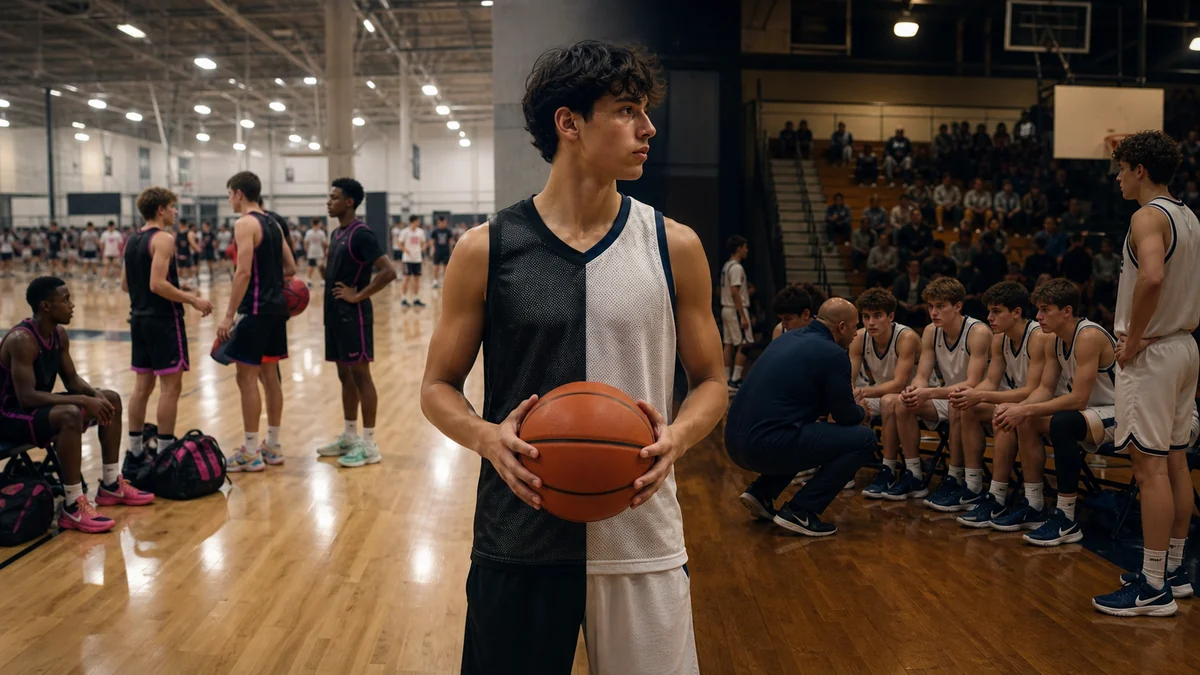
Use a clean opening card for a few seconds, then reach basketball immediately. Before each clip, freeze or slow the first frame just long enough to place one subtle marker on the player. Remove the marker as the action begins. The athlete should remain recognizable through jersey number, floor location, and continuous motion; a permanent circle can cover footwork or distract from the read. If clips come from different teams or seasons, identify the uniform change rather than expecting a viewer to infer it. email college basketball coaches
Show the possession, not only the result
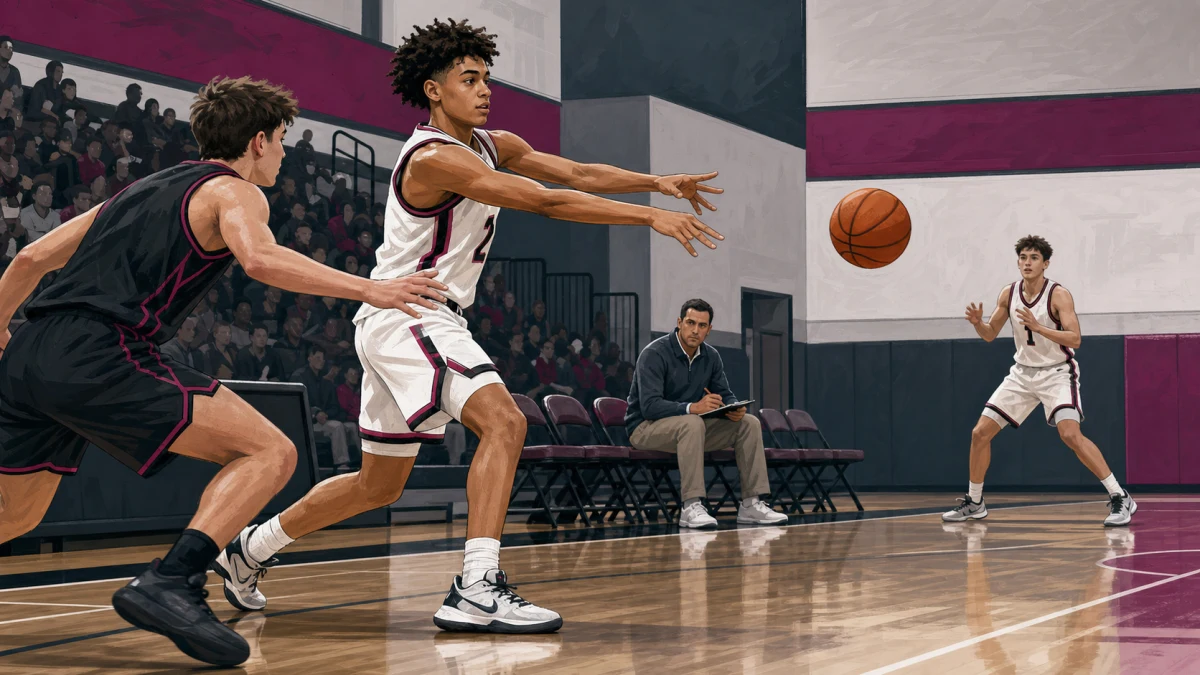
Start each selection before the player's decisive action. For a catch-and-shoot clip, show the relocation or spacing that created the catch. For a drive, show the closeout and the first read. For a help-side rotation, show the ball movement that triggered it. Continue after the shot or stop so the viewer can see balance, rebound responsibility, communication, and transition. A two-second cut that contains only the ball entering the rim proves a make; it rarely explains the player's decision. high school offseason development plan
| Evidence to show | Keep in the frame | What the coach can evaluate |
|---|---|---|
| On-ball offense | Defender's stance, help location, first step, finish or pass | Advantage creation and decision quality |
| Shooting | Footwork into the catch, contest, release, transition | Preparation, shot selection, and repeatability |
| Defense | Initial matchup, ball movement, rotation, box-out | Positioning, communication, and possession finish |
| Playmaking | Spacing before the pass and the receiver's opportunity | Timing, vision, and whether the pass created value |
| Off-ball role | Cut, screen, relocation, tag, or floor balance | Whether the player contributes without controlling the ball |
Organize clips around the player's role
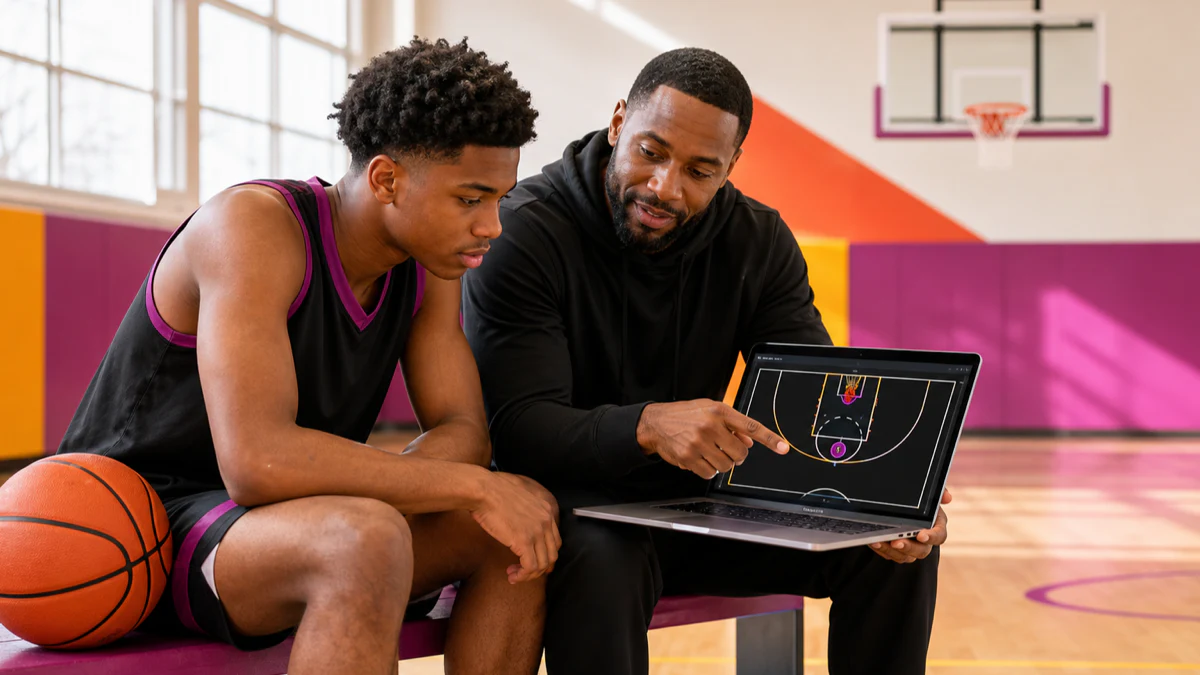
Lead with the clearest evidence for the role the player is presenting. A point guard might open with pressure handling, paint touches, passing reads, and point-of-attack defense. A wing may emphasize shooting decisions, closeout attacks, secondary creation, off-ball defense, and transition lanes. A frontcourt player may show screening, rim pressure, short-roll decisions, rebounding, and coverage responsibilities. The categories should describe work that appears on film, not labels the player hopes to earn. USA Basketball Player Development Curriculum
Range matters more than repetition. Three nearly identical uncontested makes do not add as much information as three possessions that reveal different constraints. Include strengths first, then enough supporting clips to show how the player connects actions across a possession. Avoid hiding turnovers, misses, or difficult defensive assignments by making the full-game links easy to find. A coach deciding whether to continue will eventually look for the minutes between the highlights.
Use highlights and full games for different jobs
| Asset | Primary job | Recommended contents |
|---|---|---|
| Concise highlight introduction | Make the player and role legible quickly | Best recent, role-relevant possessions with identification and context |
| Complete game 1 | Show normal rotation minutes and consistency | Uncut game from a representative recent opponent |
| Complete game 2 | Show the role under a different matchup | A second recent game with clear date, opponent, and jersey information |
| Optional position sequence | Answer a program's specific follow-up | A short set of possessions requested by that coach |
Do not manufacture a universal ideal runtime. A guard with a complex role may need more categories than a specialist, while a coach who already watched the athlete live may need only a targeted follow-up. Edit until every remaining clip adds a new piece of evidence. Keep the complete games separate so the introduction remains scannable and the longer evaluation remains honest.
Package the film with accurate recruiting information
The email or profile beside the film should contain verified school, graduation, contact, and academic information. Do not turn an unofficial GPA, height, or statistic into a graphic simply because it looks precise. The NCAA says Division I and II recruits generally need an Academic and Athletics Certification account, and its Eligibility Center explains that initial certification affects practice, competition, and athletics aid in the first full-time year. Those processes are separate from whether a coach likes the film. NCAA Eligibility Center
Rules are time-sensitive. NCAA communication rules and recruiting calendars vary by sport and division, so never copy a contact date from an old post into the video description and treat it as permanent. Use the current NCAA page and the target school's compliance guidance. The current Division I academic page also lists 16 approved core-course credits and a minimum 2.3 core-course GPA among its requirements; prospects should verify the requirements that apply to their enrollment timeline rather than relying on a reel caption. NCAA Division I Academic Standards
Run a final recruiting-film audit
Open the film on a phone and a laptop while signed out, then confirm every video loads and the player is identifiable in the first basketball clip. Read every card aloud and verify spelling, graduation year, jersey number, measurements, opponent, and contact details. Watch once without sound because music cannot carry identification or context. Basic clipping does not require advanced editing software; ask what new evidence each clip adds, remove repetitions, and have a coach who knows the games review whether the edit represents the athlete honestly. Hudl: Highlights
Then send a brief, specific message instead of a mass claim about being the perfect fit. By the later high-school years, the NCAA advises students to take increasing ownership of recruiting communication. The player should be able to explain why the program is relevant, what the linked film contains, and what information is available next. A follow-up can add a new game or requested sequence; repeating the same link without new context does not improve the evidence.
Frequently asked questions
How long should a basketball recruiting video be?
There is no universal runtime that fits every player or program. Make the introduction short enough to scan and long enough to show distinct role evidence. Remove repeated clips, reach basketball quickly, and provide separate full-game links so a coach can continue evaluating without turning the highlight reel into an entire broadcast.
Should I include missed shots or mistakes?
The highlight introduction can lead with strong evidence, but it should not pretend the rest of the game does not exist. Complete recent games let coaches inspect misses, turnovers, defensive possessions, and responses to pressure. A missed shot can still show sound preparation or a correct read; select clips for what they reveal, not only for the final box-score result.
Do I need expensive editing software?
No. Clear trimming, a readable opening card, a brief player marker, accurate labels, and stable links matter more than elaborate effects. Use any editor that preserves the original resolution and frame rate without covering the court. Export once, review the file on multiple devices, and keep the source games archived.
Can a recruiting film guarantee college offers?
No. Film is one evaluation input. The NCAA identifies film as one form of exposure and notes that academics are part of recruiting decisions, while rules and program needs vary. A strong package can make a player's evidence easier to evaluate; it cannot guarantee contact, a roster place, admission, or athletics aid.