
The short version: Stand out to college coaches by taking ownership of your recruitment. Lead with personalized, bulleted emails, verified academics, a 2-minute highlight reel, and a completed team questionnaire.
Key takeaways
- Typically, you should complete the team-specific prospective student-athlete questionnaire before sending your introductory email.
- Address emails using the coach's last name and personalize details for each specific program and staff member.
- Aim to grab a coach's attention early, show footage against good competition, and keep the highlight reel brief.
- Understand that NCAA recruiting calendars and communication rules vary significantly by division and grade level.
- Take ownership of your recruitment by 11th grade rather than relying on parents or third-party recruiting services.
The New Reality of College Basketball Recruiting
To stand out in the competitive recruiting landscape, high school basketball players should take ownership of their recruitment by sending personalized emails directly to college coaches. While parents or guardians often lead this process in 9th and 10th grade, students should take ownership and lead communication by 11th and 12th grade. Coaches want to hear directly from prospective student-athletes, and recruiting services should never replace personal outreach. NCAA Recruiting - NCAA.org - The Official Website of the NCAA Navigating the College Search as a Student Athlete – Stories
Navigating the recruiting landscape requires understanding that NCAA recruiting looks different at every division and in every sport, and communication rules vary by division and grade level. Depending on the timing of your contact, NCAA recruiting rules might prohibit a coach from communicating with you. This means a lack of response is often a compliance requirement rather than a rejection of your athletic ability. Because of these variations, players must educate themselves on the specific restrictions that apply to their target schools.
NCAA Calendars, Certification, and Questionnaires
NCAA recruiting calendars help define when and how NCAA coaches may recruit prospective student-athletes, varying by sport and division. These rules are designed to support student-athlete well-being and create a fair recruiting environment. Understanding these calendars prevents athletes from reaching out during dead periods when coaches are prohibited from initiating or responding to contact.
Additionally, Division I and II recruits generally need an Academic and Athletics Certification account with the NCAA Eligibility Center. This certification is a critical step for verifying your eligibility. Before sending any emails, you must lay the groundwork. In most instances, the first step to introducing yourself to a college coach is typically to complete a team-specific prospective student-athlete questionnaire.
Drafting Your Introductory Email
After you have done your research, coaches recommend actively communicating with three to five schools as the ideal number to focus your efforts.
When reaching out, initial emails to college coaches should include basic information, a link to an athletic profile or highlight video, and contact info. Address the email using the coach's last name, and make sure it is personalized to each coach and program. Send an email to each of the coaches on staff, especially anyone who has 'Recruitment Coordinator' in their title. How to Get Recruited for College Athletics | Cal Lutheran
Optimizing Your Highlight Film
To ensure your email is read, keep it highly structured. Initial emails should include the athlete's name, graduation year, high school, position, why they are interested in the specific program, and mention academics or an intended major. Using bullet points instead of lengthy paragraphs helps make recruiting emails easier for coaches to read. This clean formatting allows busy coaches to scan your profile quickly.
Your highlight film is your calling card. Highlight video reels should aim to grab a coach's attention within the first minute, visually highlight the player, use footage against good competition, and remain under 2 minutes total. Developing the skills that get you recruited is essential before compiling this footage. Ensure your video is concise and professional.
Campus Visits and Financial Realities
After submitting a questionnaire, coaches recommend following up with a bio containing academic and athletic information, links to highlights or skills videos, and upcoming competition schedules. Keep your written communication concise, as coaches are busy. However, do not be afraid to follow up multiple times if there is no response.
As your recruitment progresses, campus visits become an important tool. Official campus visits, where the college covers certain expenses, are typically limited in number by NCAA rules for Division I and II and can occur during junior and senior years. Unofficial campus visits are paid for entirely by the student and family, have no limit on frequency, and can occur at any time.
Honest Limitations of Recruiting Outreach
Finances are another critical piece of the recruiting puzzle. Most student-athletes do not receive a full athletic scholarship, and prospects should utilize the Net Price Calculator on each school's financial aid website. Understanding these financial realities early helps families make informed decisions.
While sending a personalized email is a powerful step, athletes must understand the limitations of recruiting outreach. Sending an email never guarantees a reply, a roster spot, or a scholarship offer. NCAA communication rules, contact periods, and academic eligibility requirements vary significantly by division and sport. Additionally, coaches are prohibited from replying to younger athletes during certain periods, and a non-response is often a compliance requirement, not a rejection.
What This Means for Players and Coaches
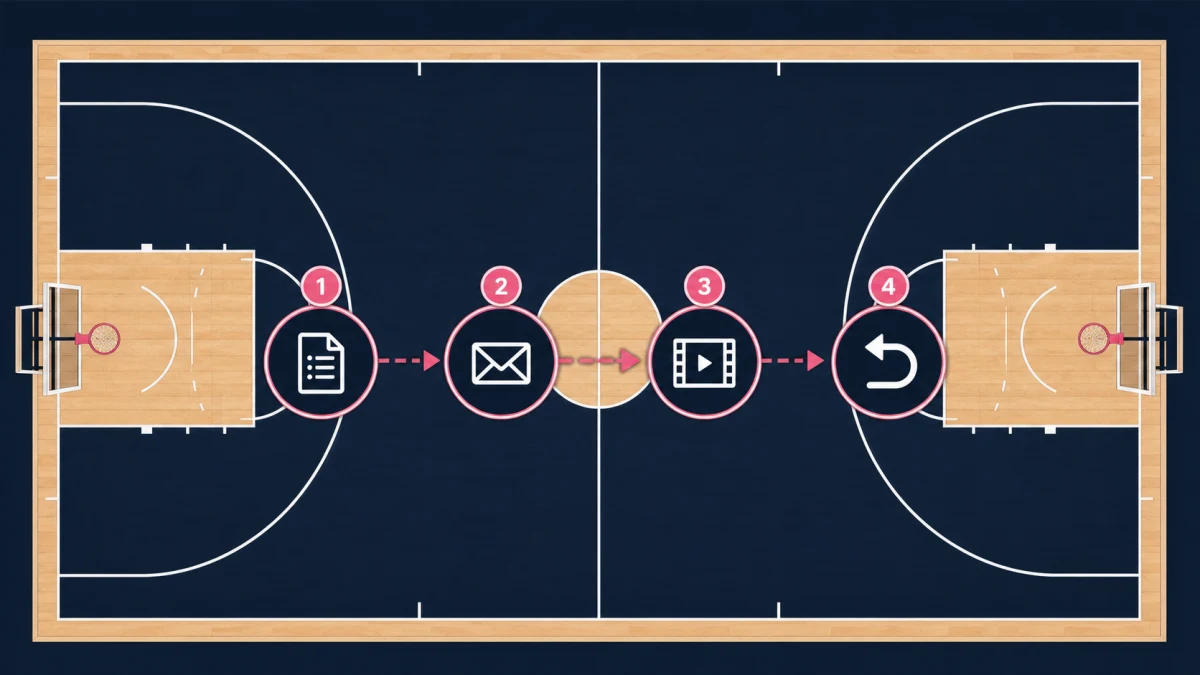
Recruiting services can be beneficial, but they should never be a replacement for personal outreach. Coaches want to hear directly from prospective student-athletes, and being your own advocate is the most effective way to show sincere interest in a program, especially if coaches do not have you on their radars early. To successfully navigate the college search, players can combine proactive, personalized outreach with adherence to NCAA rules. Start by completing the prospective student-athlete questionnaire, then follow up with a concise, bulleted email addressed to each staff member. Ensure your email contains your academic metrics, intended major, and a highlight video under 2 minutes.
Frequently asked questions
What should the subject line of a recruiting email include?
The subject should help a coach identify the player quickly, using details such as name, graduation year, position, and a relevant basketball or academic identifier. It should be specific and readable rather than written like a promotional slogan.
What belongs in the first email to a college basketball coach?
Introduce the player, explain the program-specific reason for writing, provide verified academic and basketball information, link concise game film, and include contact details and schedule. The message should make the next evaluation step easy.
When should a player follow up with a college coach?
Follow up when there is useful new information, such as updated film, a schedule, academic results, or a relevant event. Respect NCAA communication rules and avoid repeated messages that add no context or reason for the coach to respond.