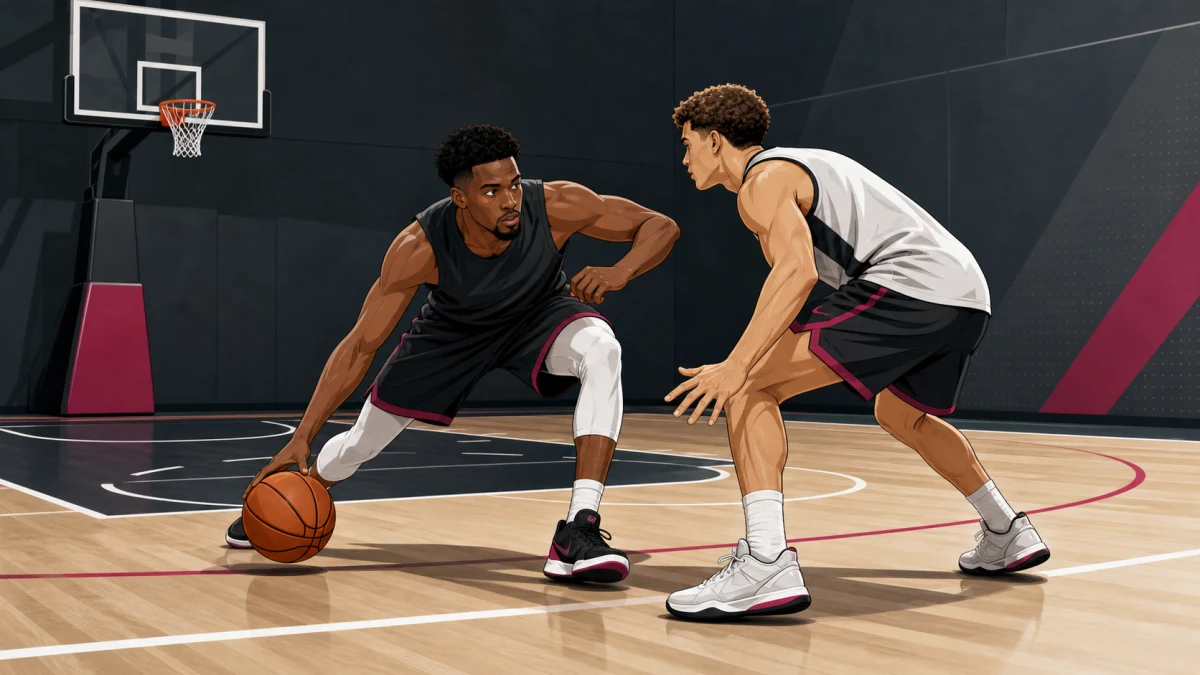

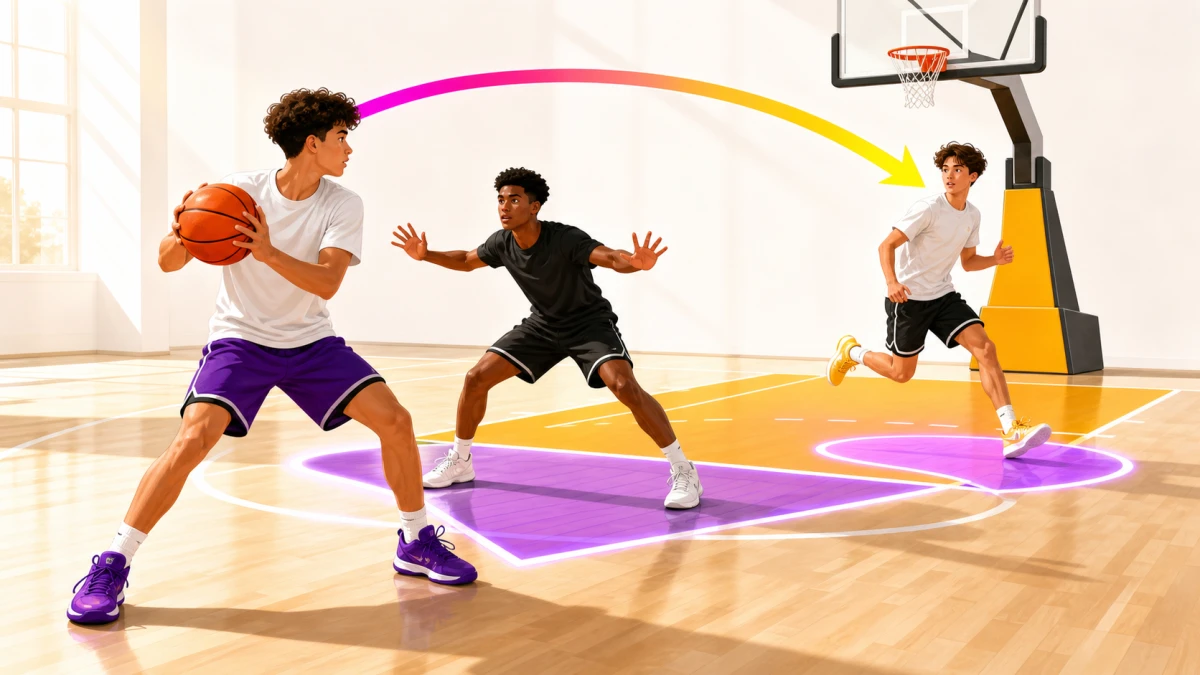
The short version: Build passing under pressure in layers. First protect balance, vision, targets, and accuracy. Then add a moving receiver, a guided defender, a shrinking window, and finally a live advantage game. Track whether the passer made a useful decision—not only whether the ball reached a teammate—and reduce the constraint when pressure destroys the skill you meant to train.
Key takeaways
- A balanced catch and ready stance buy the passer vision and options before pressure arrives.
- The receiver creates the passing window with spacing, pace, a clear target, and movement toward the ball.
- Teach the passer to see the receiver and defender, then use pivots, pass fakes, and angles to move the lane.
- Progress from guided pressure to live defense only when accuracy and decisions remain recognizable.
- Finish with advantage games that reward useful passes, not empty repetition, while accepting that one drill cannot guarantee game transfer.
What makes a pass work under pressure?
A pressured pass begins before the ball leaves the hands. The passer must catch in a position that preserves balance, vision, and more than one option. The WABC Level 1 manual describes a ready stance with feet a little wider than shoulder width, knees and hips flexed, weight balanced, head up, and hands ready. Those cues are not cosmetic. Straight legs, a dropped gaze, or weight drifting onto one foot adds a recovery movement before the player can pivot, fake, pass, or drive. WABC Coaching Manual — Level 1 how spacing creates room for the next decision
The receiver owns part of the solution. WABC asks players to show a target with their hands, stay ready to catch, and move to receive the ball. It also recommends introducing passing on the move quickly because basketball is dynamic. A passer cannot deliver to a window the receiver never creates; a receiver cannot rescue a late, floating ball simply by displaying a target after the defender has closed it. Level Up passing drills
What should the passer see before choosing a pass?
Train a simple scan: receiver, defender, next space. The receiver tells you where the target is moving. The defender tells you whether the direct lane is open, crowded, or baited. The next space tells you whether a pivot, pass fake, dribble escape, or reversal can improve the angle. WABC's passing-game questions ask players to see the positions of everyone on court, throw in front of a moving teammate, move toward the ball, and use a pivot or pass fake against pressure.
Do not preselect a pass type before reading the lane. A chest pass through an open torso-level window may be fastest. A bounce pass can travel under active hands when the floor lane is clean. An overhead or one-hand delivery may change the release point, but it is not automatically safer. The useful question is: which available path lets the receiver catch on time, on balance, and away from the defender? If no path meets that test, moving the defense is a better decision than forcing the rep.
How do you build pressure without breaking the skill?
- Foundation: catch on balance, show a target, and complete accurate passes while both players adjust their feet.
- Movement: lead a receiver cutting through a named window, first without a defender and then with a passive shadow.
- Guided defender: let the defender close one lane or apply contained ball pressure, so the passer must pivot or fake without facing every possible read.
- Timed read: give the receiver freedom to move and shorten the window only after the passer keeps posture and accuracy. Jr. NBA Starter Practice Plan 6 Jr. NBA All-Star Practice Plan 9
- Live advantage: play 2-on-1, 3-on-2, or another small-sided game in which the pass leads directly to an advantage, shot, or turnover.
Promote the activity when the player can repeat the intended behavior, not merely survive the clock. Look for a stable catch, eyes that leave the ball, a visible read of the defender, a pass that reaches the receiver's useful side, and a decision made before the window disappears. If live pressure turns every rep into a panic throw, widen the space, slow the defender, restore one dribble, or predetermine one closed lane. That is not making practice soft; it is keeping the constraint attached to the skill. how to progress drills without confusing difficulty with transfer
Which basketball passing-under-pressure drills fit each layer?
For an early live read, Jr. NBA's Pass Under Pressure Game uses three players in a small area. One defender pressures the dribbler, while a third player moves outside the area and signals for the ball. The passer must respond within two seconds. Completed passes score for the offense; steals and deflections score for the defense; roles rotate. The design creates a visible receiver cue and a bounded defender problem without adding five more players to the scan.
For timing against two defenders, Pressure Timing Bursts puts pressure on the ballhandler and a second defender on a cutter. The passer must deliver as the cutter reaches a wing window, and the receiver then has three dribbles to attack. That finish is important: the pass is judged by whether it creates a playable catch and advantage, not only by whether two hands touch the ball.
For group pressure, Jr. NBA's 1st to 50 removes dribbles and screens while two teams count completed passes. A steal, deflection, or turnover changes possession, and defenders are free to seek pressure. This is a demanding constraint. Use it after players can pivot, cut, replace, and create targets; otherwise the no-dribble rule can reward standing traps instead of the spacing and decisions you intended to teach. Jr. NBA MVP Practice Plan 6
| Activity | Primary read | Best adjustment |
|---|---|---|
| Pass Under Pressure | Ball pressure plus a moving target | Change area size or response time |
| Pressure Timing Bursts | Ball defender, cutter defender, and arrival window | Guide one defender before making both live |
| Partner Running Pass | Lead a moving teammate past a middle defender | Change required pass count or allow one dribble |
| 1st to 50 | Team spacing and continuous pressure | Lower the target or restore a limited dribble |
| 3-on-2 scramble | Find and keep a temporary advantage | Start defenders closer or farther from recovery |
How should you coach the passer and receiver?
- Passer: arrive balanced and see over the pressure before choosing the release.
- Passer: move the defender with your feet, eyes, ball position, or pass fake; do not throw through a lane just because the drill expects a pass.
- Receiver: change speed or direction, show a target, and meet the pass instead of waiting beside a defender.
- Both: communicate early enough that the target means something before the window closes.
- Coach: ask what the defender took away and where the next safe window appeared before prescribing a technique.
Keep feedback tied to the rep. “Faster” is vague; “your feet stopped before your eyes found the cutter” identifies a sequence. “Stronger pass” may miss the real problem; “the defender's top hand closed the chest lane, so your bounce window was late” connects perception to execution. Ask the player what they saw, then compare the answer with the video or the defender's position. The goal is not a memorized response but a more reliable read.
How do you measure progress—and what does not transfer automatically?
Track more than completions. Record useful catches, turnovers, deflections, late windows, and forced passes. A completion to a teammate who must jump backward into a trap is not equivalent to a pass that arrives on the move with an advantage. Jr. NBA activities model this difference by giving defenders points for deflections, connecting a timed catch to a three-dribble attack, or asking an advantage group to find the open player quickly.
No single constraint guarantees game transfer. A two-second signal drill can sharpen response timing, but a real possession may require refusing that target. A no-dribble game increases cutting and pivot pressure, but real offense includes purposeful dribbles and screens. Change partners, starting spots, defender behavior, space, and scoring outcomes over time. Then check whether the player recognizes similar information in small-sided play and games, rather than assuming success in one drill settled the skill.
Frequently asked questions
Should players pass faster under pressure?
They should decide early enough to use the window, but faster is not always better. A rushed pass before the receiver creates a target can be as poor as a late one. Build speed after the player can arrive balanced, locate the defender, and lead the receiver to a useful catch.
When should I add a live defender?
Add live defense when a guided version still preserves the skill you want: balanced catches, vision, target accuracy, and an identifiable lane decision. If the defender immediately produces blind throws on most reps, keep the defender but narrow the choices, reduce speed, or increase space before returning to fully live play.
Is a no-dribble passing game always realistic?
No. It is a constraint that amplifies pivoting, cutting, spacing, and ball pressure. Jr. NBA's 1st to 50 deliberately removes dribbles and screens, but normal basketball includes both. Use the game for its intended emphasis, then restore options in a later live phase.
Can one player train pressure passing alone?
A player can rehearse balance, pivots, pass fakes, wall targets, and passes off different footwork alone. True defender and window reads require at least a partner or a coach, and representative advantage play requires more players. Solo work prepares the tools; live partners supply the information that turns those tools into decisions.