
Versi singkat: Rencana offseason bola basket sekolah menengah harus menjawab lima pertanyaan: apa yang paling dibutuhkan pemain, apa yang dapat dilatih secara konsisten, bagaimana pekerjaan akan menjadi lebih representatif terhadap permainan, bagaimana kemajuan akan diperiksa, dan di mana pemulihan dilindungi? Mulailah dengan audit keterampilan dan gerakan, bangun dua atau tiga blok latihan terfokus, tambahkan keputusan langsung, dan jadwalkan minggu-minggu yang lebih ringan sebelum uji coba atau kompetisi.
Poin penting
- Gunakan minggu pertama untuk mengukur pergerakan saat ini, kontrol bola, keputusan menembak, dan peran dalam pertandingan daripada menebak dari klip sorotan.
- Pilih daftar prioritas yang sempit: satu keterampilan, satu keputusan, dan satu kualitas fisik untuk ditekankan pada satu waktu.
- Maju dari repetisi yang bersih ke tangkapan yang bervariasi, tekanan, dan permainan skala kecil sebelum mengharapkan hasil latihan terlihat dalam pertandingan.
- Lindungi istirahat, pilihan multi-olahraga, tuntutan sekolah, dan sinyal nyeri; jadwal yang lebih padat tidak secara otomatis menjadi rencana yang lebih baik.
Mulai dengan evaluasi jeda musim
Tuliskan peran yang ingin dicapai pemain dan bukti yang dibutuhkan peran tersebut. Seorang guard mungkin perlu mengatasi tekanan, membuat umpan keuntungan sederhana, dan bertahan di titik serangan. Seorang wing mungkin perlu membuat tembakan terbuka, melakukan cut dengan timing yang tepat, melakukan closeout dengan terkontrol, dan menyelesaikan drive lurus. Seorang pemain post mungkin perlu melakukan rebound di tengah keramaian, mengumpan keluar dari area kunci, dan bertahan di ruang tanpa melakukan foul. Peran tersebut menentukan apa yang harus diukur.
Kurikulum Pengembangan Pemain USA Basketball mengorganisir pengembangan seputar penguasaan gerakan dan keterampilan bola basket di berbagai tingkat progresif. Gunakan itu sebagai pembatas terhadap rencana yang hanya berdasarkan usia. Dua pemain di kelas yang sama dapat membutuhkan titik awal yang berbeda karena kosakata gerakan, kontrol bola, pengalaman, dan akses latihan mereka berbeda.
Catat baseline kecil: sepuluh tembakan dari dua titik yang relevan dengan permainan, urutan dribbling pendek dengan kedua tangan, tiga keputusan penyelesaian, beberapa defensive slide dan closeout, dan satu segmen langsung atau terpandu. Catat apa yang terjadi, bukan hanya hasilnya. Apakah pemain kehilangan bola saat arah berubah? Apakah kaki tiba sebelum tangkapan? Apakah closeout berhenti di bawah kendali? Bisakah pemain melihat rekan setim saat melakukan drive?
Pilih prioritas yang sesuai dengan kalender
Batasi blok pertama pada sejumlah kecil prioritas. Templat yang berguna adalah satu keterampilan teknis, satu keputusan permainan, dan satu kualitas fisik. Contoh: kontrol tangan kiri, pembacaan operan-atau-selesaikan pada drive tengah, dan pengkondisian upaya berulang. Pemain yang berbeda mungkin membutuhkan footwork menembak, keputusan closeout, dan kontrol pendaratan.
Tulis prioritas sebagai tindakan yang dapat diamati: “tangkap siap dan tembak tanpa menggeser kaki,” “pertahankan dribel tetap hidup melewati pemain bertahan kedua,” atau “selesaikan closeout dengan dada menghadap lurus dan berhenti terkontrol.” Hindari tujuan yang terlalu luas untuk diperiksa, seperti “menjadi pemain yang lebih baik.” Versi yang dapat diamati memberi tahu pemain, pelatih, dan orang tua apa yang harus diperhatikan dalam satu repetisi.
Kurikulum instruksional Jr. NBA diatur dalam level dan rencana latihan daripada satu sesi universal untuk setiap pemain. Penyertaan permainan, aktivitas kecil, permulaan acak, pembebanan dan pelepasan beban, serta pengambilan keputusan mendukung prinsip offseason yang praktis: jaga keterampilan target tetap terlihat, tetapi variasikan situasi di sekitarnya.
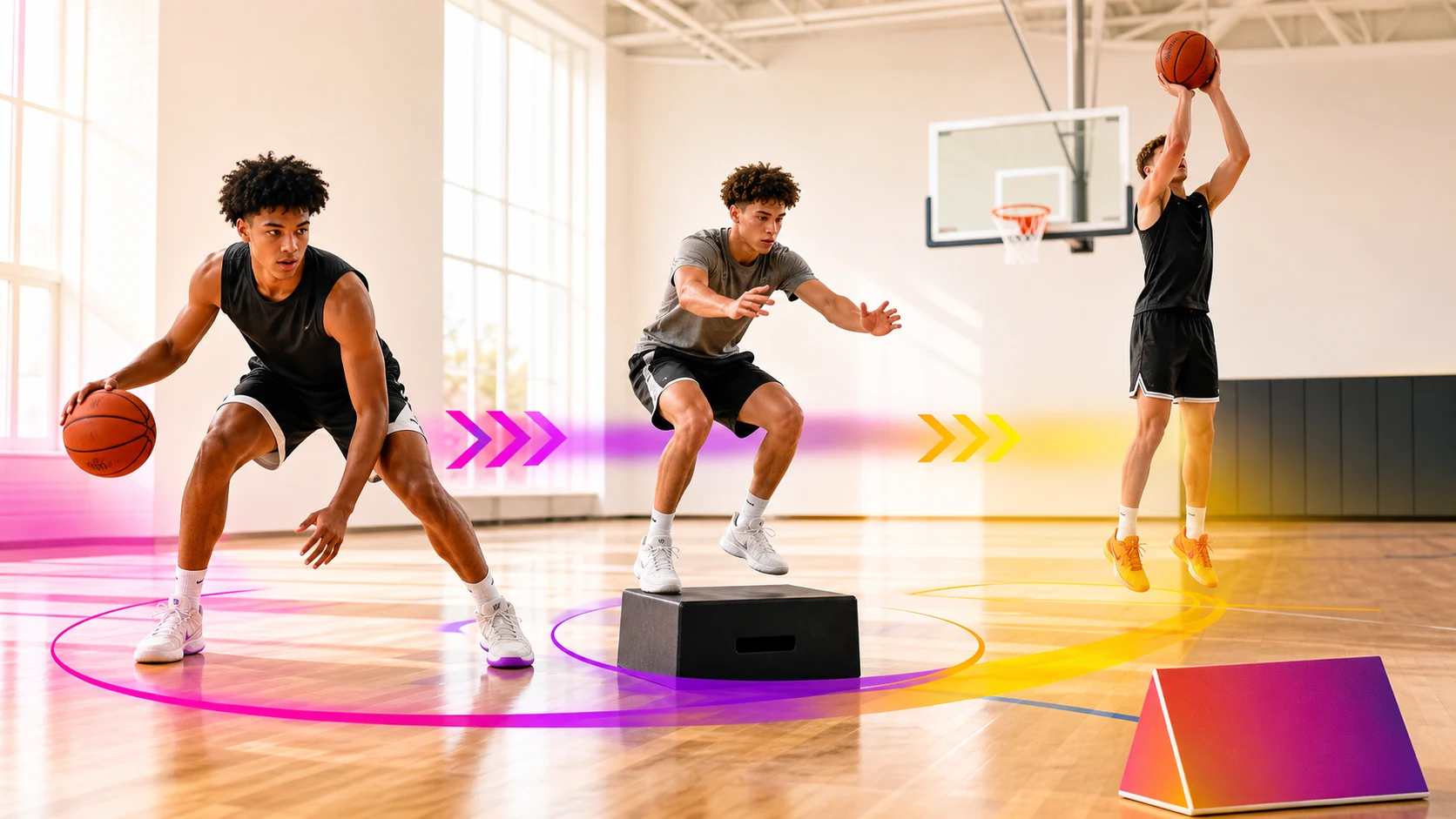
Gunakan progresi empat fase
- Kalibrasi: tetapkan gerak kaki, posisi tangan, postur, dan jalur bola tanpa terburu-buru.
- Variasikan: ubah tangkapan, arah, kecepatan, posisi awal, atau penyelesaian sambil mempertahankan keputusan yang sama.
- Tekanan: tambahkan pemain bertahan, batas waktu, closeout, atau rekan setim yang aktif yang bisa membuat tindakan selanjutnya tidak pasti.
- Penerapan: gunakan permainan skala kecil dan lima lawan lima untuk menguji apakah pemain mengenali isyarat saat lapangan ramai.
Jangan langsung beralih ke tekanan hanya karena terlihat lebih kompetitif. Jika pemain tidak dapat menjelaskan gerakan atau keputusan yang ditargetkan, pemain bertahan hanya akan menambah gangguan. Jika pemain dapat melakukan repetisi yang sudah dilatih tetapi membeku saat isyarat berubah, blok berikutnya membutuhkan variabilitas dan persepsi, bukan hanya lebih banyak repetisi.
Struktur Mingguan yang Sederhana
Jadwalkan latihan sesuai dengan kehidupan nyata pemain. Contoh minggu mungkin mencakup dua sesi latihan keterampilan terfokus, satu sesi kekuatan atau gerakan yang diawasi oleh orang dewasa yang berkualifikasi saat melibatkan beban, satu sesi permainan kecil atau pickup, dan setidaknya satu hari istirahat penuh. Pemain dengan latihan tim, turnamen, pekerjaan, atau olahraga lain mungkin membutuhkan volume basket yang lebih sedikit, bukan lebih banyak.
| Hari | Penekanan | Apa yang harus direkam |
|---|---|---|
| Senin | Kalibrasi keterampilan ditambah tembakan terkontrol atau penguasaan bola | Isyarat teknik dan pola tembakan meleset atau turnover |
| Selasa | Pemulihan, mobilitas, sekolah, atau olahraga lain | Pengecekan Energi dan Nyeri Otot |
| Rabu | Latihan pengambilan keputusan dengan rekan atau pemain bertahan terarah | Pembacaan yang benar, bukan hanya tembakan masuk |
| Kamis | Kekuatan, pergerakan, atau pengkondisian ringan | Kualitas gerakan dan dosis yang diselesaikan |
| Jumat | Permainan kecil atau permainan kecepatan pertandingan | Apakah tindakan target muncul secara langsung? |
| Sabtu | Latihan keterampilan ringan opsional atau kompetisi | Kesenangan, peran, dan biaya pemulihan |
| Minggu | Istirahat total atau aktivitas non-bola basket | Kondisi siap untuk minggu depan |
Ini adalah kerangka perencanaan contoh, bukan resep universal. Beban yang tepat berubah seiring usia, riwayat latihan, kesehatan, sekolah, kompetisi, dan akses kepelatihan.
Bangun dasar-dasar basket
Untuk ball handling, pasangkan gerakan terkontrol dengan keputusan langsung. Mulai dengan latihan perubahan arah dengan kecepatan yang menjaga bola tetap terlindungi, lalu tambahkan isyarat untuk menolak, berhenti, mengumpan, atau menyelesaikan. Untuk menembak, mulai dengan tangkapan yang stabil dan pelepasan yang seimbang, lalu variasikan lokasi umpan dan tambahkan relokasi atau closeout. Untuk penyelesaian, ubah sisi take-off, posisi tubuh, dan sudut pemain bertahan alih-alih mengulang satu layup yang identik.
Untuk pertahanan, latih tiga langkah pertama dari closeout, posisi setelah pengereman, dan keputusan slide atau contain berikutnya. Kemudian tambahkan pengatur bola yang bisa melakukan drive, operan, atau pull up. Untuk pengkondisian, gunakan interval yang menyerupai peran pemain—akselerasi pendek, perubahan arah, dan pemulihan yang tidak lengkap—sambil melindungi kualitas gerakan. Blok pengkondisian yang membuat setiap pengulangan keterampilan berikutnya menjadi ceroboh mungkin berada di tempat yang salah dalam sesi tersebut.
Gunakan perpustakaan program latihan Level Up untuk memilih struktur awal, lalu sesuaikan dosisnya dengan pemain dan hari itu. Halaman ini adalah titik awal; audit menentukan isyarat dan keputusan mana yang paling membutuhkan perhatian.
Mengukur kemajuan tanpa terpaku pada satu angka
Ulangi baseline kecil yang sama setiap tiga atau empat minggu. Jaga pengaturan tetap konsisten untuk perbandingan: titik yang sama, jenis umpan yang sama, ruang yang sama, dan kelelahan yang serupa. Catat tembakan masuk, tetapi juga catat tembakan meleset pendek atau panjang, turnover, keseimbangan, keputusan yang benar, dan apakah pemain dapat menjaga pandangan ke atas. Skor yang lebih rendah dengan keputusan yang lebih baik mungkin merupakan sinyal latihan yang lebih berguna daripada skor tinggi dari pola yang tidak terkontes.
Gunakan video secara selektif. Satu sudut pandang depan atau samping dapat menunjukkan apakah kaki tiba tepat waktu, apakah pemain tetap seimbang, atau apakah closeout terkontrol. Jangan anggap rekaman ponsel sebagai pengukuran biomekanika yang lengkap. Tujuannya adalah untuk membuat pertanyaan kepelatihan berikutnya lebih jelas.
Jaga pemulihan dan keselamatan
American Academy of Pediatrics menjelaskan bahwa atlet muda terpapar risiko penggunaan berlebihan (overuse) ketika aktivitas berulang tidak diimbangi dengan pemulihan yang cukup, dan merekomendasikan waktu istirahat dari olahraga tertentu. Panduan pencegahan cedera olahraga remaja mereka mencakup setidaknya satu hari libur per minggu dan setidaknya satu bulan istirahat dari latihan dalam olahraga tertentu setiap tahun. Perlakukan hal tersebut sebagai panduan keluarga dan medis untuk didiskusikan dengan dokter, pelatih, dan jadwal pemain—bukan sebagai izin untuk berlatih dalam rasa sakit.
Panduan NCAA tentang cedera berlebihan dan periodisasi juga menekankan kesinambungan pengembangan yang aman dan memperingatkan terhadap spesialisasi satu olahraga terlalu dini. Offseason sekolah menengah dapat mencakup bola basket, latihan kekuatan, olahraga lain, permainan keterampilan, dan istirahat yang sesungguhnya. Jika muncul rasa sakit, bengkak, ketidakstabilan, penyakit, atau perubahan gerakan yang signifikan, hentikan aktivitas dan cari nasihat medis yang sesuai.
Rencanakan mundur dari seleksi pemain
Dalam dua minggu terakhir sebelum seleksi atau periode tim baru, pertahankan keputusan bernilai tinggi tetapi kurangi volume yang tidak perlu. Latih peran: bertahan, lakukan operan ekstra, sprint ke ruang kosong, berkomunikasi, rebound, dan ambil tembakan terbuka tanpa memaksakan permainan sorotan. Bangun satu atau dua sesi kecepatan permainan singkat dan sisakan ruang agar pemain merasa segar.
Seminggu sebelum evaluasi, periksa prioritas yang sama dari audit pertama. Bisakah pemain menyebutkan isyarat, melakukan tindakan di bawah tekanan ringan, dan mengulanginya saat lelah tanpa gerakan yang berantakan? Jika tidak, pertahankan target yang sempit. Jangan mencoba memperbaiki setiap kelemahan sekaligus.
Pasangkan rencana ini dengan latihan lompat rebound basket untuk blok kekuatan yang berbeda, atau gunakan latihan bentuk permainan ketika rencana membutuhkan pengkondisian upaya berulang. Jaga rencana tetap realistis: latihan yang tepat adalah latihan yang dapat dilakukan pemain dengan isyarat yang dimaksudkan dan pulih darinya.
Pertanyaan yang sering diajukan
Berapa hari per minggu seharusnya pemain SMA berlatih di luar musim?
Tidak ada satu angka yang benar. Mulai dengan jadwal pemain saat ini, riwayat latihan, kompetisi, olahraga lain, tuntutan sekolah, dan pemulihan. Contoh minggu dapat mencakup dua sesi keterampilan terfokus, satu sesi gerakan atau kekuatan, satu paparan permainan langsung, dan setidaknya satu hari istirahat penuh, kemudian sesuaikan dari respons pemain.
Haruskah latihan di luar musim fokus pada kelemahan atau kekuatan?
Gunakan keduanya, tetapi pertahankan daftar prioritas yang sempit. Seorang pemain membutuhkan latihan yang cukup pada keterampilan atau keputusan yang membatasi untuk membuatnya dapat digunakan, sementara kekuatan yang relevan dengan peran masih membutuhkan pemeliharaan dan aplikasi langsung. Audit pertama harus menentukan keseimbangan.
Apa yang harus dilakukan pemain jika latihan di luar musim menyebabkan nyeri?
Hentikan aktivitas itu dan jangan berlatih saat merasakan sakit. Rasa sakit, bengkak, ketidakstabilan, penyakit, atau perubahan signifikan dalam gerakan memerlukan panduan medis yang tepat. Seorang pelatih atau orang tua dapat membantu menyesuaikan rencana, tetapi seorang profesional medis harus menangani masalah cedera.