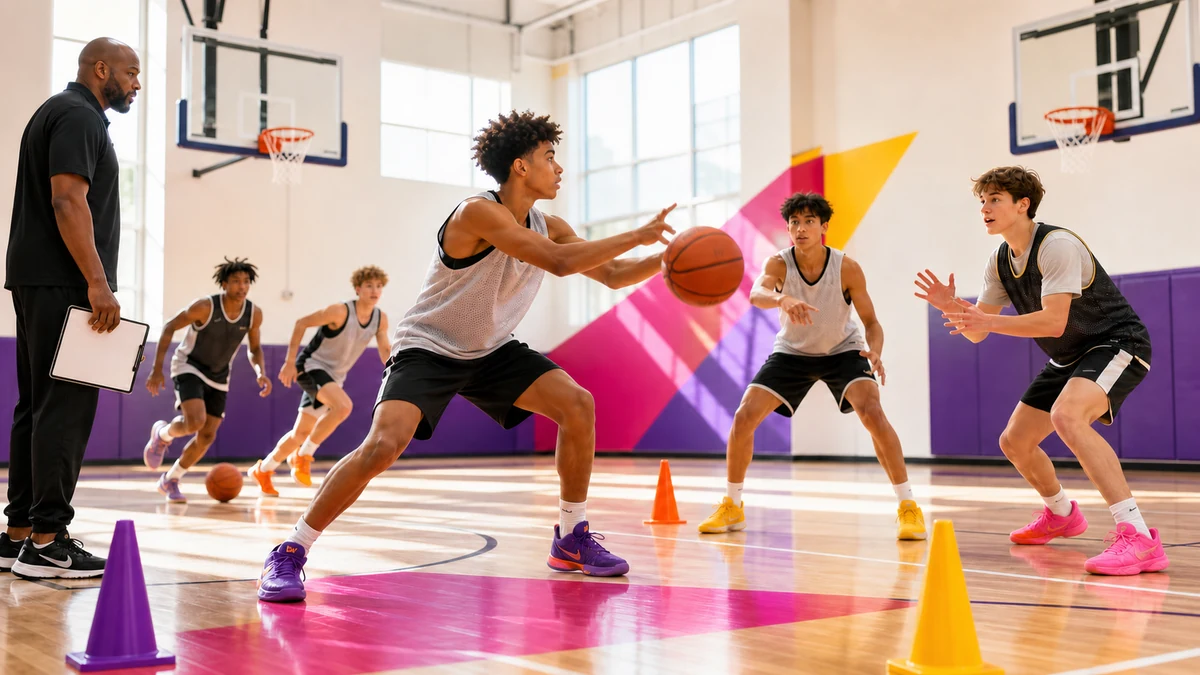
The short version: Confirm dates, forms, eligibility, medical requirements, equipment, and school rules first. Then train observable actions: handle pressure, pass on time, shoot and finish from realistic spots, defend, rebound, communicate, transition, and respond to instruction. Use small-sided play to test decisions, taper the last hard sessions, and protect sleep. No plan guarantees a roster place because each staff owns its criteria and selection.
Key takeaways
- Clear every school, state, medical, and registration requirement before treating basketball work as the only preparation.
- Build from a simple self-audit across ball handling, shooting, passing, footwork, rebounding, offense, and defense.
- Use live, short-sided play so technique must survive decisions, teammates, defenders, and transitions.
- Communication, role discipline, effort, and response to coaching are visible team behaviors—not slogans to save for tryout day.
- Arrive recovered: more last-minute volume is not automatically more readiness, and preparation cannot guarantee a roster decision.
What should you confirm before training for tryouts?
Ask the school or athletic department for the official tryout dates, grade and enrollment rules, registration steps, required forms, academic eligibility process, equipment policy, and contact person. Do not assume a teammate's checklist applies to you. NFHS notes that the timing and frequency of preparticipation evaluations vary and that schools should follow state guidelines. The coaching staff also controls its own selection criteria, roster size, and schedule, so only that program can answer program-specific questions. NFHS — The Pre-participation Evaluation of High School Athletes
Handle the sports physical early rather than during the final week. NFHS describes the preparticipation evaluation as a medical-history assessment plus a physical exam and says it is best completed with enough lead time for follow-up, often around six weeks before the season. A player with symptoms, an unresolved injury, or a clearance question should follow the clinician and school's process. A training article cannot clear an athlete to participate.
What skills are coaches able to see in a tryout?
Build a one-page audit instead of guessing which trick will impress a coach. USA Basketball separates player development into ball handling, footwork and body control, passing and receiving, rebounding, screening, shooting, team defense, and team offense. Jr. NBA's Starter and All-Star checklists follow the same broad idea: coaches assess a range of individual and team skills, and the coach judges proficiency. A tryout can sample only part of that range, but preparation should not collapse into shooting alone. USA Basketball Player Development Curriculum Jr. NBA Starter Practice Plan 6 Jr. NBA All-Star Practice Plans and Skills Checklist Level Up's basketball drill library
| Area | Observable tryout actions | Preparation check |
|---|---|---|
| Ball control | Advance, stop, change direction, and protect under pressure | Can both hands solve a simple defender problem? |
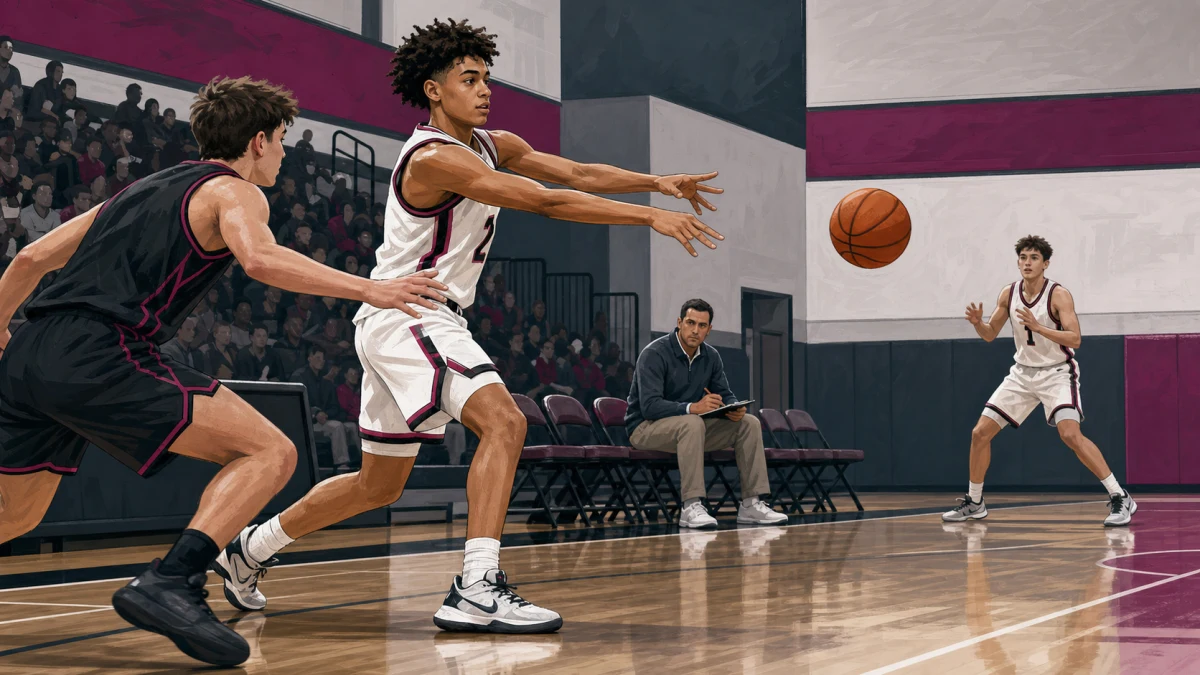
| Passing | See an open teammate, deliver on time, and relocate | Does the pass create a useful next action? |
| Shooting and finishing | Arrive balanced and choose realistic attempts | Do feet and shot selection remain stable at pace? |
| Defense and rebounding | Contain, communicate, pursue, and finish the possession | Do you find a player and the ball after the shot? |
| Team offense | Space, cut, screen, and keep advantages moving | Can you help without needing every touch? |
How should you build a four-week tryout plan?
USA Basketball's curriculum is organized into four development levels based on mastery rather than age or grade alone. It recommends starting with the simplest drill needed to assess performance and progressing when mastery justifies the change. Apply that logic within your own level: clean up a basic stop before adding a defender, stabilize the pass before shrinking its window, and show control at practice speed before chasing a test result at maximum pace. how to progress drills toward game transfer
- Week 1 — audit: film simple reps in each major category, note the two largest breakdowns, and confirm every school requirement.
- Week 2 — build: repeat the target technique with clear standards, then add movement, a partner, or a guided defender. Jr. NBA Instructional Curriculum
- Week 3 — compete: use one-on-one, two-on-two, three-on-three, transition, and advantage starts so decisions and communication become visible.
- Week 4 — rehearse and taper: run short tryout-like blocks, keep the best cues, reduce unnecessary extra volume, and finish administrative checks. NBA and USA Basketball Youth Basketball Guidelines
How do you train decisions instead of isolated moves?
A move against air proves that you can reproduce a pattern. A tryout asks whether you can use, reject, or replace that pattern while the floor changes. The updated Jr. NBA curriculum emphasizes small-sided games, unpredictable starts, adjustable difficulty, and decision-making. Use those tools deliberately: start two-on-one with a temporary advantage, play one-on-one from a closeout, or make a three-on-three possession begin after a rebound. Each constraint should expose a choice that may appear in the tryout.
Keep the game small enough that repetitions are frequent and responsibility is obvious. In two-on-two, a player cannot hide spacing, screening, help, or a late pass behind eight other bodies. In controlled five-on-five, Jr. NBA uses short four-minute games and allows a coach to stop play for a teaching point. Copy the learning structure, not a fake prediction of the exact tryout: compete hard, accept correction, restart quickly, and show the next possession has changed.
Which team behaviors matter at a tryout?
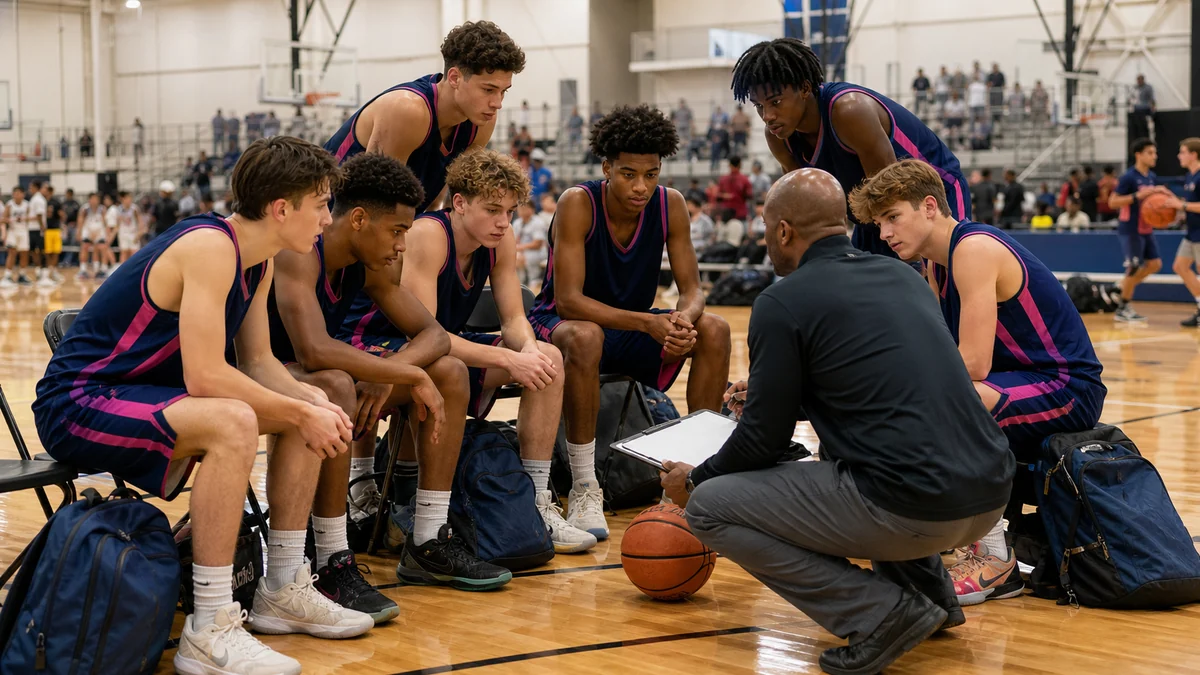
Communication must carry information. Call a screen early, name the ball in transition, point to a matchup, signal help, and tell a teammate where the next pass is available. Jr. NBA connects teammate respect with communication and willingness to sacrifice for the team. Its MVP responsibility lesson adds maximum effort, filling roles needed for team success, and upholding team culture. Those ideas become visible when a player sprints back after a turnover, makes the extra pass, boxes out without receiving credit, and stays engaged between repetitions. Jr. NBA MVP Practice Plan 1
- Listen to the full instruction before entering the line; ask one concise question when the assignment is genuinely unclear.
- Make the next rep reflect the correction instead of explaining why the previous rep failed.
- Run to spots, rotate lines, return balls, and help the drill function even when you are not being evaluated with the ball.
- Compete without blaming teammates, officials, or the drill design; a coach can see both effort and emotional control.
How should you condition and recover before tryouts?
Conditioning should resemble basketball: accelerations, stops, lateral movement, jumps, short recoveries, and skill decisions under fatigue. It should not become a punishment that erases technique every day. NBA and USA Basketball's youth guidelines recommend at least one rest day per week for grades 9–12 and caution against dense schedules. Use hard days with a purpose, separate them with appropriate recovery, and do not stack extra teams, games, and workouts merely because tryouts are close.
Protect sleep as part of the plan. Both the NBA/USA Basketball youth guidelines and CDC's student guidance list 8–10 hours for high-school-age teens. The final nights are not the time to trade sleep for another exhausted shooting session. Pack shoes, water, required forms, and any school-approved equipment early; eat and hydrate according to the routines that already work for you; and follow medical guidance for any injury or illness. CDC — Sleep and Health
Frequently asked questions
How early should I start preparing for basketball tryouts?
Four focused weeks can organize existing skills and habits, but longer development is better than a cram. Start administrative and medical checks even earlier: NFHS says a preparticipation evaluation is best scheduled with time for follow-up, often about six weeks before the season. Confirm the actual deadlines with your school because state and local requirements vary.
What should I practice most before a high school tryout?
Prioritize the largest gap revealed by a broad audit, while maintaining the fundamentals every possession needs: ball control, passing, footwork, shooting and finishing, defense, and rebounding. USA Basketball's mastery model supports starting with a simple assessment and progressing when the skill is stable. Add live decisions after the technique is recognizable.
Should I do a hard workout the day before tryouts?
Usually, the day before is better used for a short familiar tune-up than an unfamiliar maximum-load session. NBA and USA Basketball recommend regular rest for high-school players and warn about dense schedules. Follow your established plan, protect sleep, and avoid trying to gain conditioning in one day. If a coach or clinician has given you specific instructions, follow those instead.
Can good preparation guarantee that I make the team?
No. Each school and coaching staff controls its roster, selection criteria, team needs, and eligibility process. Preparation can improve how clearly you show current skills, decisions, effort, communication, and response to coaching. It cannot promise an outcome or reveal criteria the program has not published. Ask the school for official information and focus your work on the controllable behaviors in front of you.