
The short version: Traveling is defined as progressing in any direction while in possession of the ball in excess of prescribed limits. The rule outlines specific requirements for the gather, step counts, and pivot foot restrictions.
Key takeaways
- The gather is the exact point where a player gains enough control to hold, change hands, pass, shoot, or cradle the ball.
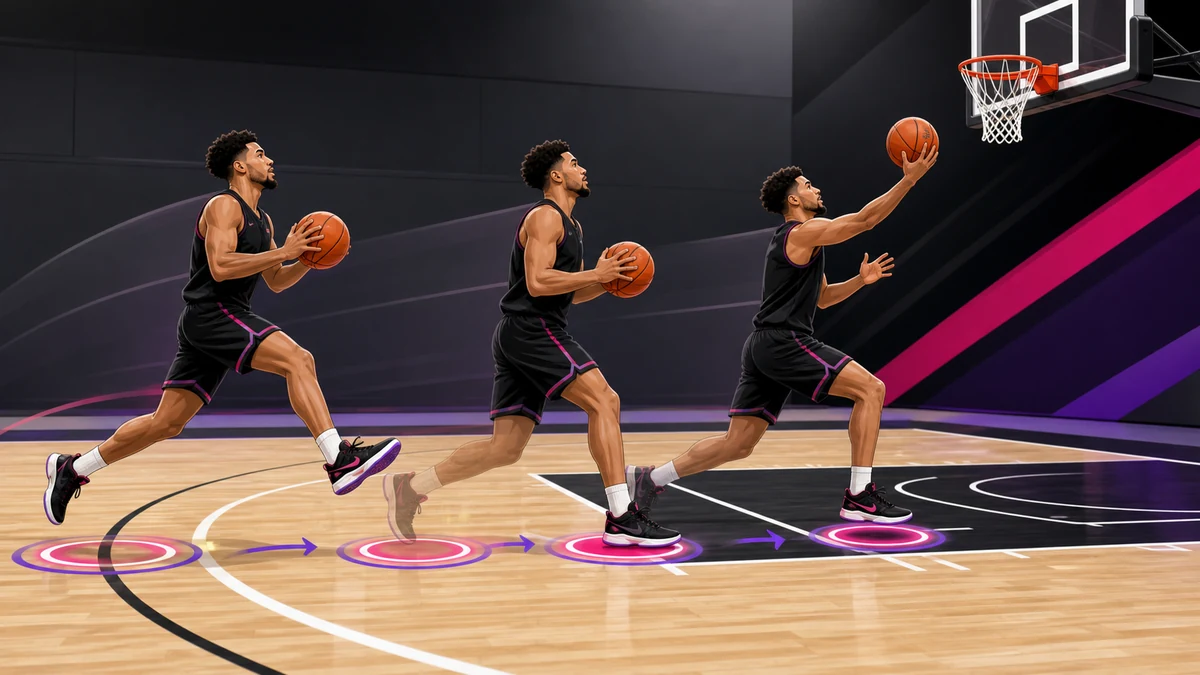
- A progressing player who gathers the ball may take two legal steps to come to a stop, pass, or shoot.
- When starting a dribble from a standstill, the ball must leave the hand before the pivot foot is raised.
- A player who jumps off one foot on step one can land on both feet simultaneously but cannot pivot.
- If an opponent firmly grabs the ball during a continuous drive, extra steps are ruled a jump ball under FIBA rules.
What Is Traveling and How Is the Gather Defined?
According to RULE NO. 4: Definitions | NBA Official, traveling is defined as progressing in any direction while in possession of the ball, which is in excess of prescribed limits. RULE NO. 4: Definitions | NBA Official
According to RULE NO. 4: Definitions | NBA Official, for a player who receives the ball via a pass or gains possession of a loose ball, the gather is defined as the point where the player gains enough control of the ball to hold it, change hands, pass, shoot, or the player cradles the ball against his body.
According to RULE NO. 4: Definitions | NBA Official, for a player who is in control of the ball while dribbling, the gather is defined as the point where a player puts two hands on the ball, or otherwise permits the ball to come to rest, while he is in control of it.
According to RULE NO. 4: Definitions | NBA Official, for a player who is in control of the ball while dribbling, the gather is also defined as the point where a player puts a hand under the ball and brings it to a pause. Additionally, the gather is completed when the dribbling player otherwise gains enough control of the ball to hold it, change hands, pass, shoot, or the player cradles the ball against his body.
How Many Steps Can a Player Take After the Gather?
According to RULE NO. 10: Violations and Penalties | NBA Official, a player who gathers the ball while progressing may take two steps in coming to a stop, passing or shooting the ball. RULE NO. 10: Violations and Penalties | NBA Official
According to RULE NO. 10: Violations and Penalties | NBA Official, a player who gathers the ball while dribbling may take two steps in coming to a stop, passing, or shooting the ball.
According to RULE NO. 10: Violations and Penalties | NBA Official, a player who gathers the ball while progressing, if he has not yet dribbled, may take one step prior to releasing the ball.
According to RULE NO. 10: Violations and Penalties | NBA Official, to count these steps, the rules define exactly when each step occurs. The first step occurs when a foot, or both feet, touch the floor after gaining control of the ball. Following this initial contact, the second step occurs after the first step when the other foot touches the floor, or both feet touch the floor simultaneously.
What Are the Rules Governing the Pivot Foot?
According to RULE NO. 4: Definitions | NBA Official, a pivot takes place when a player, who is holding the ball, steps once or more than once in any direction with the same foot, with the other foot (pivot foot) in contact with the floor. triple threat position
According to RULE NO. 10: Violations and Penalties | NBA Official, the rules specify how a player may establish their pivot foot based on how they receive the ball. Under NBA rules, a player who receives the ball while standing still may pivot, using either foot as the pivot foot. Additionally, a player who comes to a stop on step one when both feet are on the floor or touch the floor simultaneously may pivot using either foot as his pivot.
According to RULE NO. 10: Violations and Penalties | NBA Official, a player who lands with one foot first may only pivot using that foot. basketball footwork drills
How Do You Legally Start a Dribble and Lift the Pivot Foot?
According to RULE NO. 10: Violations and Penalties | NBA Official, in starting a dribble after receiving the ball while standing still, or coming to a legal stop, the ball must be out of the player’s hand before the pivot foot is raised off the floor. basketball training workouts
According to RULE NO. 10: Violations and Penalties | NBA Official, if a player, with the ball in his possession, raises his pivot foot off the floor, he must pass or shoot before his pivot foot returns to the floor. Furthermore, if a player drops the ball while in the air after raising his pivot foot, he may not be the first to touch the ball.
How Do Jump Stops and Simultaneous Landings Work?
According to RULE NO. 10: Violations and Penalties | NBA Official, a progressing player who jumps off one foot on the first step may land with both feet simultaneously for the second step. In a situation where a progressing player jumps off one foot on the first step and lands with both feet simultaneously for the second step, the player may not pivot with either foot.
According to RULE NO. 10: Violations and Penalties | NBA Official, if a player jumps with both feet from step one, he must release the ball before either foot touches the floor. Additionally, if one or both feet leave the floor after landing with both feet simultaneously on the second step, the ball must be released before either returns to the floor.
What Are Common Traveling Violations and FIBA Exceptions?
According to RULE NO. 10: Violations and Penalties | NBA Official, under NBA rules, a player who falls to the floor while holding the ball, or while coming to a stop, may not gain an advantage by sliding. Additionally, upon ending his dribble or gaining control of the ball, a player may not touch the floor consecutively with the same foot, an action commonly referred to as a hop.
According to FIBA Official Rules, a held ball occurs when one or more players from opposing teams have one or both hands firmly on the ball so that neither player can gain control of the ball without undue roughness. If a player with the ball in the hands is in the continuous motion to the basket to score and an opponent places hands firmly on the ball, taking more steps than allowed by the traveling rule is interpreted as a jump ball situation. FIBA Official Rules 2024 Obri V10A
About Level Up Basketball
Frequently asked questions
What is the gather step in basketball?
The gather is the point when a moving player gains control of the ball strongly enough for the rulebook's step count to begin. Identifying that moment is essential because movement before and after control is not judged the same way.
Why do NBA and FIBA traveling calls sometimes look different?
Their rule language and interpretations are not identical, and visual clips can hide the exact moment of control. A move should be evaluated under the competition's rulebook rather than by assuming every league counts the sequence the same way.
Can a player lift the pivot foot before passing or shooting?
A player may lift the pivot foot to pass or shoot, but the ball must be released before that foot returns to the floor. Starting a dribble has a different restriction, so the action after the pivot matters.