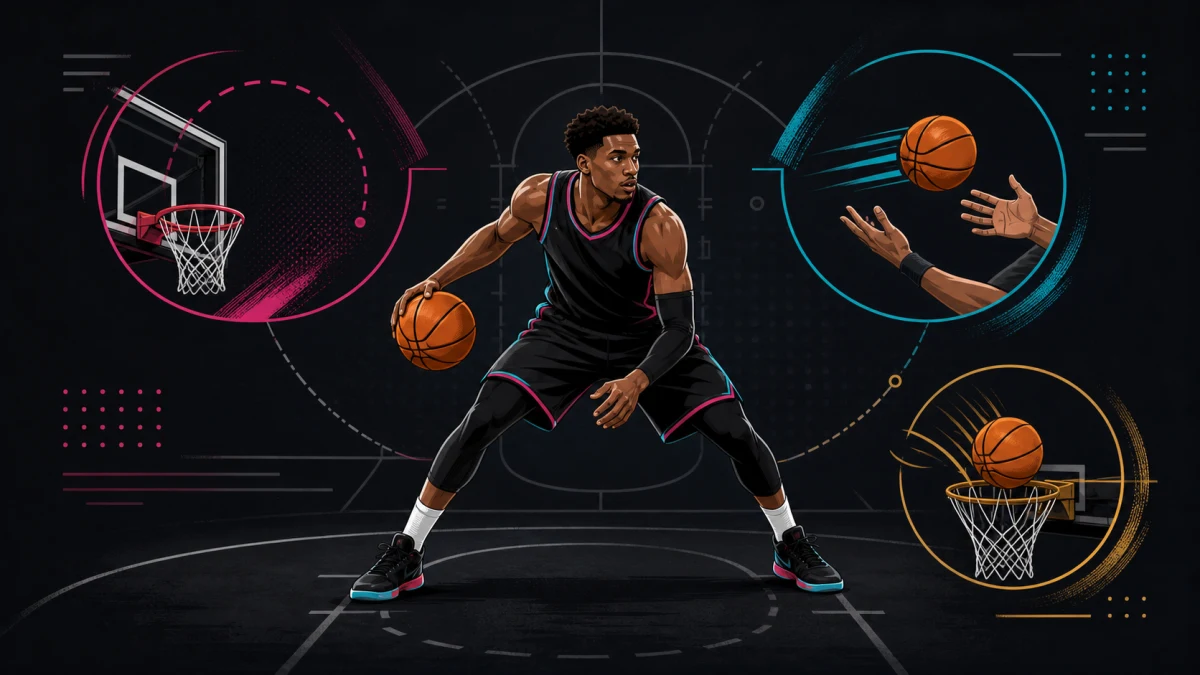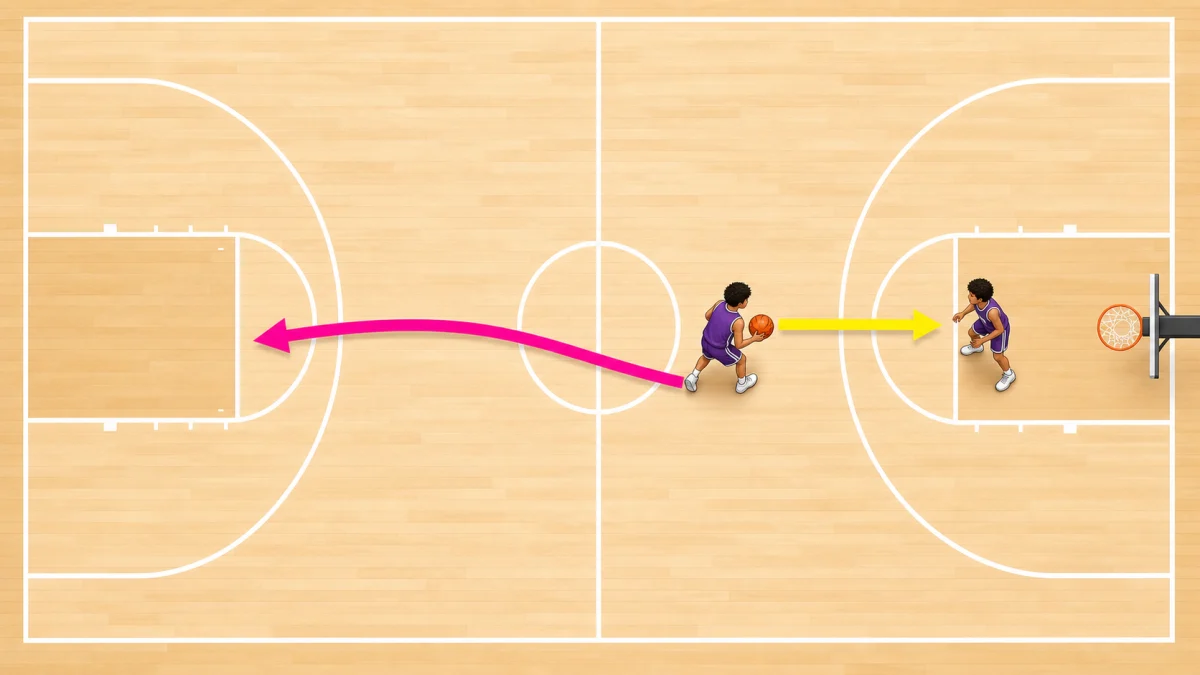

The short version: The triple threat is the ideal athletic stance when holding the ball, allowing players to shoot, pass, or dribble while maintaining legal pivot foot control.
Key takeaways
- The triple threat is the ideal athletic stance for players to stand in when they have the ball.
- It is named the triple threat because players are a threat to shoot, pass, or dribble.
- The stance requires bent knees and feet placed slightly wider than shoulder width apart.
- Pivoting is defined as when a player stands still and steps with one foot.
- The triple threat position provides a player with options to pass, shoot, or dribble.
What is the Triple Threat Position?
The triple threat is the ideal athletic stance for players to stand in when they have the ball. When a player receives a pass or catches the basketball, establishing this specific posture is considered the standard for offensive readiness. It serves as the primary base from which all subsequent individual offensive actions are initiated. By adopting this stance, the player positions themselves in a highly functional manner that is widely recognized across all levels of basketball as the optimal way to stand while holding the ball. This athletic stance is designed to provide immediate stability, control, and readiness. Rookie Practice Plans - NBA.com: Jr. NBA
The triple threat position is named as such because players are a threat to shoot, pass, or dribble. This terminology directly reflects the three distinct offensive options that are simultaneously available to the player from this single stance. Because the defender must guard against all three possibilities, the player holding the ball becomes a highly versatile threat. The name itself highlights the strategic advantage of keeping the defense guessing, as the player can transition into a shot, execute a pass to a teammate, or begin a dribble to drive past their defender.
Swipe sideways to explore the full diagram.
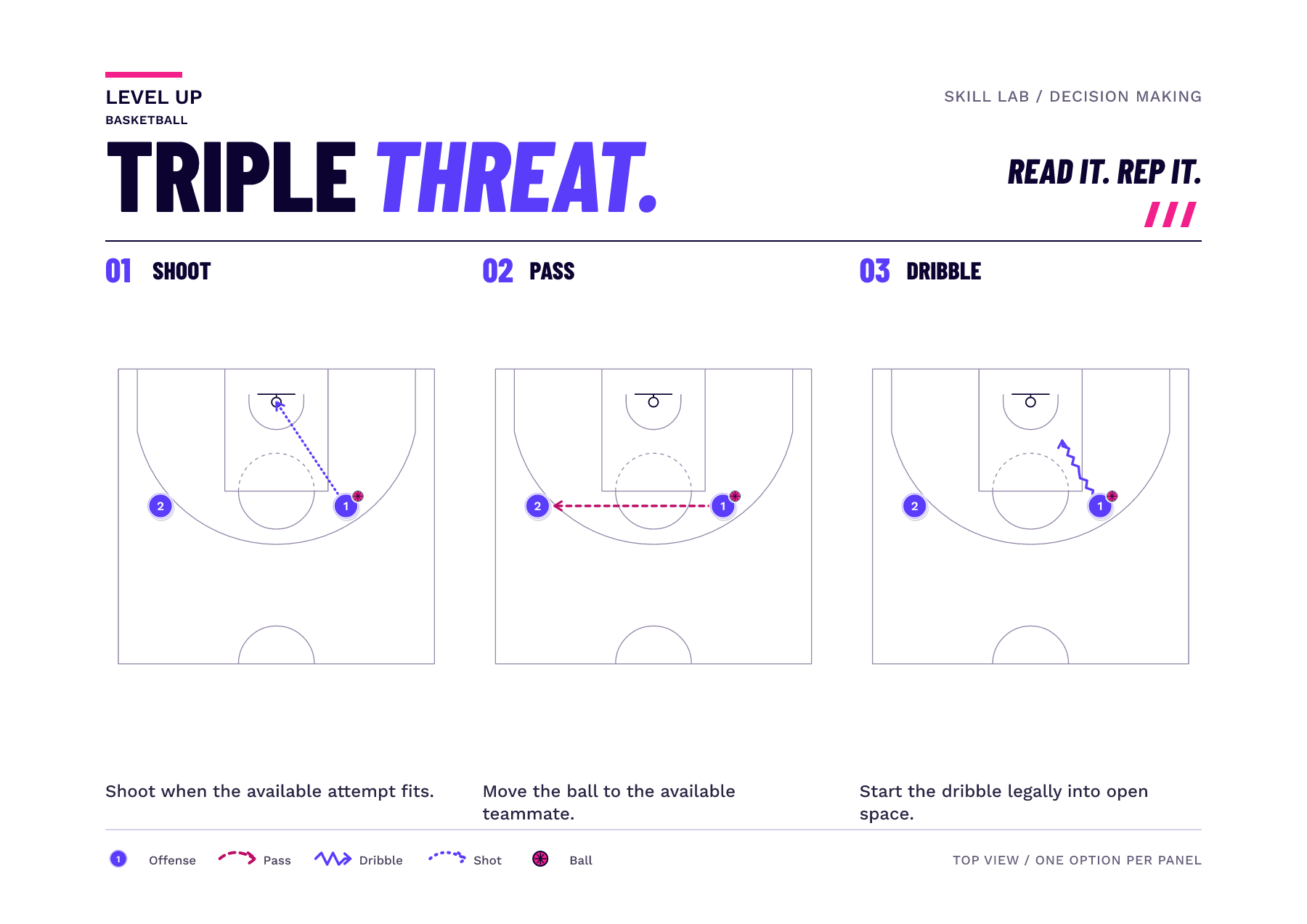
How to Get Into the Triple Threat Stance
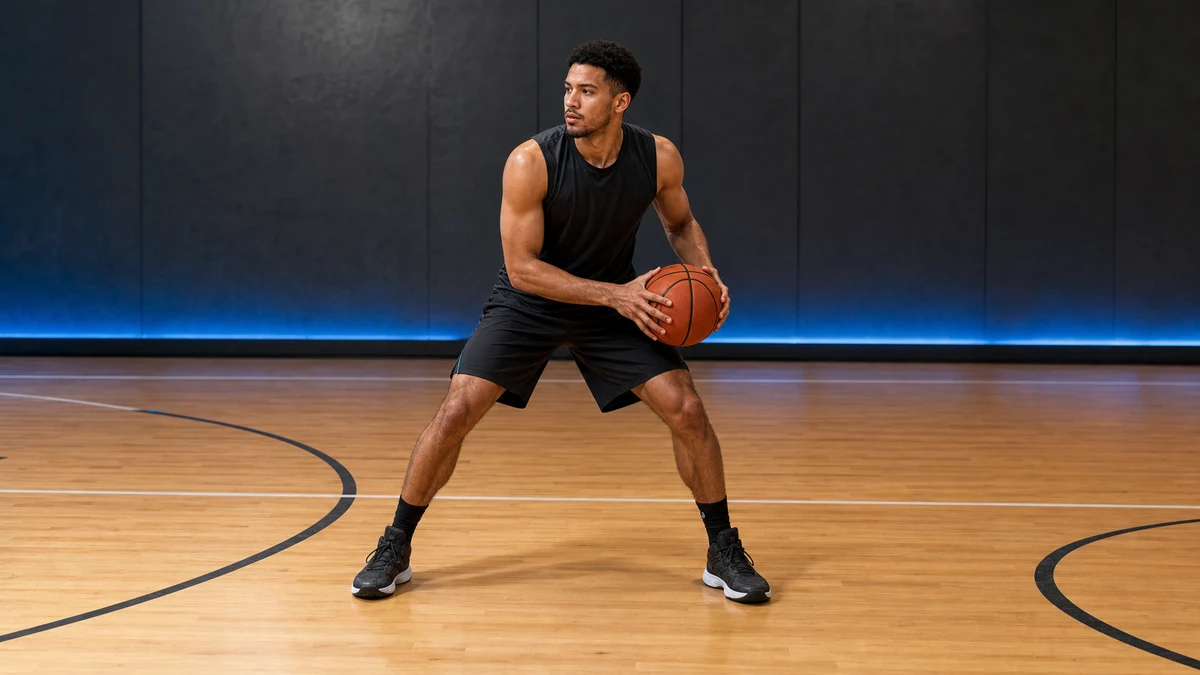
The triple threat stance requires players to bend their knees with their feet placed slightly wider than shoulder width apart. This lower body positioning is essential for establishing a low center of gravity and a stable base. By bending the knees, the player remains in an active, athletic posture rather than standing upright. Placing the feet slightly wider than shoulder width apart ensures that the player has a wide, balanced foundation that supports quick movements in any direction. This specific arrangement of the feet and knees is a fundamental requirement of the stance.
In the triple threat stance, players hold the ball, bend their elbows for strength, and position the ball slightly toward their dominant hand side. This upper body alignment is crucial for protecting the basketball and preparing for action. By holding the ball securely and bending their elbows, players generate physical strength and control, making it difficult for defenders to swipe the ball away. Positioning the ball slightly toward the dominant hand side places it in a natural pocket, which allows for a quick transition into a shot, a pass, or a dribble.
The Mechanics of Pivoting
Pivoting is defined as when a player stands still and steps with one foot. This fundamental movement is a critical component of footwork that allows a player holding the basketball to change their physical orientation and face different directions without traveling. When executing a pivot, the player must keep one foot completely stationary on the floor while using the other foot to step in various directions. This action of stepping with one foot while standing still is the precise definition of pivoting under basketball rules, providing a legal method to shield the ball. WABC Coaching Level Manuals Level 1 English
The foot that remains on the ground during a pivot is called the pivot foot. This specific foot acts as the stationary anchor for the player's entire body during the pivoting movement. While the player is permitted to step and swing their other foot in any direction to adjust their position, the pivot foot must remain in constant contact with the playing surface. Understanding which foot is designated as the pivot foot is essential for every player, as lifting or sliding this stationary foot illegally will result in a traveling violation.
Establishing the Pivot Foot on the Catch
If a player catches the ball with one foot on the ground, that specific foot is designated as the pivot foot. This rule applies directly to situations where a player receives a pass while already in motion or while stepping. The moment the ball is secured in the player's hands, the foot that is currently touching the floor is immediately established as the pivot foot. The player has no choice in this scenario; the rules of the game dictate that this single foot on the ground must remain stationary.
If a player catches the ball with two feet on the ground, they can choose which foot to pivot on, but cannot change their decision afterward. This scenario offers the player a tactical choice, allowing them to select either the left or the right foot as their stationary pivot foot based on the position of the defender. However, once the player makes their decision and lifts one foot to take a step, the foot that remains on the ground is locked in as the pivot foot.
Establishing the Pivot Foot from the Air
If a player catches the ball in the air, whichever foot lands first is designated as their pivot foot. This rule is highly relevant when players jump to receive a pass or catch the ball while running. As the player returns to the floor, the first foot to make contact with the ground is automatically established as the pivot foot. The player must recognize this landing sequence immediately, as the first foot to touch the court becomes the stationary anchor that cannot be lifted or slid before a dribble.
If both feet land simultaneously after catching the ball in the air, the player may choose which foot to pivot on. This simultaneous landing is commonly referred to as a jump stop. When a player executes a jump stop and lands with both feet touching the floor at the exact same moment, they are granted the flexibility to select either foot as their pivot foot. This choice allows the player to assess the defensive pressure and decide which foot is more advantageous to keep stationary.
Rules for Dribbling, Passing, and Shooting
A player is required to start dribbling the ball before lifting their pivot foot. This rule is one of the most critical aspects of basketball footwork and is a common source of traveling violations. When a player is in the triple threat position and decides to drive or dribble, they must release the ball from their hands to start the dribble before their pivot foot leaves the playing surface. Lifting the pivot foot before the ball has left the hand to begin a dribble is an illegal movement.
A player may lift their pivot foot as long as they pass or shoot before that foot touches the ground again. This rule provides players with additional flexibility when executing a shot or a pass from the triple threat position. While starting a dribble requires the ball to be released before lifting the pivot foot, a player who is passing or shooting is legally permitted to lift their pivot foot off the ground. The only restriction is that the ball must leave the player's hands before the foot touches again.
Limitations and Common Mistakes of the Stance
Standing with straight legs is a common pivoting mistake that results in poor balance. When players fail to maintain the bent-knee posture required by the triple threat stance, they lose their athletic base and become highly unstable. Straight legs raise the player's center of gravity, making it incredibly easy for defenders to disrupt their balance or force them out of position. Furthermore, standing with straight legs severely limits the player's ability to pivot quickly or generate power for a sudden pass, shot, or drive.
Bending down and looking at the floor during a pivot negatively affects balance and makes it difficult to see open teammates. This mistake often occurs when players feel pressured by a defender and instinctively look down at the ball or the ground. By bending at the waist and lowering their eyes, players compromise their physical balance, making them susceptible to falling or losing control. Additionally, looking at the floor completely cuts off their court vision, preventing them from seeing open teammates who may be open.
What This Means for Players and Coaches
A pivot should be a controlled, balanced movement executed with bent legs to maintain good balance. Coaches should emphasize this principle during practice to help players develop proper footwork habits. When players execute pivots with bent legs, they ensure that their center of gravity remains low and stable, allowing them to handle defensive pressure without losing their footing. This controlled movement is key to maintaining a strong triple threat stance and executing effective passes, shots, or drives on the court.
USA Basketball categorizes player skills into eight distinct areas, including Footwork & Body Control, Ball Handling & Dribbling, and Passing & Receiving. These categories highlight the comprehensive nature of player development, where foundational skills are interconnected. The triple threat position and pivoting directly involve multiple areas of this curriculum, specifically combining footwork and body control with ball handling, dribbling, passing, and receiving. By understanding how these skills fit into the broader framework established by USA Basketball, coaches and players can approach training with a clear understanding of basic footwork. USA Basketball Player Development Curriculum - USA Basketball
Frequently asked questions
What is the triple threat position in basketball?
Triple threat is a balanced position from which a player can shoot, pass, or drive. The player should protect the ball, see the floor, and remain ready to act instead of holding a rigid pose that delays the next decision.
When should a player use triple threat?
It is useful after receiving the ball when the player can legally pivot and assess the defense. The exact stance and ball position should fit the player's space, role, and immediate read rather than look identical on every catch.
What are common triple threat mistakes?
Common mistakes include standing upright, exposing the ball, looking down, locking the feet, and faking without threatening the defense. The position works when balance, vision, and readiness support a real shot, pass, or drive.