
The short version: A held ball is called when opponents secure the ball so firmly that neither can gain control without undue roughness. In the NBA, the two involved players normally jump at the nearest circle. NCAA and FIBA games use an alternating-possession throw-in after the opening jump establishes which team receives the first arrow. The arrow changes only when the alternating-possession throw-in ends, not simply when the whistle sounds.
Key takeaways
- A loose-ball scramble is not automatically a held ball; officials wait until control cannot be gained without undue roughness.
- NBA held balls normally restart with a jump ball between the involved players.
- NCAA and FIBA held-ball situations normally restart with a throw-in for the team indicated by the possession arrow.
- The arrow reverses when the alternating-possession throw-in ends, so table officials and coaches must track the complete administration.
What is a held ball in basketball?
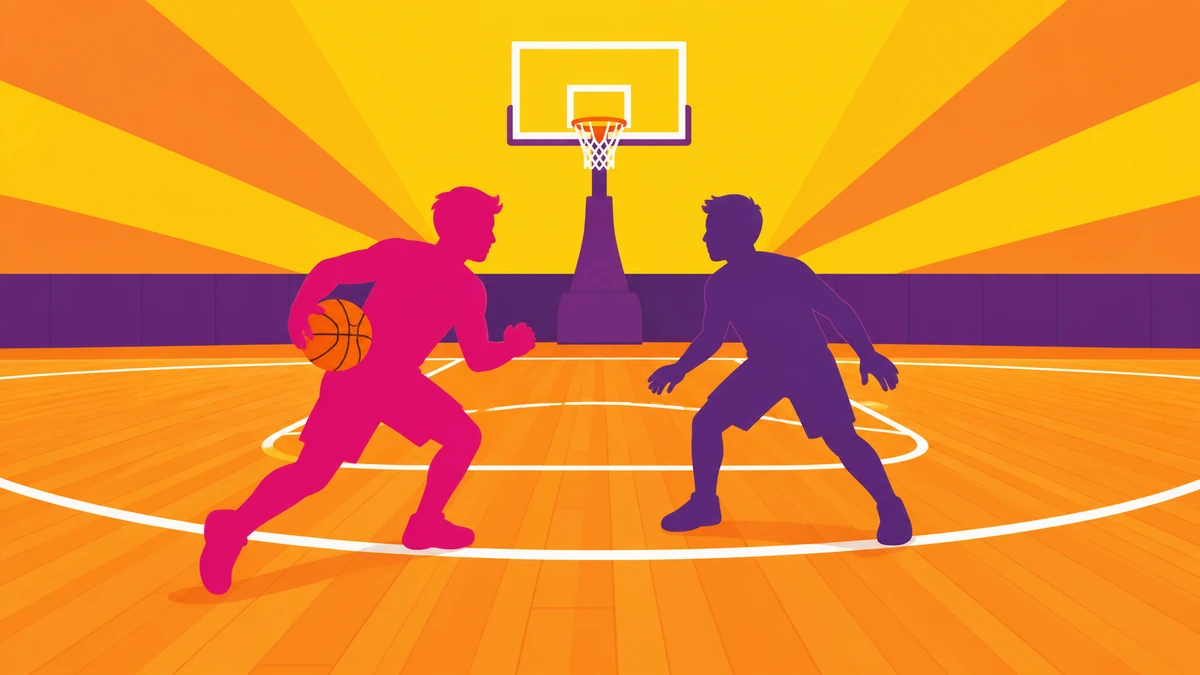
A held ball occurs when opponents secure the basketball so firmly that neither player can gain control without undue roughness. The whistle protects the ball and the players; it is not a reward for grabbing first or squeezing longest. The NBA and FIBA definitions use nearly the same practical threshold. NCAA rules also cover the familiar tie-up and an airborne-player situation in which a defender prevents a pass or shot while the player returns to the court with the ball. NBA Rule No. 4: Definitions FIBA Official Basketball Rules 2024 basketball throw-in rules
Not every contested ball is tied up. If one player still has enough control to pass, pivot, or pull the ball free safely, play can continue. If the ball is loose between bodies, the official may wait to see whether someone establishes control. NBA guidance specifically says a player sitting or lying on the floor with possession should have an opportunity to throw the ball. That keeps a legal hustle play from becoming an automatic whistle simply because the player is down.
A held ball is not automatically a turnover
A held-ball call makes the ball dead and sends the game into a restart procedure. It does not prove that the offensive player lost possession, that the defender stole the ball, or that either player committed a violation. What happens next depends on the competition code. In an NBA game, the restart is normally another jump ball. In NCAA and FIBA play, the table uses the alternating-possession arrow after the opening jump has established the first entitlement. NBA Rule No. 6: Putting Ball in Play NCAA Men's Basketball Rules Book backcourt violations
That distinction changes player behavior. An NBA defender who forces a tie-up earns a chance to win a live toss. A college or FIBA defender may force an immediate throw-in for the defense, or may only cause the arrow to flip after the offense keeps the ball. The defensive effort is still valuable in both cases, but the scoreboard operator's arrow can matter as much as which player appears stronger in the tie-up.
How the NBA restarts a held ball
NBA Rule 6 sends a held ball to the circle closest to where it happened. The two players involved normally take the jump. The official tosses the ball, the jumpers wait until it reaches its highest point, and neither jumper may catch it before it touches a non-jumper, the floor, the basket, or the backboard. Injury or ejection can change who participates, but the core NBA restart remains a real jump rather than an arrow-controlled throw-in.
For players, the practical lesson is to find the correct circle and organize the next possession quickly. Non-jumpers should locate likely tap directions, protect against a direct runout, and communicate matchups before the toss. The held-ball whistle ends the scramble, but it can create a second competitive moment immediately afterward.
How the NCAA and FIBA possession arrow works
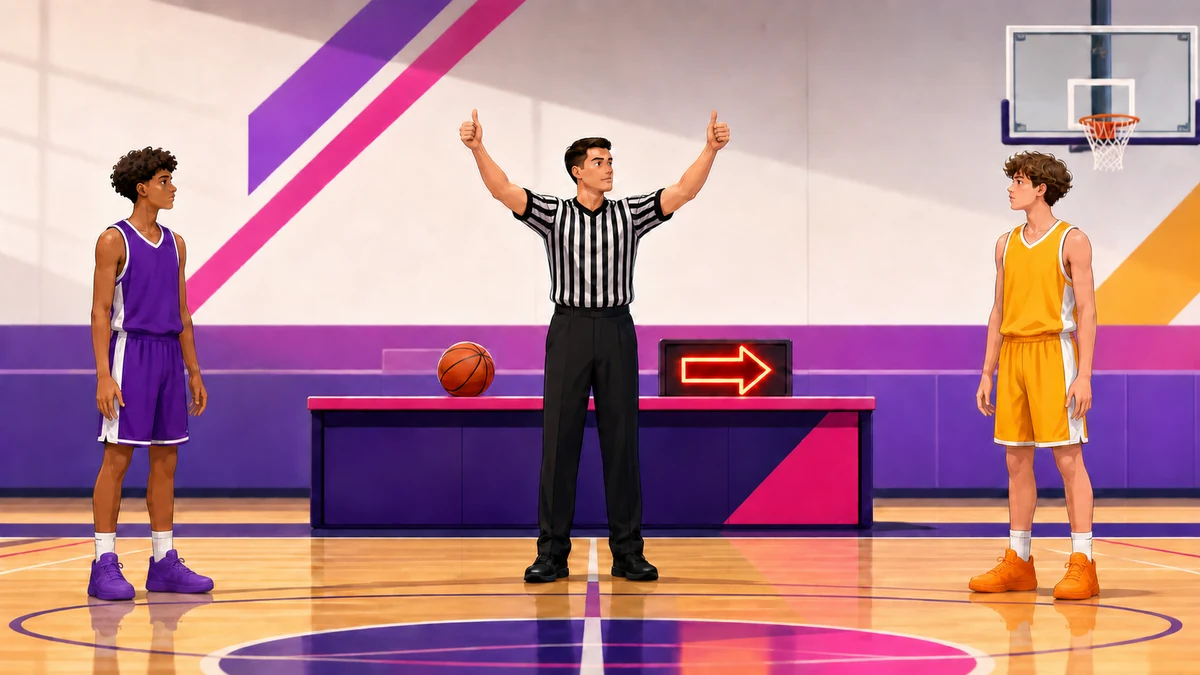
NCAA and FIBA games begin with an opening jump ball. The team that does not gain the first control is entitled to the first alternating-possession throw-in. From then on, a held ball is one of the situations decided by that entitlement. The team named by the arrow receives a throw-in at the designated spot nearest the tie-up, subject to the rulebook's placement exceptions. This replaces repeated jump balls and makes the next award predictable.
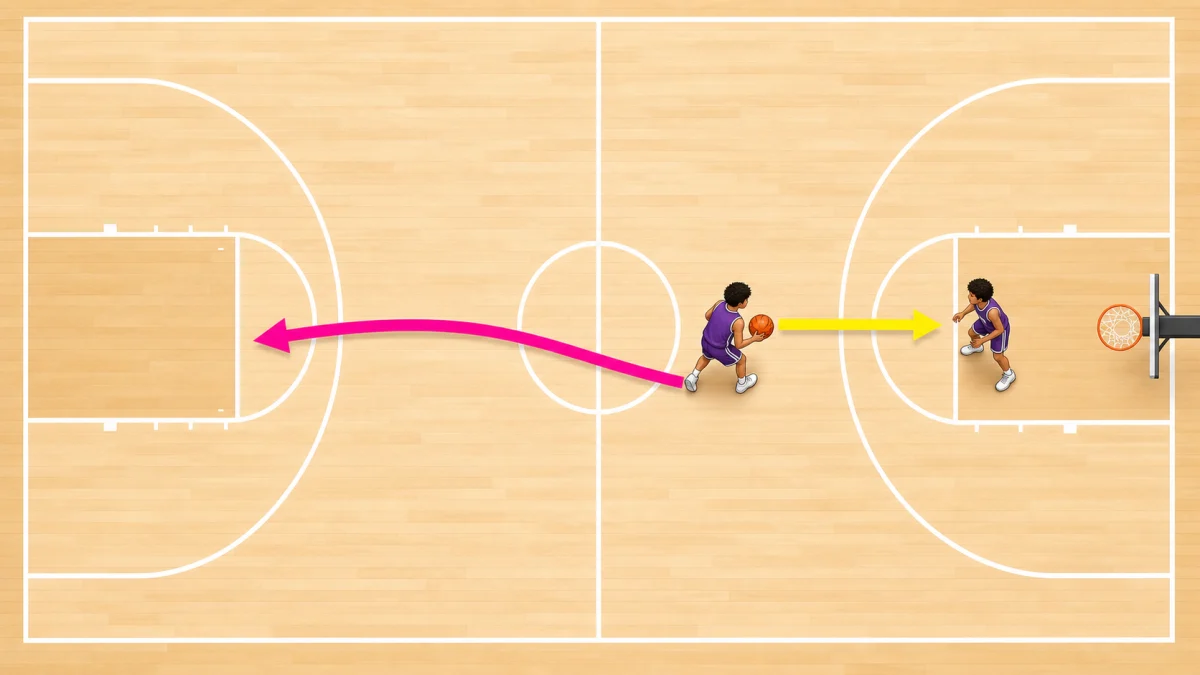
The physical arrow points toward the basket the entitled team is attacking. It is a table-management device, not a record of which team possessed the ball most recently. Because teams change ends, the scorer must administer the direction according to the rulebook at halftime. Players should look to the official and scorer's table instead of guessing from the previous held ball.
When does the possession arrow change?
The arrow does not reverse merely because an official signals a held ball. Under the NCAA procedure, it reverses when the alternating-possession throw-in ends, such as when the passed ball legally touches an inbounds player or the throw-in team commits a throw-in violation. FIBA likewise reverses the arrow immediately when the alternating-possession throw-in ends. That timing matters if a foul, violation, or unusual stoppage occurs before the throw-in is completed.
A simple bench habit is to confirm three moments: which team is entitled before the throw-in, whether the throw-in legally ended, and which direction the arrow shows afterward. If the display appears wrong, the coach should address the table through the officials at the next appropriate dead ball. Players should keep playing the ruling on the floor rather than stopping to debate the arrow during live action.
How players should handle tie-up situations
- Protect the ball with a strong base and legal pivots before the defender can secure it.
- When both players have firm control, avoid twisting, swinging, or escalating after the whistle.
- Know your competition code: prepare for a jump in the NBA format and check the arrow in NCAA or FIBA play.
- On an arrow throw-in, organize spacing and pressure immediately; the procedure decides possession, not the quality of the next play.
Coaches can teach the rule with two short situations: one true held ball in which neither player can release safely, and one loose-ball battle that should remain live. Then rehearse both restarts. The goal is not to train players to hunt for whistles. It is to help them protect the ball, contest legally, stop on the whistle, and transition into the correct next action without confusion. other commonly confused basketball rules
Frequently asked questions
Is a held ball the same as a jump ball?
A held ball is the situation that stops play. A jump ball is one possible way to restart it. The NBA normally uses a jump between the involved players, while NCAA and FIBA games normally use the possession arrow after the opening jump.
Who gets the ball after a tie-up in college basketball?
The team indicated by the alternating-possession arrow receives the designated-spot throw-in. The team that did not obtain control of the opening jump receives the first arrow opportunity.
Does the possession arrow change as soon as a held ball is called?
No. The arrow changes when the alternating-possession throw-in ends under the applicable procedure, not at the instant of the held-ball whistle. It reverses only after that throw-in reaches its defined end.
Can a player on the floor be called for a held ball immediately?
Being on the floor is not itself a held ball. NBA guidance says a seated or prone player in possession should have an opportunity to throw the ball; the held-ball threshold still requires control that cannot be resolved without undue roughness.