
The short version: A player is out when touching the boundary line or space beyond it; an airborne player's status comes from the last floor contact. The ball is usually awarded against the last player who touched it. A thrower normally has five seconds, must stay behind the plane, and has limited lateral movement at a designated spot. After a made basket, the inbounding team may move along the endline. Exact NBA and FIBA procedures differ.
Key takeaways
- Boundary lines are out-of-bounds, and an airborne player's location follows the last place touched on the floor.
- Last touch normally determines who caused the ball to go out, including when the final contact is with an out-of-bounds player.
- The five-second count begins when the ball is at the thrower's disposal, not when the passer first starts looking for a teammate.
- A designated-spot throw-in has tighter movement limits than an endline throw-in after a made basket.
- NBA and FIBA share core ideas but differ in wording and procedures, so use the code adopted by your competition.
When is a player or the ball out-of-bounds?
Start with the line: the boundary line is out-of-bounds. Under FIBA, a player is out when any part of the body touches the floor—or a non-player object—on or beyond that line. A player who jumps keeps the status of the last floor contact. So an inbounds player can leap, catch the ball above the sideline, and remain inbounds until landing; a player who jumped from out-of-bounds remains out while airborne and cannot rescue the ball by touching it before re-establishing inbounds position. FIBA Official Basketball Rules 2024 how floor location also matters in the backcourt rule
The ball is out when it touches an out-of-bounds player or person, the floor or an object on or outside the line, the backboard supports or back of the board, or an object above the court. The NBA uses the same basic floor-contact idea for players and keeps an airborne player's last location, though its rulebook has league-specific details for objects and the backboard. In a live game, do not ask only where the ball is; ask what it touched. NBA Rule No. 8 — Out-of-Bounds and Throw-In
How does the last-to-touch rule decide possession?
FIBA assigns responsibility to the player last to touch the ball—or be touched by it—before it goes out. If a defender deflects a pass and the ball lands beyond the sideline, the defense caused it out. If the ball hits an offensive player standing on the line, that offensive player causes it out even when the defender supplied the previous force. The official follows the final legal contact, not who created the earlier momentum.
The NBA also generally uses last touch, but its text includes a specific hand-contact provision and procedures for simultaneous or uncertain touches. Coaches should teach players to play through the whistle, keep feet clear of the line, and use the competition's rule code.
When does the five-second throw-in count start?
In FIBA, the throw-in begins when the ball is at the thrower's disposal. The player then has no more than five seconds to release it. The count does not wait for a fake or preferred cut. It begins when the official has made the ball available under the rule. The throw-in ends when a player on court legally touches the ball, the inbounding team violates, or the live ball lodges between the ring and backboard.
- Release the pass within five seconds of disposal. NBA Rule No. 10 — Violations and Penalties
- Keep the body and ball behind the boundary until the pass is released; do not step onto the court while holding it.
- Do not touch the throw-in pass first after entering the court; another player must touch it before the thrower can.
- Do not try to score directly from the throw-in or hand the ball to a teammate standing on court.
- Make the released pass enter the court; a throw-in that simply goes out untouched is not a successful inbound.
FIBA and NBA share those restrictions, but their wording and penalties are not identical. A youth league may adopt another code or local modification. Separate the coaching problem—create a passing angle before five seconds—from the competition's official procedure. FIBA Official Basketball Rules hub
How far may the thrower move?
At a designated FIBA throw-in spot, the player may move directly backward as far as conditions allow but may not travel laterally more than one metre in total before releasing. The NBA describes its designated space as one step to either side. Those phrases are related, not interchangeable measurements. In both systems, a designated throw-in is not permission to run the sideline looking for a better angle. Pivoting, stepping within the allowed space, or retreating is different from abandoning the spot.
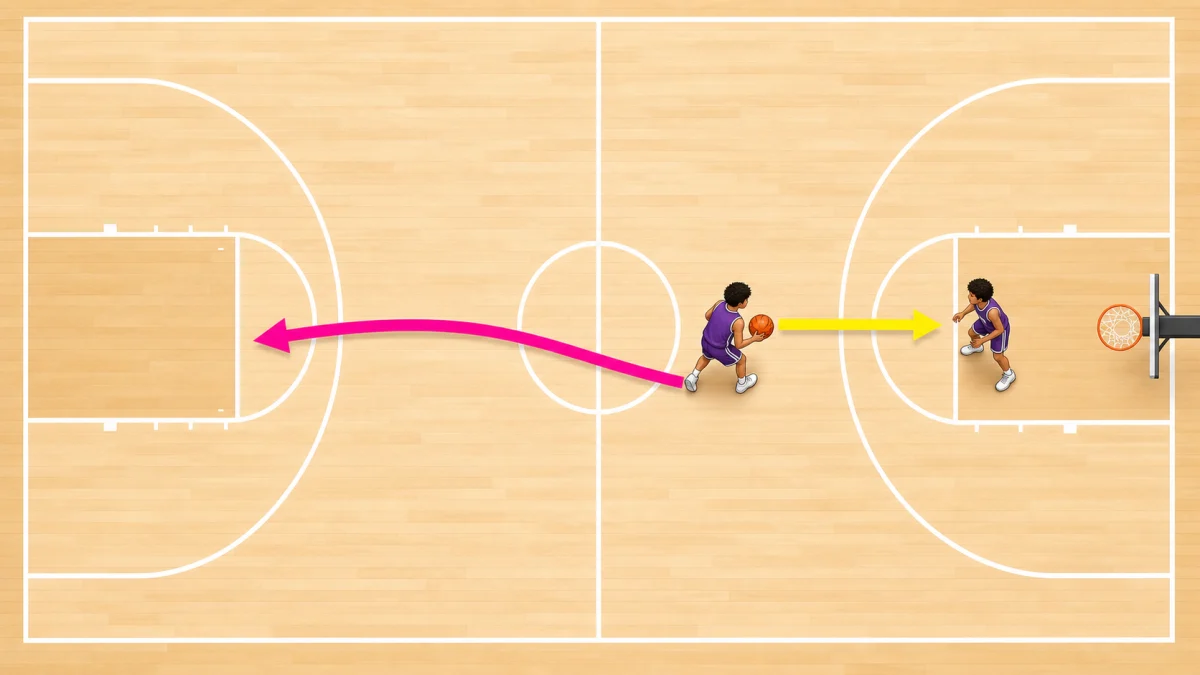
After a successful field goal or qualifying last free throw, the endline privilege changes the picture. FIBA allows any non-scoring player to take the ball behind that team's endline, move laterally along it or backward, and pass to a teammate who is also behind the endline. The five-second count still runs from the moment the first out-of-bounds player has the ball at disposal. The NBA also allows the non-scoring team to use the endline and pass behind it after a score.
That privilege comes from the restart, not merely from standing on an endline. A throw-in after a foul or violation may use a designated place near the infraction, even behind the endline. Players should identify whether the ball follows a made basket. Coaches can rehearse both a stationary designated-spot inbound and a moving after-score endline inbound. why legal movement depends on the exact live-ball situation
What can defenders do at the boundary plane?
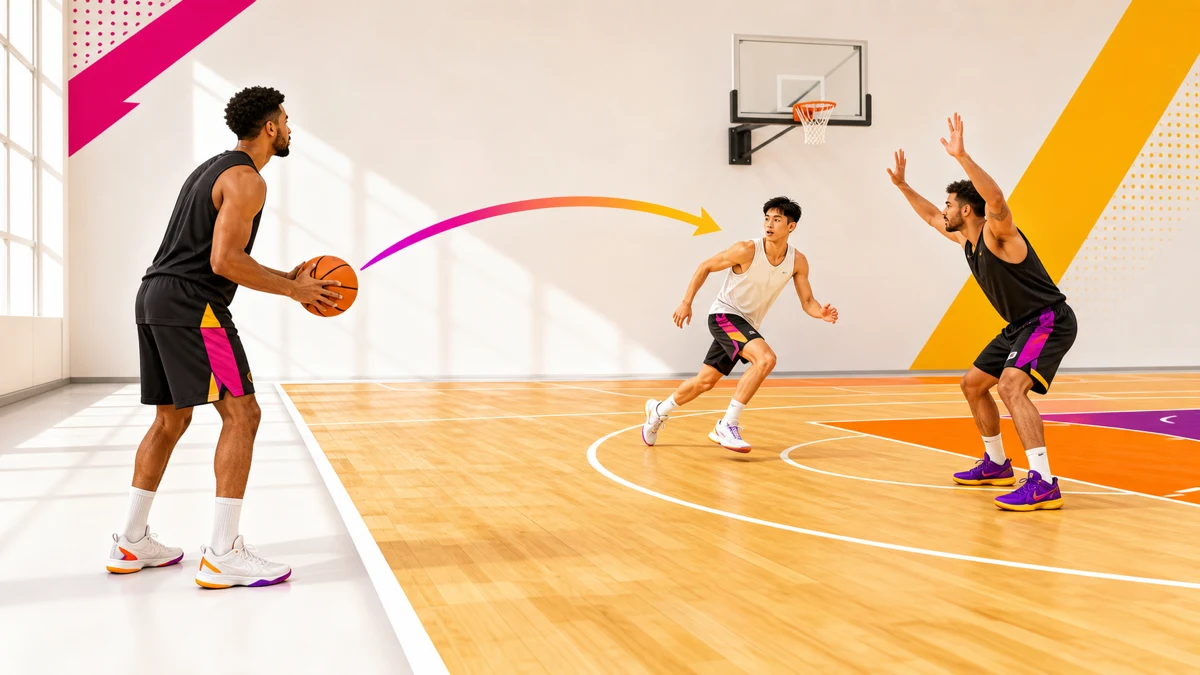
The boundary plane protects the thrower's space. FIBA says other players may not put any part of the body over the line before the pass crosses it. When the out-of-bounds clearance is less than two metres, a defender also may not crowd within one metre of the thrower. The NBA likewise prohibits players from extending over the plane before the throw-in pass crosses. A defender may pressure vision and passing angles from a legal inbounds position; reaching across the plane to block the release is different.
FIBA's interpretations show how interference can escalate. In late fourth-quarter or overtime situations, the referee uses the illegal-boundary-line-crossing warning signal before placing the ball at the thrower's disposal; a defender who then crosses to interfere receives a technical foul without another warning. Earlier in the game, the interpretations describe an immediate interruption and team warning on the first interference, followed by a technical foul for a repeat. These are administration details, not permission for the offense to initiate contact across the line. FIBA Official Basketball Rules Interpretations 2024
How should teams practice throw-ins?
- Mark a real boundary line and require the thrower to establish both feet outside it before receiving the ball.
- Start a visible five-second count on disposal and make cutters create a first safe window by the third count.
- Practice a designated spot with only the allowed lateral space, then repeat from a deeper position to use the legal backward room.
- Practice an after-score endline exchange in which two teammates pass behind the line without resetting the five-second count.
- Add one legal defender who pressures without crossing the plane; stop immediately when a foot or hand violates the boundary relationship.
Give the thrower reads instead of one memorized pass: rim first when a legal window exists, then a safety release and the team's late-count option. Off-ball players should create different passing levels rather than stack one lane. Review the rule set before a tournament because the spot, movement privilege, clock, and penalty can change.
Frequently asked questions
Is the boundary line in or out in basketball?
It is out-of-bounds. Under FIBA, a player touching the line is out, and a ball touching the floor on the line is out. An airborne player keeps the status of the last floor location, so the takeoff point matters until that player lands. The NBA uses the same core last-floor-contact idea, but always apply the rulebook adopted by the competition.
When does the five-second count begin on a throw-in?
In FIBA, it begins when the ball is at the thrower's disposal. The thrower must release within five seconds; the count does not wait for the first pass fake or cutter. The NBA similarly starts from receipt and control of the inbounding ball. Officials determine disposal in the live situation, so players should be ready before taking the ball.
Can an inbounder run along the baseline?
After a made basket or qualifying last free throw, yes: FIBA and NBA rules allow the non-scoring team to move along the endline and pass to a teammate behind it while the five-second limit continues. At a designated-spot throw-in after many fouls or violations, movement is tighter. In FIBA the lateral total is one metre; the NBA describes a one-step space.
May a defender reach over the sideline on an inbound?
Not to interfere before the pass crosses the boundary plane. FIBA and NBA both restrict players from putting a body part over the line during the throw-in. FIBA also uses a clearance rule when the out-of-bounds area is narrow and has warning and technical-foul procedures for interference. A defender can pressure from a legal inbounds position without breaking the plane.