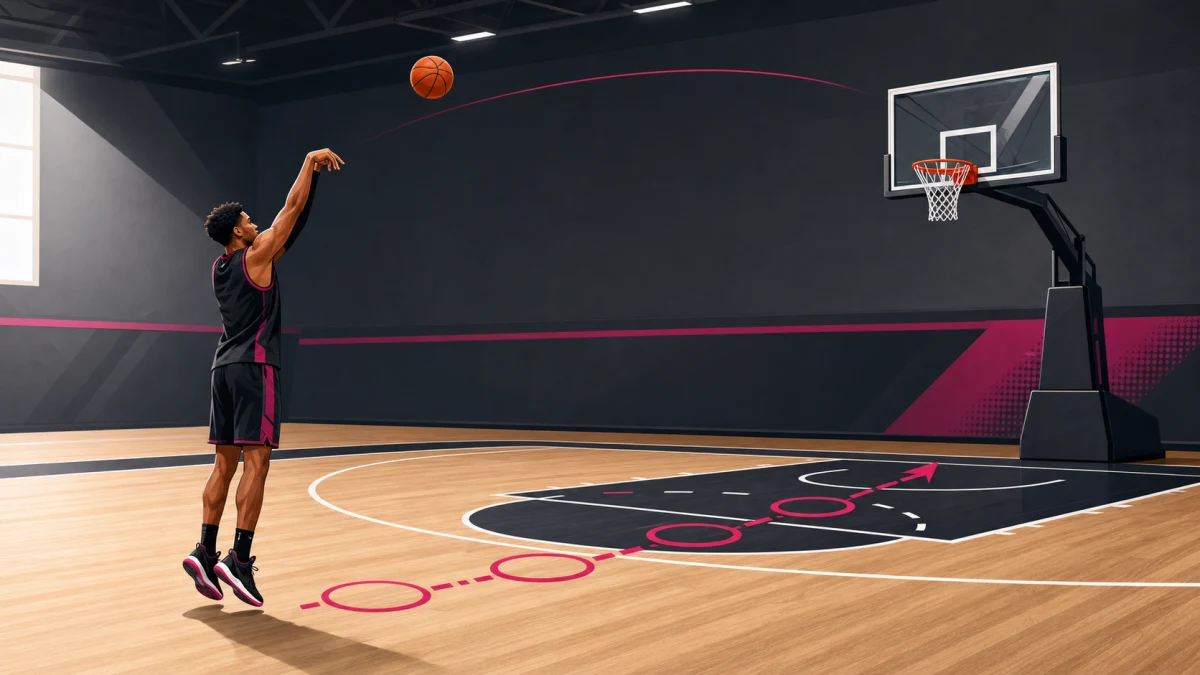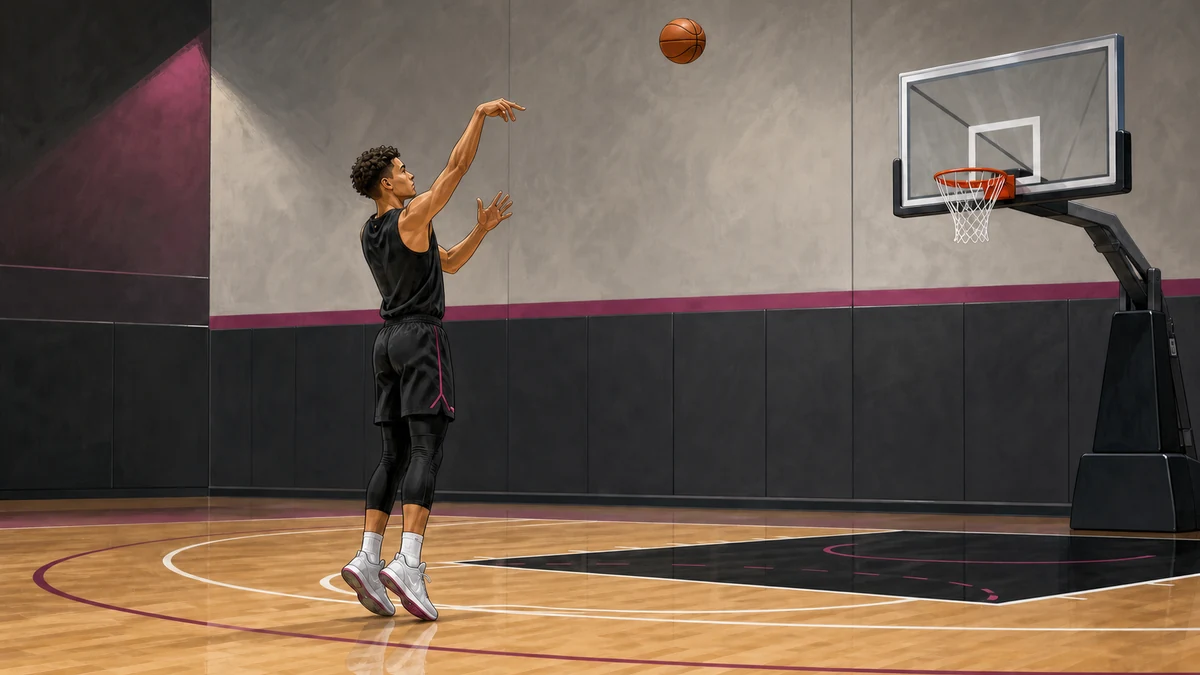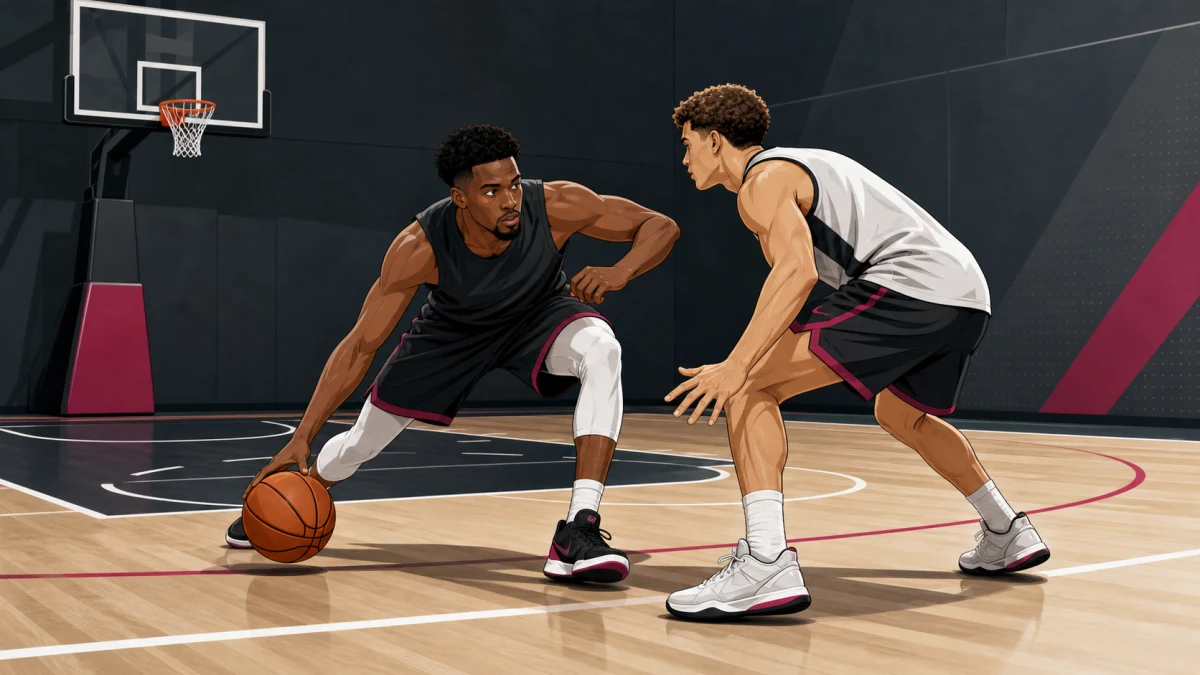

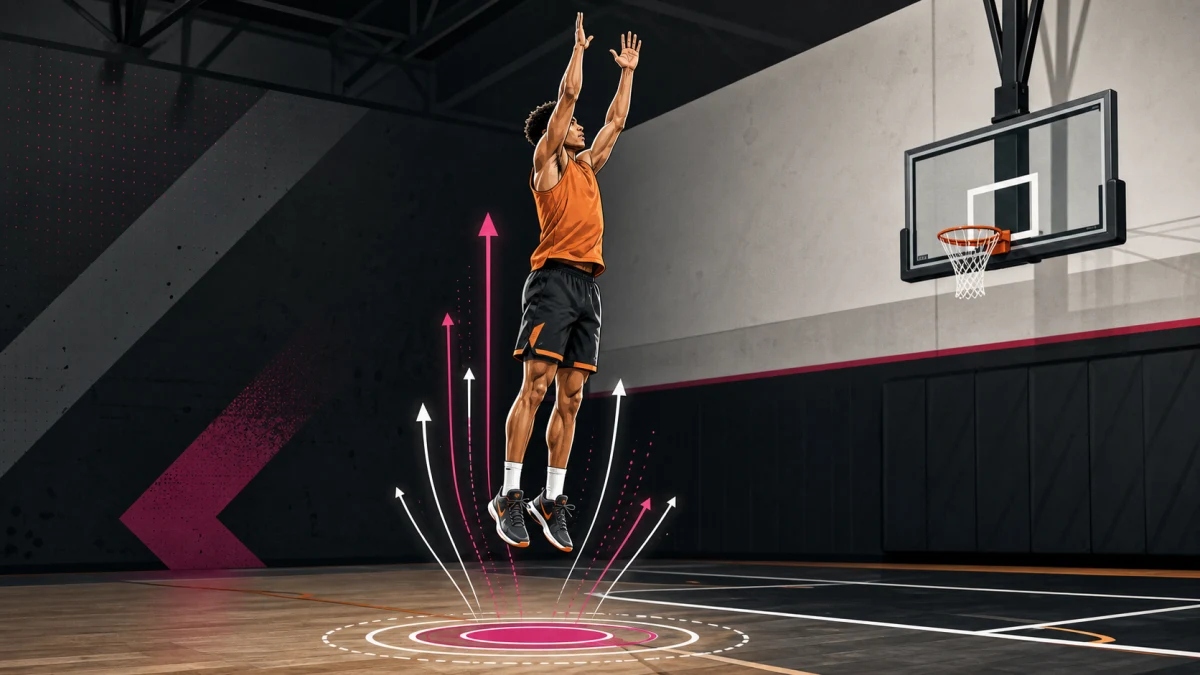
The short version: Vertical-jump training should combine strength, fast force production, jump technique, and recovery. An eight-week block is long enough to test whether the program is working, but it cannot promise a specific number of inches. Use two quality sessions per week, keep high-impact contacts controlled, and retest the same jump under the same conditions at Weeks 4 and 8.
Key takeaways
- Measure before training. Test countermovement, standing, and approach jumps separately.
- Combine strength and plyometric work. Evidence supports both, but the best prescription depends on training age and equipment.
- Protect rep quality. Full recovery and controlled landings matter more than accumulating jumps while tired.
- Train the jump used in basketball. Include two-foot, one-foot, approach, and repeat-jump tasks only after basic control is established.
First, define what “vertical jump” means
A standing jump, a countermovement jump with an arm swing, a two-foot approach jump, and a one-foot running jump are related but not identical skills. If the player tests one version and trains another, the result becomes hard to interpret. Choose two tests:
- Countermovement jump: two feet, consistent arm-swing rule, no approach.
- Basketball approach jump: the same starting distance, gather pattern, takeoff leg or legs, and reach target each time.
Warm up the same way, take three attempts, and record the best plus the average. Film the landing. Retest at the same time of day when practical and avoid comparing a fresh test with one performed after a hard practice.
What the evidence supports—and what it does not
A meta-analysis focused on basketball players included 14 resistance-training studies and 399 participants. It found a positive overall effect on jump performance, while also showing that outcomes vary across programs and athletes. That supports year-round strength work; it does not guarantee that one exercise or loading scheme will work for everyone. Read the basketball resistance-training meta-analysis.
A separate meta-analysis of 32 plyometric-jump-training studies involving 818 basketball players found improvements across jump, sprint, change-of-direction, balance, and strength measures. The studies differed in age, sex, level, and program design, so the useful conclusion is broad: well-planned plyometric training can help basketball athletes. It is not evidence for daily maximal jumping. Review the basketball plyometric-training meta-analysis.
More recent network meta-analysis suggests combined resistance and plyometric approaches can improve countermovement jump and sprint outcomes, with some combined formats outperforming resistance training alone. The authors also note uncertainty about the optimal arrangement. See the combined-training review.
The eight-week program
Train on two nonconsecutive days, ideally 48 to 72 hours apart. Players already lifting with a qualified coach can integrate the strength work into that program. Beginners and youth athletes should use movements they can perform safely and should get supervision before adding external load or depth jumps.
| Weeks | Strength emphasis | Jump emphasis | Target |
|---|---|---|---|
| 1–2 | Split squat, hinge, calf raise, trunk control | Snap-down landing, pogo, submaximal countermovement jump | Stable positions and repeatable landings |
| 3–4 | Progress load or range only when technique holds | Maximal countermovement jump and broad jump | Produce force without extra contacts |
| 5–6 | Lower volume, faster concentric intent | Approach jumps and low-volume repeated jumps | Transfer force into basketball footwork |
| 7 | Maintain strength with fewer sets | One-foot and two-foot approach jumps | Sharpen preferred and secondary takeoffs |
| 8 | Reduced volume | Short quality session, then retest after recovery | Measure adaptation without accumulated fatigue |
Session A: force and two-foot takeoff
- Dynamic warm-up and low pogo series.
- Primary lower-body strength movement: three controlled sets.
- Split-squat or single-leg strength movement: two or three sets each side.
- Countermovement jumps: three to five sets of two or three high-quality reps.
- Snap-down landing or landing-and-hold: two sets of three.
Rest long enough that jump height and landing quality remain stable. If the athlete's jump visibly declines across two sets, end the maximal work.
Session B: elastic work and approach mechanics
- Dynamic warm-up and ankle stiffness series.
- Hinge or posterior-chain strength movement: three controlled sets.
- Calf and trunk work: two or three sets.
- Approach jumps: three to five sets of two, alternating one- and two-foot takeoffs as appropriate.
- Low-volume lateral or single-leg landing task: two sets each side.
The approach should be repeatable. Mark the starting point and film the final two steps. A longer, faster approach is not automatically better if it forces braking or a poor gather.
Landing quality is part of the program
“Land quietly” is a useful sound cue, but the visual checklist is more specific:
- The foot, knee, and hip share the load rather than one joint absorbing it alone.
- The knee tracks with the foot instead of collapsing abruptly inward.
- The torso remains controlled and the athlete can hold the landing.
- Single-leg landings look similar on both sides before speed increases.
Pain is not a training target. Stop the session and consult a qualified medical or performance professional if jumping causes pain, swelling, instability, or a meaningful change in movement.
How to interpret the Week 4 and Week 8 tests
Use more than the best attempt. Compare the average of three jumps, approach consistency, and landing control. A small height increase with better repeatability may be meaningful. No height change does not automatically mean the block failed: the athlete may have improved strength, approach timing, or tolerance while the test remained noisy. Conversely, one unusually high jump does not prove the whole program worked.
If the athlete improves in the countermovement jump but not the approach jump, spend the next block on approach rhythm and takeoff skill. If the approach improves but standing power does not, maintain the technical work while revisiting strength and recovery. If both decline, reduce fatigue before adding exercises.
What this program deliberately leaves out
There is no promised “add X inches” outcome, no mandatory depth-jump volume, and no assumption that every player should lift the same load. Training history, body size, age, competition schedule, sleep, injury history, and coaching access all change the prescription. The eight-week structure is a testing framework, not a medical or individualized strength program.
Use the vertical jump drill library for exercise options, read how to jump higher for the mechanics, or follow the vertical jump workout.
Frequently asked questions
Can an eight-week plan guarantee a higher vertical jump?
No plan can guarantee a specific increase. Results depend on training history, strength, coordination, recovery, and how consistently the athlete performs the work. Use the plan as a progression, retest under the same conditions, and adjust with a qualified coach.
Why does landing technique belong in a vertical-jump plan?
Jump training includes absorbing force as well as producing it. Controlled landings help athletes maintain alignment and prepare for the next action. If landing quality deteriorates, reducing intensity or volume is more useful than chasing additional repetitions.
Should basketball players train strength or plyometrics first?
The right order depends on the athlete's training age and current capacity. Players need enough strength and movement control to tolerate explosive work, while plyometrics must stay technically sharp. A coach can adjust the balance instead of applying one sequence to everyone.