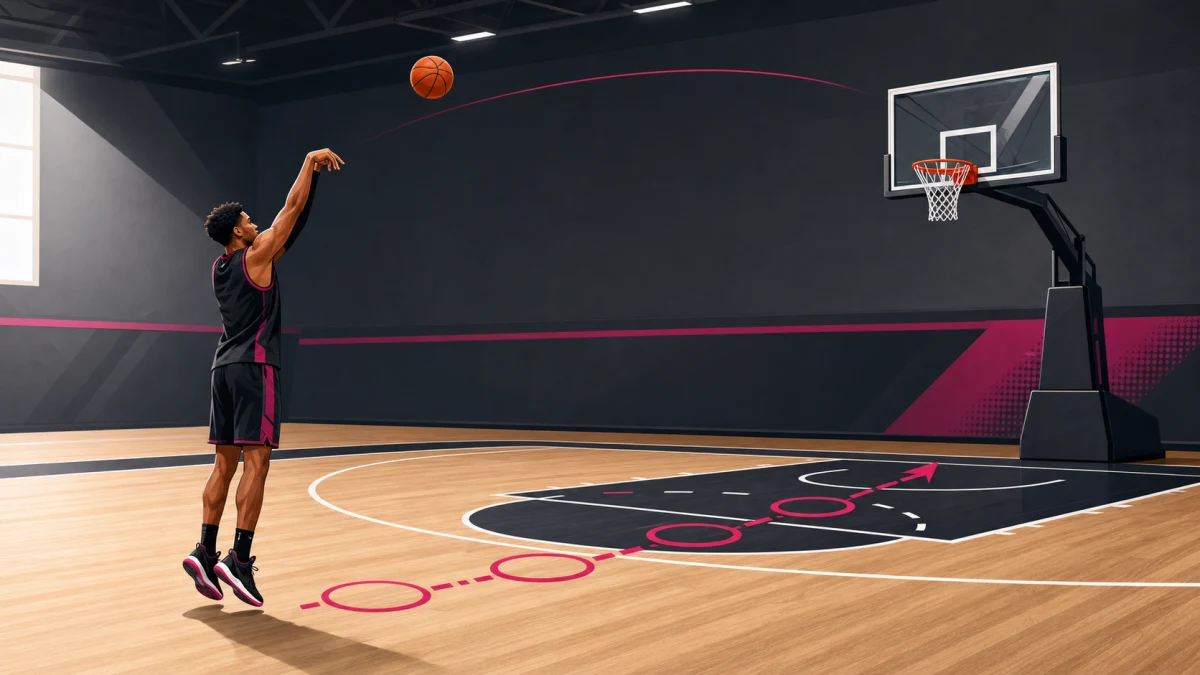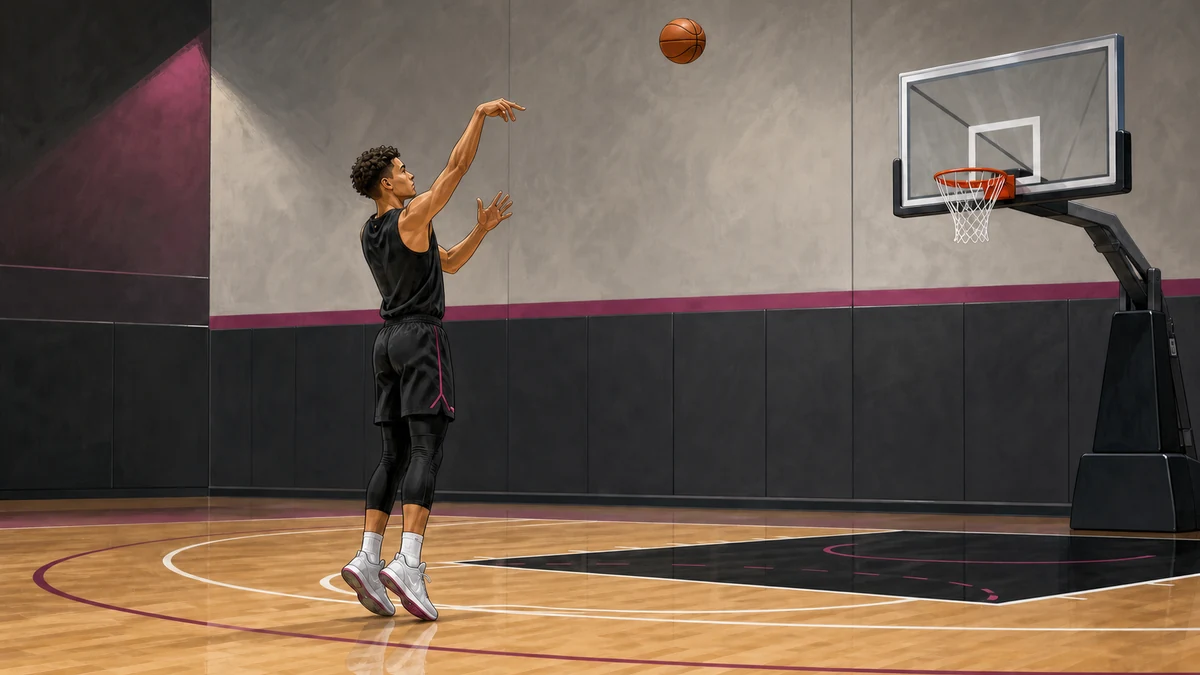
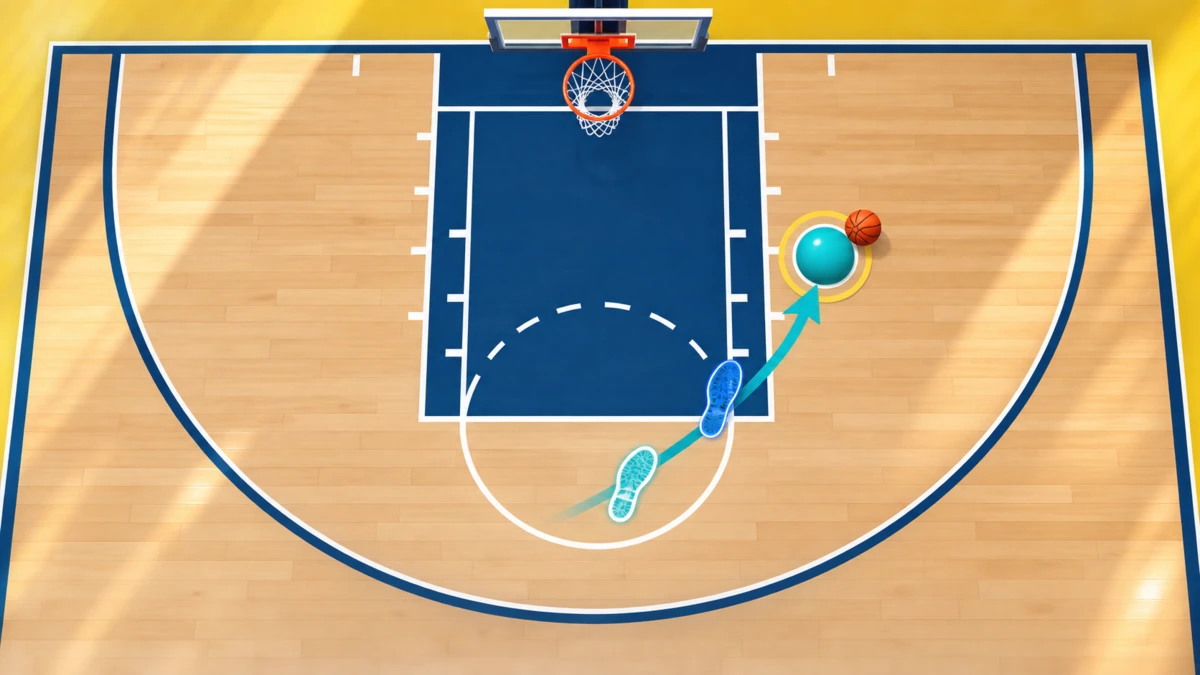
The short version: Prepare before the ball arrives. Show a target, track the pass, lower the center of mass, and use either a controlled 1-2 step or a balanced two-foot stop that fits the angle and speed of the catch. The objective is not to force every player into one identical stance; it is to reach a repeatable shooting window without drifting, twisting, or losing the option to drive or pass.
Key takeaways
- Shot preparation begins before the catch, with vision, stance, and movement toward the passing window.
- Both a 1-2 step and a two-foot stop can organize a shot when the player controls momentum and squares within their own comfortable alignment.
- The final foot pattern should fit the pass direction, movement speed, available space, and next defensive read.
- Progress from stationary balance to moving catches, then add closeouts and decisions before judging game transfer.
What is shot-preparation footwork?
Shot-preparation footwork is the way a player organizes the body before the ball reaches the shooting window. It includes the approach to the pass, the order and width of the steps, the control of forward or lateral momentum, and the final stance from which the player can shoot. The objective is not a decorative rhythm. It is to arrive balanced, see the rim, and keep the ball and body moving together instead of catching first and rebuilding the stance afterward. Jr. NBA Catch, Turn and Shoot Drill Jr. NBA Rookie Practice Plans Jr. NBA How to Shoot a Basketball basketball footwork fundamentals
Preparation starts before contact with the ball. A player should locate the pass, show a useful target, and begin lowering into a controllable stance while the ball travels. On a stationary catch, that may look quiet. On a relocation, transition run, or screen exit, it requires a deliberate braking plan. The visible shot may be identical, but the footwork needed to create it changes with the direction and speed of the catch. Jr. NBA Starter Practice Plan: Spin Step-In Drill
Start with a balanced shooting window
Jr. NBA teaching materials begin the shot from a balanced stance with flexion through the ankles, knees, and hips. The weight is organized across the feet, and the shooting-side foot may sit slightly ahead. That is a useful starting picture, not a demand that every player point every joint along one rigid line. Players differ in build, mobility, handedness, comfort, and the angle from which the pass arrives. The shared test is whether the stance supports a clean upward action without a last-second twist or fall.
- The feet stop under a controllable base instead of crossing or landing far outside the player's center.
- The knees and hips can load without the chest drifting past the base.
- The eyes can find the target before the ball rises into the release.
- The player can land from the shot under control, a practical sign that the preparation did not carry excess sideways or forward momentum.
Choose between a 1-2 step and a two-foot stop
A 1-2 step gives the player a clear sequence for absorbing a pass and moving into the shot. Jr. NBA uses this pattern in its Partner Step-In Shooting drill and in a dedicated pre-shot footwork lesson. The first foot begins the braking and turning action; the second foot completes the base. The order can change with direction, handedness, and the player's task. What matters is that the second step completes balance rather than arriving as a hurried correction. Jr. NBA Starter Practice Plan: Partner Step-In Shooting Jr. NBA Set Up Your Footwork Before Your Shot
A two-foot stop organizes the catch by landing or settling both feet together. Jr. NBA's Rookie curriculum teaches the jump stop as a balanced landing that preserves either-foot pivot options and includes both jump-stop and 1-2 step shooting in its checklist. That makes the choice contextual rather than ideological. A two-foot stop may suit a straight-line hop into space; a 1-2 may suit a directional step-in. Train both, then keep the pattern that produces control for the actual route.
Match the feet to the direction of the pass
A pass from directly in front asks less rotation from the feet than a pass received while lifting from the corner or exiting a screen. On lateral movement, the inside foot can help stop the route and begin the turn, as the Jr. NBA Spin Step-In drill demonstrates. The outside foot then completes the base. The player should not spin blindly toward the rim; the catch, turn, and visual target must stay connected so the defense and available space remain visible.
When the pass is high, low, late, or slightly behind, forcing the planned foot count can make the catch worse. Secure the ball and regain the base first. The correct basketball decision may be to shot fake, drive, pass, or reset rather than launch from a compromised stance. Shot preparation is successful when it creates a usable decision window; it is not failed merely because the player chooses not to shoot. progress basketball drills toward live decisions
A four-stage shot-preparation progression
- Balance rehearsal: begin close to the basket, receive a straight pass, settle with a two-foot stop, and hold the loaded stance before shooting.
- Partner step-in: use a 1-2 catch from both sides, changing the lead foot when the route changes and checking whether the second step completes the base.
- Movement catch: spin or pass the ball ahead, move laterally, step in with the inside foot, become square and balanced, and repeat in both directions.
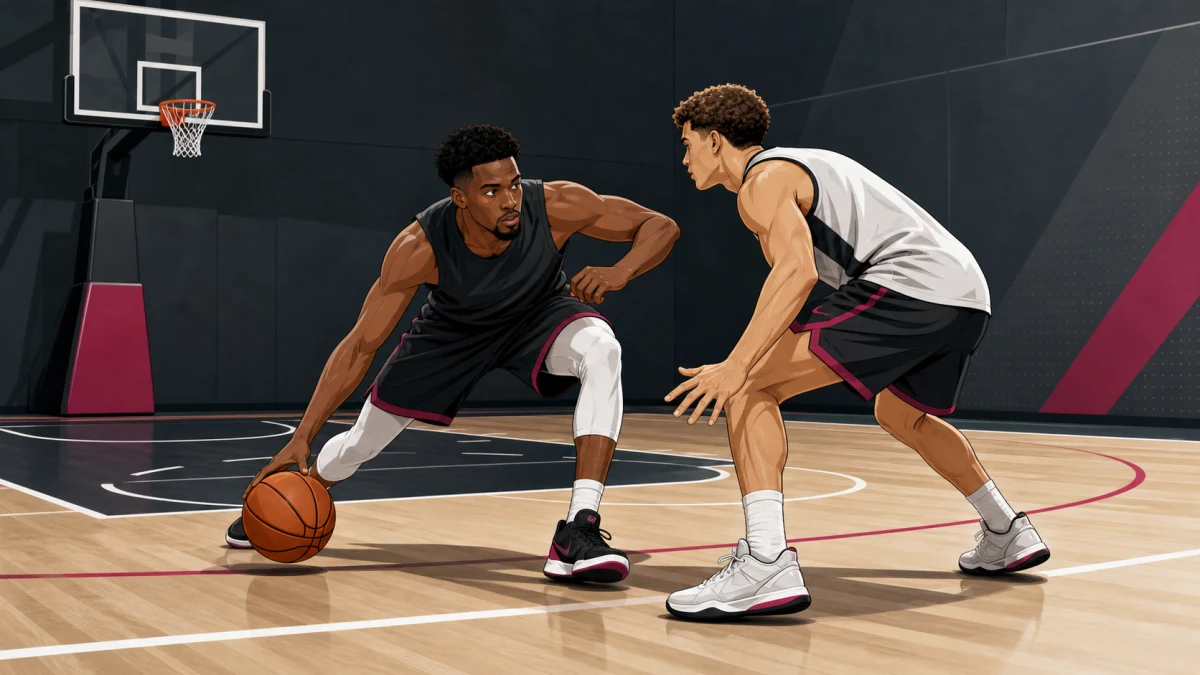
- Read the closeout: add a defender who varies arrival distance so the shooter chooses an immediate shot, a controlled one- or two-dribble attack, or a pass.
Keep the constraint narrow enough to diagnose the feet. If every repetition starts from a different route, pass quality, and defensive coverage, the player may accumulate activity without learning why balance changed. Add one variable at a time: direction, speed, pass location, then defender. Once the pattern survives those changes, blend it into a larger shooting workout and track whether the player reaches the same usable window under realistic timing. basketball workouts
Coach the cause, not only the miss
- Drifting forward: reduce approach speed sooner and ask whether the first braking step is landing too close to the catch.
- Falling sideways: check whether the feet are finishing the turn at different times or the pass is pulling the player outside the base.
- Slow release after a clean catch: begin the load before ball contact so the feet and hands do not operate as separate stages.
- Rigid stance: allow a small, repeatable offset that fits the player while preserving balance and basket orientation.
Do not use makes and misses as the only footwork score. A made shot can hide a poor catch, and a well-prepared shot can miss. Record whether the player arrived on time, controlled momentum, saw the target, preserved the next option, and landed under control. Then compare the pattern across locations and speeds. The purpose of technique work is a repeatable process that remains useful when the defense and pass are imperfect, not a promise that every balanced attempt will go in.
Frequently asked questions
Should every player use a 1-2 step?
No. Jr. NBA teaches both 1-2 step shooting and jump-stop shooting. Players should learn both and choose a controlled pattern that fits the direction, speed, and purpose of the catch.
Which foot should land first on a 1-2 catch?
The useful order depends on movement direction, handedness, and the player's turn. Practice from both sides and judge the sequence by whether the second step completes balance without forcing a late twist.
How close should beginners shoot while learning the feet?
Start where the player can maintain the intended stance and upward action without adding extra force or changing the pattern. Jr. NBA's basic shooting guidance recommends learning technique close to the basket before extending range.