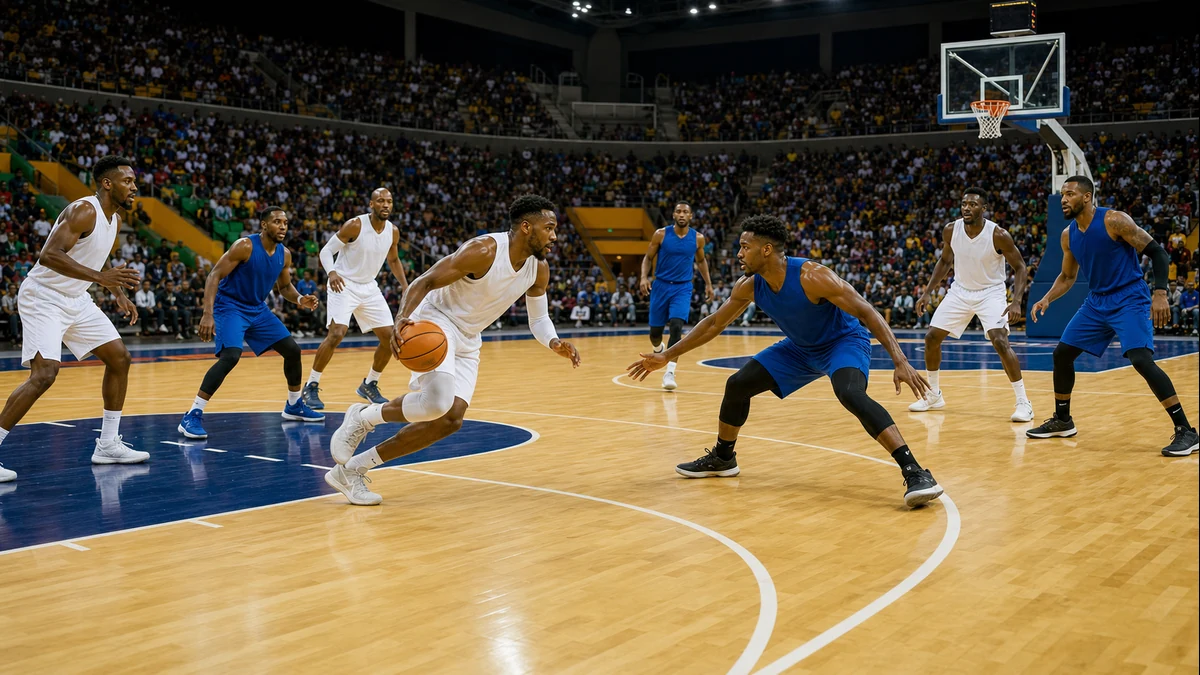


The short version: An international club basketball pathway can include a national federation, local clubs, academies, schools, and competitions. The order and rules differ by country. Use official federation and club sources to map the setting, ask teams concrete development questions, and seek qualified local advice for contracts, immigration, eligibility, or representation. A tryout or player profile does not guarantee a roster place, scholarship, contract, or visa outcome.
Key takeaways
- Map the national federation, local league, club, academy, and school options before comparing opportunities.
- Ask a prospective team how it trains, competes, communicates, evaluates players, and supports education.
- Bring a concise player profile and game evidence, but verify every requirement with the organization that owns it.
- Keep contracts, agents, immigration, eligibility, and financial decisions with qualified local professionals.
There is no single international club pathway
International basketball is not one ladder with the same rungs in every country. A player may move through a school team, a community club, a federation program, an academy, a regional league, or several of those at once. In another country, the local club may organize most player development; elsewhere, the school or a federation center may have a larger role. The first task is not to search for a universal shortcut. It is to identify which organizations actually run the age group, competition, and development setting you are considering. FIBA National Federations FIBA Players' Hub different basketball development settings
FIBA's national-federation directory is a practical place to start the map. It shows that basketball governance is organized through member federations across five world regions. That does not mean a federation will select a player or place them on a club team. It means families can use an official starting point to locate the country-level structure, then follow that structure to the relevant competition, association, or club. Treat each organization’s current website and staff as the authority for its own requirements.
Map the local basketball ecosystem first
- Find the national federation and the regional or local body that organizes the age group and competition you want to understand.
- List the clubs, academies, school programs, and development centers that play in that environment; note their age bands, locations, season dates, and contact routes.
- Separate official facts from assumptions. A club’s public league, tryout process, and roster category may be clear; an informal promise or social-media post is not the same as a confirmed place.
- Ask the organization that owns a rule about eligibility, documents, fees, travel, school arrangements, or local registration rather than relying on a generic guide.
This map prevents a common mistake: comparing opportunities by name alone. Two programs can both call themselves an academy while offering very different schedules, competition levels, coaching access, and education support. Write down the actual setting. Who supervises the basketball program? Which league does the team play in? How are players evaluated? What happens when school, travel, and games overlap? A clear set of questions produces a more useful conversation than a broad request to “get seen.”
Questions to ask a prospective club or academy
Ask questions that reveal the daily player experience. Start with basketball: What is the team’s age group and competition calendar? How many coaches work with the group? How are individual skills, decision-making, and role development discussed? Is there a process for film review or player feedback? Then ask about the practical context: What are the regular training locations and travel expectations? How do school commitments fit the schedule? Who is the point of contact for a family question? The answers should describe a real environment, not just a brand promise. college basketball recruiting preparation
- What does a normal training week look like during the season and outside the season?
- Which competition does this group enter, and where can I verify the current schedule and age category?
- How will I receive feedback about my role, development priorities, and the next action to work on?
- How are academic, language, travel, safeguarding, and family-communication needs handled in this setting?
- Which requirements must be confirmed directly with the club, federation, school, or other qualified local professional?
Build a player profile that makes the conversation easier
A player profile is not a contract proposal and it does not need to be a cinematic highlight reel. Prepare a clean one-page summary with age group, position context, height if relevant to the program, current team, competition level, contact route for a parent or guardian when appropriate, and a short description of the roles you have actually played. Add a few game clips or full-game links only when the recipient requests them. The goal is to help a coach or administrator understand what evidence exists and what question you are asking.
Use specific basketball language. Instead of “elite shooter,” describe the role and context: a guard who can enter the ball against pressure, relocate after a pass, and defend the point of attack. Instead of claiming a future level, show a current possession where you made the relevant read. A club may value different things based on its roster and competition. Honest evidence helps the conversation; it does not guarantee a trial, a roster place, a scholarship, or a professional future. structured basketball workouts
Keep education and wellbeing on the same map
A pathway decision changes more than a gym address. It can affect school, language, travel, housing, family routines, and the support system around the player. FIBA’s Players' Hub separates education, programs, integrity, agents and contracts, and mental-health resources rather than presenting basketball development as the only consideration. Use that broad frame when comparing options: where will the player learn, who can answer safeguarding questions, what trusted adults are nearby, and how will problems be raised if the environment is not working?
This is not a reason to make every decision at once. It is a reason to identify who owns each question. A coach can explain training. A club administrator can explain the club process. A school can explain education arrangements. A licensed or otherwise qualified local professional should address contracts, representation, immigration, tax, and other regulated matters. Keeping those roles separate protects the player from treating a basketball conversation as advice it is not qualified to provide.
Agents, contracts, eligibility, and travel: use the right professional
FIBA’s Players' Hub describes an Agents & Contracts area that covers how agents may assist players in contract negotiations and careers, including salary, clauses, and benefits. That is a signal to slow down, not a substitute for advice. A family should not sign, pay, travel, transfer, or submit documents because a general article, a social post, or an informal contact says the path is simple. Ask for the applicable rules from the organization involved and get qualified local advice before making a decision with legal, financial, immigration, or representation consequences. college transfer context
A legitimate opportunity can still require careful verification. Confirm the identity and authority of the person contacting you, use official club or federation channels, ask for written explanations you can review with a qualified professional, and avoid pressure to decide immediately. If a question is about rules or personal circumstances, the safe answer is not a guess. It is to return to the current official source and the professional who is allowed to advise on that issue.
A practical next-step checklist
- Locate the national federation and the competition or club structure relevant to the country and age group.
- Create a comparison sheet for each legitimate option: competition, training setting, feedback process, education, travel, costs, and family contact.
- Prepare a factual player profile and selected game evidence, then ask the organization how it evaluates prospective players.
- Confirm requirements with the institution that owns them and use qualified local professionals for regulated or personal decisions.
Frequently asked questions
How do I find an international basketball club?
Begin with the country’s FIBA-recognized national federation and then identify the local competition, club, academy, or school setting that serves the relevant age group. Verify the current process directly with the organization; directory research is a starting point, not a roster offer.
Do international basketball academies work the same way in every country?
No. Basketball structures, age groups, competition calendars, school arrangements, and club roles vary by country and organization. Compare the actual program details rather than assuming that an academy label guarantees a particular level, opportunity, or support system.
Do I need an agent to join an international basketball club?
This guide cannot answer that for an individual player. FIBA identifies agents and contracts as a separate player-support area, but representation, contracts, eligibility, and local requirements are personal and regulated questions. Verify the current rules with the relevant organization and use qualified local advice before acting.
Can a player profile guarantee a tryout or contract?
No. A concise, honest profile can make an initial conversation clearer, but it does not guarantee selection, a trial, a scholarship, a contract, a visa, or a future role. Use it to present evidence and ask a focused question, then follow the organization’s actual process.