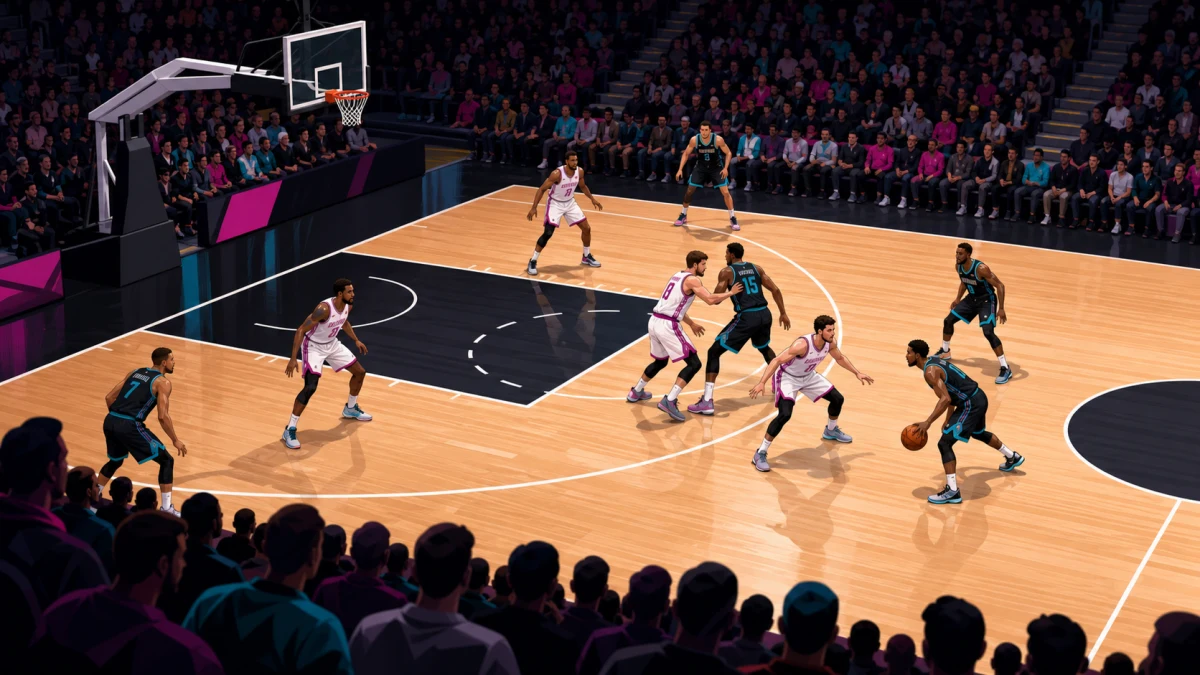

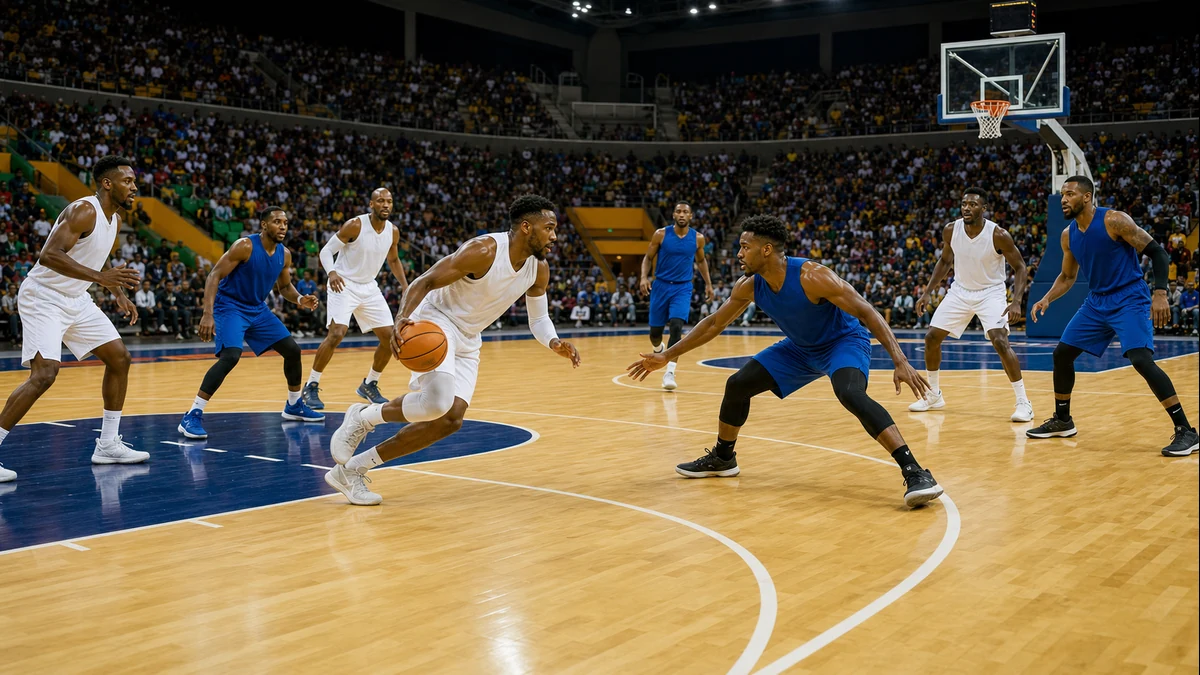
The short version: Youth players participating in development programming can progress through various stages, ultimately reaching the BAL.
Key takeaways
- The BAL is a historic partnership between NBA Africa and FIBA, marking the NBA's first collaboration to operate a professional league outside North America.
- The 2026 season features a streamlined two-conference format (Kalahari and Sahara) with six teams in each, playing a total of 42 games.
- Qualification is merit-based, with seven countries receiving automatic bids and five teams qualifying through FIBA Africa's 'Road to the BAL' tournaments.
- The BAL Elevate program integrates elite prospects from the NBA Academy directly into professional club rosters, creating a clear developmental pipeline.
- The 2026 season culminates in a high-stakes playoff bracket in Kigali, Rwanda, featuring the top four teams from each conference.
The NBA-FIBA Partnership: A Historic Joint Venture
The global basketball landscape is undergoing a massive shift, driven by the emergence of highly structured international pathways that connect local talent directly to the professional ranks. At the forefront of this evolution is the Basketball Africa League (BAL), which tips off its sixth season in March 2026. The BAL is a groundbreaking professional league featuring 12 club teams from across Africa, representing a historic joint venture between NBA Africa and the International Basketball Federation (FIBA). BAL – FREQUENTLY ASKED… - Basketball Africa League - The BAL
This partnership is highly significant because the BAL represents the NBA's first collaboration to operate a professional basketball league outside of North America. Rather than acting merely as a scouting showcase, the BAL builds on the deep foundation of club competitions that FIBA Africa has organized across the continent for decades. By combining the NBA's operational excellence, global marketing reach, and player development systems with FIBA's established international competitive framework, the league has created a highly sustainable model. For players and families exploring pathways outside the traditional North American high school and college systems, the BAL offers a professional alternative that rivals other elite international structures, such as those found in European basketball. To understand how this compares to other global professional structures, you can read our guide on how the Euroleague works.
The Qualification Pathway: Automatic Bids and the 'Road to BAL'
Understanding the Qualification Process
One of the most unique aspects of the BAL is its merit-based qualification system, which ensures that the highest-performing clubs on the continent earn their spots on the big stage. The entry system is divided into two primary pathways: automatic qualification and the qualifying tournaments. National league champions from seven specific countries receive automatic bids to the BAL group stage. These countries are Angola, Egypt, Morocco, Nigeria, Rwanda, Senegal, and Tunisia. To determine which countries receive these coveted automatic bids, NBA Africa and FIBA Africa evaluate several key factors, including each country's basketball tradition, recent performance in continental competitions, existing basketball infrastructure, and overall compliance with FIBA governance.
For clubs in countries without an automatic bid, the path to the main tournament runs through the rigorous 'Road to the BAL' qualifying tournaments, which are conducted by FIBA Africa. These tournaments feature national league champions from the remaining countries across the African continent, creating a highly competitive, multi-stage qualifying process. A critical phase of this journey is the Elite 16 phase, which is scheduled for November 2025. During this phase, the qualifying teams are split into two regional divisions: Division West, which plays from November 11 to November 16, 2025, and Division East, which plays from November 18 to November 23, 2025. Ultimately, four teams from the Elite 16 phase qualify for the BAL final phase, where they join the eight automatically qualified teams to complete the 12-team field. This structure ensures that every single spot in the tournament is earned through high-stakes, competitive play on the court. Competition System - FIBA Africa Champions Clubs ROAD TO B.A.L 2026 | FIBA Basketball
The 2026 Season Format: Two Conferences and the Road to Kigali
The 2026 Conference Format and Playoff Structure
As the league enters its sixth season in 2026, the competition format has evolved to deliver more games and higher intensity. Unlike the 2024 and 2025 seasons, which split the 12 teams into three conferences of four teams each, the 2026 BAL season features a streamlined two-conference format. The 12 teams are divided into the Kalahari Conference and the Sahara Conference, with six teams competing in each conference. This adjustment significantly increases the competitive volume, with teams scheduled to play a total of 42 games throughout the 2026 season, providing players with more professional game exposure and fans with more high-stakes matchups. The magic of African b… - Basketball Africa League - The BAL
The 2026 season is structured across three distinct phases hosted in different cities across the continent. The Kalahari Conference is scheduled to take place in Pretoria, South Africa, from March 27 to April 5, 2026, at the SunBet Arena. Following this, the Sahara Conference will take place in Rabat, Morocco, from April 24 to May 3, 2026, at the Prince Moulay Abdellah Sports Complex. The season culminates with the highly anticipated BAL Final Phase, scheduled to take place from May 22 to May 31, 2026, at the state-of-the-art BK Arena in Kigali, Rwanda.
The playoff qualification rules are straightforward but demanding. The top four teams from both the Kalahari and Sahara conferences will advance to the BAL Playoffs in Kigali. Once there, the eight advancing teams will compete in a high-intensity bracket featuring two rounds of quarter-final series. The winners of these series will advance to the semi-finals, with the ultimate victors moving on to the single-elimination final to play for the championship, while the losing semi-finalists compete in a third-place game.
The battle for the BAL championship trophy has historically been fierce, showcasing the parity and rising talent level across the continent. Over the league's history, five different teams from four African countries have won the BAL Championship: Zamalek of Egypt (2021), US Monastir of Tunisia (2022), Al Ahly of Egypt (2023), Petro de Luanda of Angola (2024), and Al Ahli Tripoli of Libya (2025). Among these elite clubs, Petro de Luanda stands out as a model of consistency; they are the only team to have participated in all five previous seasons of the BAL, compiling a 27–13 win–loss record over 40 games played.
This high level of competition has captured the imagination of basketball fans globally and locally. The league's fifth season in 2025 recorded an impressive total attendance of more than 140,000 fans who watched the games live across Morocco, Senegal, Rwanda, and South Africa. This widespread fan engagement highlights the success of the league's multi-country hosting model, with five different countries having hosted BAL games over the league's first six seasons: Egypt, Morocco, Rwanda, Senegal, and South Africa.
Player Development Pathways: From Grassroots to BAL Elevate
About the Basketball Africa League
As youth players participate in NBA Africa and FIBA Africa’s basketball development programming, they can progress from the Jr. NBA/Jr. WNBA and NBA Basketball School to Basketball Without Borders (BWB) and NBA Academy, and ultimately to the BAL.
What This Means for Players, Coaches, and Families
Player Qualification Pathways
For aspiring players, the BAL and its developmental pipeline represent a tangible, elite professional goal that does not require leaving the African continent to achieve global visibility. The presence of NBA scouts, world-class coaching, and professional-grade facilities means that players are developed under modern standards. For coaches, the BAL offers a highly competitive environment to scout tactical innovations and source elite international talent. For families, understanding these structured pathways helps in making informed decisions about a player's long-term athletic and academic future.
To prepare for the physical and tactical demands of this level of play, athletes can focus on structured, consistent development. While there is no single path to success, a balanced training regimen is helpful. As an adaptable starting point for player development, aspiring athletes can focus on structured skill work, such as shooting mechanics, footwork, and decision-making under pressure, alongside video analysis to study professional spacing and defensive rotations. This baseline should be adjusted based on individual readiness and under the guidance of a qualified in-person coach.
Limitations and Logistical Realities
BAL Youth Development
Level Up Basketball publishes free basketball articles, drill pages, and workout pages for players, coaches, and families.
Elevate Your Game with Level Up Basketball
Level Up Basketball Resources
At Level Up Basketball, we publish free basketball articles, drill pages, and workout pages for players, coaches, and families.