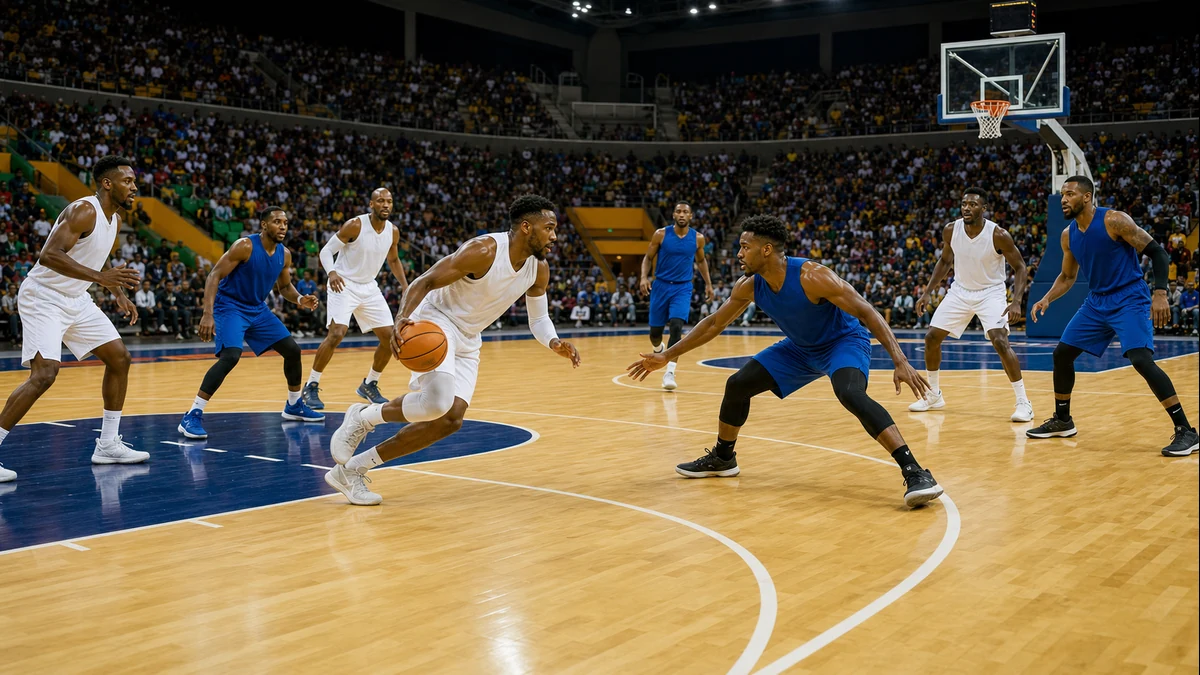


The short version: The Basketball Champions League (BCL) features a structured, merit-based format where 54 teams from 29 countries compete through qualifiers, a regular season, play-ins, and playoffs to reach the Final Four.
Key takeaways
- The 2026-27 BCL season features 54 teams from 29 European countries competing over an eight-month period.
- The Qualification Round tournaments in September 2026 determine the final two spots for the Regular Season.
- Group winners qualify directly for the Round of 16, while second and third-placed teams enter the Play-Ins.
- The season culminates in a prestigious Final Four tournament weekend with Semi-Finals and the championship.
What is the Basketball Champions League?
The Basketball Champions League represents a highly structured and collaborative effort in European club basketball. It is established as an innovative joint partnership between FIBAClubCo and 11 top European leagues. This unique organizational structure ensures that the interests of both international basketball and domestic competitions are aligned. For the upcoming 2026-27 season of the Basketball Champions League, the competition will involve 54 teams representing 29 European countries. This broad representation highlights the inclusive nature of the league, bringing together diverse basketball cultures and elite clubs from across the continent to compete in a highly organized, merit-based system that rewards sporting performance. Basketball Champions League Season 11 lineup announced | About FIBA Competition System - Basketball Champions League Powered by Ameresco SUNEL | FIBA Basketball
The competitive calendar is designed to be both rigorous and respectful of domestic schedules. A minimum of 194 games will be played over the course of eight months of competition in this 11th season of the Basketball Champions League. To ensure that clubs can maintain their domestic focus, games are scheduled on Tuesdays and Wednesdays to safeguard national leagues' schedules. This scheduling strategy prevents conflicts with weekend domestic league games, allowing players, coaches, and fans to enjoy high-stakes European matchups mid-week while preserving the integrity and rhythm of local league play across the 29 represented nations.
The 2026-27 Qualification Pathway
The journey for the 2026-27 Basketball Champions League (Season 11) officially began with a high level of interest from clubs across Europe. A total of 61 clubs applied for the Basketball Champions League by the official deadline on June 19. Following a thorough review of these applications, the Basketball Champions League Board ratified a list of 30 clubs with a direct berth in the 2026-27 BCL Regular Season, as well as 24 clubs that will compete in the Qualification Round tournaments. This selection process ensures that only the most qualified and competitive clubs enter the tournament, setting a high standard for the entire competition.
For the teams that did not receive a direct berth, the path to the main stage is highly demanding. The 24 clubs competing in the Qualification Round will be drawn into two tournaments, with the winner of each tournament advancing to the Regular Season. This single-elimination style tournament format leaves no room for error, as only two tickets remain for the 32-team Regular Season. The 2026-27 BCL Qualification Round tournaments will take place from September 14 to 20, 2026, and the Regular Season will begin on October 6, 2026, marking the official start of the main tournament.
The BCL Regular Season Format
The 2026-27 Regular Season phase features 32 clubs split into 8 groups of 4 clubs each, playing in a round-robin, home-and-away system from October to December. The first-placed teams in each Regular Season group qualify directly for the Round of 16, while second and third-placed teams enter the Play-Ins. This format ensures that every team plays a balanced schedule of home and away games against their group opponents during the final months of the calendar year, making every single matchup critical for direct qualification or securing a postseason play-in spot.
The Play-In phase consists of 16 clubs playing a best-of-3 series over January, with home advantage given to the second-placed teams. The winners then advance to the Round of 16 phase, which features 16 clubs split into 4 groups of 4 clubs each, playing in a round-robin, home-and-away system from the end of January to March. This transition from high-intensity best-of-three series to another structured round-robin group stage demands sustained excellence and physical resilience from the competing clubs during the winter months.
The Championship Bracket and Final Four
The final stretch of the competition transitions into high-stakes bracket play. The Quarter-Finals phase consists of 8 clubs playing a best-of-3 series over April, with home advantage given to the first-placed teams. This playoff format tests the resilience of the final eight teams. Following the quarterfinals, the Final Four tournament concludes the season over a weekend, featuring Semi-Finals on Friday and the Finals on Sunday. This compact, high-pressure tournament weekend is the ultimate test of physical conditioning and mental focus, where the champion is finally crowned.
The quality of the competition is elevated by the presence of numerous national champions. The complete lineup for Season 11 features 16 national league champions, nine of which are directly in the Regular Season: ALBA BERLIN (Germany), Spartak Office Shoes (Serbia), ERA Nymburk (Czechia), Cibona (Croatia), Windrose Giants Antwerp (Belgium), Falco KC Szombathely (Hungary), FC Porto (Portugal), Legia Warszawa (Poland), and Sabah BC (Azerbaijan). The inclusion of these prestigious champions ensures that the Basketball Champions League remains a true clash of domestic titleholders, raising the competitive bar for all participants.
National Champions and Historical Context
To understand the prestige and excitement of the tournament's final stage, we can look at the conclusion of the previous season. In the 2025-26 season endpoint example, Rytas Vilnius won the BCL title by defeating AEK BC 92-86 in overtime in Badalona, Spain. This dramatic overtime thriller in front of thousands of passionate fans serves as a perfect example of the high stakes, intense competition, and emotional peak that teams experience on the Road to the Final Four, illustrating what every club strives to achieve. Rytas Vilnius win first BCL title in overtime thriller - Basketball Champions League Powered by Ameresco SUNEL | FIBA Basketball
For players and coaches, navigating the Basketball Champions League requires meticulous preparation and strategic depth. Because games are scheduled on Tuesdays and Wednesdays to safeguard national leagues' schedules, coaching staffs must manage roster rotation and recovery to handle mid-week international travel alongside weekend domestic games. Furthermore, the culmination of the season in the Final Four tournament over a weekend—featuring Semi-Finals on Friday and the Finals on Sunday—demands peak physical conditioning and mental resilience, as teams must prepare for two championship-level games in a span of three days.
The Road to the Final Four Pathway
| Competition Stage | Format Details | Key Timeline Details |
|---|---|---|
| Qualification Rounds | 24 clubs drawn into two tournaments, with the winner of each tournament advancing | September 14 to 20, 2026 |
| Regular Season | 32 clubs split into 8 groups of 4 playing a round-robin, home-and-away system | October to December 2026 |
| Play-Ins | 16 clubs playing a best-of-3 series, with home advantage to second-placed teams | January 2027 |
| Round of 16 | 16 clubs split into 4 groups of 4 playing a round-robin, home-and-away system | End of January to March 2027 |
| Quarter-Finals | 8 clubs playing a best-of-3 series, with home advantage to first-placed teams | April 2027 |
| Final Four | 4 qualified teams competing in Semi-Finals on Friday and Finals on Sunday | May 2027 |
Limitations and Season-to-Season Variations
When analyzing the Basketball Champions League, players, coaches, and parents must understand that participating clubs, seedings, and exact tournament formats can change from season to season. This overview focuses specifically on the ratified plans for the 2026-27 season (Season 11). The references to the completed 2025-26 season (Season 10) champion, Rytas Vilnius, are used solely as a historical example of the tournament's final stage and competitive intensity, rather than a guarantee of future participants or exact matchups.
Frequently asked questions
What is the Basketball Champions League?
The Basketball Champions League is a European club competition organized by FIBA. Clubs progress through its competition structure while also competing in their domestic systems, so it should not be confused with a national league or with EuroLeague.
How do teams reach the Basketball Champions League Final Four?
Teams must advance through the season's group and knockout stages under the format for that edition. The Final Four is the concluding tournament, so qualification depends on results across earlier phases rather than a separate invitation based only on reputation.
Is the Basketball Champions League the same as EuroLeague?
No. They are separate European club competitions with different organizers, participating clubs, qualification relationships, and season formats. Both feature international club basketball, but readers should check each competition's current official structure before comparing teams or pathways.