The short version: In Jr. NBA's instructions, players alternate two dribbles while reacting to the coach: left hand selects the left foot first, and right hand selects the right foot first. The step goes forward. Players turn at half court and return until the allotted time expires.
Key takeaways
- Jr. NBA starts players across the baseline with two balls per active player and the coach ahead near the free-throw line.
- Jr. NBA introduces simultaneous pounds, then specifies alternating dribbles during the reaction sequence.
- Watch the selected foot, forward direction and continued ball control together; simplify the rehearsal when one part breaks down.
Where the players and coach start
The challenge is to make a decision while keeping both balls moving. Jr. NBA's instructions ask players to alternate their dribbles, read the coach's raised hand and start forward with the corresponding foot. As a coach, watch that first foot as closely as you watch the basketballs. MVP Practice Plans - NBA.com: Jr. NBA
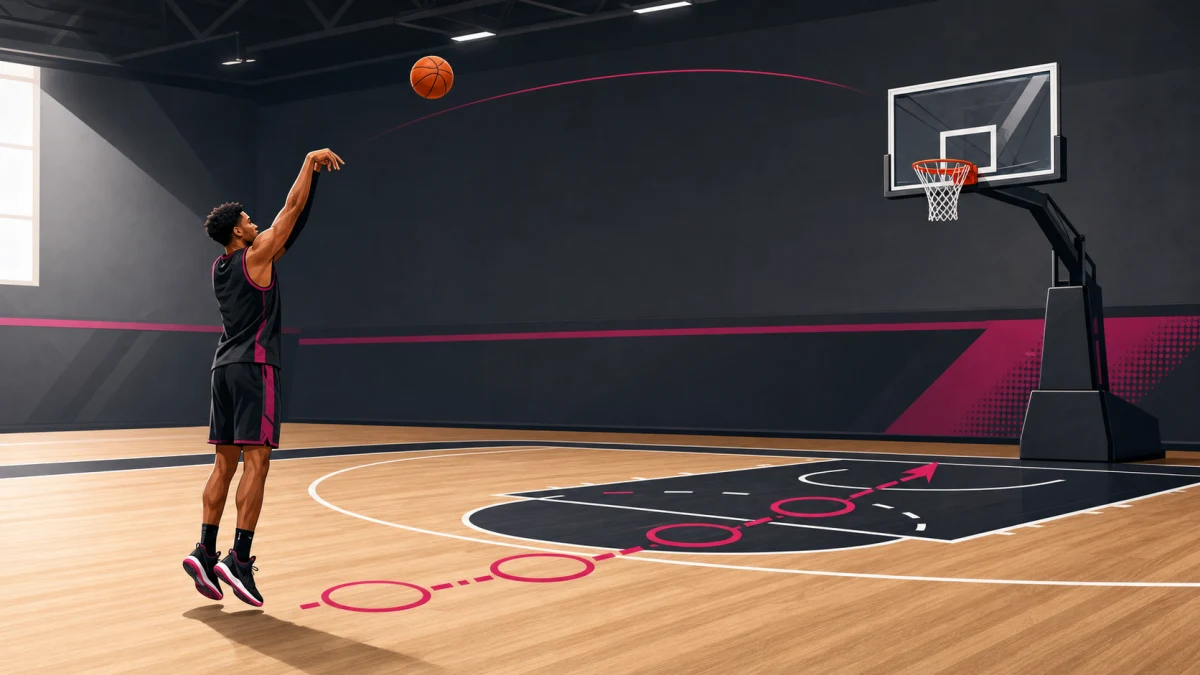
For Jr. NBA's starting arrangement, spread players across the baseline with two basketballs per active player. Players may share with a partner. The coach begins ahead of the group near the free-throw line, where players can see the signal.
Swipe sideways to explore the full diagram.
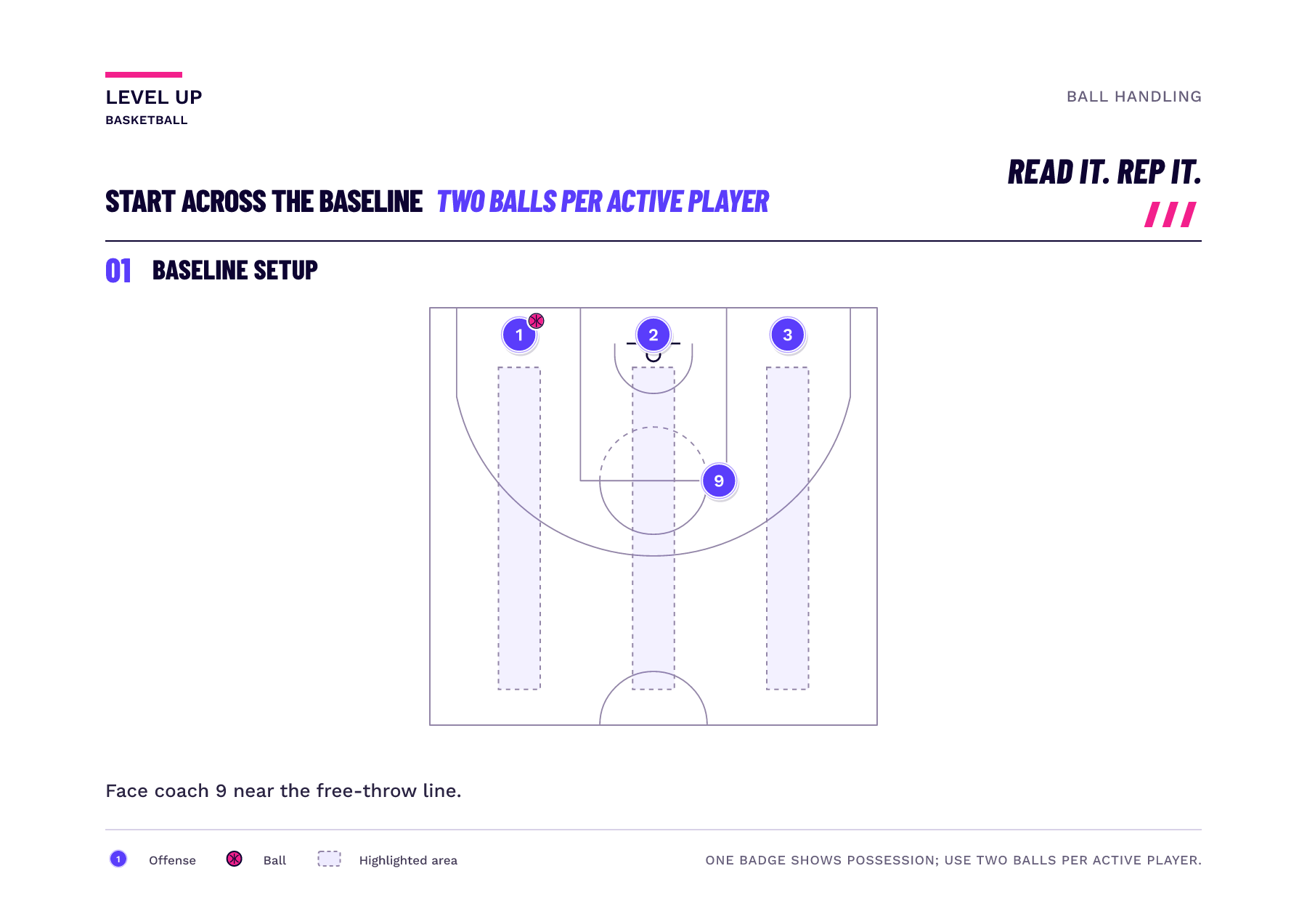
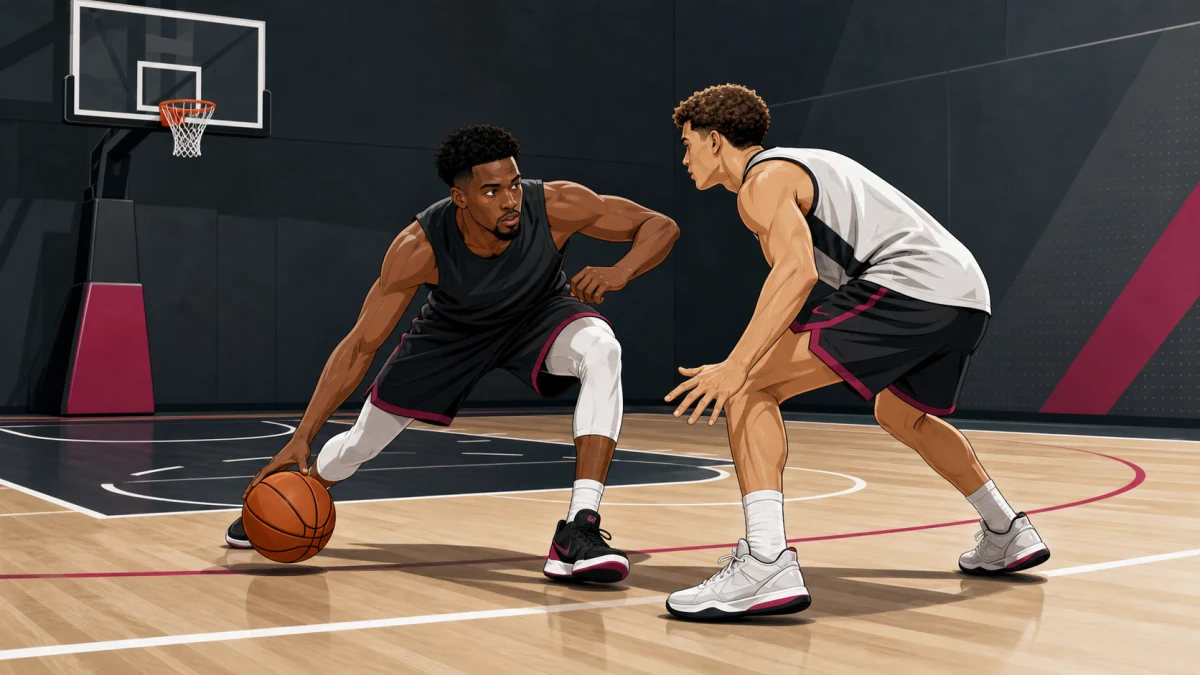
The rhythm changes within Jr. NBA's instructions. The opening setup has players pound both balls at the same time; the reaction sequence explicitly calls for alternating dribbles. During the signals, think one bounce, then the other, while keeping both balls working.
As a coaching preparation, rehearse the alternating rhythm without traveling. Show a hand and ask the player to name the foot they would use first. This separates reading the cue from executing the forward step.
Which foot moves, and where does it go?
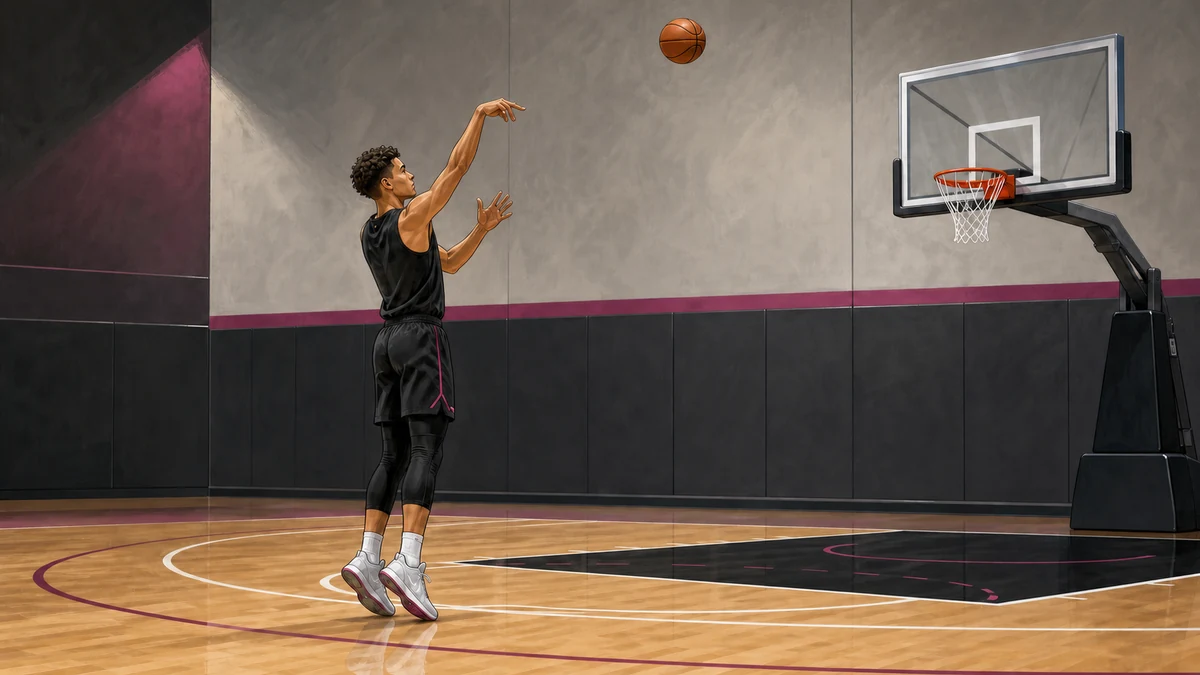
Jr. NBA directs the player to take one big, explosive step forward with the foot corresponding to the raised hand: the coach's left hand selects the player's left foot, and the coach's right hand selects the player's right foot. The signal selects the first foot; the movement travels forward toward half court. Both dribbles continue through the step.
Swipe sideways to explore the full diagram.
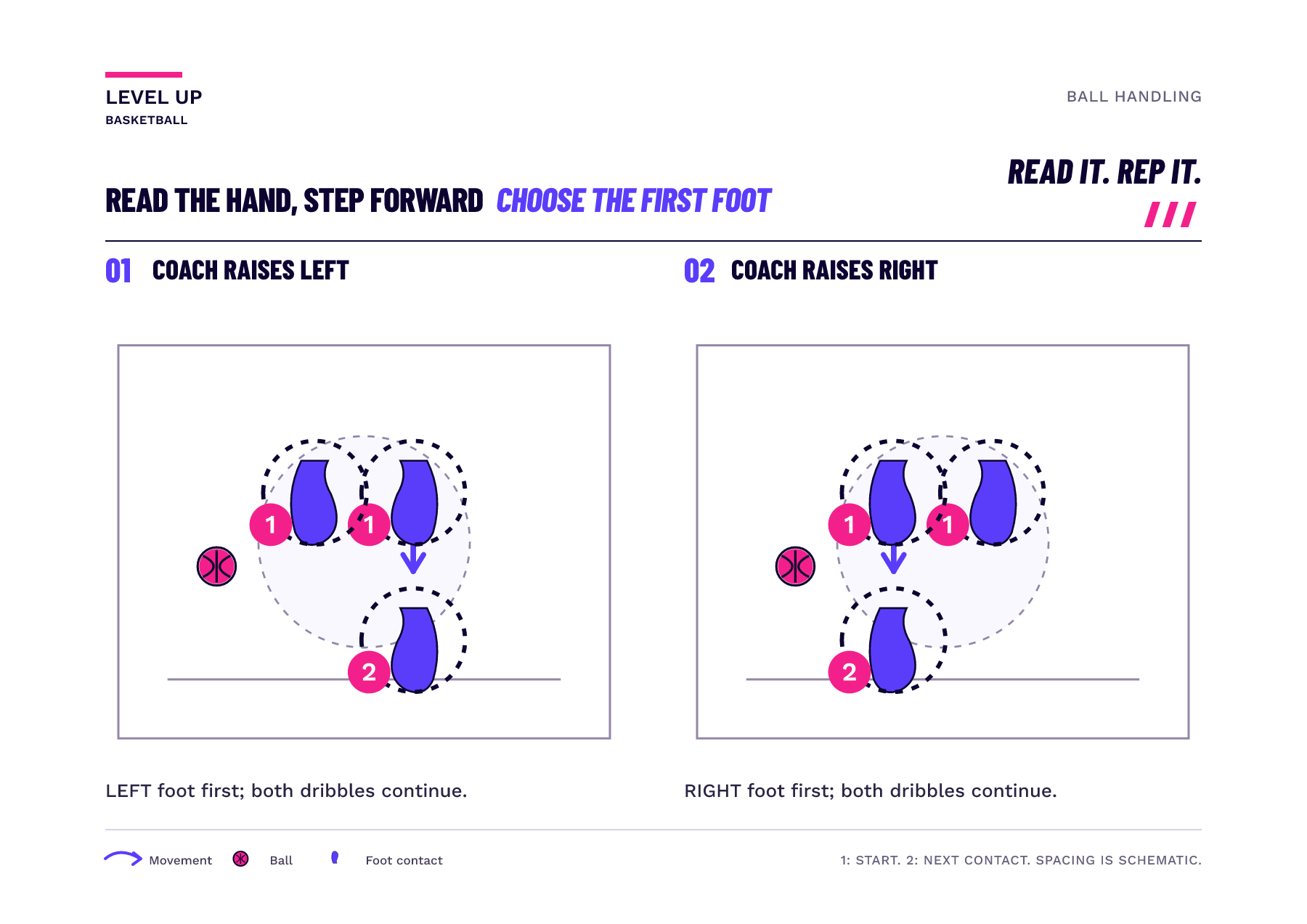
Use Jr. NBA's sequence as three observation points: did the intended foot initiate movement, did that movement go forward, and did both dribbles continue? Give feedback on the part that broke down. A correct foot with lost ball control still gives you something specific to rehearse.
What happens at half court?
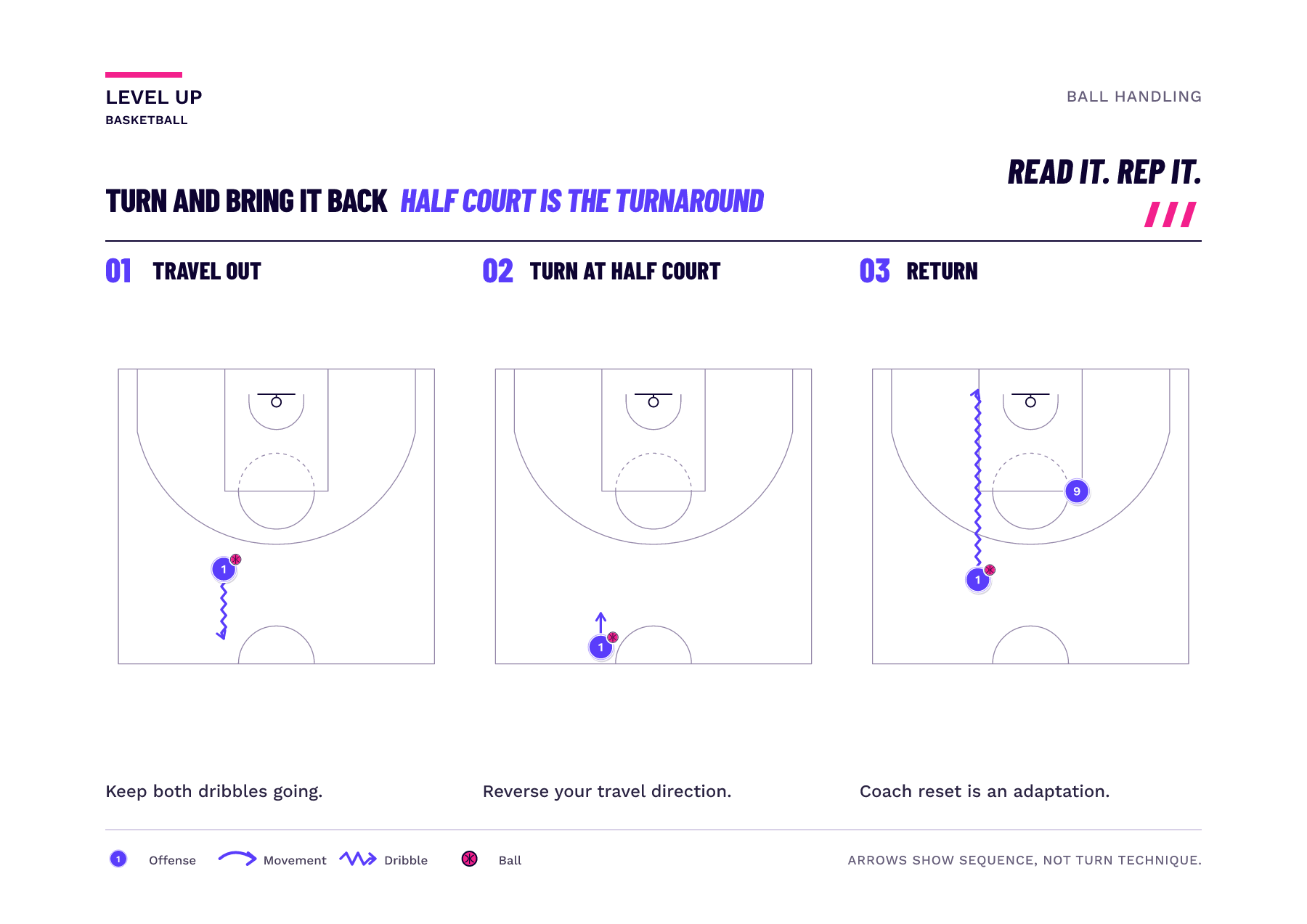
Jr. NBA has players reach half court, turn and come back, continuing the exercise until the allotted time has elapsed. Half court is the turnaround point; the starting baseline becomes the destination for the return.
Plan how players will see the next hand signal after turning. One coaching adaptation is to pause the group at half court, let the coach reset ahead of the returning players, then resume. Choose a position where the hand is easy to see. This pause and coach reset are added teaching choices.
Swipe sideways to explore the full diagram.
Was this useful?